Artwork
Dianae Ephesiae Templum (The Temple of Diana at Ephesus)
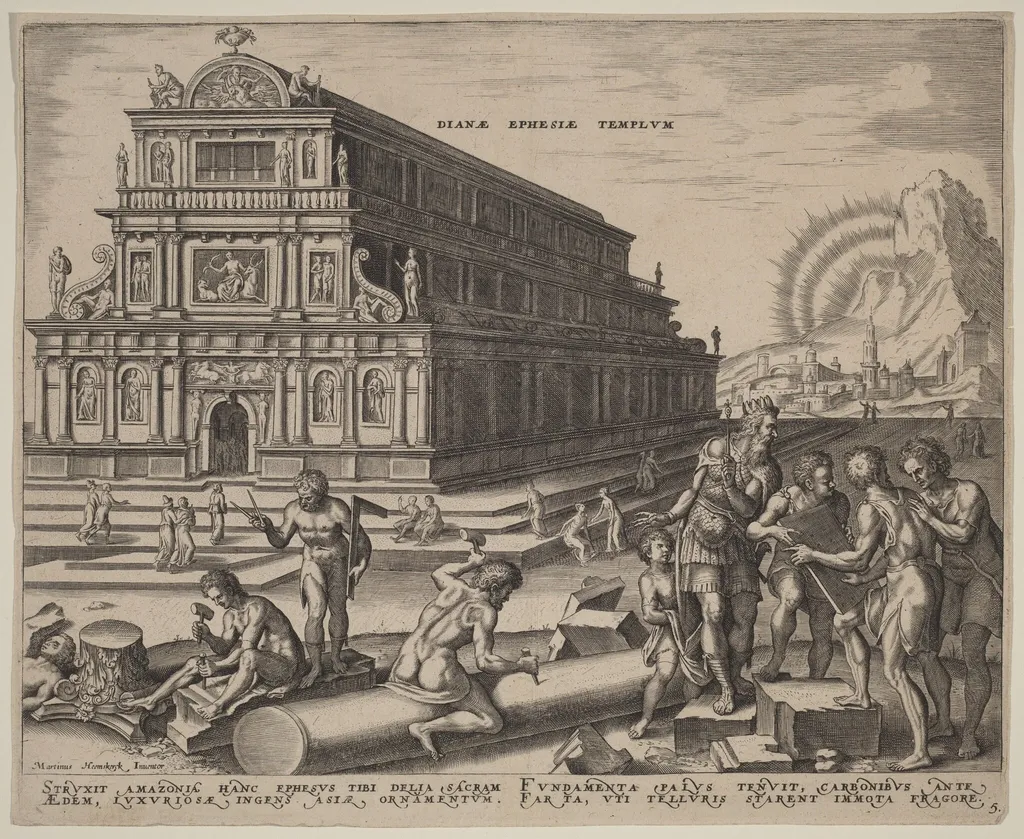
Dianae Ephesiae Templum (The Temple of Diana at Ephesus) is an ink print by the Renaissance artist Philip Galle. It dates from 1572 and is held in the collection of the National Gallery of Art.
About this work
Overview
Philip Galle’s 1572 engraving, titled *Dianae Ephesiae Templum*, presents an imagined view of the ancient sanctuary dedicated to Artemis at Ephesus. Executed on laid paper, the print belongs to the late‑Renaissance tradition of reproducing classical subjects for a European audience that was fascinated by antiquity’s legendary monuments.
Subject & Meaning
The image centers on a monumental temple, its massive columns and crowded roof populated by numerous statues, evoking the grandeur associated with one of the ancient world’s celebrated wonders. By populating the scene with diminutive figures and animals, Galle underscores the scale of the structure while hinting at the religious and civic importance the sanctuary held in mythic memory.
Technique & Style
Galle employed fine cross‑hatching to render texture and depth, a hallmark of his reproductive engraving practice. The linear density of the hatching creates a sense of solidity in the stone columns and a bustling atmosphere on the roof, while the overall composition balances architectural precision with imaginative embellishment.
History & Provenance
Although Galle never visited the site—its ruins had vanished centuries earlier—he based the design on earlier sketches, travelers’ accounts, and literary descriptions. The print thus reflects a synthesis of second‑hand information and artistic invention, serving as a visual conduit for contemporary viewers to engage with a lost monument.
Context
Created during a period when European artists frequently rendered mythological and historical subjects for prints, this work illustrates the broader Renaissance interest in classical antiquity. Galle’s output, largely composed of reproductive prints, catered to collectors and scholars eager for accessible images of distant, celebrated locations.
Artist & collection
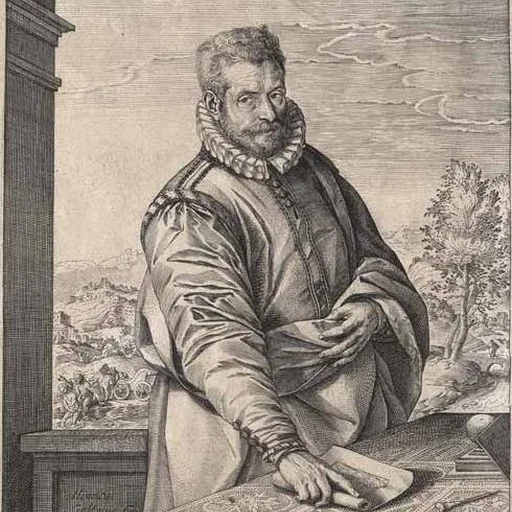
Artist
Philip (or Philips) Galle (1537 – March 1612) was a Dutch publisher, best known for publishing old master prints, which he also produced as designer and engraver. He is especially known for his reproductive engravings of paintings.

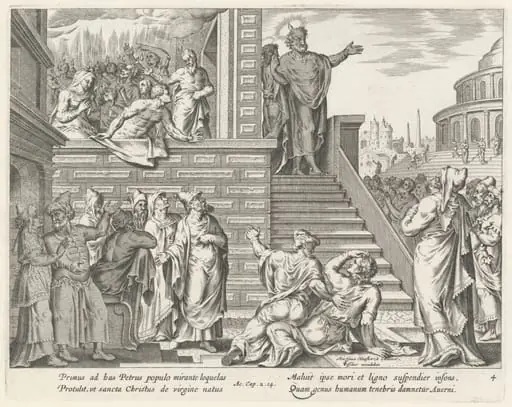 Saint Peter Speaks to the People about Christ
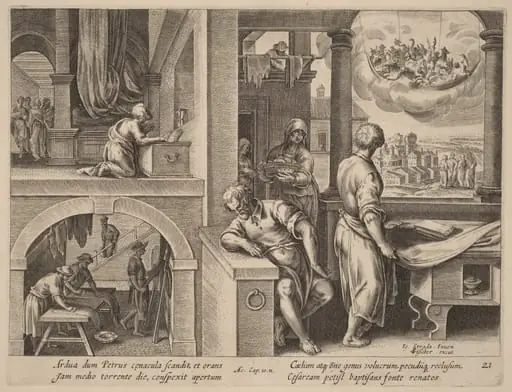 The Vision of Saint Peter
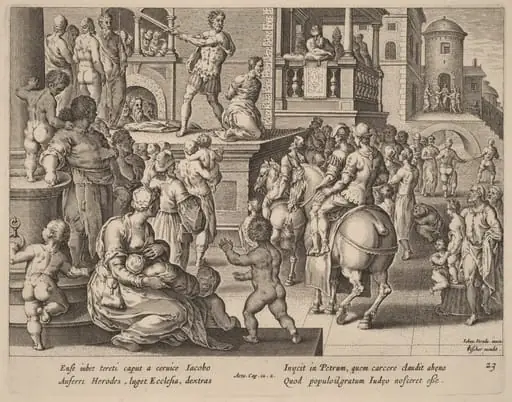 Beheading of Saint James
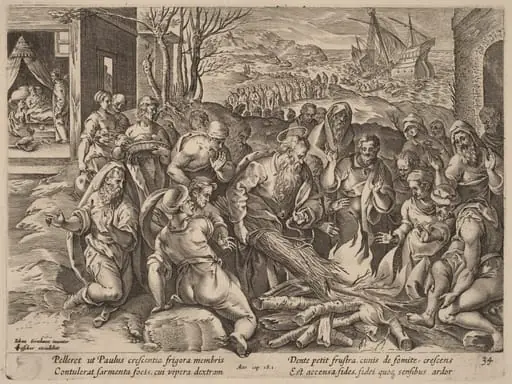 Saint Paul Shipwrecked on the Island of Melita
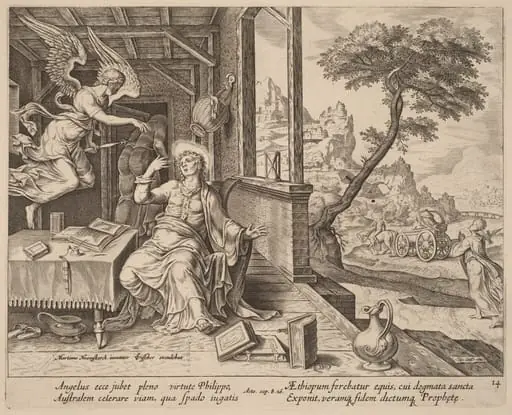 The Angel Orders Saint Philip to Accompany the Ethiopian Eunuch
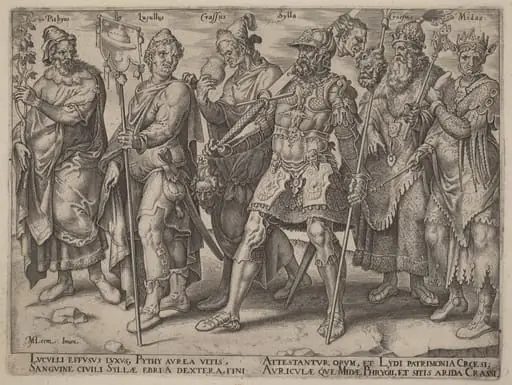 Notorious Examples of Wealth from Antiquity
 The Parable of the Wise and Foolish Virgins
 The Resurrection
 Latona Insulted
 Mausolaeum (The Tomb of Mausolus at Halicarnassus)
 The Slaughter of the Priests of Samaria
 The Adoration of the Shepherds
 Josiah Celebrating Passover
 Fountain of Youth
 Allegory of Love
 The Hospital
 View of the Forum from the Base of the Capitol
 Phaeton Asking for the Chariot
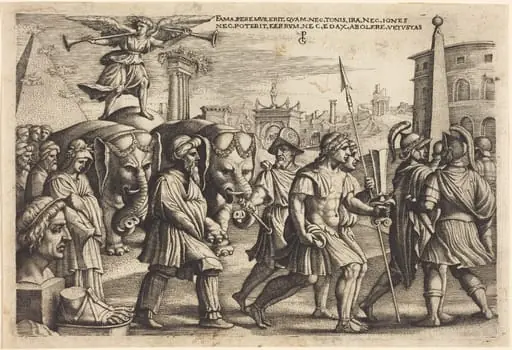 The Triumph of Fame
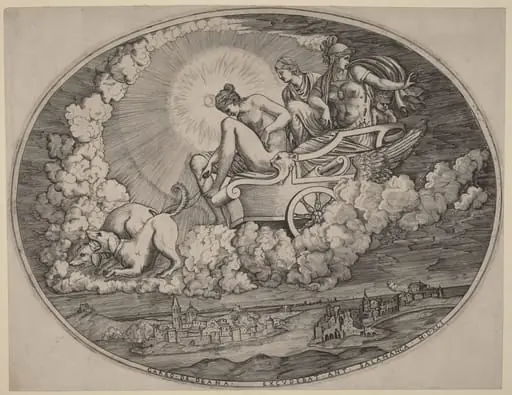 The Chariot of Diana