Artwork
Nahum
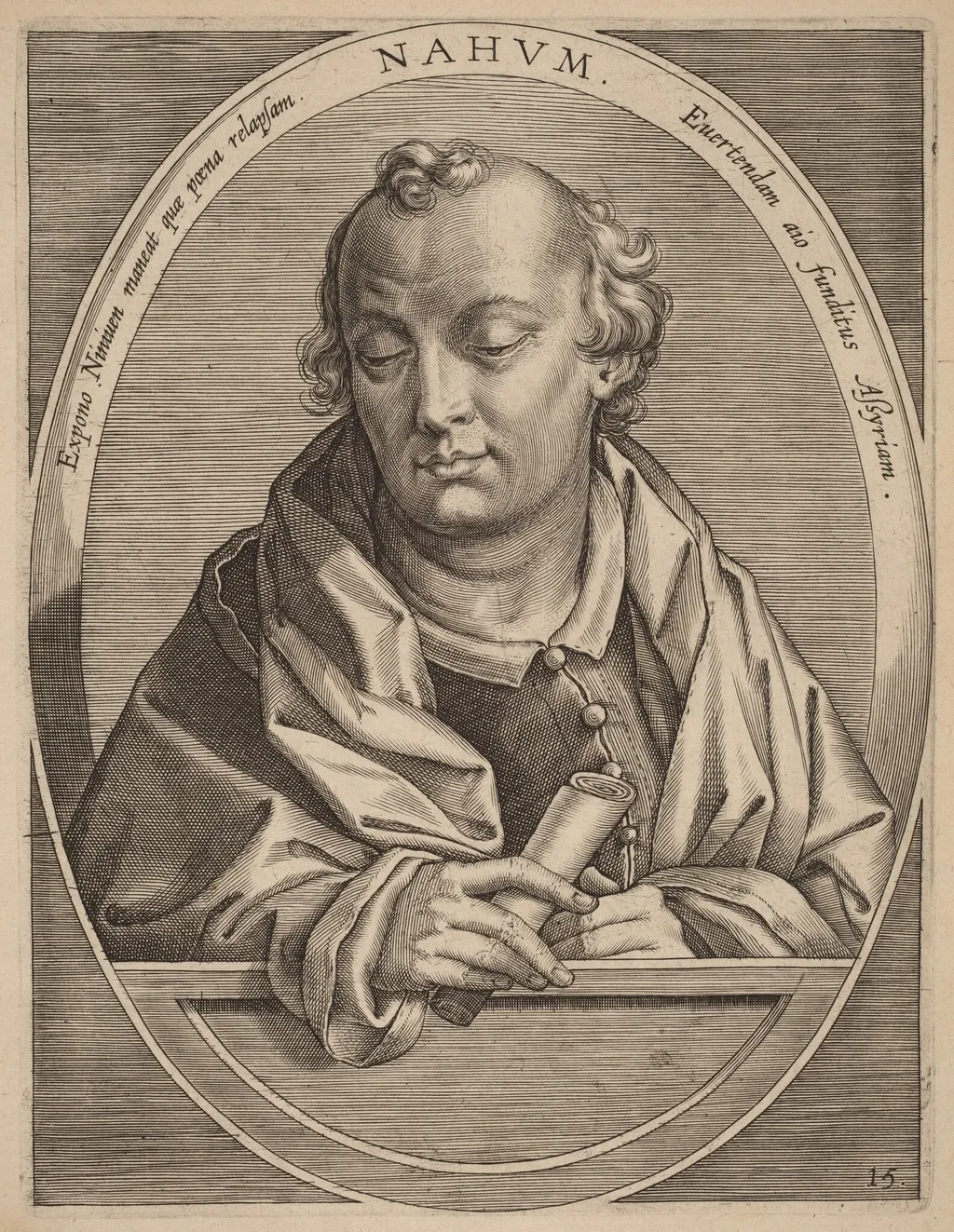
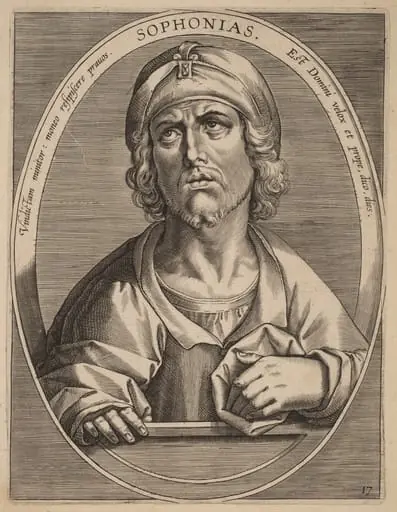
Nahum is an ink print by the Baroque artist Theodor Galle. It dates from 1613 and is held in the collection of the National Gallery of Art.
About this work
Overview
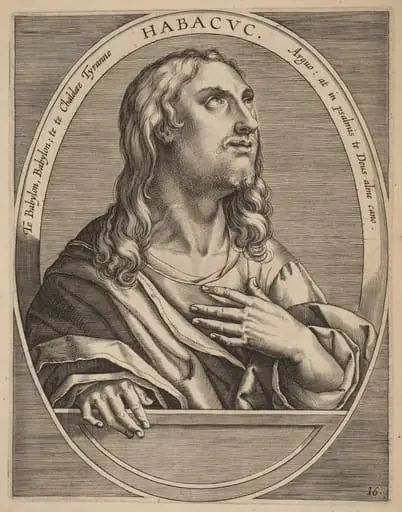
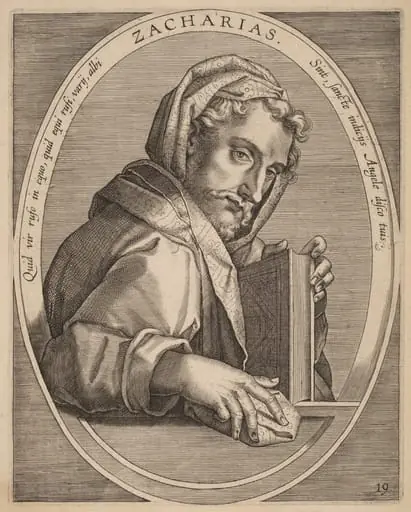
Created in 1613 by Theodor Galle, this engraving on laid paper depicts a male figure identified as Nahum. Rendered in monochrome, the image captures the subject from the chest up, facing slightly to the right. The composition emphasizes quiet dignity through restrained gesture and precise line work, typical of early 17th-century Northern European printmaking traditions.
Subject & Meaning
The figure is labeled 'Nahum,' likely referencing the biblical prophet, though no definitive link to a specific historical individual is established.
The figure is labeled 'Nahum,' likely referencing the biblical prophet, though no definitive link to a specific historical individual is established. His serious gaze and clasped hands suggest contemplation or authority. The object he holds—possibly a scroll or book—reinforces a scholarly or prophetic identity, aligning the portrait with conventions of religious or intellectual portraiture of the period.
Technique & Style
Galle employed fine, controlled engraving lines to model form and texture, particularly in the curls of hair, the stubble of the beard, and the folds of clothing. The contrast between light and shadow is achieved through density of line rather than tone, characteristic of metalplate engraving. The paper’s laid texture subtly interacts with the ink, enhancing the tactile quality of the image.
History & Provenance
The print originates from a period when engraved portraits were widely circulated as educational or devotional images. Galle, active in the Southern Netherlands, produced numerous reproductive engravings after other artists. While the exact provenance of this specific impression is undocumented, its style and date place it within a broader network of print distribution across Europe in the early 1600s.
Context
In the early 17th century, engraved portraits of biblical figures served both devotional and didactic purposes, often appearing in religious texts or private collections. Galle’s work reflects the demand for such imagery in Protestant regions, where visual representations of scriptural characters were valued for their moral clarity and accessibility to literate audiences.
Legacy
Though not widely reproduced in modern scholarship, this engraving exemplifies the precision and restraint of Flemish printmaking at the turn of the century. It contributes to the understanding of how religious identity was visually constructed in print culture, preserving a quiet, humanized interpretation of a prophetic figure through the disciplined hand of the engraver.
Artist & collection