Artwork
Title Page for Agostino Mascardi, Silvarium Libri IV
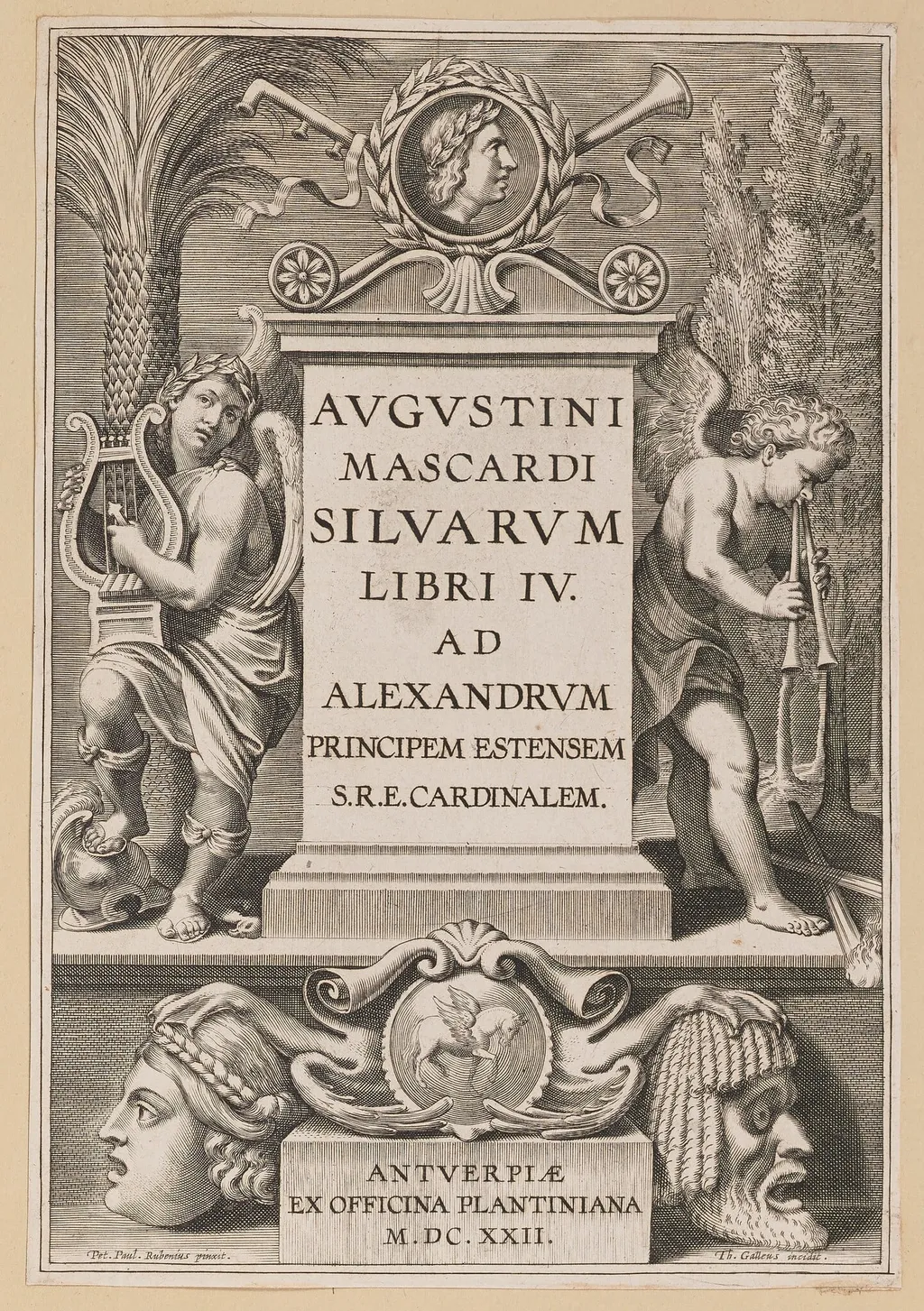
Title Page for Agostino Mascardi, Silvarium Libri IV is an ink print by the Baroque artist Theodor Galle. It dates from 1622 and is held in the collection of the National Gallery of Art.
About this work
Overview
Theodor Galle’s 1622 engraving serves as the title page for Agostino Mascardi’s work *Silvarium Libri IV*. Executed on laid paper, the print functions as a decorative frontispiece, combining allegorical figures with heraldic elements to announce the text’s scholarly content.
Subject & Meaning
Central to the composition are two idealized male figures. One, seated with a lyre and a scroll, evokes the classical muse of poetry, while the other, leaning on a spear, suggests martial virtue. Above them a shield bearing a stylized face and below a coat of arms featuring a bird reinforce themes of knowledge and authority.
Technique & Style
Galle employed fine line engraving, carving intricate details such as the folds of drapery and the delicate feathering of the bird. The contrast between the crisp, linear rendering of the figures and the softer shading of the background demonstrates the printmaker’s command of tonal variation within the constraints of metal engraving.
History & Provenance
Created in the early seventeenth century, the print was likely commissioned to accompany the first edition of Mascardi’s *Silvarium*. Theodor Galle, a prominent member of the Galle family of Antwerp engravers, contributed the design, reflecting the collaborative networks between authors and printmakers in the Republic of the United Provinces.
Context
The frontispiece reflects the Baroque fascination with allegory and the integration of visual and textual scholarship. By embedding symbolic figures and heraldic motifs, the engraving aligns the book with contemporary intellectual currents that prized classical learning and noble patronage.
Legacy
While primarily a functional title page, the engraving exemplifies the high level of craftsmanship achieved in early modern print culture. It remains a reference point for studies of book illustration and the role of engravers in disseminating scholarly works during the period.
Artist & collection


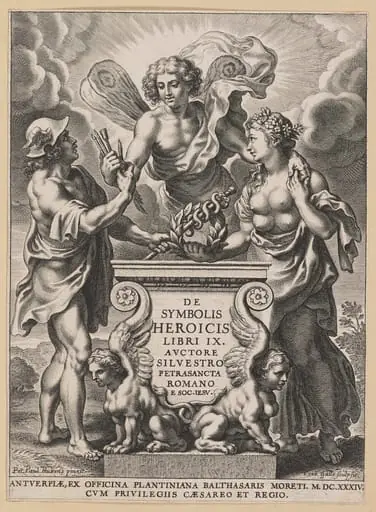 Title Page for Silvester Pietrasanta, De Symbolis Heroicis
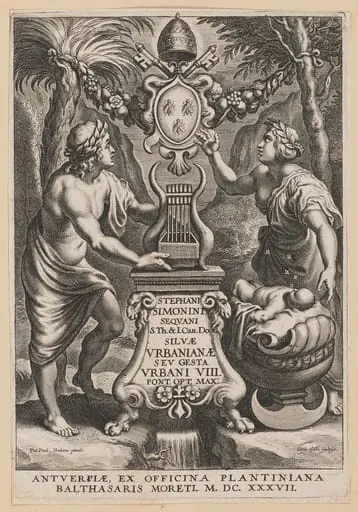 Title Page for Stephanus Simonini, Silvae Urbaninae
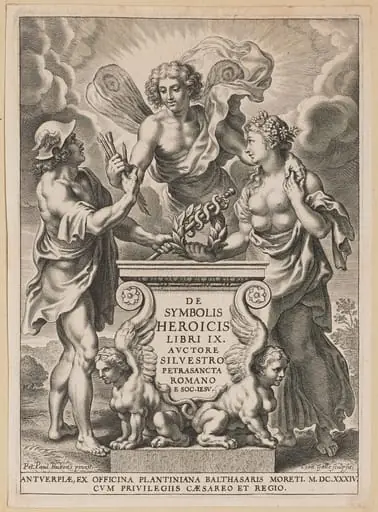 Title Page for Silvester Pietrasanta, De Symbolis Heroicis
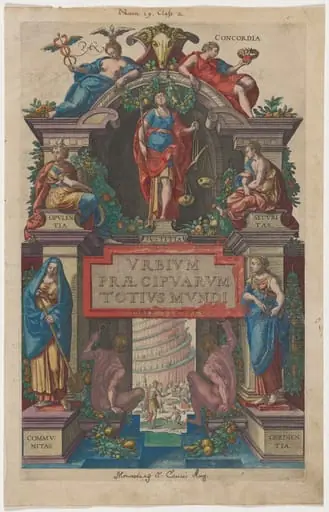 Title Page to Urbium Praecipuarum Totius Mundi
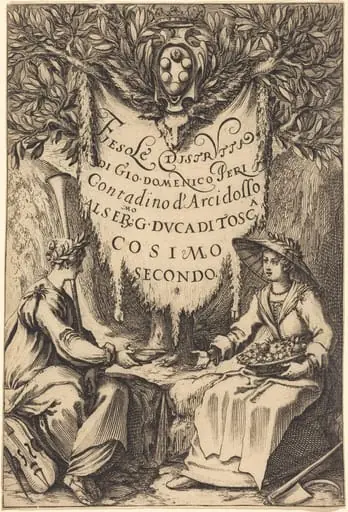 La belle jardinière
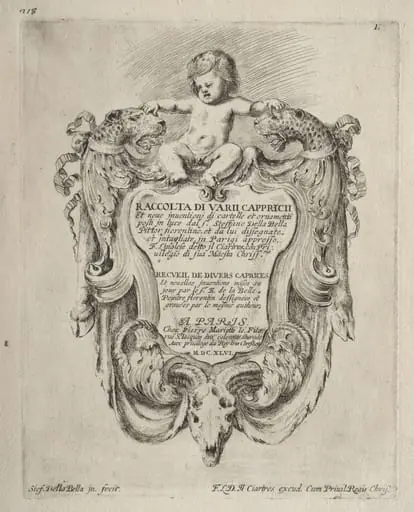 Collection of Various Caprices and New Designs of Cartouches and Ornaments
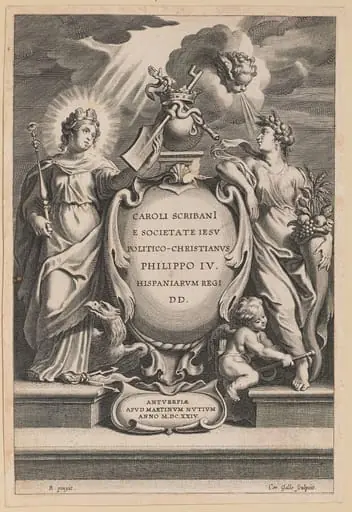 Title Page for Carolus Scribani, Politico-Christianus
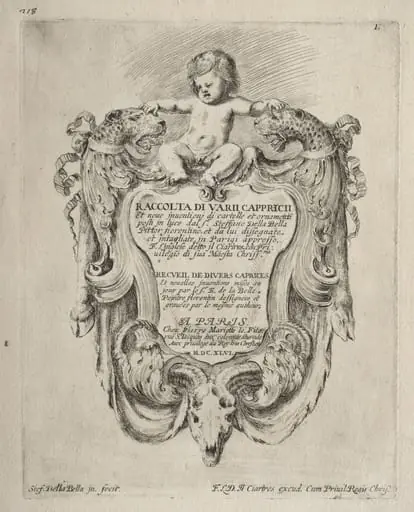 Collection of Various Caprices and New Designs of Cartouches and Ornaments: No 1, Title Page
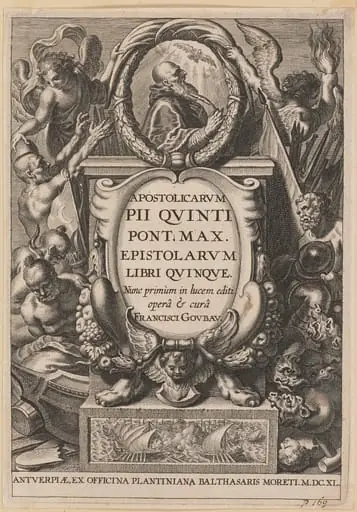 Title Page for Apostolicarvm PII Qvinti Pont. Max...