Artwork
The Prima Macchina for the Chinea of 1772: A Building Dedicated to Chinese Philosophy
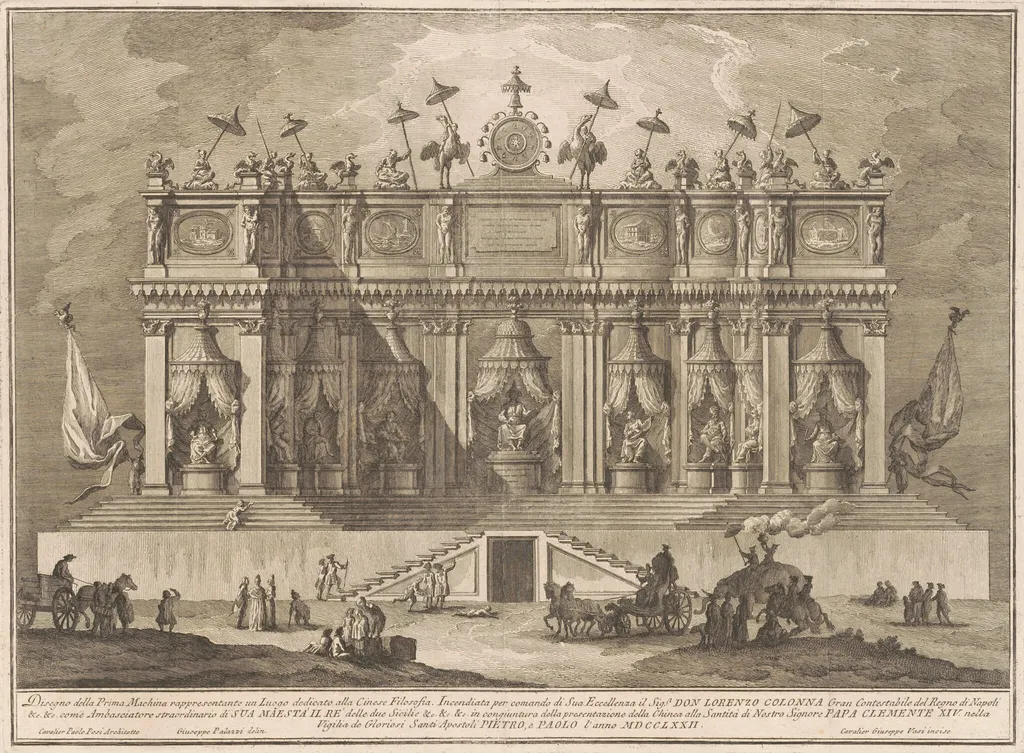
The Prima Macchina for the Chinea of 1772: A Building Dedicated to Chinese Philosophy is an ink print by the Romanticist artist Giuseppe Vasi. It dates from 1772 and is held in the collection of the National Gallery of Art.
About this work
Flags and banners hang everywhere, and people below carry a large wooden structure on their shoulders.
This print shows a grand, imaginary building with three tall columns and statues on top. The middle column has a clock, and the sides have small scenes inside windows. Flags and banners hang everywhere, and people below carry a large wooden structure on their shoulders.
The text at the bottom calls it a "machine" for Chinese philosophy, built for a special event in 1772. The artist used lines to create shadows and details, making it look like a real place.
Next, look up etching to see how artists like this made prints with acid and needles.
Overview
Giuseppe Vasi’s 1772 etching, titled *The Prima Macchina for the Chinea of 1772: A Building Dedicated to Chinese Philosophy*, depicts an imagined monumental structure. The composition centers on a three‑columned façade crowned with statues, a central clock, and decorative banners. Below, figures bear a large wooden framework, suggesting a ceremonial procession linked to the Chinea festivities of that year.
Subject & Meaning
The print presents a fanciful edifice described as a “machine” for Chinese philosophy, a reference to the exotic themes popular in 18th‑century European court spectacles. The inclusion of clocks, statues, and allegorical windows hints at an intellectual or philosophical purpose, while the surrounding flags and the laboring crowd evoke the public pageantry surrounding the Chinea, a diplomatic tribute to the Pope.
Technique & Style
Vasi employed the traditional etching process, incising lines into a copper plate with a needle before immersing it in acid to bite the design. He rendered depth through cross‑hatching and varied line weight, creating shadows that give the imagined architecture a three‑dimensional presence. The crisp detailing of the statues and banners demonstrates his mastery of line work typical of late‑Baroque printmaking.
History & Provenance
Created for the 1772 Chinea celebration—a yearly tribute from the Kingdom of Naples to the Papacy—the print was likely distributed as a commemorative image of the event’s theatrical set‑piece. Surviving copies are held in several European print collections, reflecting the work’s role as both a visual record of the ceremony and a product of Vasi’s prolific print workshop.
Context
The Chinea, a grand equestrian procession, was a focal point of Roman public life in the 1700s, blending political diplomacy with elaborate spectacle. Vasi’s depiction aligns with contemporary interests in Orientalism and the Enlightenment’s fascination with foreign philosophies, situating the imagined building within a broader cultural dialogue about knowledge, power, and visual extravagance.
Artist & collection

 The Seconda Macchina for the Chinea of 1766: A Theater for Athletic Games
 The Prima Macchina for the Chinea of 1765: The Garden of the Hesperides
 The Prima Macchina for the Chinea of 1769: A "Deliziosa"
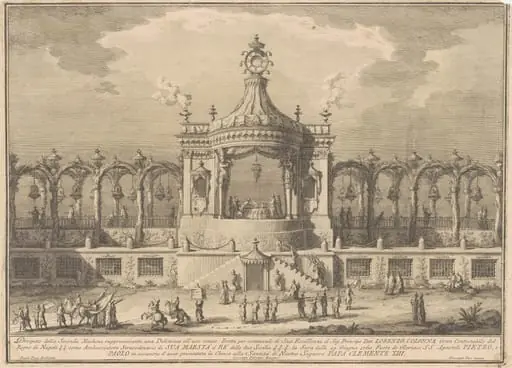 The Seconda Macchina for the Chinea of 1760: A Chinoiserie Pavilion
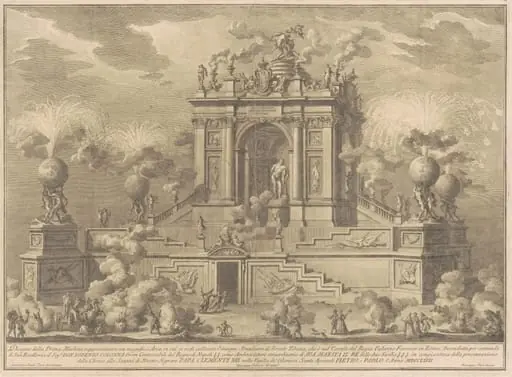 The Prima Macchina for the Chinea of 1767: A Triumphal Arch with the Farnese Hercules
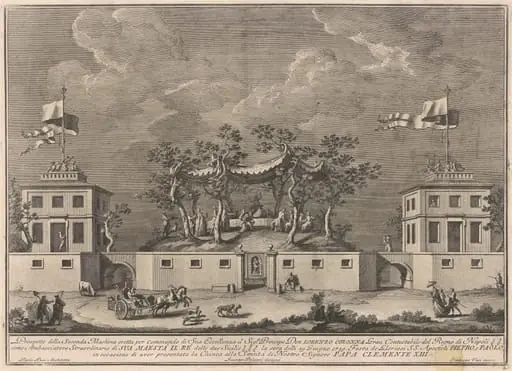 The Seconda Macchina for the Chinea of 1759: A "Deliziosa" with a Bacchanal
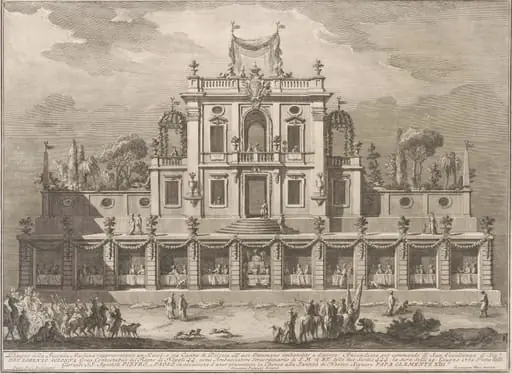 The Seconda Macchina for the Chinea of 1762: A Kiosk, or Pleasure-House in Ottoman Style
 The Seconda Macchina for the Chinea of 1763: The Grape Harvest
 The Seconda Macchina for the Chinea of 1765: A Decorated Building with Cockaigne Poles
 The Prima Macchina for the Chinea of 1764: A Capitol Building
 The Prima Macchina for the Chinea of 1771: The Temple of Asclepius
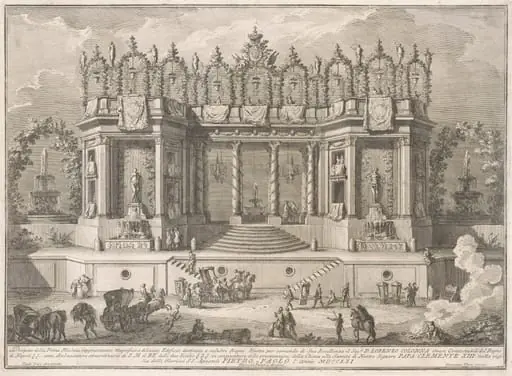 The Prima Macchina for the Chinea of 1761: The Salubrious Baths
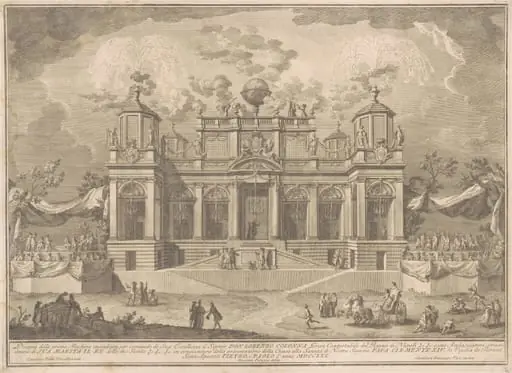 The Prima Macchina for the Chinea of 1770: An Roman Building for Commerce
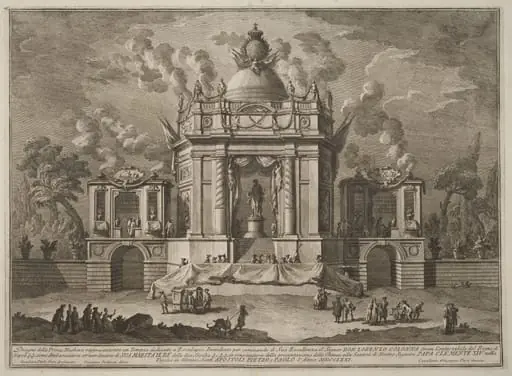 The Prima Macchina for the Chinea of 1771: The Temple of Asclepius
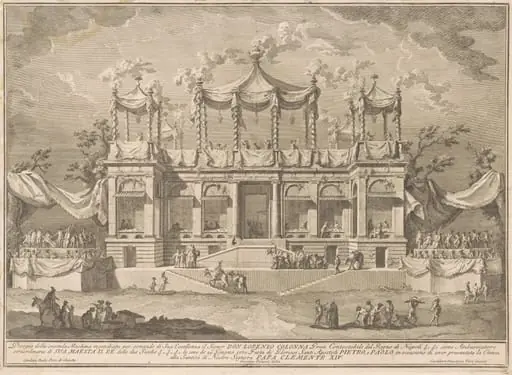 The Seconda Macchina for the Chinea of 1770: The Fish Market Portico
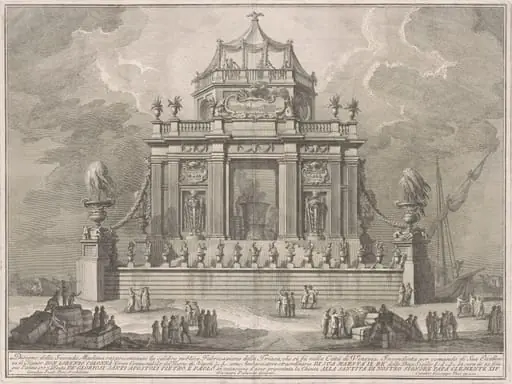 The Seconda Macchina for the Chinea of 1773: The Preparation of Theriac in Venice
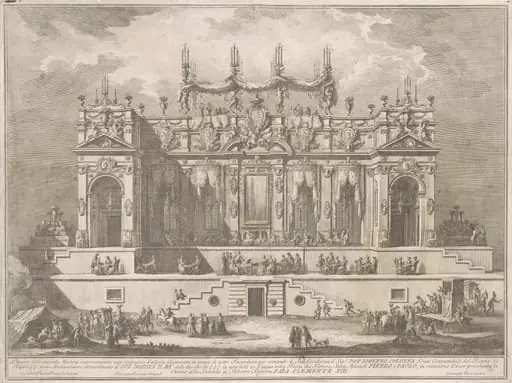 The Seconda Macchina for the Chinea of 1764: A Magnificent Gallery Illuminated at Night
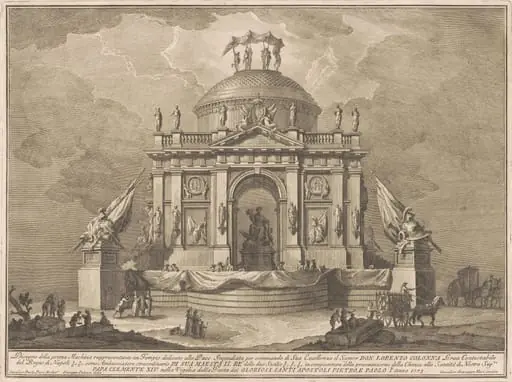 The Prima Macchina for the Chinea of 1773: The Temple of Peace