Artwork
The Prima Macchina for the Chinea of 1761: The Salubrious Baths
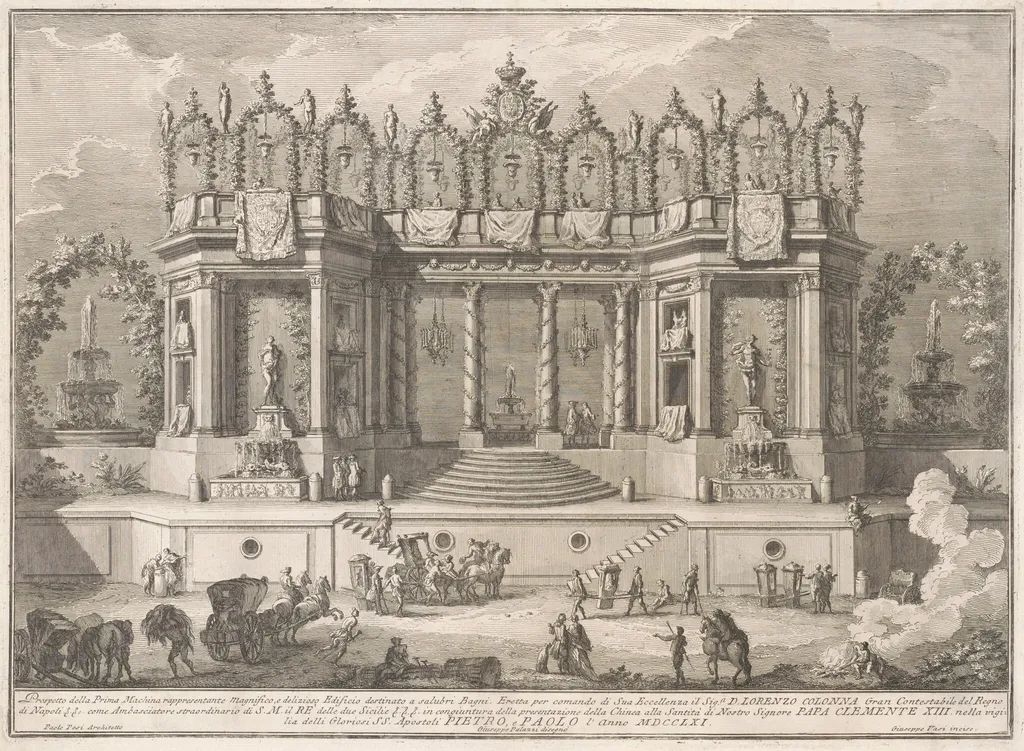
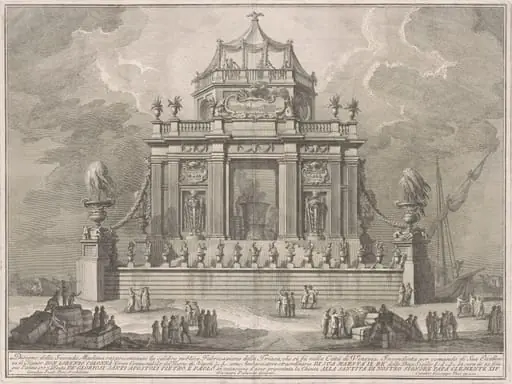
The Prima Macchina for the Chinea of 1761: The Salubrious Baths is an ink print by the Romanticist artist Giuseppe Vasi. It dates from 1761 and is held in the collection of the National Gallery of Art.
About this work
The room looks like a palace or temple, but it’s also a stage for a temporary performance.
This print shows a grand, empty room with tall columns and a curved ceiling. Statues stand on pedestals, and a fountain sits in the center. Below, a busy street scene unfolds with people, horses, and carts moving around.
The text at the bottom explains this was built for a special event in 1761. The room looks like a palace or temple, but it’s also a stage for a temporary performance.
Want to know more about how this image was made? Look into etching.
Overview
Giuseppe Vasi’s 1761 etching, titled *The Prima Macchina for the Chinea of 1761: The Salubrious Baths*, depicts an expansive, columned interior capped by a curved vault. At its centre a fountain rises amid pedestaled statues, while a bustling street scene unfolds beneath, populated by pedestrians, horses and carts.
Subject & Meaning
The composition juxtaposes a monumental, temple‑like hall—suggestive of a palace or ceremonial space—with the ordinary urban activity below. The print records a temporary architectural setting erected for the 1761 Chinea festivities, a public celebration that combined spectacle with civic display.
Technique & Style
Executed in etching, Vasi employed fine line work to render the architectural perspective and the animated street tableau. The contrast between the crisp, orderly interior and the lively, sketch‑like figures below highlights the artist’s skill in balancing architectural precision with narrative detail.
History & Provenance
Created specifically for the 1761 Chinea event, the print served as a visual record of the temporary structure commissioned for the occasion. It was likely distributed among participants and patrons of the celebration, preserving the fleeting architecture for posterity.
Context
The Chinea was an annual diplomatic and ceremonial procession linking the Papal States and the Kingdom of Naples. Vasi’s image situates the temporary hall within the broader urban fabric of Rome, illustrating how public festivities transformed ordinary streets into stages for grandiose displays.
Legacy
As a documentary work, the etching offers scholars insight into 18th‑century Roman urban planning, festive architecture, and the role of print media in disseminating images of public events. Vasi’s detailed rendering continues to inform studies of temporary Baroque scenography.
Artist & collection

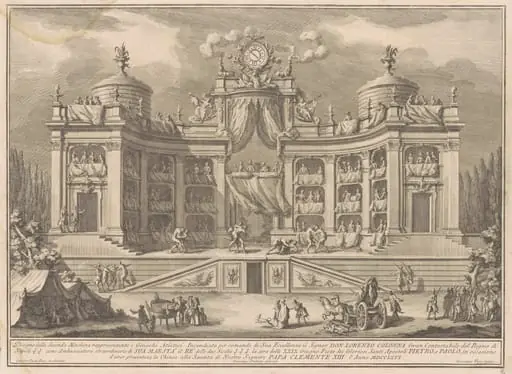 The Seconda Macchina for the Chinea of 1766: A Theater for Athletic Games
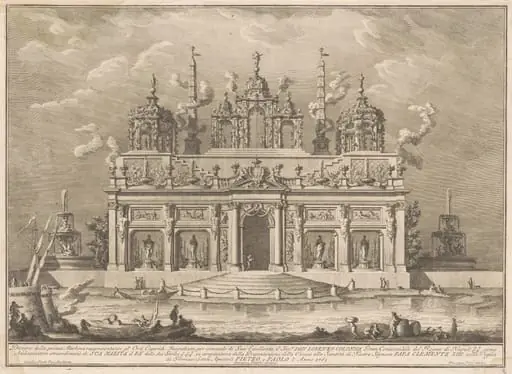 The Prima Macchina for the Chinea of 1765: The Garden of the Hesperides
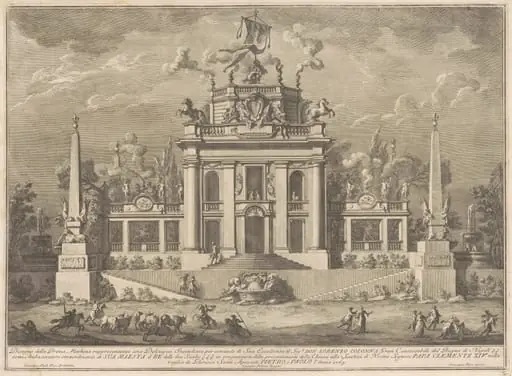 The Prima Macchina for the Chinea of 1769: A "Deliziosa"
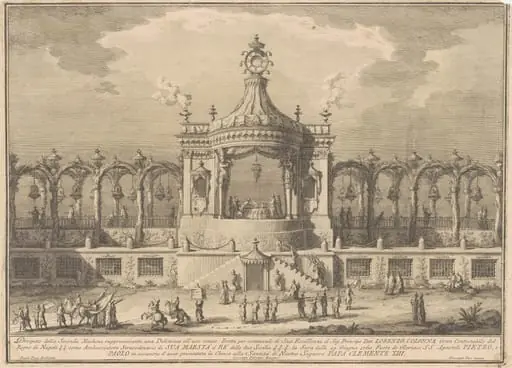 The Seconda Macchina for the Chinea of 1760: A Chinoiserie Pavilion
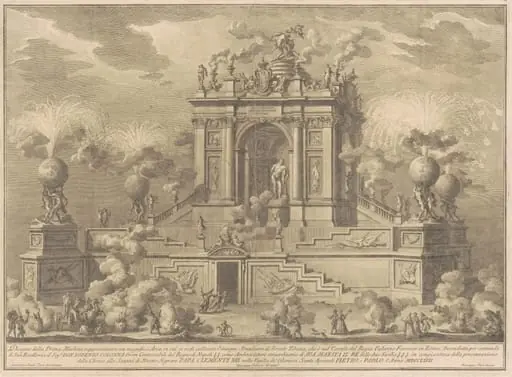 The Prima Macchina for the Chinea of 1767: A Triumphal Arch with the Farnese Hercules
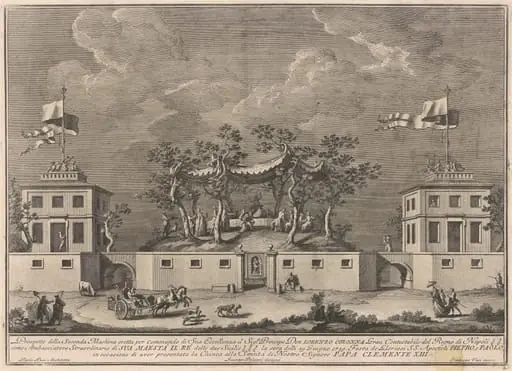 The Seconda Macchina for the Chinea of 1759: A "Deliziosa" with a Bacchanal
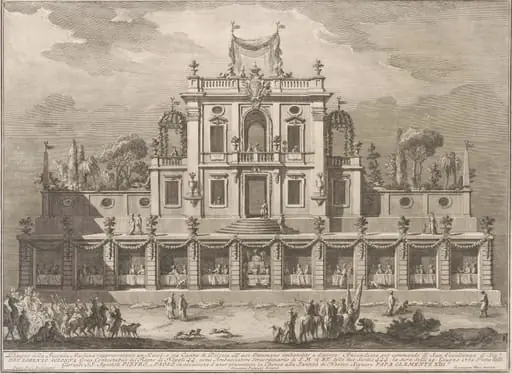 The Seconda Macchina for the Chinea of 1762: A Kiosk, or Pleasure-House in Ottoman Style
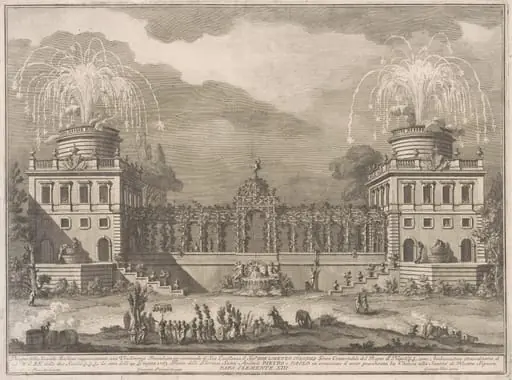 The Seconda Macchina for the Chinea of 1763: The Grape Harvest
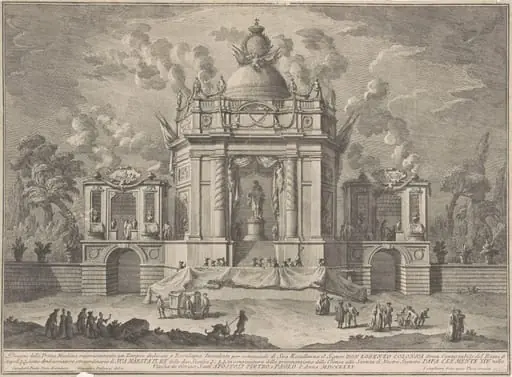 The Prima Macchina for the Chinea of 1771: The Temple of Asclepius
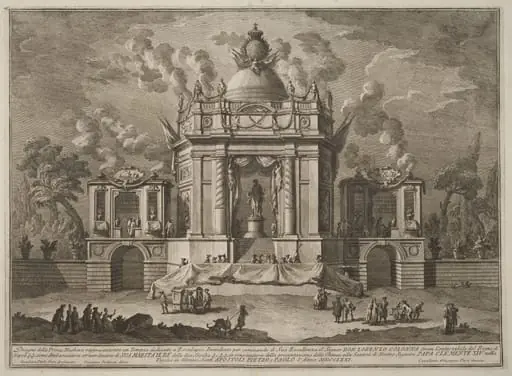 The Prima Macchina for the Chinea of 1771: The Temple of Asclepius
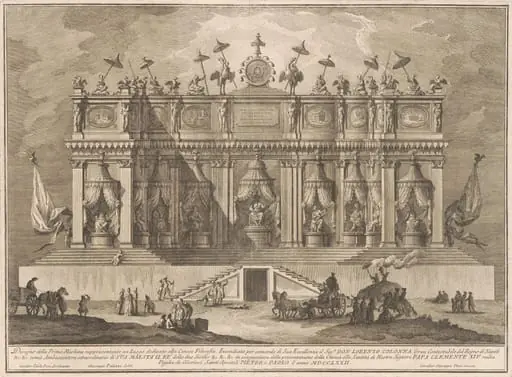 The Prima Macchina for the Chinea of 1772: A Building Dedicated to Chinese Philosophy
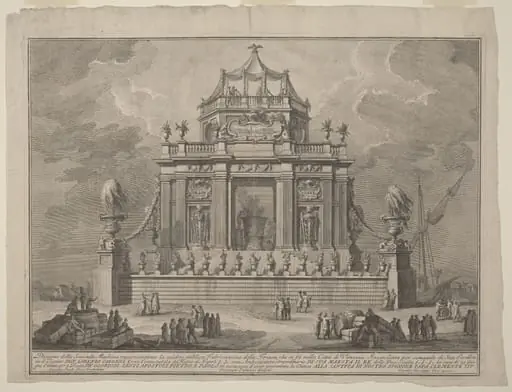 The Seconda Macchina for the Chinea of 1773: The Preparation of Theriac in Venice
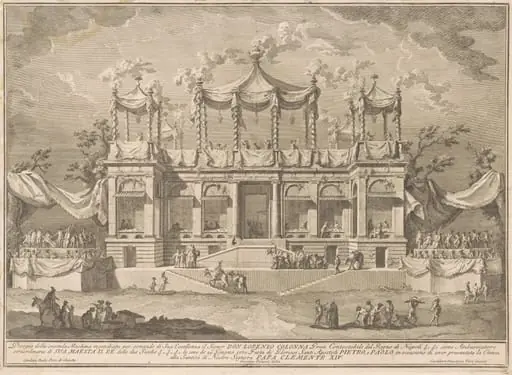 The Seconda Macchina for the Chinea of 1770: The Fish Market Portico
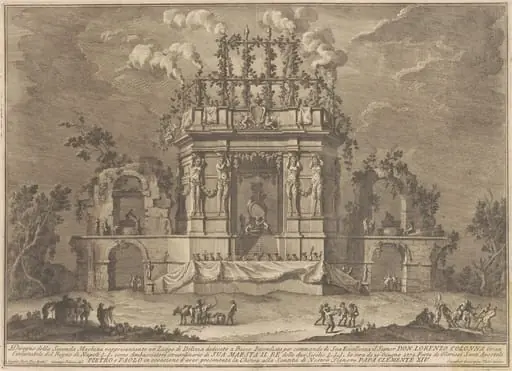 The Seconda Macchina for the Chinea of 1771: A Pleasure Palace Dedicated to Bacchus
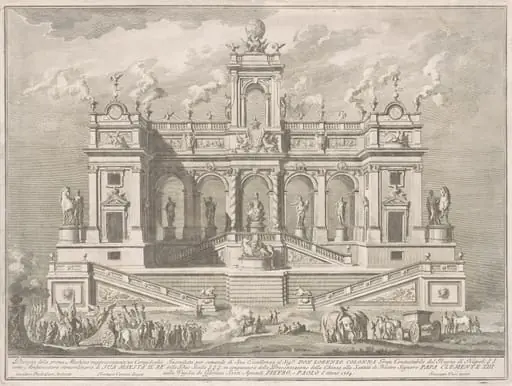 The Prima Macchina for the Chinea of 1764: A Capitol Building
 The Seconda Macchina for the Chinea of 1773: The Preparation of Theriac in Venice