Artwork
The Apocalypse: Duvet Studying the Apocalypse
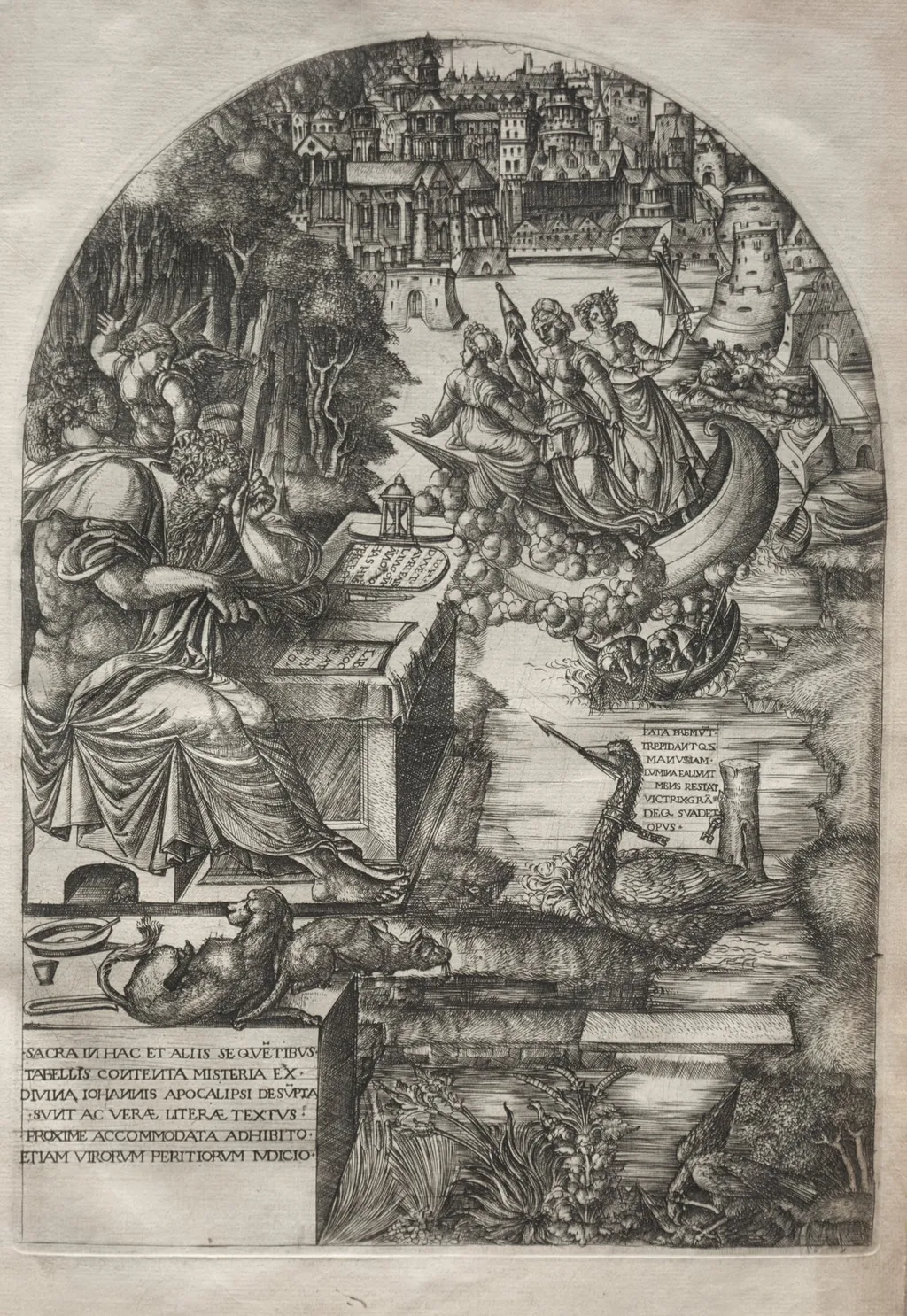
The Apocalypse: Duvet Studying the Apocalypse is a print by the Renaissance artist Jean Duvet. It dates from 1555 and is held in the collection of the Cleveland Museum of Art.
About this work
Overview
Duvet, working in the provincial town of Langres, produced these images entirely by hand, carving intricate details into metal plates.
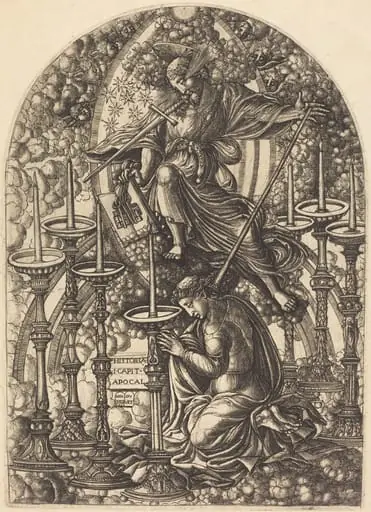
This engraving belongs to a series of twenty-three prints by Jean Duvet illustrating the Book of Revelation. Created over several years, the complete set is among only seven known surviving volumes. Duvet, working in the provincial town of Langres, produced these images entirely by hand, carving intricate details into metal plates. The series stands as his most ambitious and enduring contribution to French printmaking.
Subject & Meaning
The scene depicts the Four Horsemen of the Apocalypse, as described in Revelation 6. They surge through a turbulent sky amid falling stars and flames, symbolizing conquest, war, famine, and death. Below, a panicked crowd reacts to the divine judgment unfolding above. Duvet’s interpretation emphasizes chaos and divine retribution, aligning with the apocalyptic vision of the biblical text while amplifying its emotional intensity.
Technique & Style
Duvet employed fine-line engraving to achieve dense, textured surfaces. His figures are robustly modeled, showing awareness of Italian Renaissance anatomy, yet his compositions reject spatial logic. Instead, he favors ornamental patterning, overlapping forms, and swirling movement. The result is a highly personal style—elaborate, compressed, and emotionally charged—distinct from the clarity of his Italian influences.
History & Provenance
Duvet completed the series between 1550 and 1560, likely for private patrons. The museum’s volume is one of seven complete sets known to exist, underscoring its rarity. Though he never traveled to Italy, Duvet absorbed Italian prints through circulating engravings, particularly those by Marcantonio Raimondi. His work gained recognition in France, establishing him as a foundational figure in the country’s print tradition.
Context
In mid-16th-century France, printmaking remained secondary to painting and sculpture. Duvet’s series emerged during a period of religious upheaval, when apocalyptic themes resonated widely. His isolation in Langres did not prevent him from engaging with broader European visual culture, yet his work retained a uniquely French intensity, blending northern detail with Italianate form in an idiosyncratic synthesis.
Legacy
Duvet’s Apocalypse series elevated printmaking in France to new levels of complexity and ambition. Though overshadowed in later centuries, his work influenced subsequent generations of French engravers. His disregard for conventional perspective and embrace of symbolic density prefigured Mannerist tendencies. His legacy lies in demonstrating that print could convey profound theological narratives with unmatched visual force.
Artist & collection

Artist
Jean Duvet (1485 – after 1562) was a French Renaissance goldsmith and engraver, now best known for his engravings.

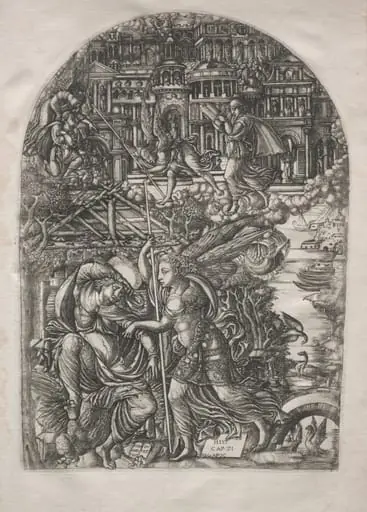 The Apocalypse: The Angel Shows St. John the New Jerusalem
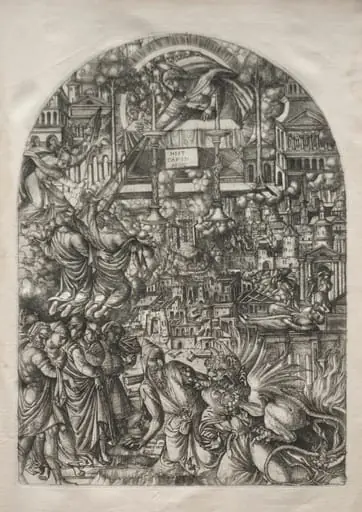 The Apocalypse: The Measurement of the Temple
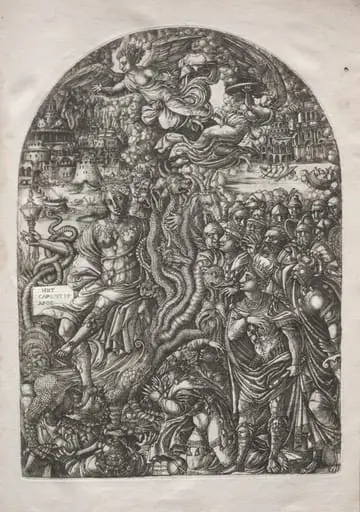 The Apocalypse: Babylon the Harlot, Seated on the Seven-headed Beast
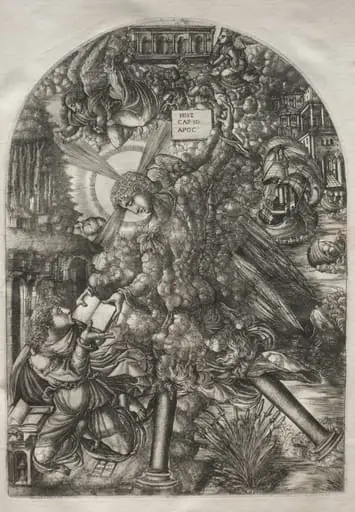 The Apocalypse: The Angel Gives St. John the Book to Eat
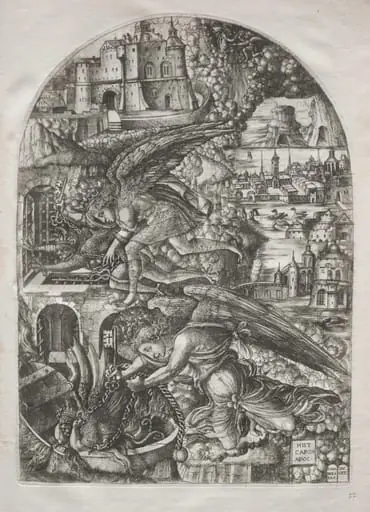 The Apocalypse: Satan Bound for a Thousand Years
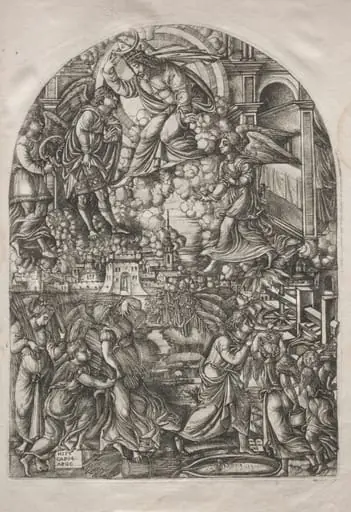 The Apocalypse: The Winepress of the Wrath of God
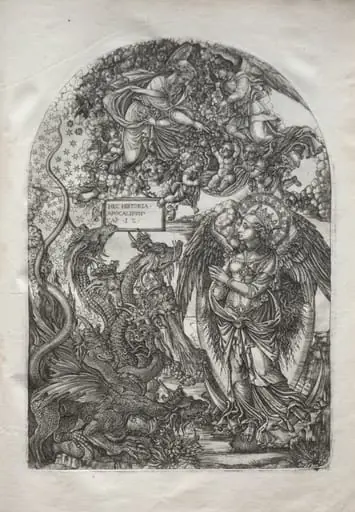 The Apocalypse: St. Michael and the Dragon
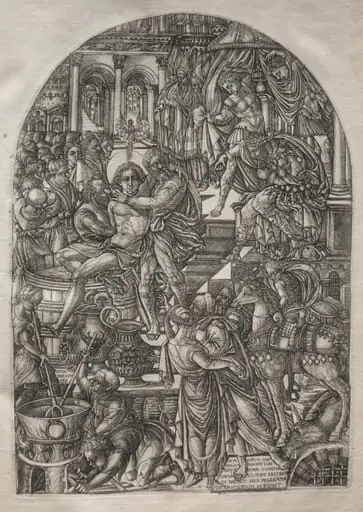 The Apocalypse: The Martyrdom of St. John the Evangelist
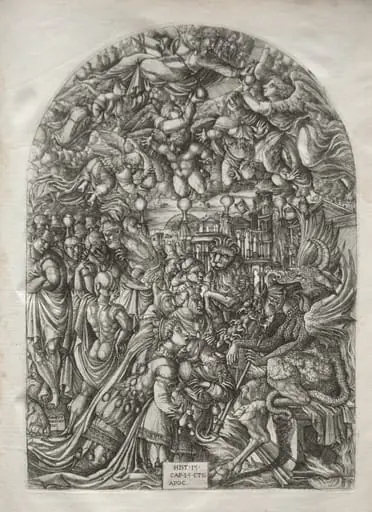 The Apocalypse: The Woman Clothed with the Sun
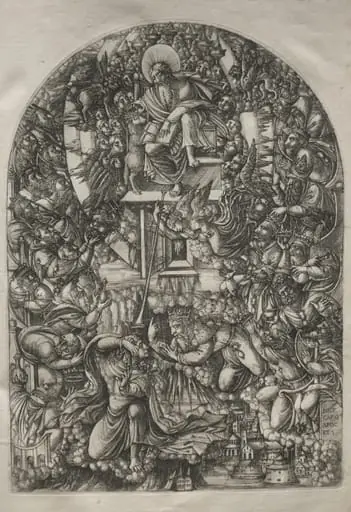 The Apocalypse: St. John Summoned to Heaven
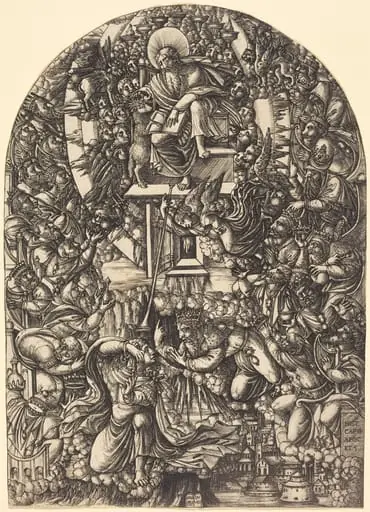
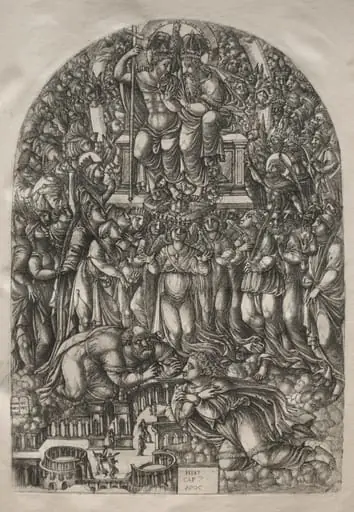 The Apocalypse: An Innumerable Multitude Which Stand before the Throne