Artwork
The Dishonest Steward
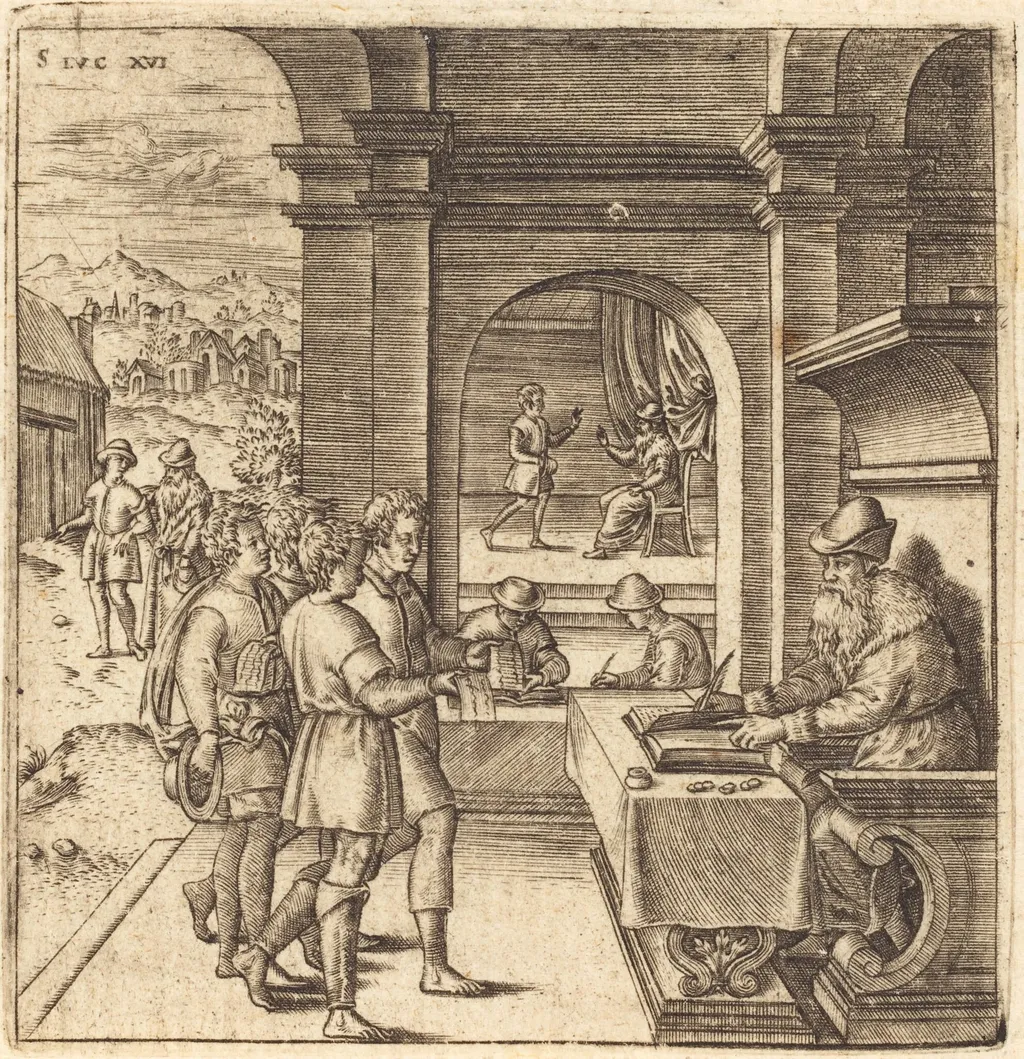
The Dishonest Steward is an ink print by the Renaissance artist Léonard Gaultier. It dates from 1578 and is held in the collection of the National Gallery of Art.
About this work
Overview
His technique aligned with contemporary Northern European printmakers, particularly those associated with the Wierix and van de Passe workshops.
Created around 1578, this engraving by Léonard Gaultier is one of many prints produced in Paris during the late 16th century. Gaultier, born in Mainz and active until 1641, worked exclusively with the graver to achieve fine linear detail. His technique aligned with contemporary Northern European printmakers, particularly those associated with the Wierix and van de Passe workshops. The image depicts a narrative scene drawn from biblical parable, rendered with meticulous precision and no color.
Subject & Meaning
The scene illustrates the Parable of the Unjust Steward from the Gospel of Luke, in which a manager, accused of misusing his master’s resources, manipulates debts to secure future favor. On the left, onlookers observe a figure clutching a bag, suggesting deceit. On the right, two men examine financial records amid scattered coins and instruments, implying transactional corruption. The background town hints at wider societal consequences, reinforcing the moral tension between accountability and cunning.
Technique & Style
Gaultier employed the burin to carve fine, controlled lines into copper, producing sharp contrasts and intricate textures. The composition is densely packed with figures and architectural detail, each element rendered with uniform clarity. No hatching or tone is used to suggest depth; instead, spatial relationships are implied through overlapping forms and perspective lines. The absence of color and reliance on line alone reflect the formal discipline of French engraving at the time.
History & Provenance
Gaultier produced this print during his early career in Paris, where he established himself as a reproductive and original printmaker. While no early ownership records are documented for this specific work, it aligns with his known output of moralizing scenes and portraits. His prints circulated widely in France and the Low Countries, often sold as individual sheets or collected in albums. The work survives in several institutional collections, attesting to its continued circulation in the 17th century.
Context
In late 16th-century France, religious imagery remained central to print culture, even as secular themes gained ground. Biblical parables like this one were popular subjects for moral instruction, especially among literate urban audiences. Gaultier’s style reflects the influence of Flemish engravers, whose detailed compositions were widely admired. His work emerged amid a flourishing print market that valued clarity, narrative legibility, and technical precision over expressive flair.
Legacy
Gaultier’s engravings, including this one, contributed to the dissemination of visual moral narratives across Europe. Though not widely celebrated in his lifetime, his technical consistency and adherence to traditional methods preserved a mode of printmaking that preceded the rise of etching and more painterly styles. His works remain valuable for understanding the visual culture of Protestant and Catholic Europe, where images served as tools of instruction and social commentary.
Artist & collection
Artist
Léonard Gaultier, or, as he sometimes signed himself, Galter, a French engraver, was born at Mainz about 1561, and died in Paris in 1641.


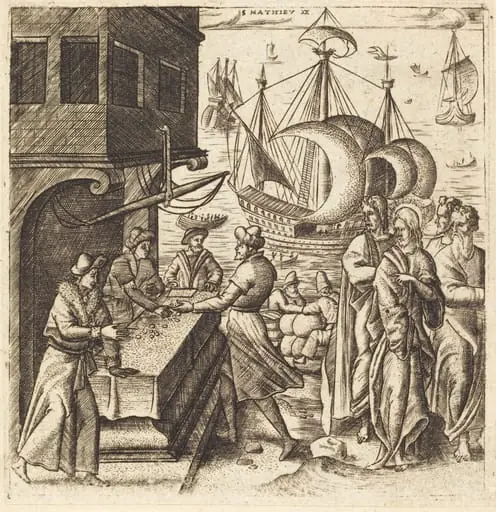 The Calling of Matthew
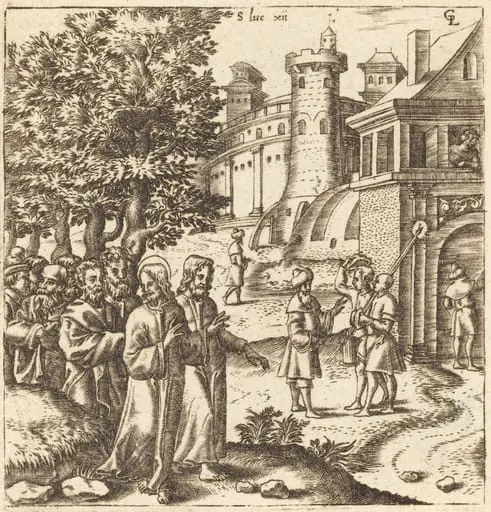
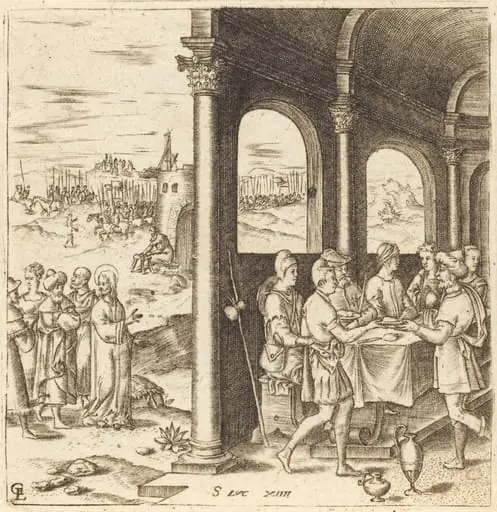 Christ Journeying to the House of a Pharisee
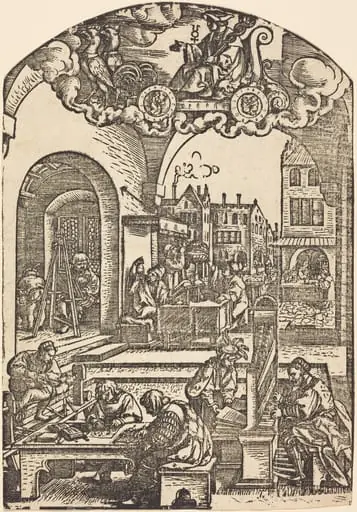 Mercury
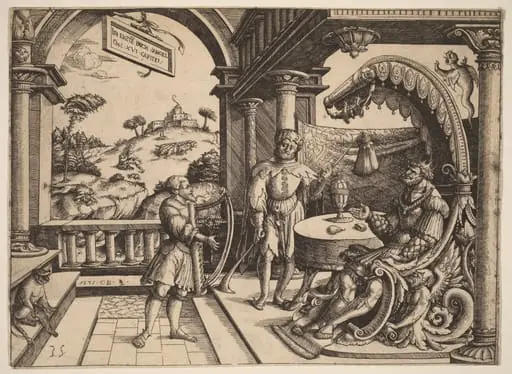 David Playing the Harp before Saul
 Christ before Pilate
!["Do Not Sit on the Grain Measure" [fol. 12 recto], by French early 16th Century](https://artifactworldgallery.com/img/french-early-16th-century--do-not-sit-on-the-grain-measure-fol-12-recto--f8331e34873da0a6-w320.webp) "Do Not Sit on the Grain Measure" [fol. 12 recto]
"Do Not Sit on the Grain Measure" [fol. 12 recto] The Raising of Lazarus
 Teachings on the Coming of the Judgment
 The Bad Advice of One Little Man to Another
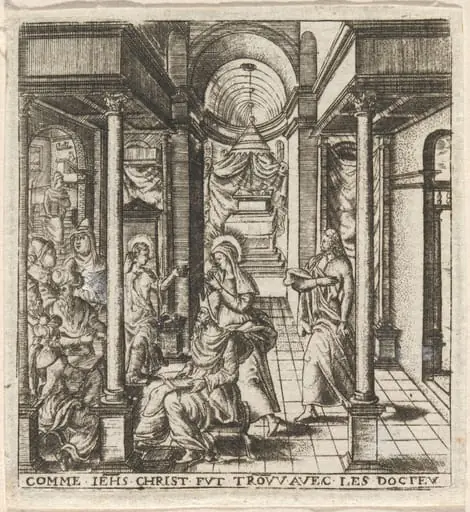
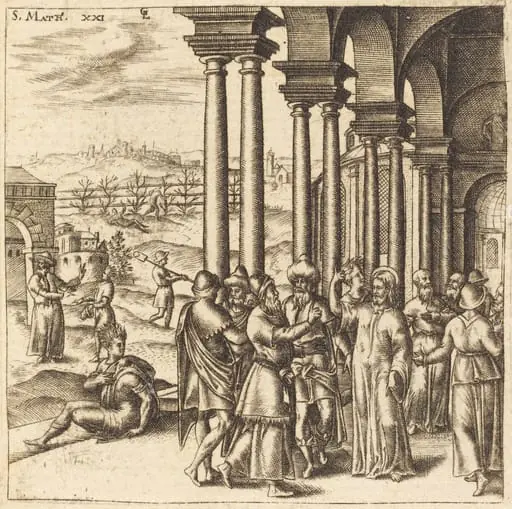 Christ in the Temple
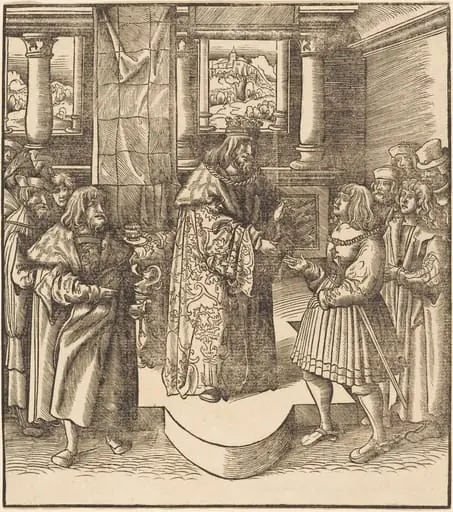 The Old White King Sending His Messengers to Portugal