Artwork
The Calling of Matthew
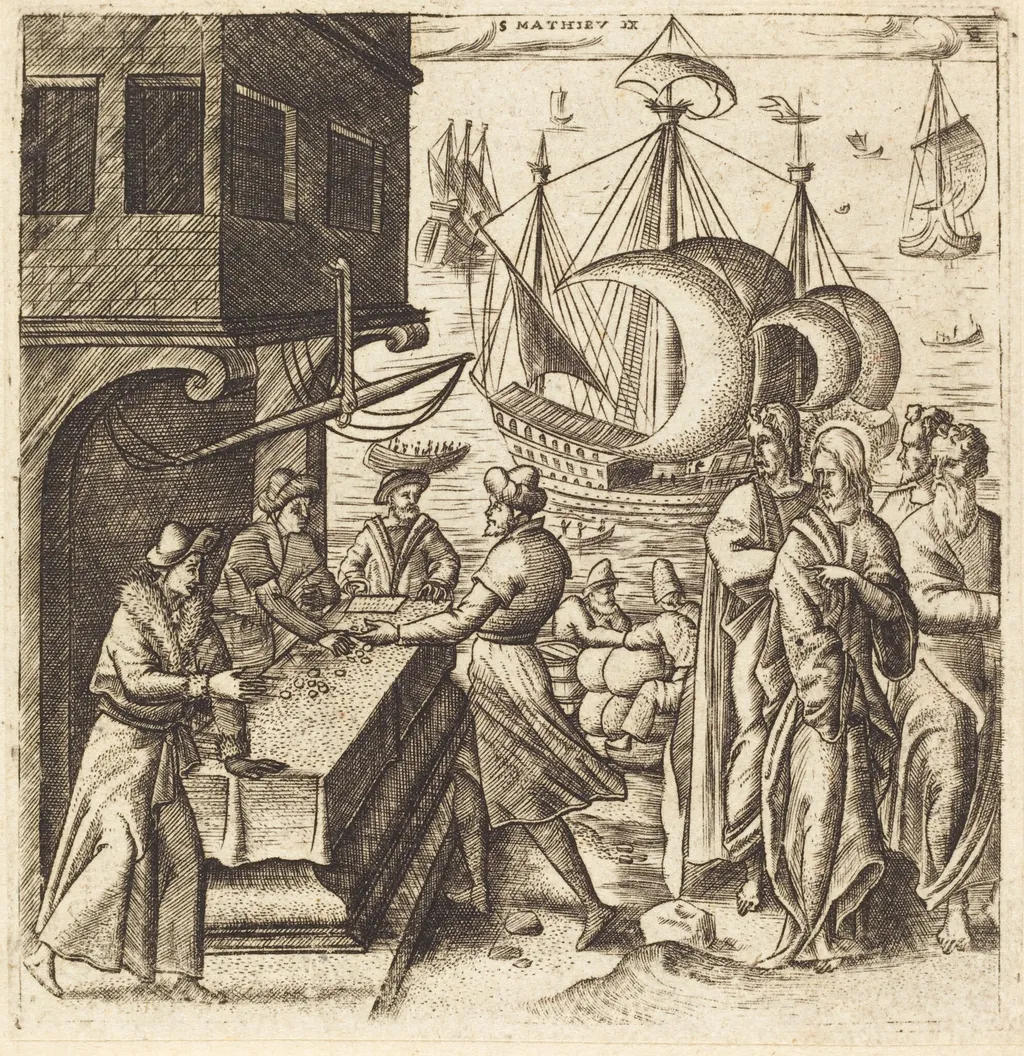
The Calling of Matthew is an ink print by the Renaissance artist Léonard Gaultier. It dates from 1578 and is held in the collection of the National Gallery of Art.
About this work
Overview
The Calling of Matthew is an engraving created by French artist Léonard Gaultier around 1578. This print depicts a pivotal biblical moment within a detailed, everyday setting.
Subject & Meaning
The engraving illustrates the biblical scene of Matthew's calling. The composition juxtaposes the mundane (a figure counting coins indoors) with the monumental (a bustling harbor and prominent tower visible through a window), suggesting a moment of transformative significance.
Technique & Style
Executed entirely with the graver, the work showcases Gaultier's precise, stiff, and formal style, akin to the Wierix and Crispyn van de Passe. Fine lines create depth, shadows, and texture, lending solidity to figures and architecture.
History & Provenance
Léonard Gaultier, born in Mainz circa 1561 and active in Paris until his death in 1641, produced this engraving as part of a diverse oeuvre including portraits and self-designed subjects.
Context
As an engraving, The Calling of Matthew reflects the artistic and technical practices of its time, inviting viewers to appreciate the intersection of religious narrative and daily life in a meticulously rendered environment.
Legacy
While specific legacy details of The Calling of Matthew are not highlighted, the piece contributes to the broader understanding of 16th-century engraving techniques and the interpretation of biblical themes in early modern European art.
Artist & collection
Artist
Léonard Gaultier, or, as he sometimes signed himself, Galter, a French engraver, was born at Mainz about 1561, and died in Paris in 1641.


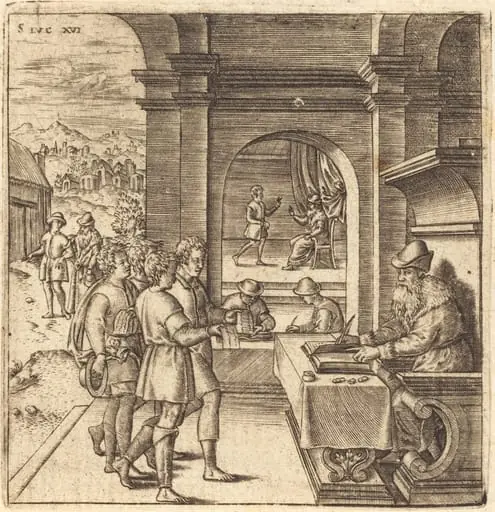 The Dishonest Steward
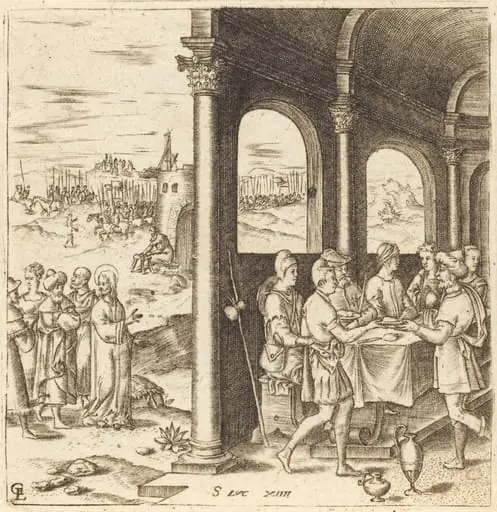 Christ Journeying to the House of a Pharisee
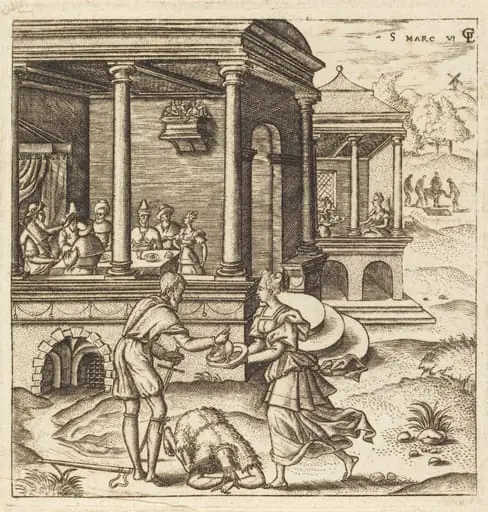 John the Baptist Beheaded
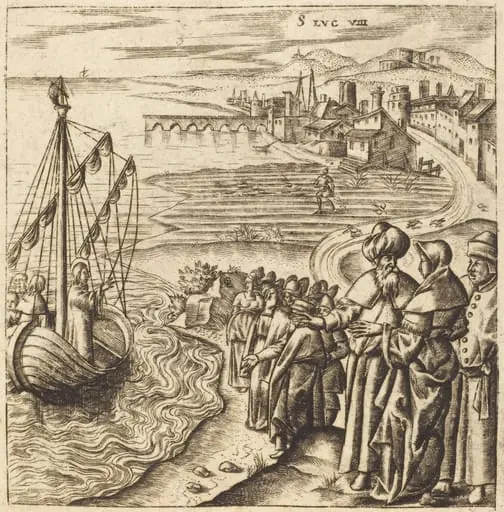 Christ on the Lake
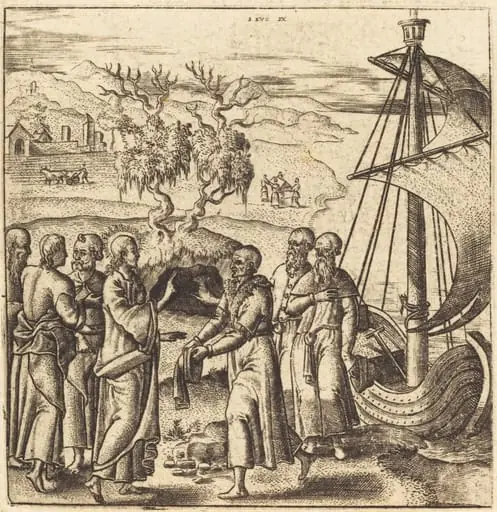 Christ the Teacher
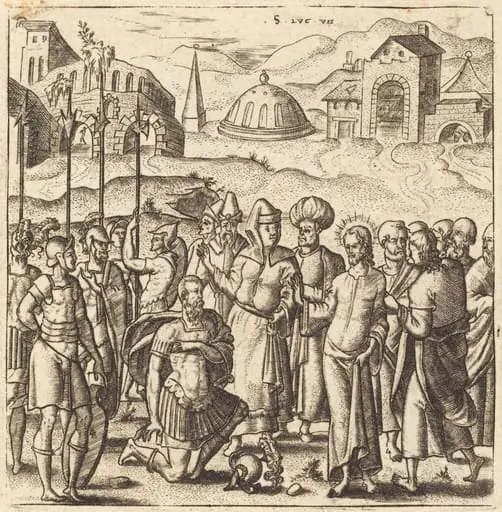 Christ and the Centurion
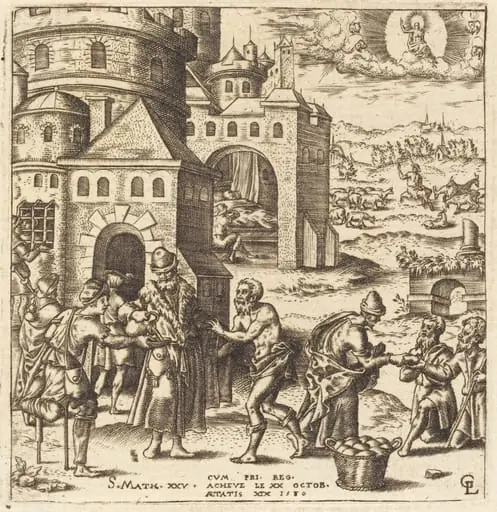 Teachings on the Coming of the Judgment
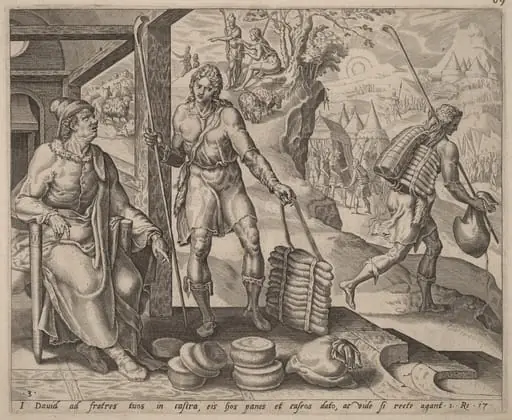 Jesse Sending David to the Camp
 Pharaoh and the Plague of Frogs
 The Raising of Lazarus
 David Playing the Harp before Saul
 Mercury