Artwork
The Good Samaritan
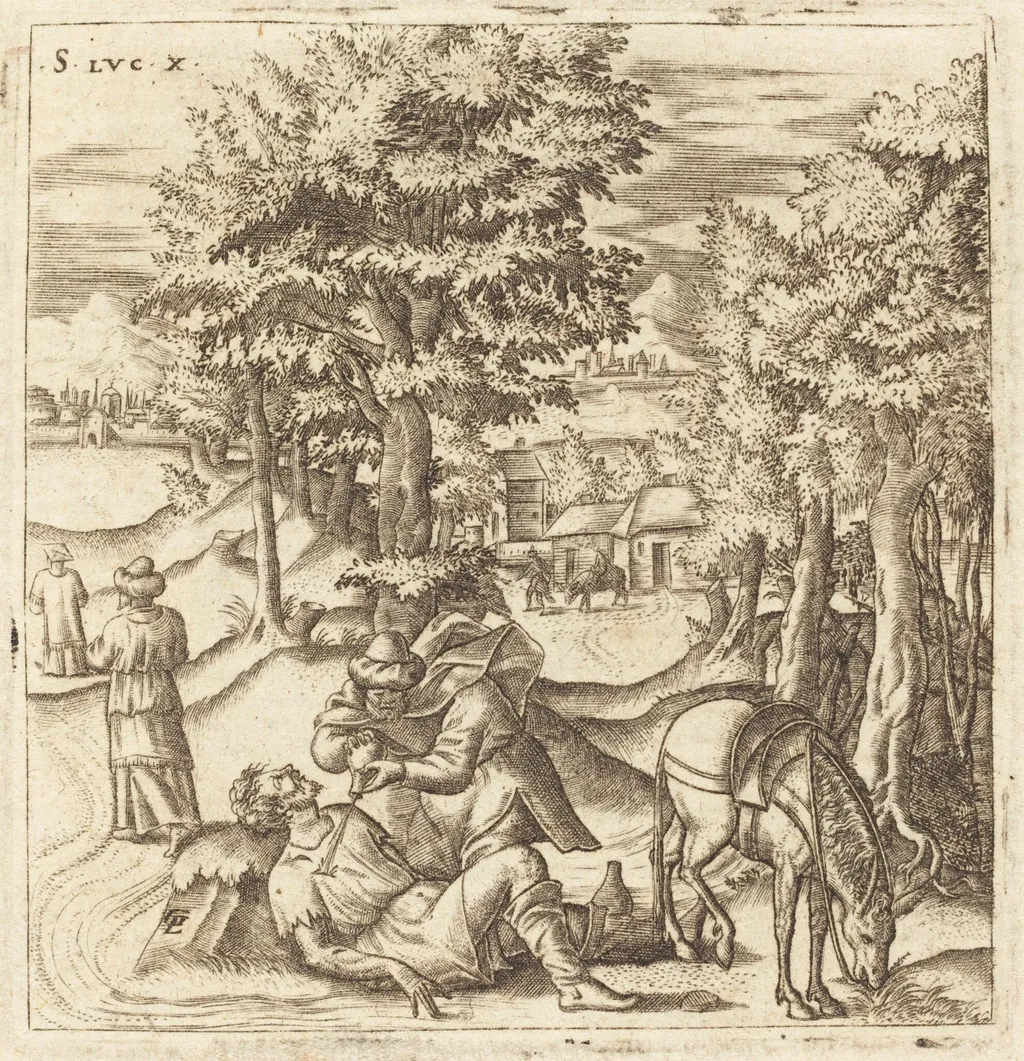
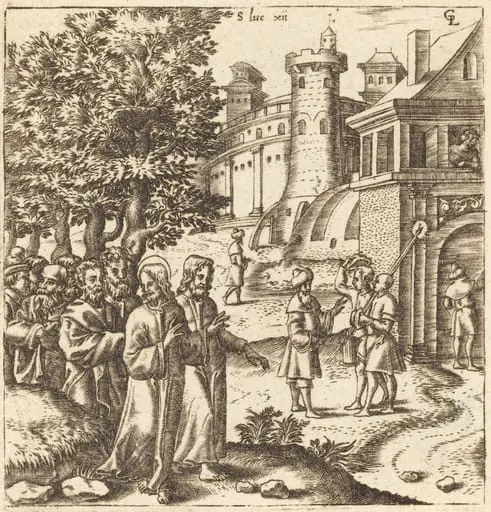
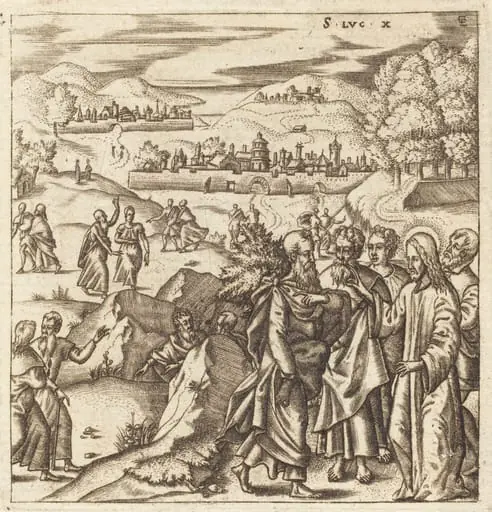
The Good Samaritan is an ink print by the Renaissance artist Léonard Gaultier. It dates from 1578 and is held in the collection of the National Gallery of Art.
About this work
Overview
Leonard Gaultier’s engraving titled *The Good Samaritan* dates from circa 1578.
Leonard Gaultier’s engraving titled *The Good Samaritan* dates from circa 1578. Executed in black‑and‑white line work, the print measures the typical size of late‑sixteenth‑century French intaglio plates and presents a narrative scene derived from the biblical parable. The composition is organized around a wounded traveler on a road, surrounded by figures who either assist, observe, or pass by, set against a distant village landscape.
Subject & Meaning
The image visualizes the New Testament story in which a traveler is left injured on a road, while a Samaritan offers aid. Gaultier includes three secondary figures: a man bent over the victim, another gesturing toward him, and a rider on horseback who appears indifferent. The juxtaposition of compassion and neglect underscores the moral lesson of the parable, inviting viewers to contemplate the virtues of mercy.
Technique & Style
Created entirely with a graver, the engraving displays Gaultier’s characteristic precision. Fine, parallel lines render the texture of clothing folds, the musculature of the horse, and subtle shifts of light across surfaces. The overall effect is a controlled, linear clarity that aligns with the formal French engraving tradition of the period, emphasizing meticulous draftsmanship over expressive brushwork.
History & Provenance
Leonard Gaultier, born around 1561 in Mainz, worked chiefly in Paris until his death in 1641. He produced a substantial body of prints, many after his own designs, and was known for a stiff, exacting approach. *The Good Samaritan* is among his early religious works and reflects the market for devotional images in late‑Renaissance France, though specific ownership records for this plate are scarce.
Context
Gaultier’s print belongs to a broader European trend of narrative engravings that circulated biblical themes for both private devotion and public instruction. His style parallels that of the Wierix brothers and Crispyn van de Passe, whose works also favored tight line work and careful composition. The print thus illustrates the cross‑regional exchange of printmaking techniques and iconographic conventions during the late sixteenth century.
Artist & collection
Artist
Léonard Gaultier, or, as he sometimes signed himself, Galter, a French engraver, was born at Mainz about 1561, and died in Paris in 1641.