Artwork
A View of O'Connell Street, Dublin
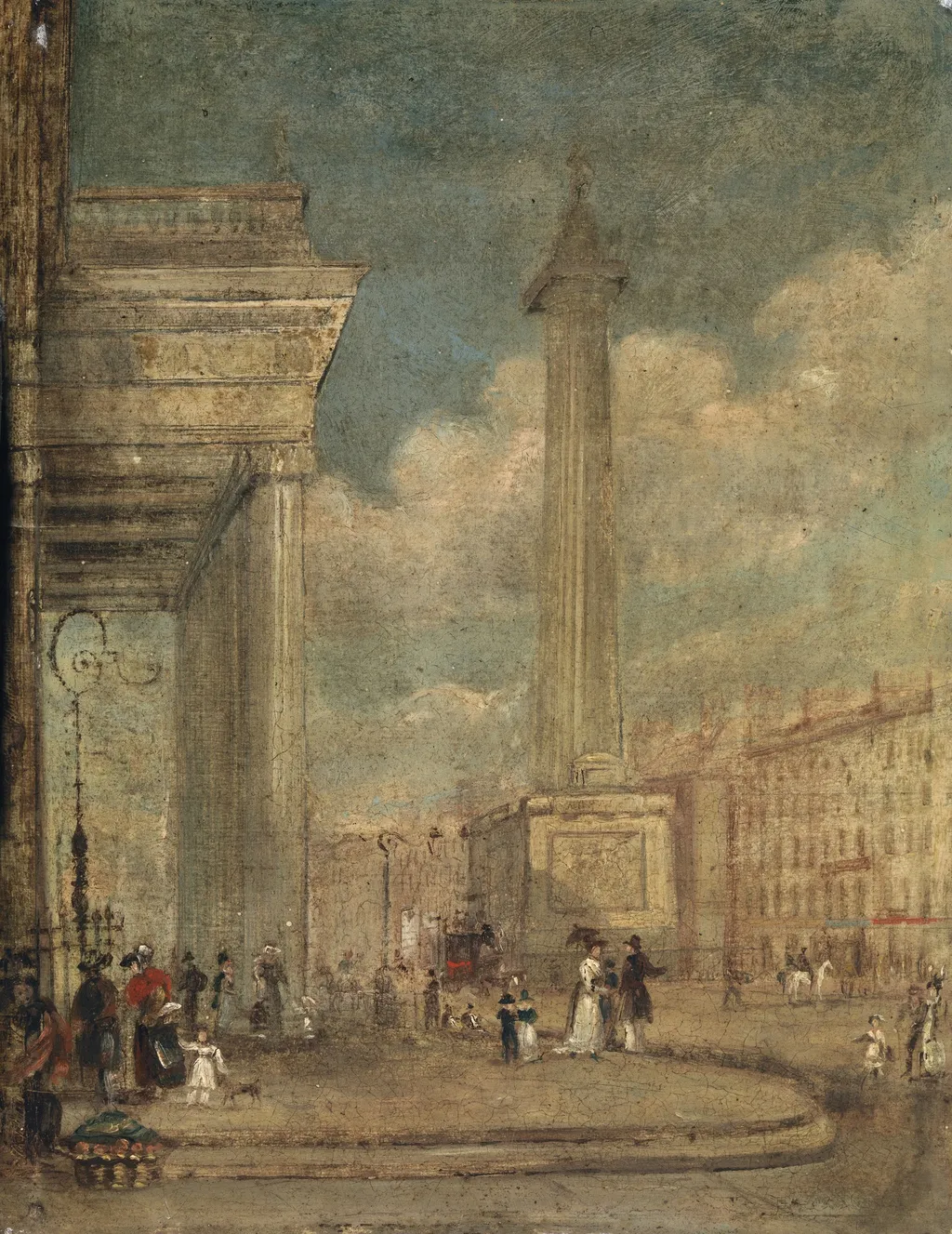
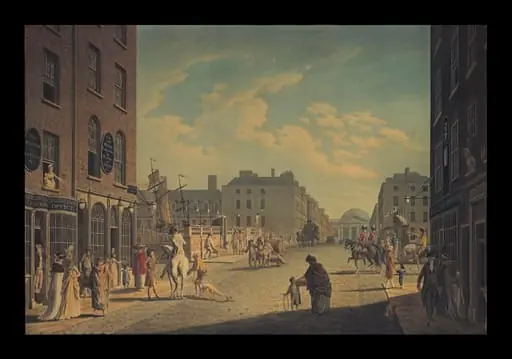
A View of O'Connell Street, Dublin is an unspecified painting by George Petrie. It dates from 1838 and is held in the collection of the National Gallery of Ireland.
About this work
Overview
The National Gallery of Ireland holds the piece, which presents a topographical record of the city’s urban fabric during a period of civic transformation.
Painted around 1838 by George Petrie, this work captures a quiet yet lively stretch of Dublin’s O’Connell Street. The National Gallery of Ireland holds the piece, which presents a topographical record of the city’s urban fabric during a period of civic transformation. Petrie’s focus on architectural detail and pedestrian activity reflects his broader interest in documenting Ireland’s built environment.
Subject & Meaning
The central column, likely the Nelson Pillar, anchors the composition as a symbol of imperial presence amid everyday life. Figures in the foreground—merchants, passersby, and laborers—move with unremarkable purpose, suggesting the routine rhythms of urban existence. The painting does not dramatize events but instead observes the coexistence of public monument and private routine, offering a subdued commentary on civic identity.
Technique & Style
Petrie employs a restrained palette of earth tones and soft grays to unify the scene, avoiding theatrical contrast. Light falls diagonally across the column and facades, defining form through subtle gradations rather than stark shadows. This controlled use of chiaroscuro enhances the architectural solidity of the buildings while maintaining an overall atmosphere of stillness, aligning with topographical traditions of the period.
History & Provenance
Created during Petrie’s active years as an antiquarian and artist, the painting emerged from his systematic documentation of Irish landmarks. It entered the National Gallery of Ireland’s collection in the 19th century, likely through institutional acquisition or donation tied to his scholarly reputation. Its preservation reflects early efforts to archive Ireland’s urban heritage through visual means.
Context
In the 1830s, Dublin was reshaped by new public works and shifting political tides. O’Connell Street, then called Sackville Street, was a key thoroughfare lined with recent civic structures. Petrie’s depiction aligns with a broader movement among Irish artists and scholars to record the nation’s physical landscape amid growing nationalist sentiment, even as British symbols like the column remained prominent.
Legacy
The painting endures as a factual record of Dublin’s urban morphology before major 20th-century changes. While not widely exhibited as a major artistic statement, it holds value for historians and urban researchers. Petrie’s approach—precise, unembellished, and attentive to detail—established a model for topographical painting in Ireland that influenced later documentary efforts.
Artist & collection

Artist
George Petrie was an Irish painter, musician, antiquarian and archaeologist of the Victorian era who was instrumental in building the collections of the Royal Irish Academy and National Museum of Ireland.

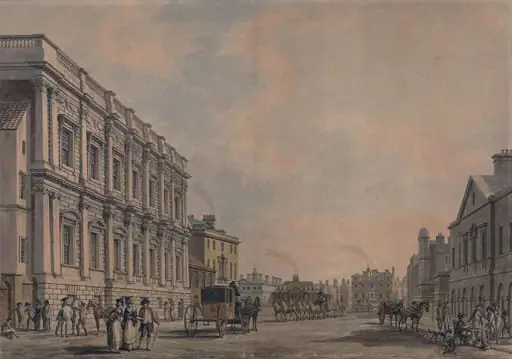 Whitehall, with the Banqueting House
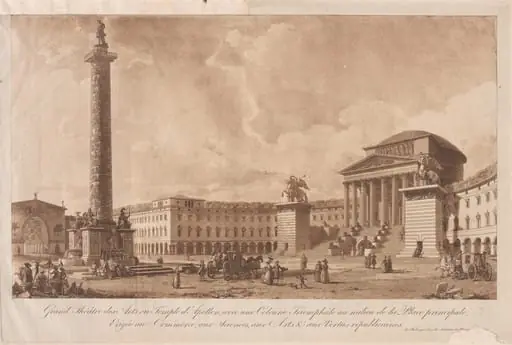 Grand Théâtre des Arts ou Temple d'Apollon, avec une Colonne Triomphâle au milieu de la Place principale, erigée au Commerce, aux Sciences, aux Arts & aux Vertus républicaines (Grand Theater of the Arts or Temple of Apollo, with a Victory Column in the Middle of the Main Square, Erected to Commerce, the Sciences, the Arts, and Republican Virtues)
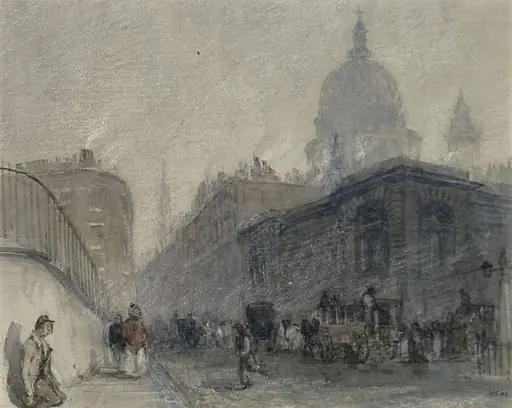 Solitude: View of Newgate Street, looking east, showing the old prison and St. Paul's
 The Strand, with Somerset House and St Mary's Church
 Monte Cavallo, Rome
 Untitled
 Mansion House and the Poultry, looking down Cheapside
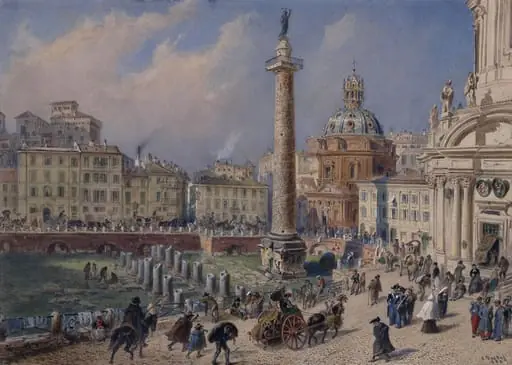 Trajan's Column, Rome
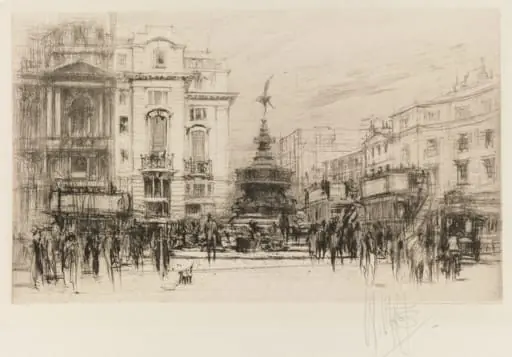 London Set: Piccadilly Circus (with Criterion Theatre)
 Picadilly Circus
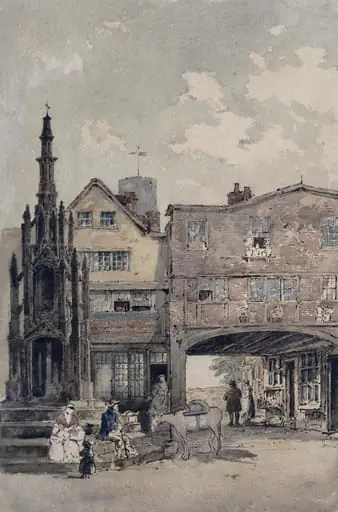 The Butter-Cross, Winchester
 Capel Street, Dublin, with the Royal Exchange in the distance