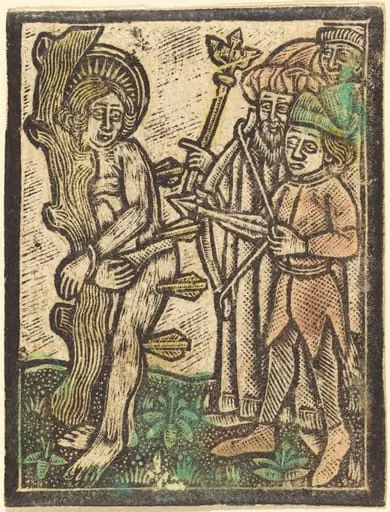
Artwork
Adam and Eve
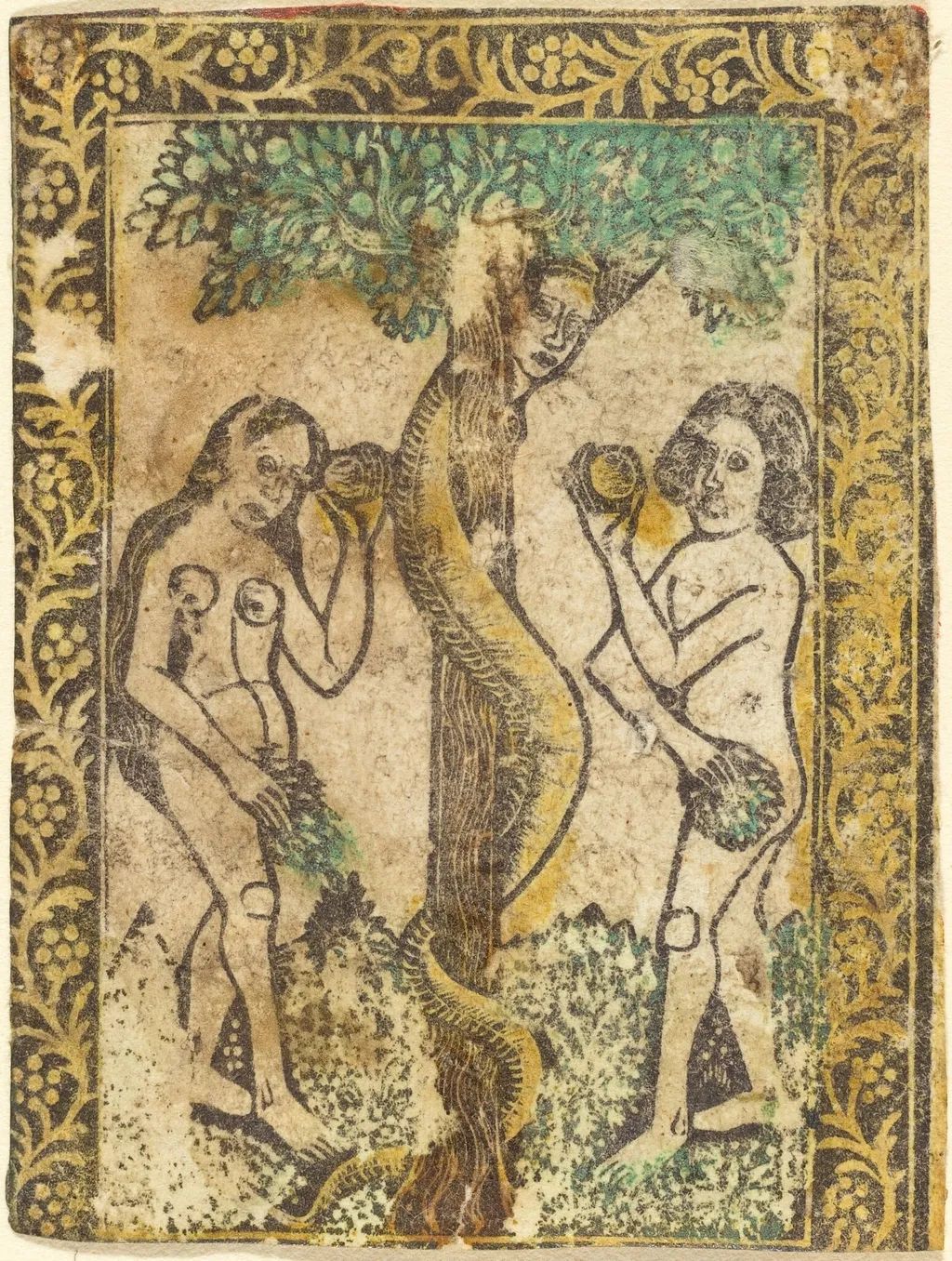
Adam and Eve is a paint print by the Renaissance artist German 15th Century. It dates from 1470 and is held in the collection of the National Gallery of Art.
About this work
Overview
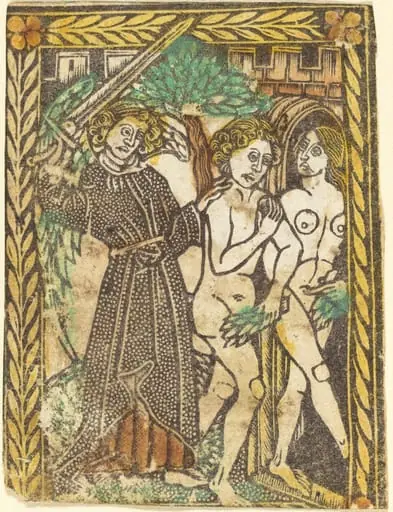
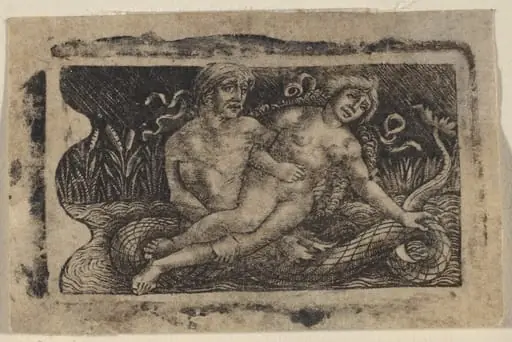
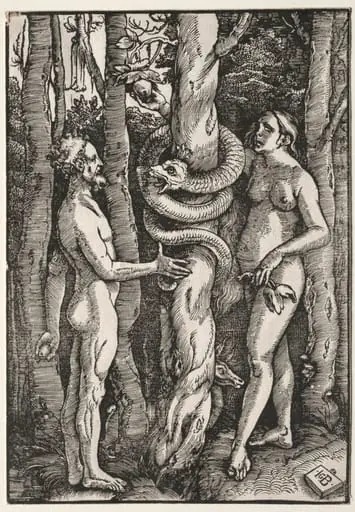
Adam and Eve is a metalcut print, enhanced with hand-coloring in yellow, red-brown lake, and green. The scene depicts three figures in a simplistic outdoor setting, characterized by a flat background, a central tree, and a decorative gold and faded color border along the edges.
Subject & Meaning
The central figure, under a tree and holding a branch, is flanked by two reaching figures. While the subject is titled 'Adam and Eve', the presence of a third figure suggests an interpretation that may include another biblical character, potentially altering the traditional narrative understanding of the piece.
Technique & Style
Executed in metalcut, a technique allowing for detailed line work, the print features stiff, awkwardly posed figures with simple forms and minimal shading. Hand-coloring adds muted yellows and greens, contrasting with the more vibrant, yet faded, gold border.
Context
Created during a transitional period in art history, this piece precedes the Renaissance movement, which would later introduce more naturalism, depth, and expressive figures, contrasting with the simplistic and flat representation seen here.
Legacy
As a pre-Renaissance work, 'Adam and Eve' serves as a benchmark for the evolutionary stages of European art, illustrating the stylistic and technical precursors to the more advanced techniques and aesthetics of the impending Renaissance.
Artist & collection

Artist
This 15th-century German artist carved vivid religious scenes into metal and wood, then hand-painted them in bright, symbolic colors.

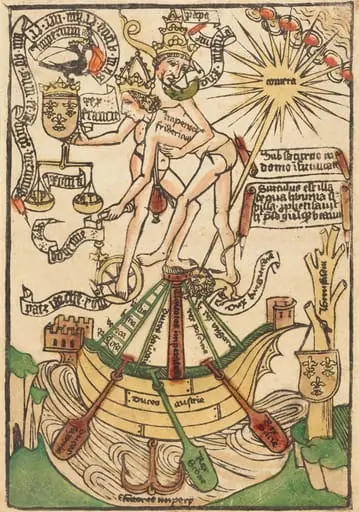 Allegory of the Meeting of Pope Paul II and Emperor Frederick III
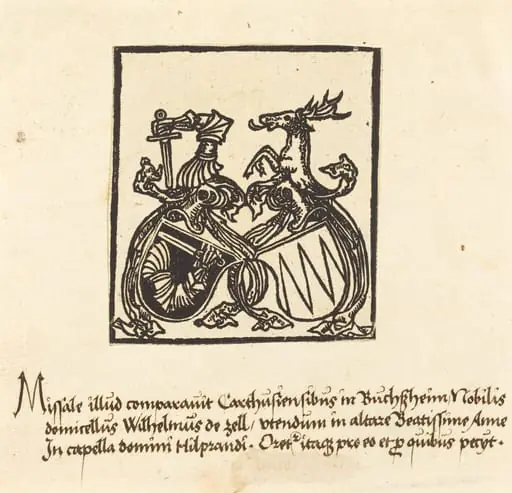 Bookplate of Wilhelm von Zell
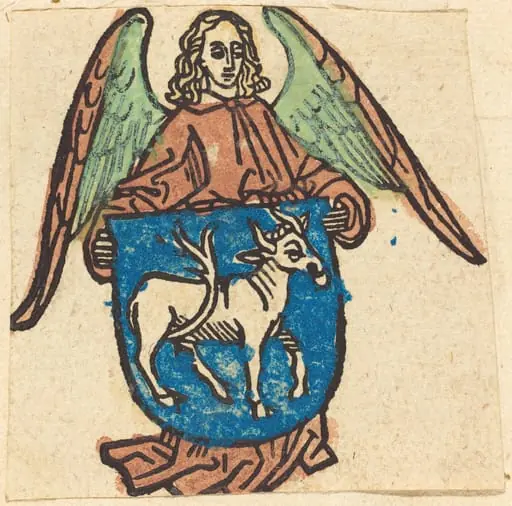 Bookplate of Hilprand Brandenburg of Bibrach
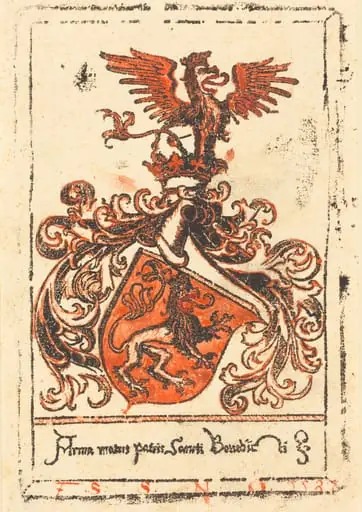 Bookplate of the Abbey of Ottobeuren
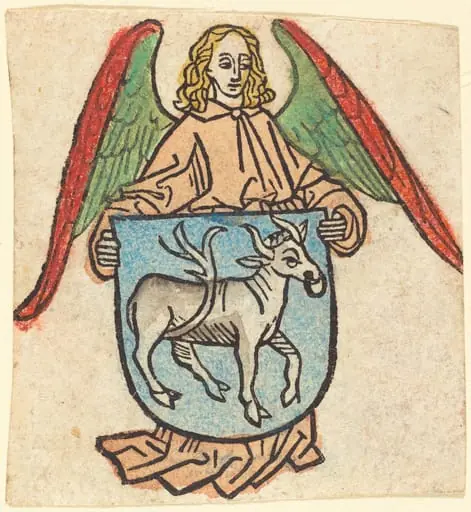 Bookplate of Hilprand Brandenburg of Bibrach
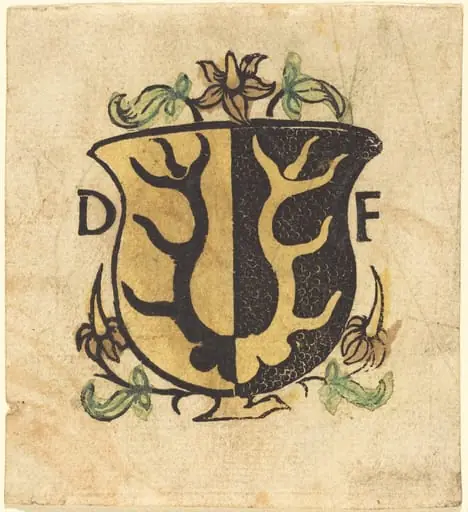 Bookplate of Dominicus Frauenfelder
![Studies for Six Figures (sheet from a model book) [recto], by German 15th Century](https://artifactworldgallery.com/img/german-15th-century--studies-for-six-figures-sheet-from-a-model-book-recto--4837429e0755bc3f-w320.webp) Studies for Six Figures (sheet from a model book) [recto]
Studies for Six Figures (sheet from a model book) [recto] Christ and Mary Interceding with God the Father