Artwork
The Expulsion from the Garden of Eden
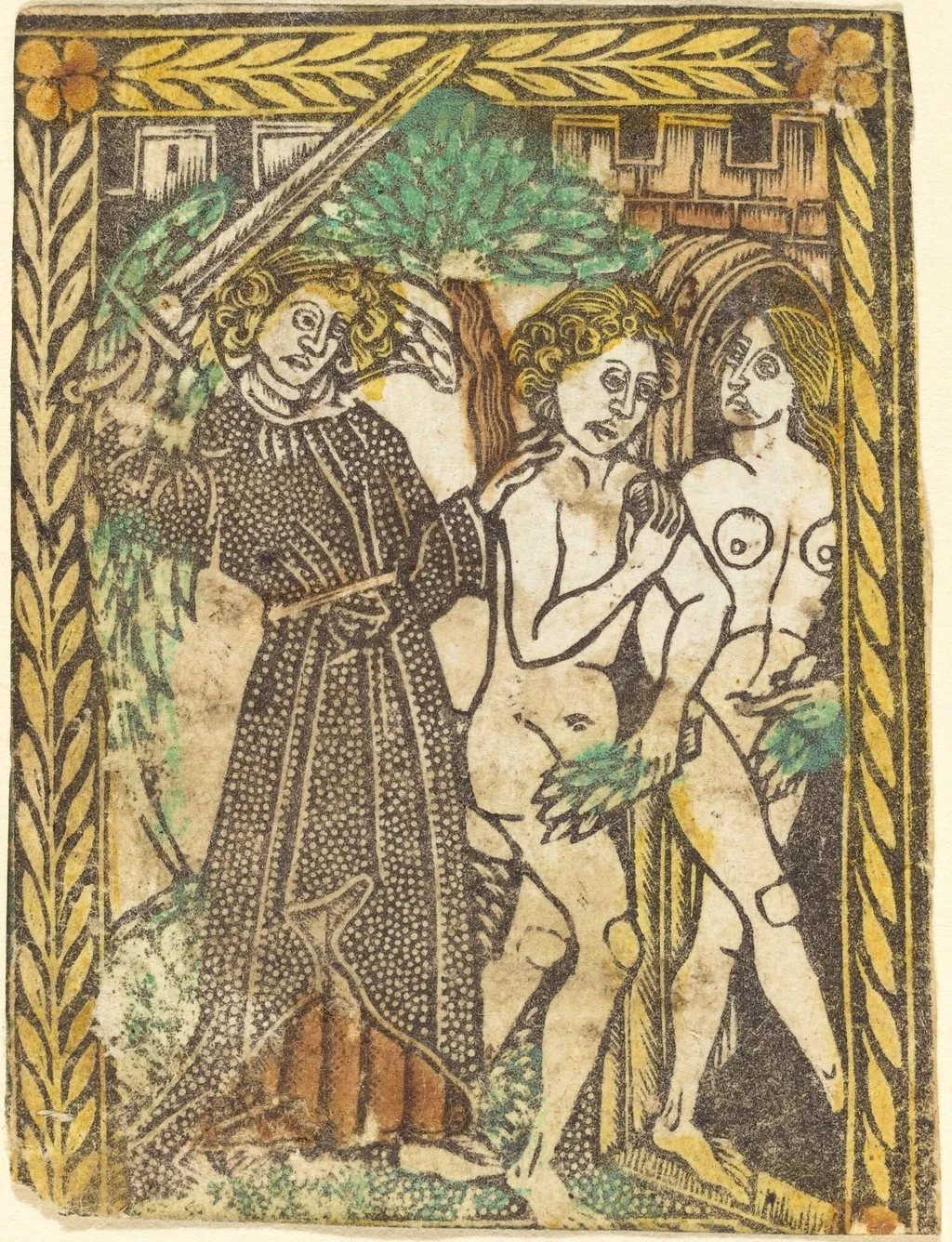
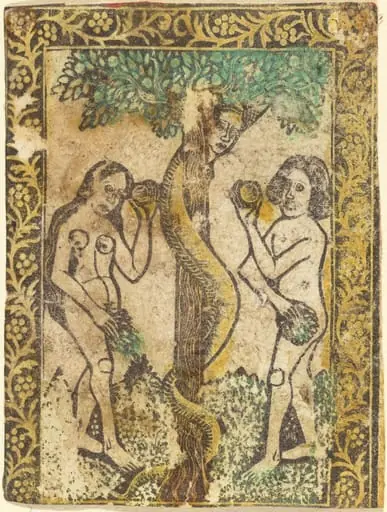
The Expulsion from the Garden of Eden is a paint print by the Renaissance artist German 15th Century. It dates from 1470 and is held in the collection of the National Gallery of Art.
About this work
Overview
The work titled *The Expulsion from the Garden of Eden* is a metalcut print that has been hand‑colored with vivid pigments of yellow, red‑brown lake and green. The image presents a compact scene of three figures within a stylized garden setting, rendered in the flat, bright coloration characteristic of early printmaking.
Subject & Meaning
The composition depicts the biblical moment of humanity’s removal from Eden. A robed figure on the left, rendered in a dotted garment, gazes downward, while two naked companions stand beside him; one clutches a leaf or small branch, suggesting the modesty imposed after the fall. The arrangement emphasizes the loss of innocence and the onset of human awareness.
Technique & Style
Executed as a metalcut, the image was incised into a metal plate, allowing for bold, linear outlines. After printing, the surface was manually painted with flat washes of yellow, red‑brown, and green, producing a uniform, non‑modelled appearance. The figures appear blocky and rigid, reflecting the early Renaissance tendency toward schematic representation in printed media.
History & Provenance
The print belongs to the early period of Renaissance printmaking, when artists began to explore reproducible media. Its hand‑coloring indicates a later stage of production, likely intended for a market that valued vivid, affordable illustrations of biblical narratives.
Context
During the transition from medieval to Renaissance art, printmakers adopted simplified visual vocabularies to disseminate religious stories widely. The inclusion of modest architectural elements and leafy framing aligns with contemporary efforts to situate biblical events within recognizable, albeit stylized, environments.
Legacy
Although not celebrated for technical virtuosity, the piece exemplifies the spread of narrative imagery through early print technology. Its straightforward visual language contributed to the broader accessibility of scriptural themes in the burgeoning print culture of the period.
Artist & collection

Artist
This 15th-century German artist carved vivid religious scenes into metal and wood, then hand-painted them in bright, symbolic colors.

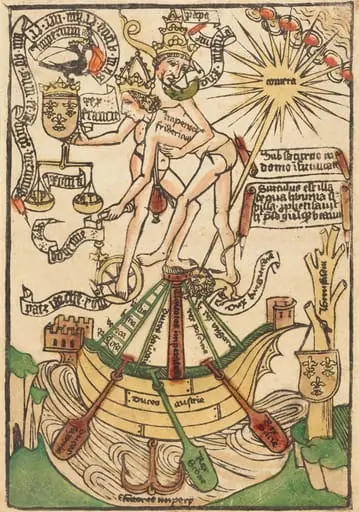 Allegory of the Meeting of Pope Paul II and Emperor Frederick III
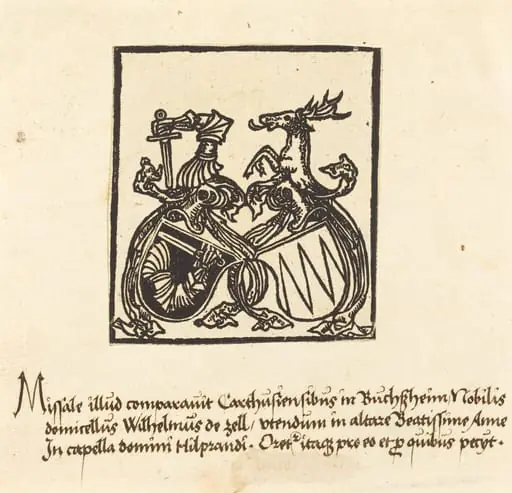 Bookplate of Wilhelm von Zell
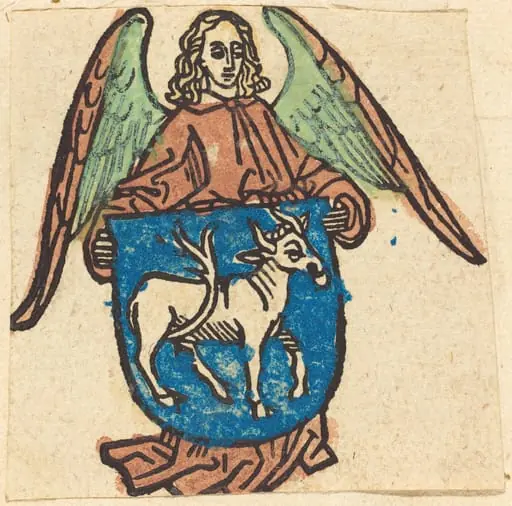 Bookplate of Hilprand Brandenburg of Bibrach
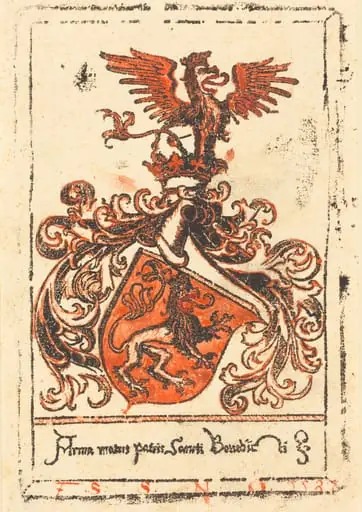 Bookplate of the Abbey of Ottobeuren
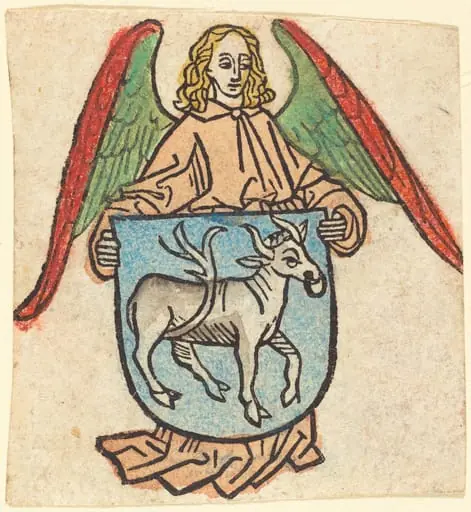 Bookplate of Hilprand Brandenburg of Bibrach
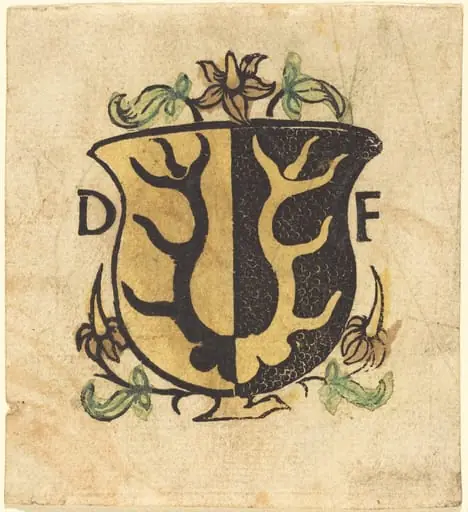 Bookplate of Dominicus Frauenfelder
![Studies for Six Figures (sheet from a model book) [recto], by German 15th Century](https://artifactworldgallery.com/img/german-15th-century--studies-for-six-figures-sheet-from-a-model-book-recto--4837429e0755bc3f-w320.webp) Studies for Six Figures (sheet from a model book) [recto]
Studies for Six Figures (sheet from a model book) [recto]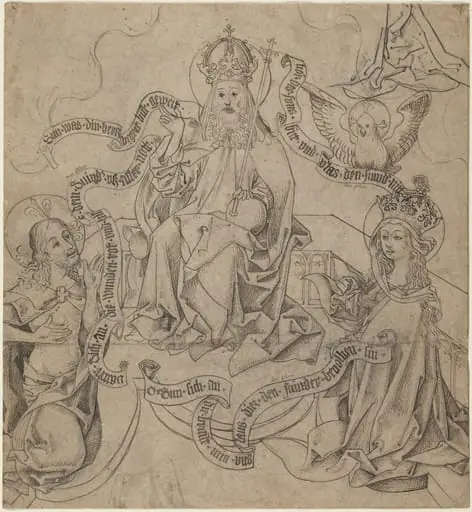 Christ and Mary Interceding with God the Father