Artwork
The Descent of the Holy Ghost
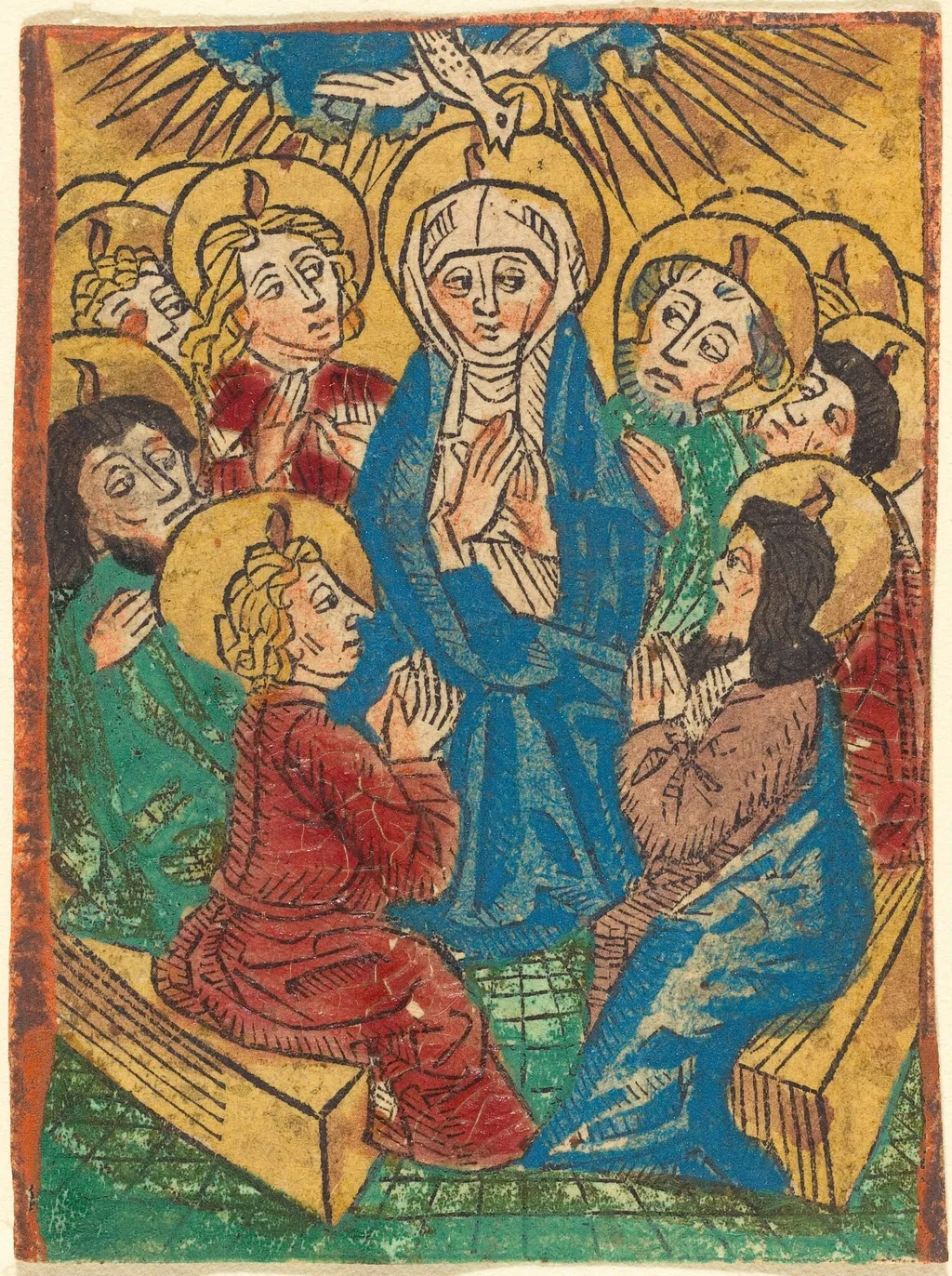
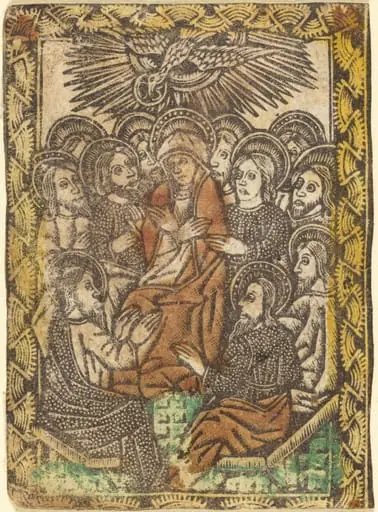
The Descent of the Holy Ghost is an ink print by the Renaissance artist German 15th Century. It dates from 1490 and is held in the collection of the National Gallery of Art.
About this work
Overview
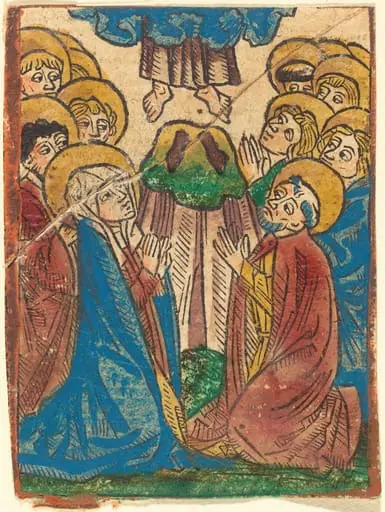
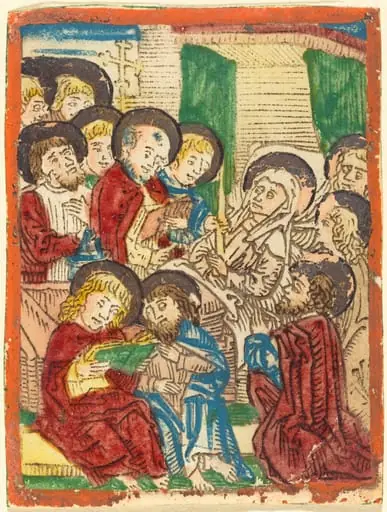
Rendered in bold, flat colors and simplified forms, the composition centers on a figure in blue with clasped hands, surrounded by others in vivid robes.
This hand-colored woodcut depicts the descent of the Holy Ghost, a moment from Christian tradition when divine presence descends upon the apostles. Rendered in bold, flat colors and simplified forms, the composition centers on a figure in blue with clasped hands, surrounded by others in vivid robes. The sky is filled with wavy lines and birds, suggesting movement and spiritual energy, while the ground below implies a field or meadow, grounding the scene in earthly space.
Subject & Meaning
The image illustrates the Pentecost, when the Holy Spirit descended as tongues of fire upon the apostles, empowering them to spread the Gospel. The central figure, likely the Virgin Mary, is surrounded by disciples, all marked by glowing halos to signify divine favor. The upward gaze of the figures and the radiant sky emphasize the spiritual ascent of grace, reinforcing the moment as one of revelation and communal transformation.
Technique & Style
Executed as a woodcut, the image was carved from a wooden block, inked, and pressed onto paper, then hand-colored with pigments. The style favors clear outlines, minimal detail, and saturated hues—red, green, gold, and blue—to distinguish figures and convey symbolic meaning. The simplification of forms enhances legibility and devotional focus, typical of popular religious prints produced for private or communal worship.
History & Provenance
Produced in the late medieval or early Renaissance period, such prints were widely circulated in Europe as affordable devotional aids. Though the exact origin and maker are unknown, the technique and iconography align with workshops in southern Germany or the Low Countries. Surviving examples are rare due to the fragility of hand-colored paper, making this piece a valuable witness to pre-printing-era religious culture.
Context
In an era when most people could not read, visual imagery served as a primary means of conveying biblical stories. Woodcuts like this one were often displayed in homes or chapels, used in processions, or bound into prayer books. The emphasis on radiant figures and symbolic color reflects a broader tradition of sacred art designed to inspire awe and devotion, rather than naturalistic representation.
Legacy
This print exemplifies how religious narratives were adapted for mass reproduction before the advent of movable type. Its enduring presence in collections today underscores the role of print in shaping popular piety. Though stylistically modest, its clarity and emotional directness influenced later devotional imagery, preserving a visual language of faith that bridged artisan craft and spiritual practice.
Artist & collection

Artist
This 15th-century German artist carved vivid religious scenes into metal and wood, then hand-painted them in bright, symbolic colors.

 Allegory of the Meeting of Pope Paul II and Emperor Frederick III
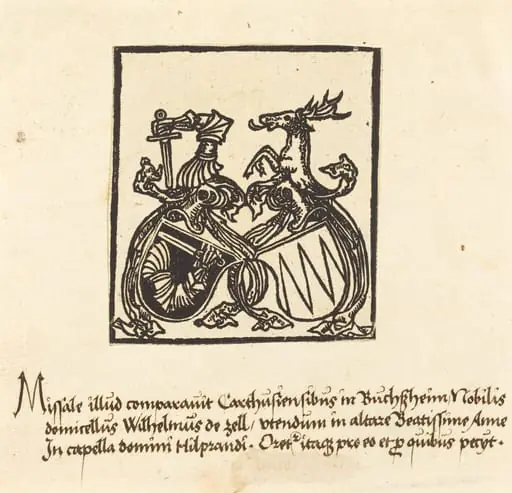 Bookplate of Wilhelm von Zell
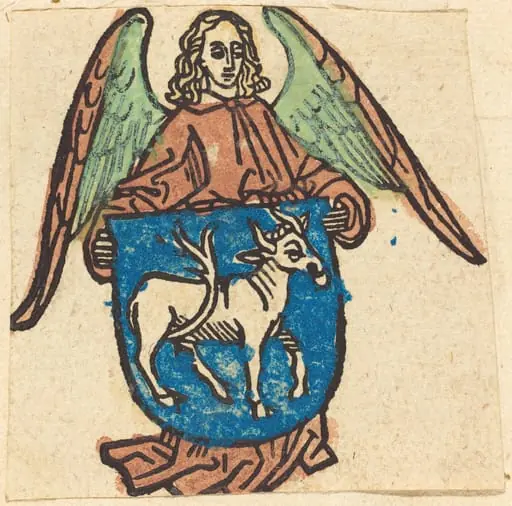 Bookplate of Hilprand Brandenburg of Bibrach
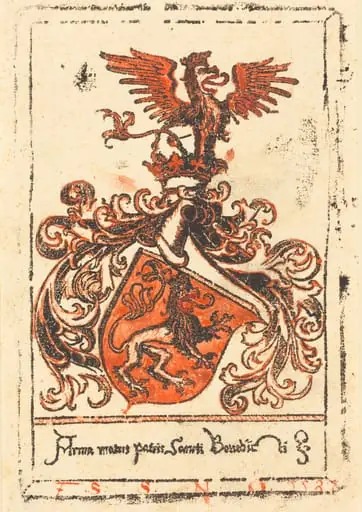 Bookplate of the Abbey of Ottobeuren
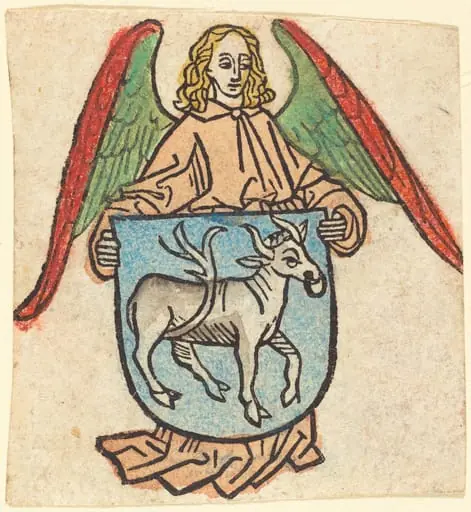 Bookplate of Hilprand Brandenburg of Bibrach
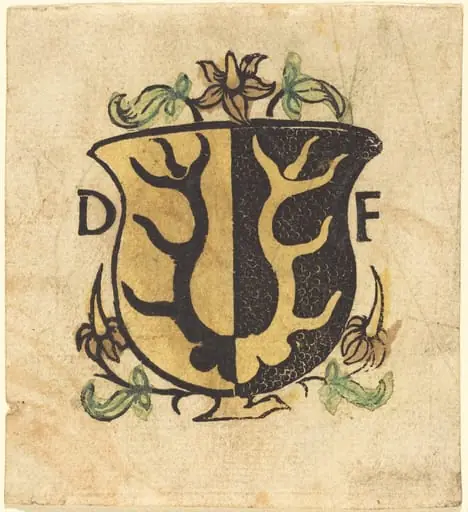 Bookplate of Dominicus Frauenfelder
![Studies for Six Figures (sheet from a model book) [recto], by German 15th Century](https://artifactworldgallery.com/img/german-15th-century--studies-for-six-figures-sheet-from-a-model-book-recto--4837429e0755bc3f-w320.webp) Studies for Six Figures (sheet from a model book) [recto]
Studies for Six Figures (sheet from a model book) [recto]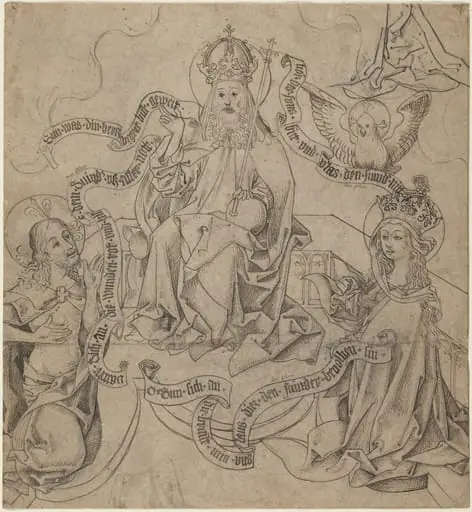 Christ and Mary Interceding with God the Father