Artwork
The Virgin Appearing to a Dying Priest
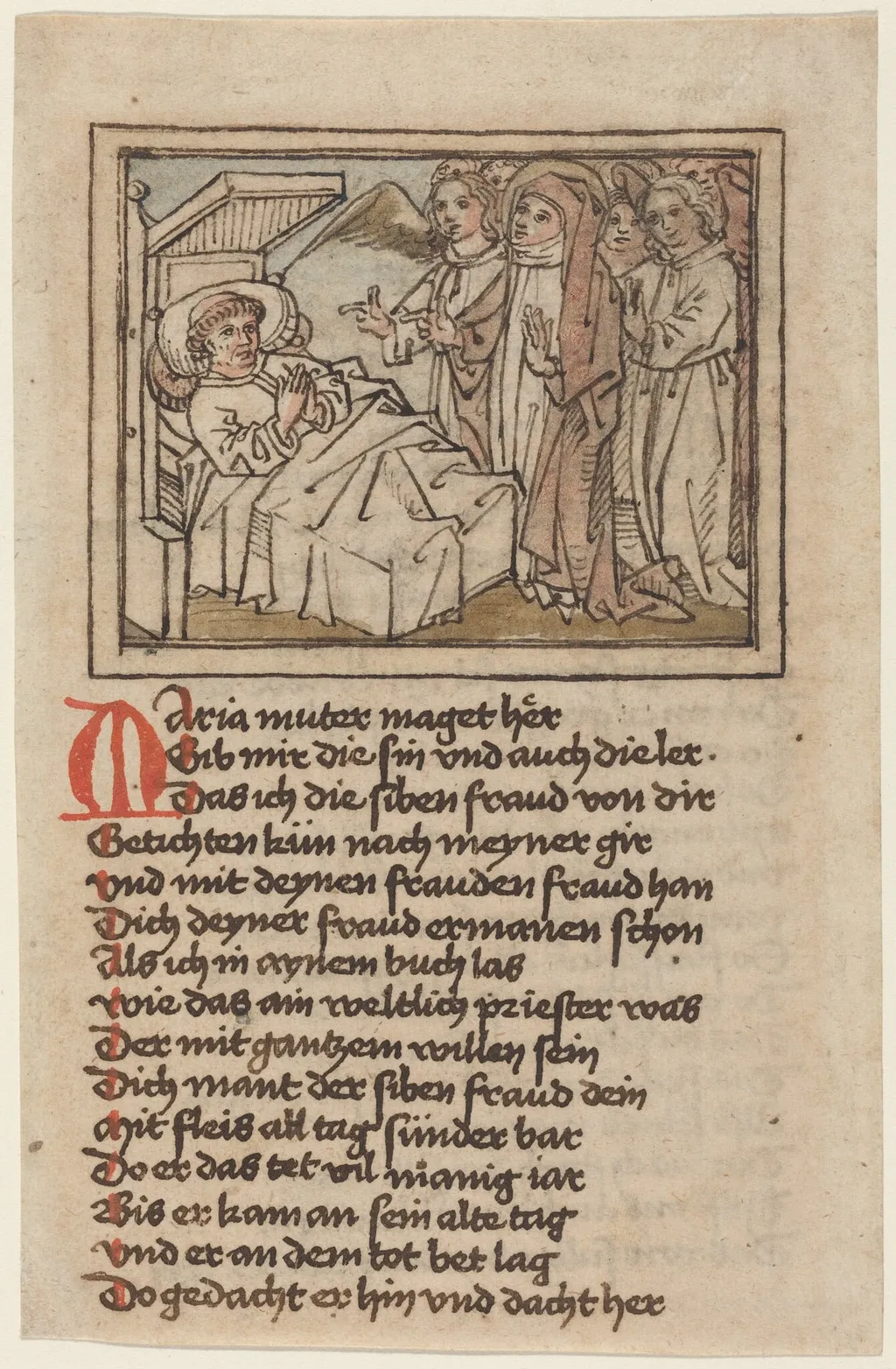
The Virgin Appearing to a Dying Priest is an ink drawing by the Renaissance artist German 15th Century. It dates from 1474 and is held in the collection of the National Gallery of Art.
About this work
Overview
The composition is confined to a modest interior where a kneeling priest faces a crowned, haloed female figure, presumed to be the Virgin Mary.
The work titled *The Virgin Appearing to a Dying Priest* is a small drawing executed in pen and ink with watercolor on laid paper. The composition is confined to a modest interior where a kneeling priest faces a crowned, haloed female figure, presumed to be the Virgin Mary. Two additional women flank the scene, one gesturing upward, while a brief German inscription runs beneath the image in red‑and‑black script.
Subject & Meaning
The central narrative depicts a dying cleric receiving a vision of the Virgin, a motif that underscores intercessory prayer and the promise of salvation at death. The pointing gesture of the attendant woman directs the priest’s—and the viewer’s—gaze toward the celestial figure, reinforcing the theme of divine intervention at the moment of earthly transition.
Technique & Style
The artist employed a restrained palette of earthy tones, applying watercolor in flat washes that avoid chiaroscuro or spatial depth. Pen work defines the figures and architectural outlines, while the laid‑paper surface contributes a subtle texture. The overall aesthetic reflects a Northern Renaissance sensibility, characterized by linear clarity and modest coloration rather than the dramatic lighting of Italian contemporaries.
History & Provenance
The drawing is inscribed in German, indicating a likely origin in a German‑speaking region during the Renaissance period. No specific artist or date is recorded, and the work’s ownership trail prior to its current museum acquisition remains undocumented.
Context
Visions of the Virgin appearing to dying individuals were a common devotional subject in late medieval and early modern Europe, serving as visual encouragement for the faithful. This piece aligns with that tradition, offering a personal, intimate portrayal rather than a grand, public altarpiece.
Artist & collection

Artist
This 15th-century German artist carved vivid religious scenes into metal and wood, then hand-painted them in bright, symbolic colors.

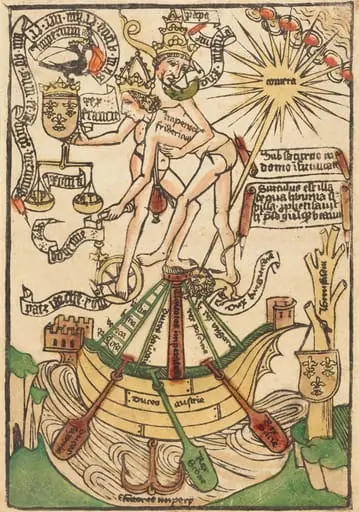 Allegory of the Meeting of Pope Paul II and Emperor Frederick III
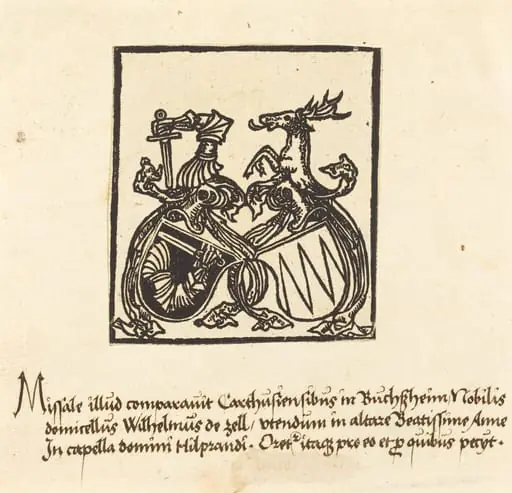 Bookplate of Wilhelm von Zell
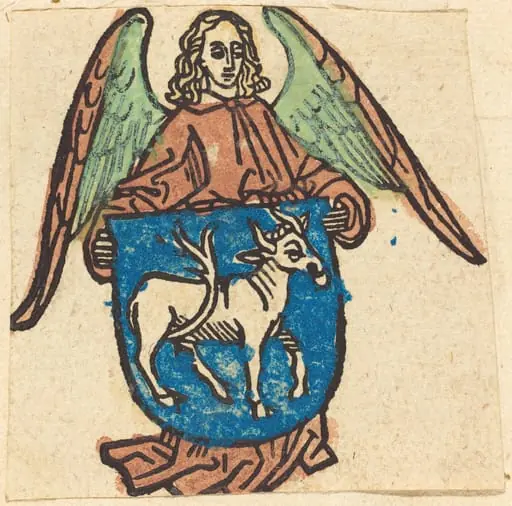 Bookplate of Hilprand Brandenburg of Bibrach
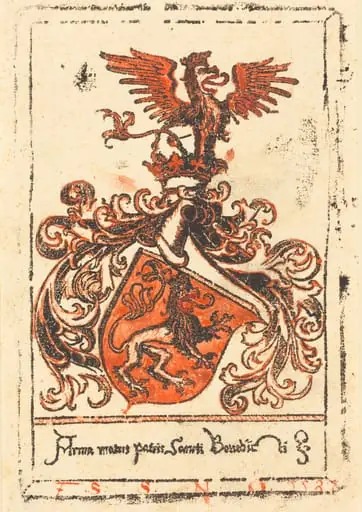 Bookplate of the Abbey of Ottobeuren
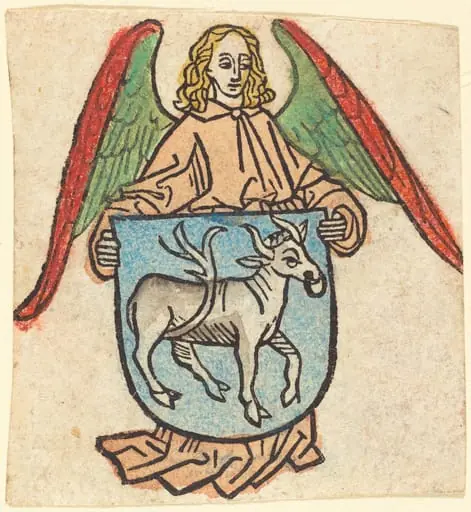 Bookplate of Hilprand Brandenburg of Bibrach
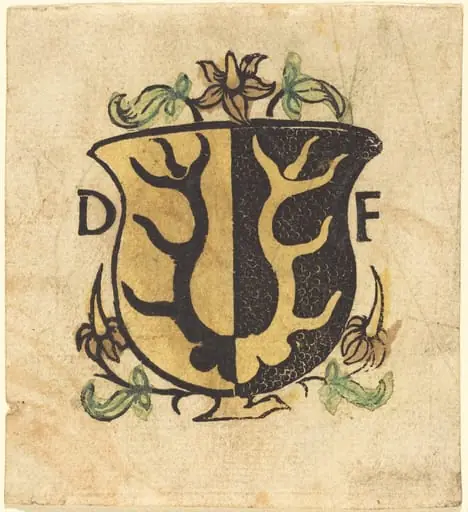 Bookplate of Dominicus Frauenfelder
![Studies for Six Figures (sheet from a model book) [recto], by German 15th Century](https://artifactworldgallery.com/img/german-15th-century--studies-for-six-figures-sheet-from-a-model-book-recto--4837429e0755bc3f-w320.webp) Studies for Six Figures (sheet from a model book) [recto]
Studies for Six Figures (sheet from a model book) [recto]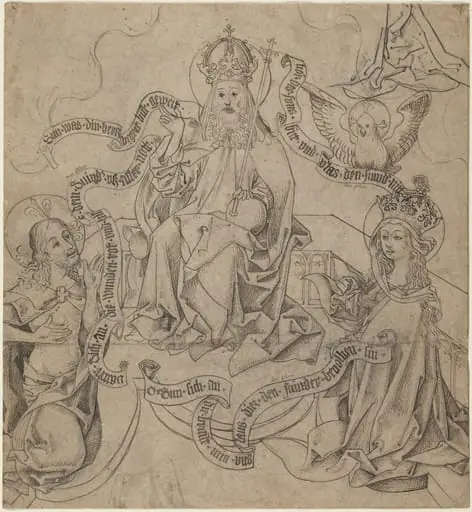 Christ and Mary Interceding with God the Father
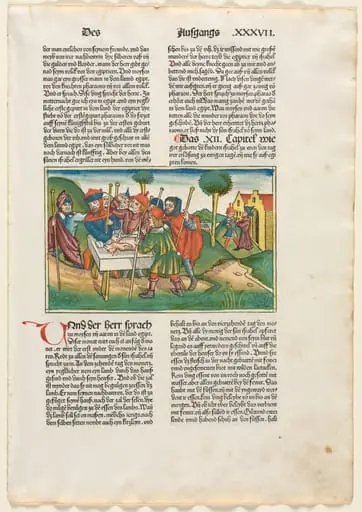 Offering of the Paschal Lamb from the German Bible published by Anton Koberger, Nürnberg
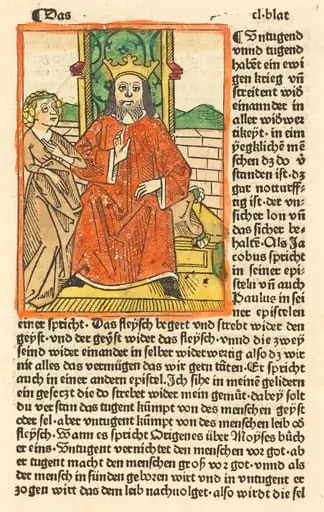 Crowned Man on a Throne with the Virgin Standing at the left
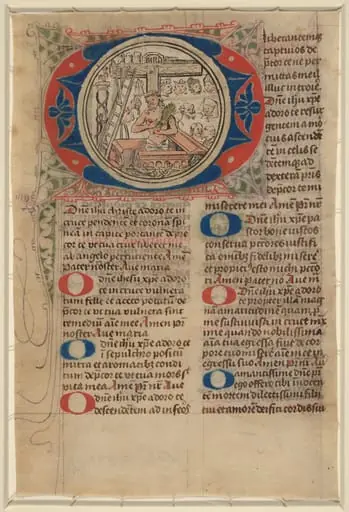 Christ as the Man of Sorrows
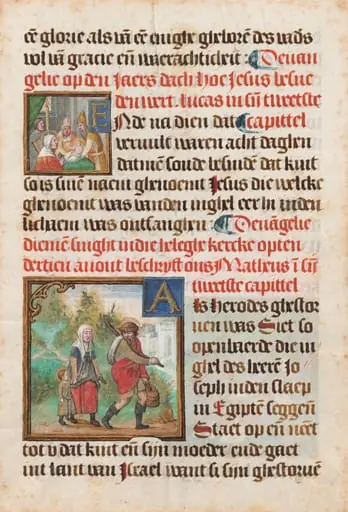 Manuscript Leaf from a Book of Hours
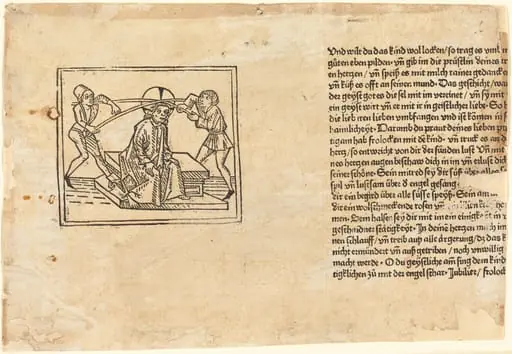 Christ Crowned with Thorns
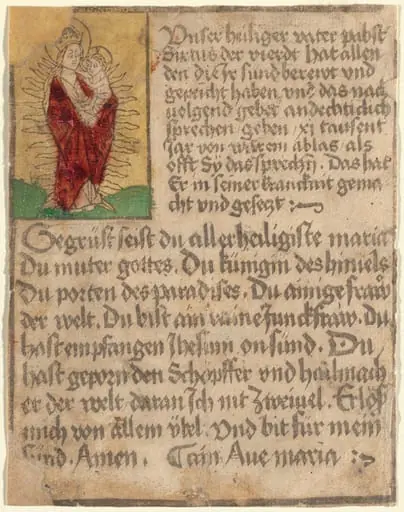 Madonna and Child in a Glory with an Indulgence and a Prayer
![The Flight into Egypt [recto], by Italian 15th Century](https://artifactworldgallery.com/img/italian-15th-century--the-flight-into-egypt-recto--8f4d5275d7f90f98-w320.webp) The Flight into Egypt [recto]
The Flight into Egypt [recto]![The Destruction of the Egyptian Idols [verso], by Italian 15th Century](https://artifactworldgallery.com/img/italian-15th-century--the-destruction-of-the-egyptian-idols-verso--646d3c2b8098cfee-w320.webp) The Destruction of the Egyptian Idols [verso]
The Destruction of the Egyptian Idols [verso]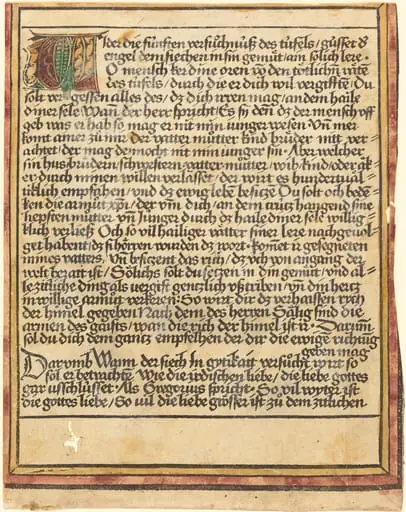 Exhortation Against Avarice
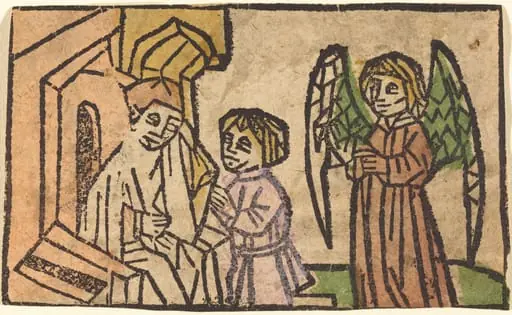 Confession
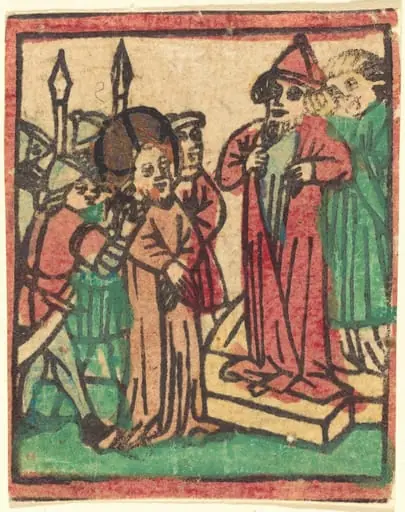 Caiaphas Tearing his Clothes
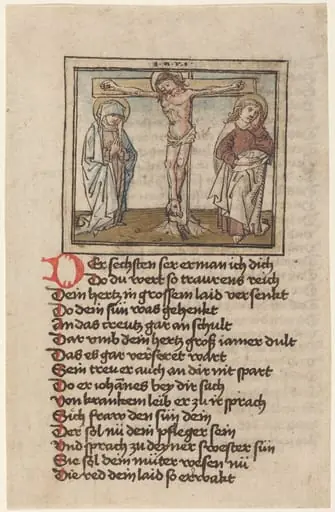 The Crucifixion