Artwork
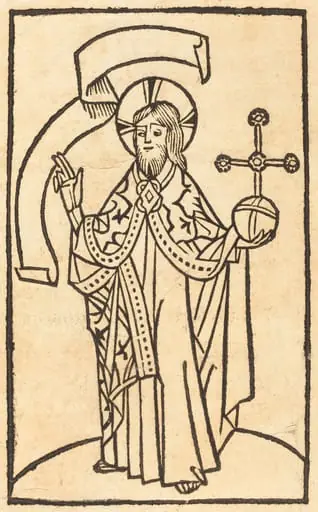
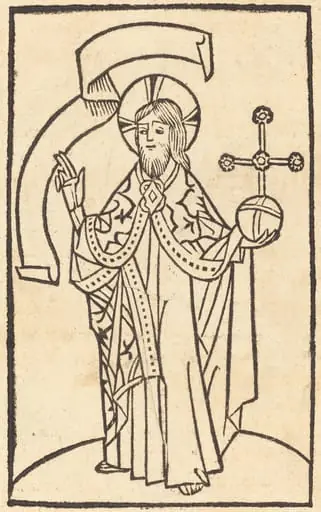
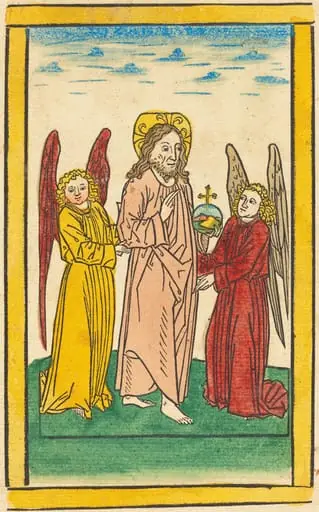
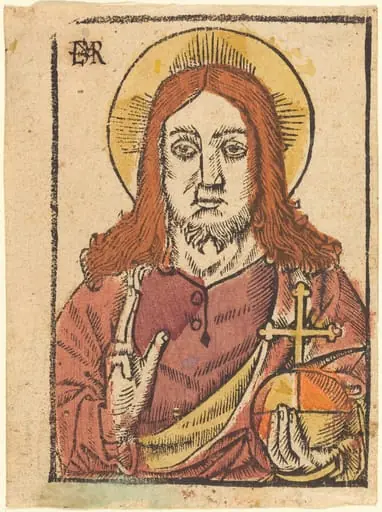
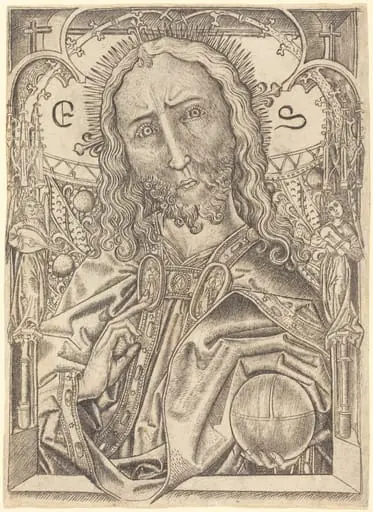
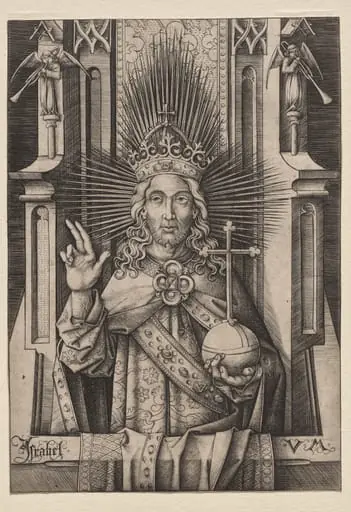
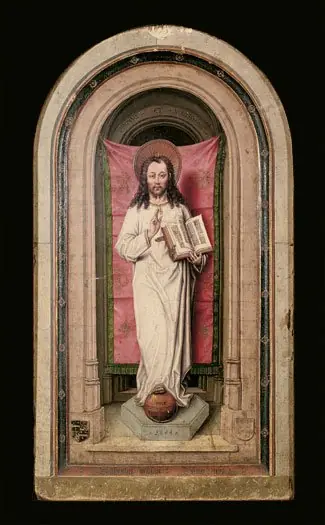
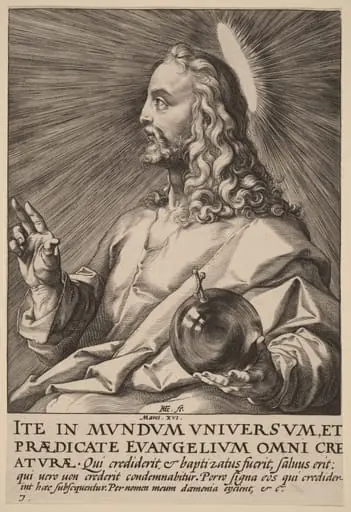
Christ as Salvator Mundi
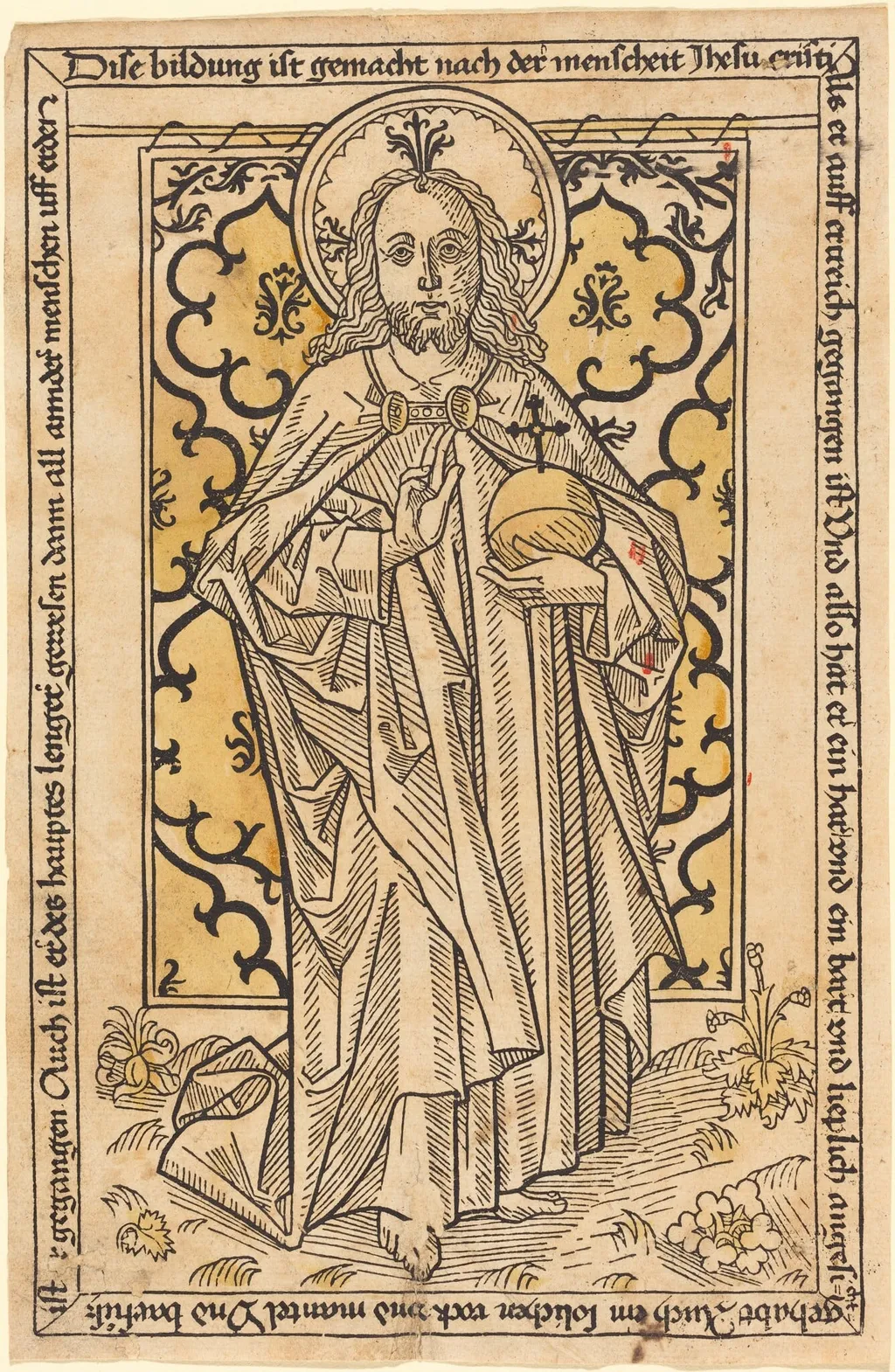
Christ as Salvator Mundi is an ink print by the Renaissance artist German 15th Century. It dates from 1470 and is held in the collection of the National Gallery of Art.
About this work
Overview
The work is a hand‑colored woodcut depicting a solemn, bearded figure with long hair, haloed and holding a globe in one hand while raising the other in a gesture of blessing. The background is minimal, showing only two slender trees, and the margins are filled with decorative motifs and an inscription in an archaic script.
Subject & Meaning
Identified as Christ as Salvator Mundi, the image presents the Christian savior holding the world, a visual shorthand for his role as the redeemer of humanity. The raised hand functions as a benediction, reinforcing the theological message of divine protection and universal salvation that the piece was intended to convey to its viewers.
Technique & Style
Executed as a woodcut, the design was carved in relief on a wooden block, inked, and pressed onto paper. After printing, the image was hand‑colored with yellow and red pigments, a common practice to enhance visual impact. The composition is characterized by a stiff, symbolic mode typical of early religious prints, emphasizing iconographic clarity over naturalistic detail.
Context
Woodcut prints of this period served both devotional and didactic purposes, making sacred imagery accessible to a broader audience beyond illuminated manuscripts. The decorative border and scripted text reflect the integration of visual and textual elements common in medieval religious art, reinforcing the work’s role as a portable, instructive object for personal or communal contemplation.
Artist & collection

Artist
This 15th-century German artist carved vivid religious scenes into metal and wood, then hand-painted them in bright, symbolic colors.

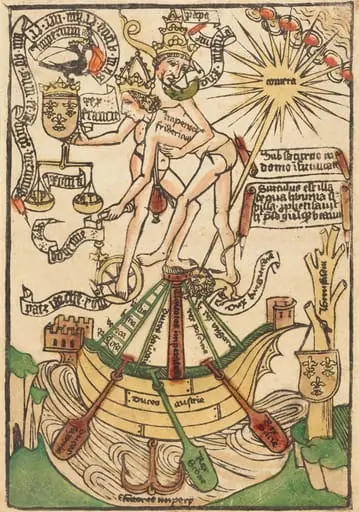 Allegory of the Meeting of Pope Paul II and Emperor Frederick III
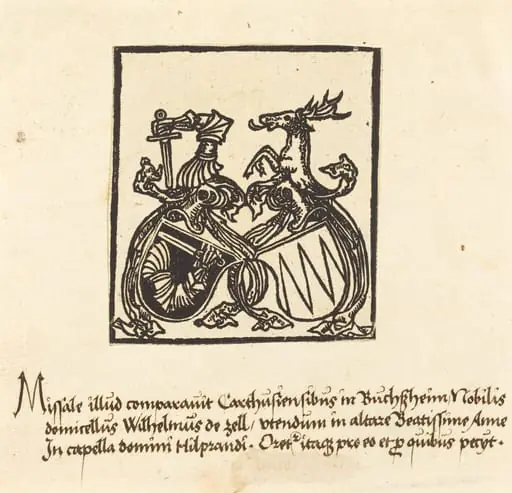 Bookplate of Wilhelm von Zell
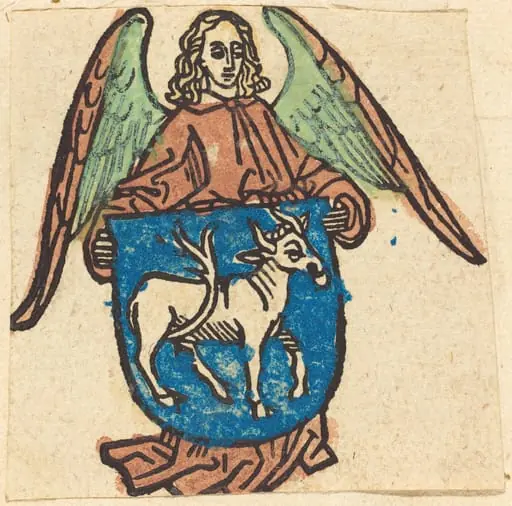 Bookplate of Hilprand Brandenburg of Bibrach
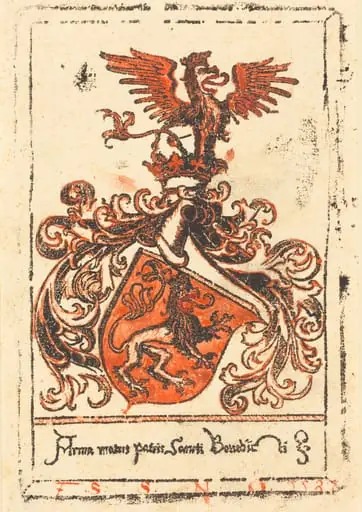 Bookplate of the Abbey of Ottobeuren
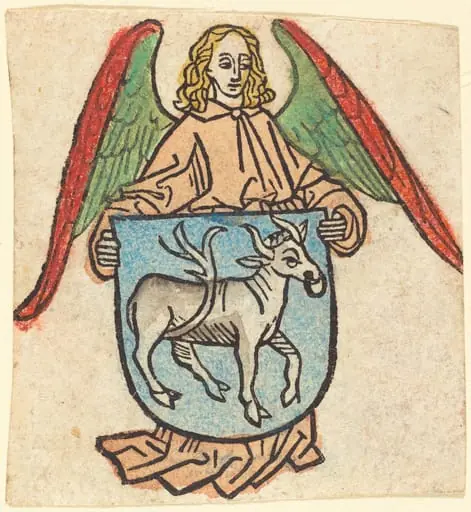 Bookplate of Hilprand Brandenburg of Bibrach
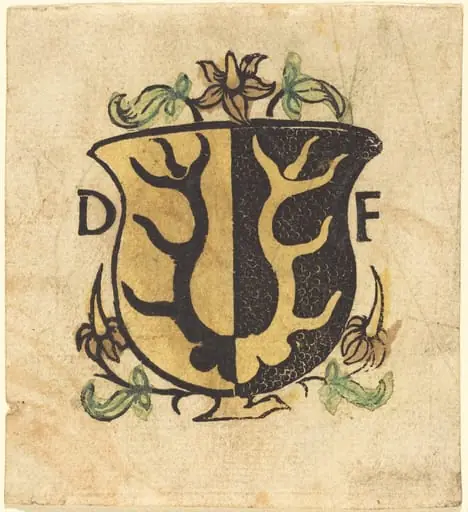 Bookplate of Dominicus Frauenfelder
![Studies for Six Figures (sheet from a model book) [recto], by German 15th Century](https://artifactworldgallery.com/img/german-15th-century--studies-for-six-figures-sheet-from-a-model-book-recto--4837429e0755bc3f-w320.webp) Studies for Six Figures (sheet from a model book) [recto]
Studies for Six Figures (sheet from a model book) [recto]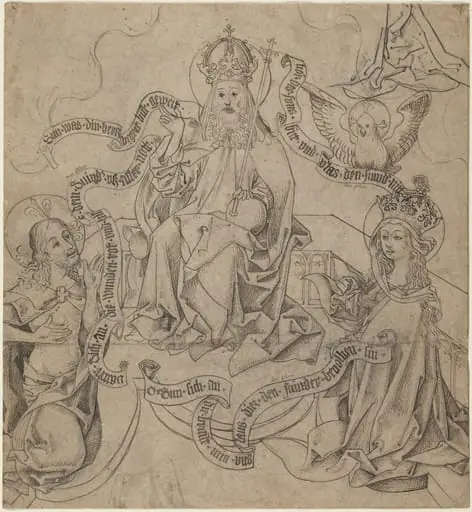 Christ and Mary Interceding with God the Father