Artwork
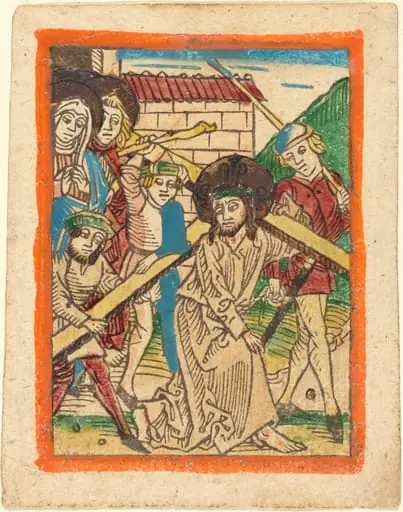
Christ Bearing the Cross
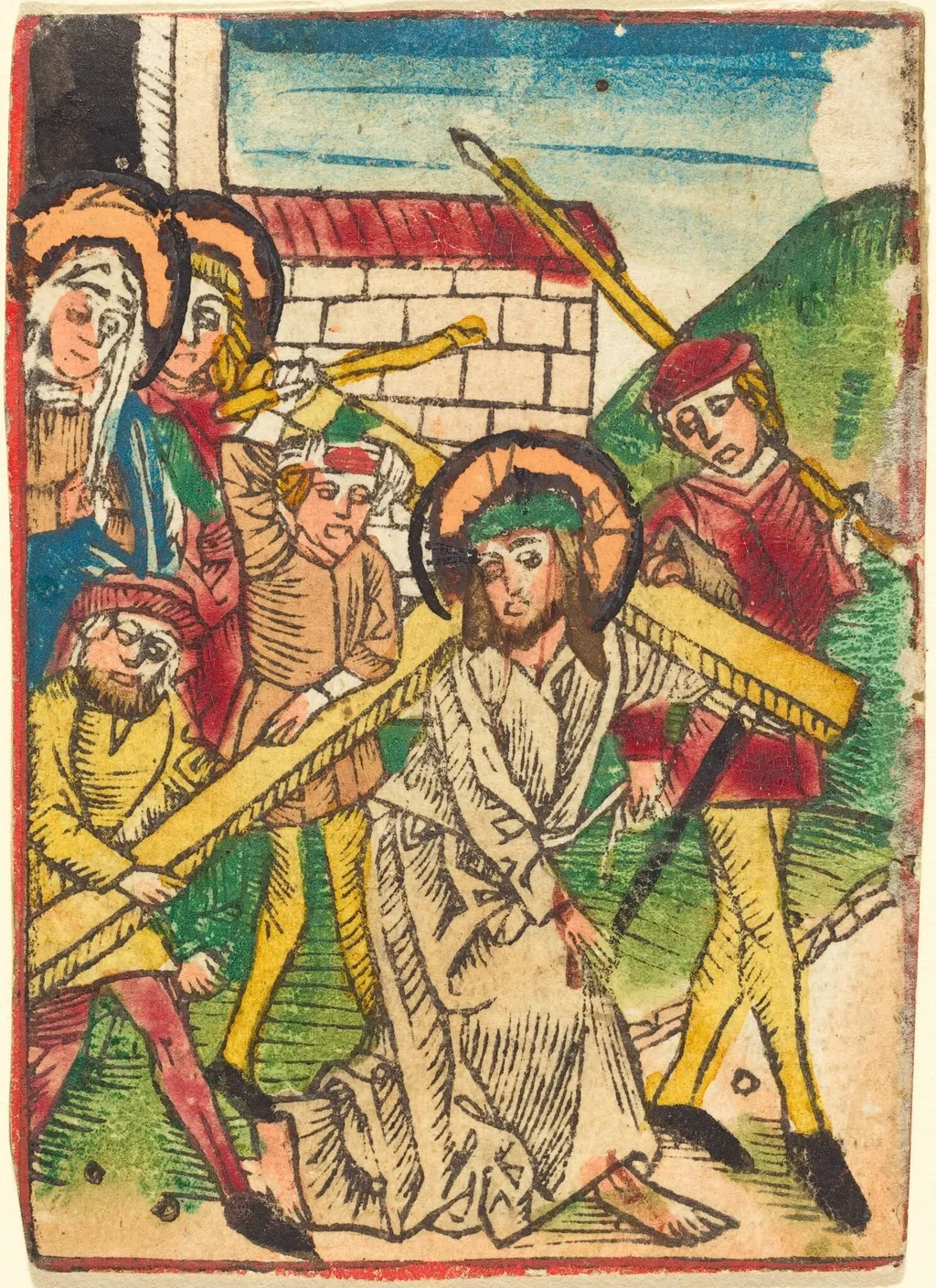
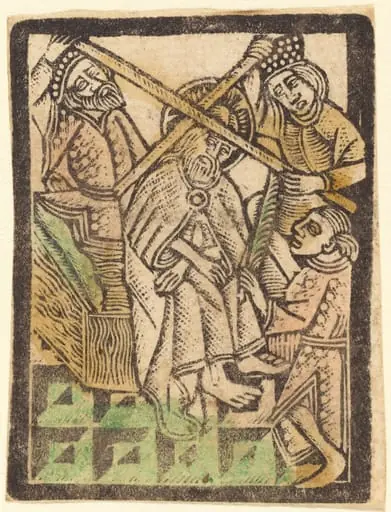
Christ Bearing the Cross is an ink print by the Renaissance artist German 15th Century. It dates from 1475 and is held in the collection of the National Gallery of Art. This woodcut depicts Christ carrying the cross, printed in black ink on laid paper and later hand-colored with pigments and metallic leaf.
About this work
Overview
This woodcut depicts Christ carrying the cross, printed in black ink on laid paper and later hand-colored with pigments and metallic leaf.
This woodcut depicts Christ carrying the cross, printed in black ink on laid paper and later hand-colored with pigments and metallic leaf. The image was produced using a carved wooden block, a common technique in early European printmaking. Colors such as green, red, and blue were applied manually after printing, while silver leaf—now tarnished—once outlined the halo. Multiple impressions were made, allowing the image to circulate widely among religious communities.
Subject & Meaning
The scene portrays Christ’s journey to Calvary, emphasizing his quiet endurance amid violent surroundings. Soldiers press against him, their rough forms contrasting with his composed posture and upward gaze. The crown of thorns and the heavy cross underscore his suffering, while the distant city and crowd suggest the public nature of his crucifixion. The image invites contemplation of sacrifice and divine resignation rather than overt drama.
Technique & Style
The composition relies on bold, linear carving typical of woodcut printing, with strong contrasts between dark outlines and open spaces. Details like the soldiers’ garments and the city skyline are rendered with simplified, rhythmic strokes. Hand-coloring added emotional nuance—green robes, red accents, and metallic highlights—though the silver leaf has oxidized over time. The method prioritized clarity and reproducibility over fine detail, suited for mass distribution.
History & Provenance
Created during the late 15th or early 16th century, this print emerged in a period when woodcuts were key to disseminating religious imagery. Produced in a workshop setting, multiple copies were likely sold to pilgrims, clergy, and lay devotees. Its survival in good condition suggests careful handling, possibly as a devotional object. The tarnished silver leaf indicates age and exposure, consistent with prints used in private or chapel settings.
Context
In the decades before the Reformation, printed images like this served as visual aids for prayer and instruction, especially among those unable to read. The depiction aligns with popular Passion narratives circulating in northern Europe, where emotional immediacy was valued. Woodcuts bridged the gap between illuminated manuscripts and the coming age of printed books, making sacred stories accessible beyond elite circles.
Legacy
This print exemplifies how early print technology transformed religious experience by standardizing visual motifs across regions. Its widespread circulation helped shape collective imagery of Christ’s Passion, influencing later depictions in painting and sculpture. Though modest in scale and medium, it contributed to a broader visual culture that sustained faith through repetition and accessibility.
Artist & collection

Artist
This 15th-century German artist carved vivid religious scenes into metal and wood, then hand-painted them in bright, symbolic colors.

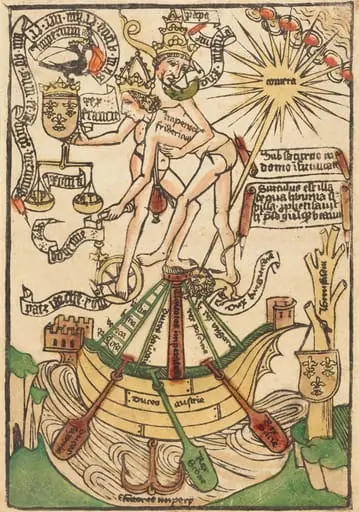 Allegory of the Meeting of Pope Paul II and Emperor Frederick III
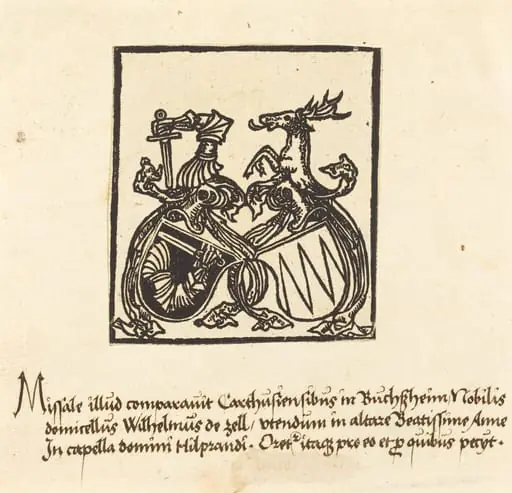 Bookplate of Wilhelm von Zell
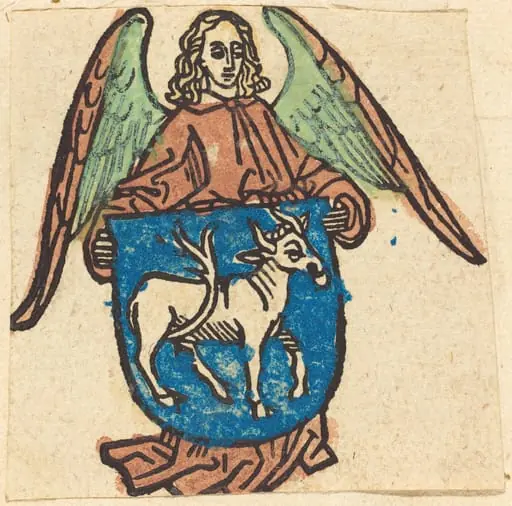 Bookplate of Hilprand Brandenburg of Bibrach
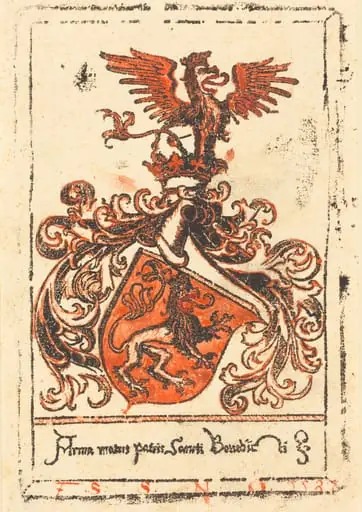 Bookplate of the Abbey of Ottobeuren
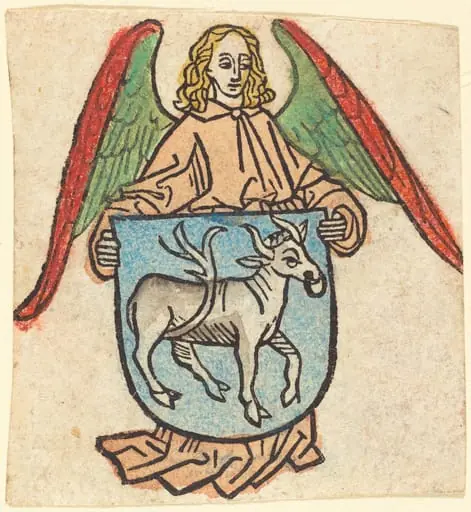 Bookplate of Hilprand Brandenburg of Bibrach
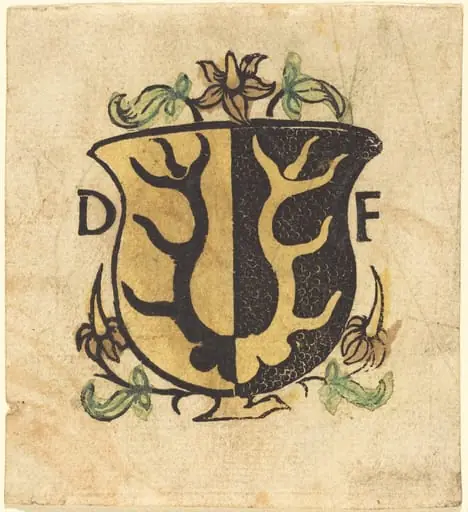 Bookplate of Dominicus Frauenfelder
![Studies for Six Figures (sheet from a model book) [recto], by German 15th Century](https://artifactworldgallery.com/img/german-15th-century--studies-for-six-figures-sheet-from-a-model-book-recto--4837429e0755bc3f-w320.webp) Studies for Six Figures (sheet from a model book) [recto]
Studies for Six Figures (sheet from a model book) [recto]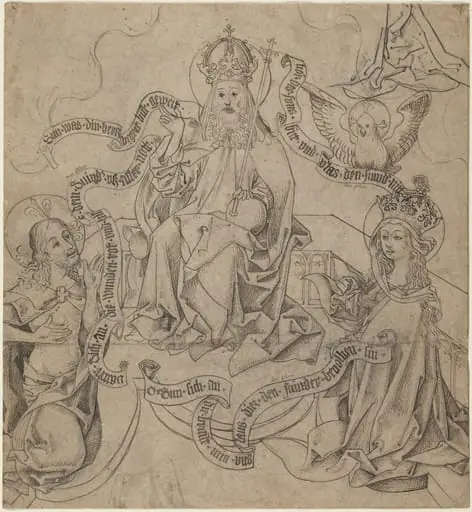 Christ and Mary Interceding with God the Father