Artwork
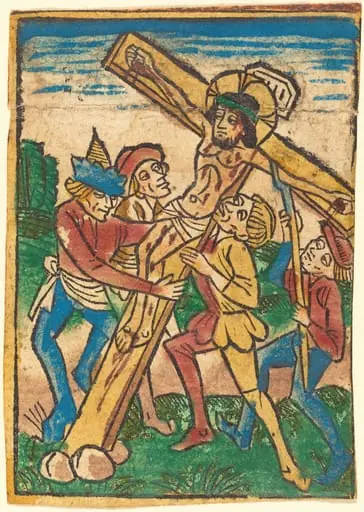
Christ Nailed to the Cross
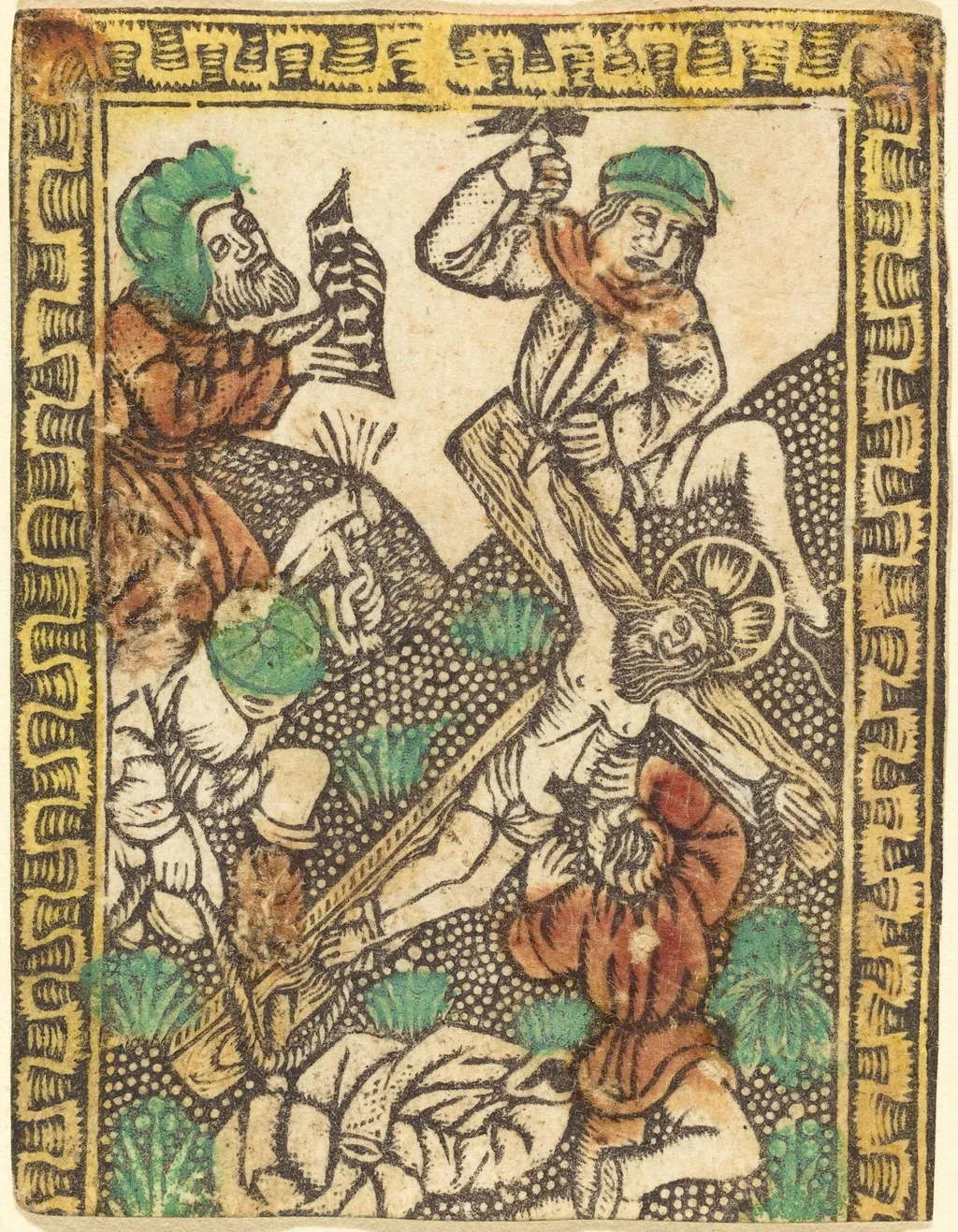
Christ Nailed to the Cross is a paint print by the Renaissance artist German 15th Century. It dates from 1475 and is held in the collection of the National Gallery of Art. This metalcut print depicts the crucifixion of Christ in a compact, densely composed scene.
About this work
Overview
Hand-colored with yellow, red-brown lake, and green pigments, the work combines printmaking with manual coloring.
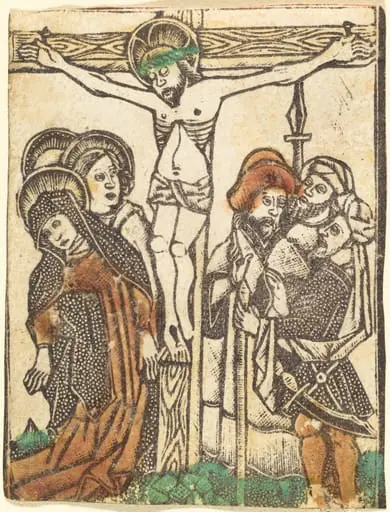
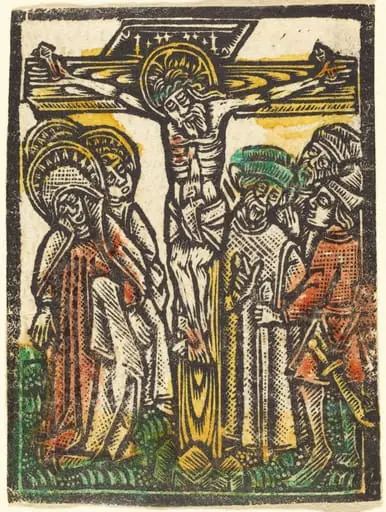
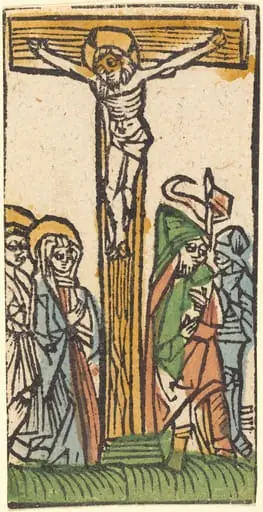
This metalcut print depicts the crucifixion of Christ in a compact, densely composed scene. Hand-colored with yellow, red-brown lake, and green pigments, the work combines printmaking with manual coloring. The figures are rendered with linear precision and minimal modeling, set against a backdrop of stylized trees and bushes, all enclosed within an ornamental border typical of early printed devotional images.
Subject & Meaning
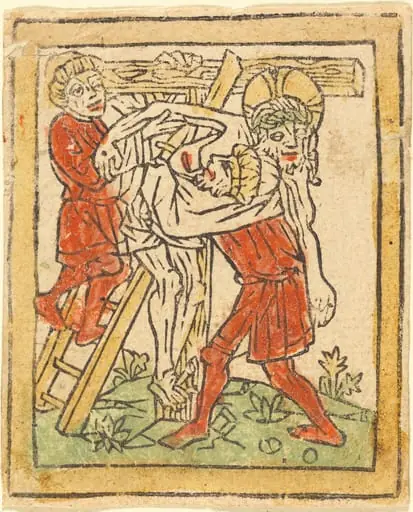
The scene portrays Christ being nailed to the cross, flanked by two figures: one wielding a hammer, the other reaching toward the cross. The focus is on the physical act of crucifixion, emphasizing sacrifice and suffering. The intimate scale and lack of grandeur suggest a private devotional purpose, intended for personal meditation rather than public display.
Technique & Style
Executed as a metalcut, the image relies on sharp, clean lines and flat planes of color with little to no shading. The figures appear rigid and two-dimensional, reflecting pre-Renaissance conventions. Hand-coloring enhances key areas—clothing, skin, and foliage—without altering the underlying linear structure, preserving the print’s graphic clarity.
History & Provenance
Created during the late 15th century, this print emerged in a period when metalcut techniques were widely used for religious imagery before the dominance of woodcut and engraving. Its small size and decorative border indicate production for domestic or monastic use, likely in German-speaking regions where such prints circulated among lay devotees.
Context
At the time, artists were beginning to experiment with spatial depth and naturalism, yet this work retains medieval conventions. The absence of perspective and the stylized foliage reflect transitional aesthetics, bridging late Gothic traditions and the emerging Renaissance emphasis on realism. Such prints served as accessible religious tools before widespread literacy.
Legacy
This print exemplifies the role of affordable, mass-produced images in shaping personal piety before the Reformation. While overshadowed by later Renaissance innovations, it preserves the visual language of devotional practice in late medieval Europe, offering insight into how ordinary believers engaged with sacred narratives through tactile, colored prints.
Artist & collection

Artist
This 15th-century German artist carved vivid religious scenes into metal and wood, then hand-painted them in bright, symbolic colors.

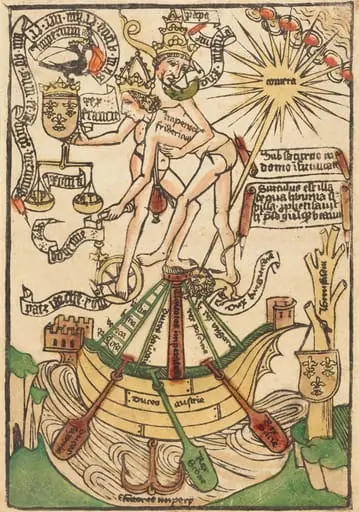 Allegory of the Meeting of Pope Paul II and Emperor Frederick III
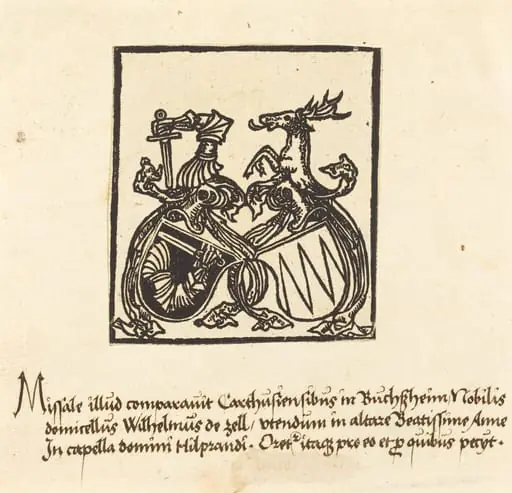 Bookplate of Wilhelm von Zell
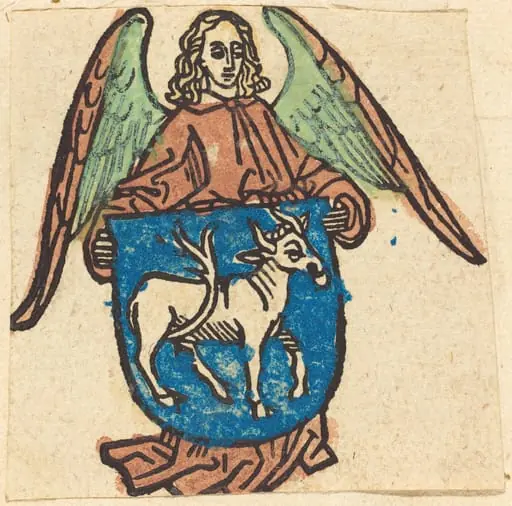 Bookplate of Hilprand Brandenburg of Bibrach
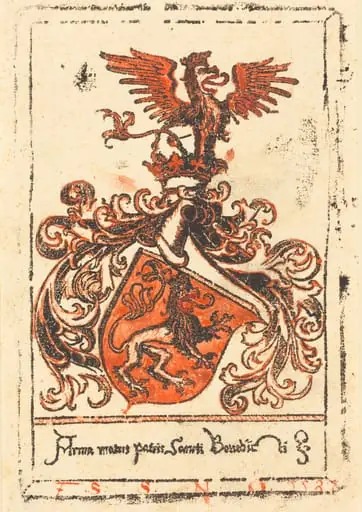 Bookplate of the Abbey of Ottobeuren
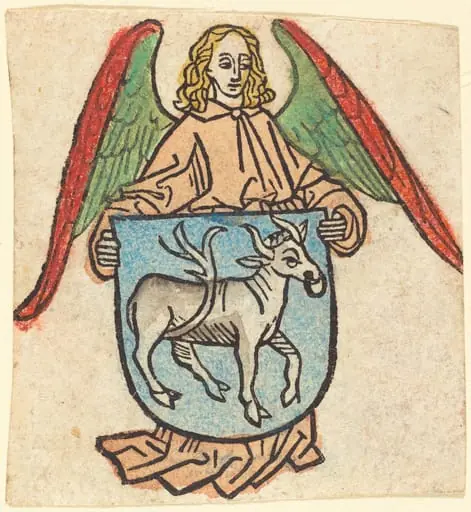 Bookplate of Hilprand Brandenburg of Bibrach
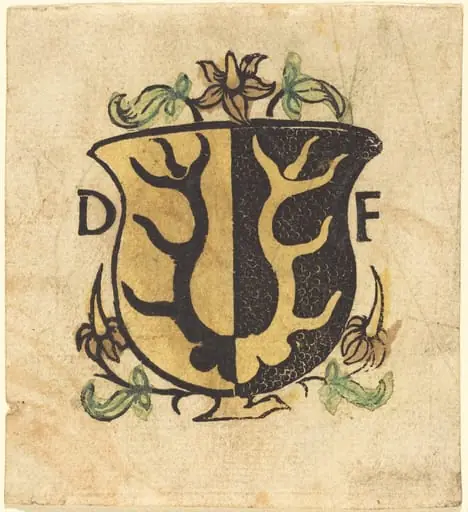 Bookplate of Dominicus Frauenfelder
![Studies for Six Figures (sheet from a model book) [recto], by German 15th Century](https://artifactworldgallery.com/img/german-15th-century--studies-for-six-figures-sheet-from-a-model-book-recto--4837429e0755bc3f-w320.webp) Studies for Six Figures (sheet from a model book) [recto]
Studies for Six Figures (sheet from a model book) [recto]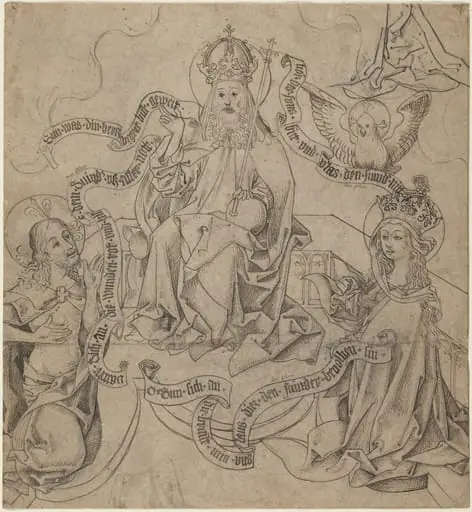 Christ and Mary Interceding with God the Father