Artwork
Christ on the Cross
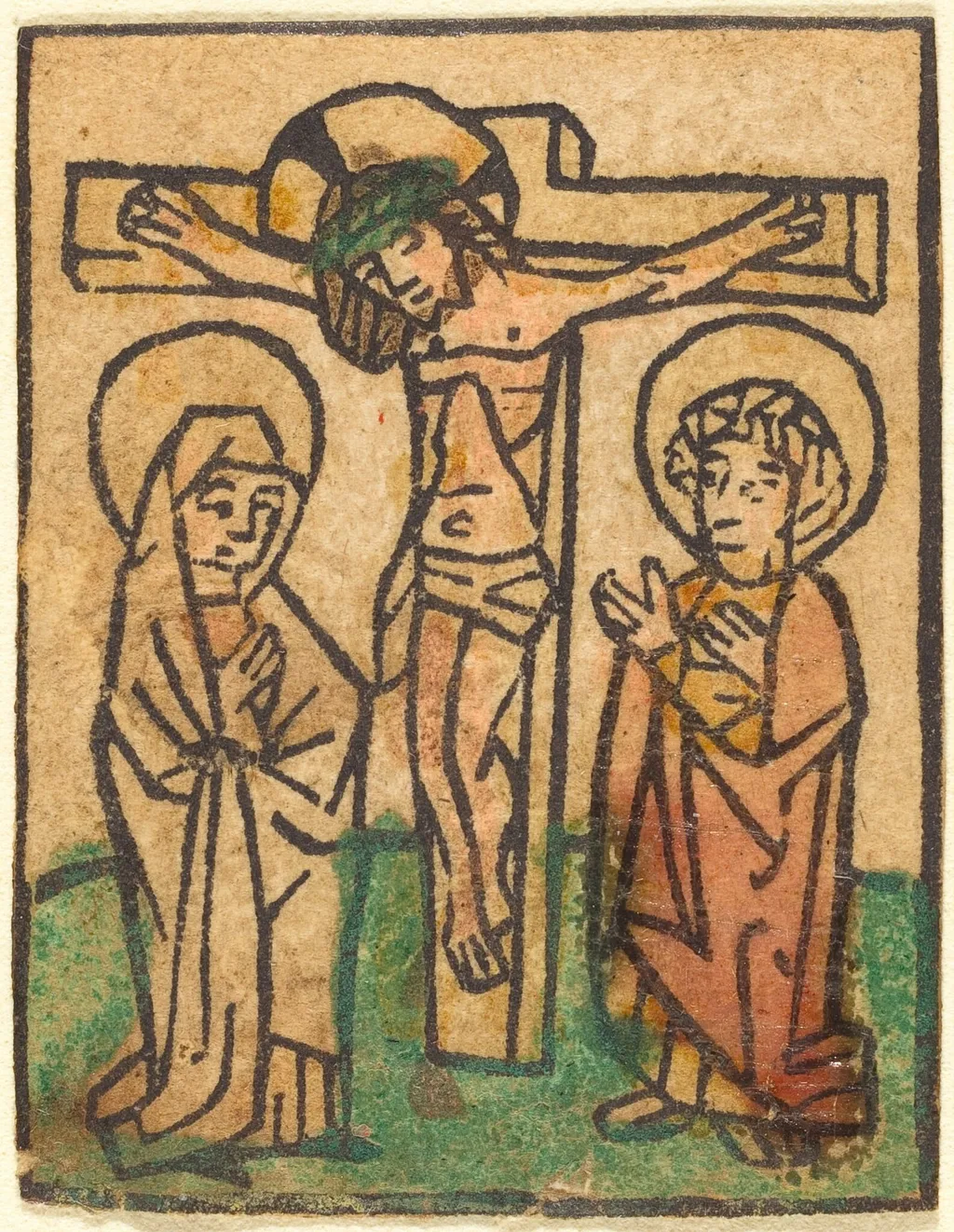
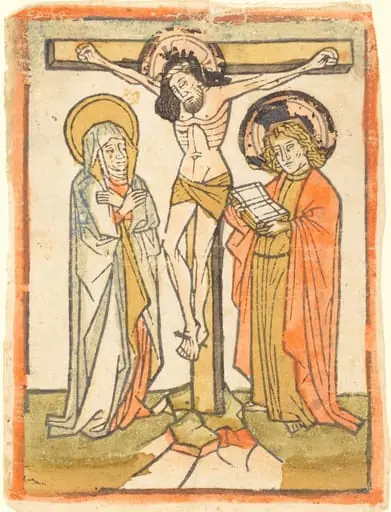
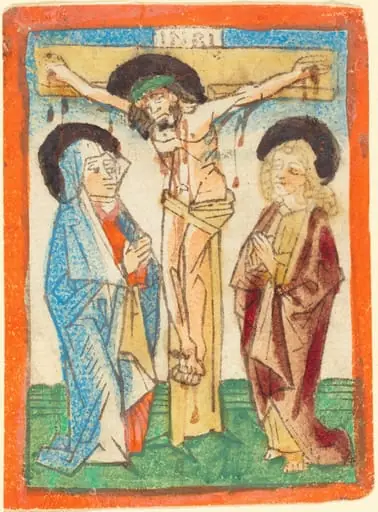
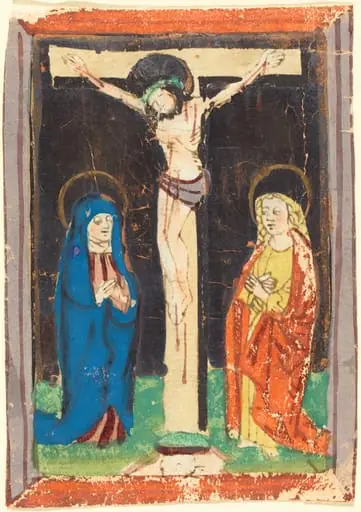
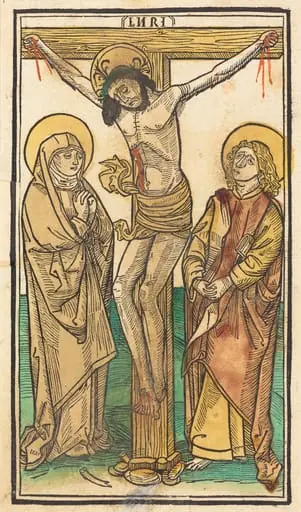
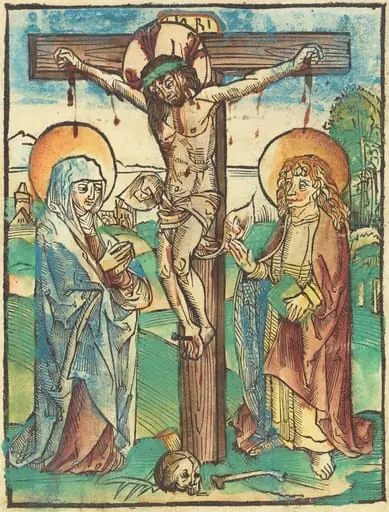
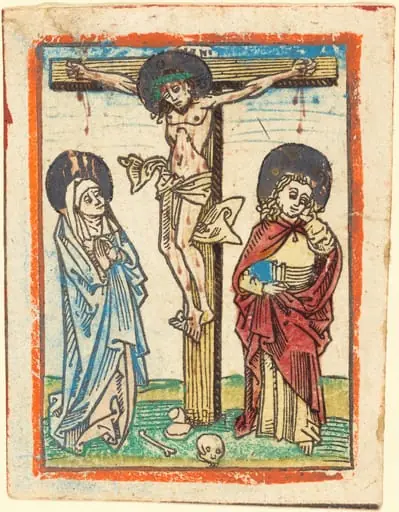
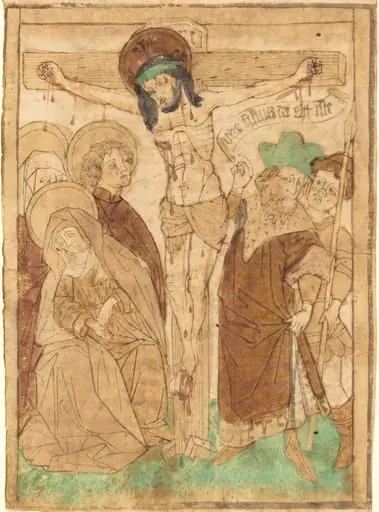
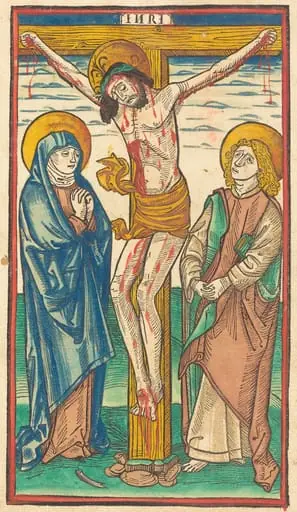
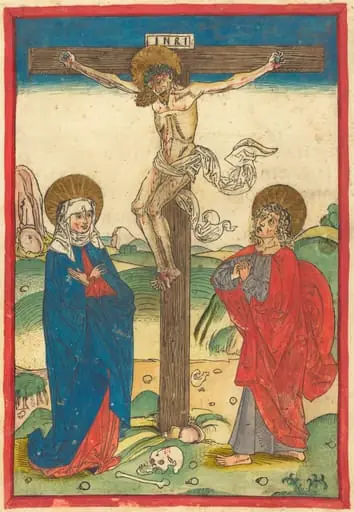
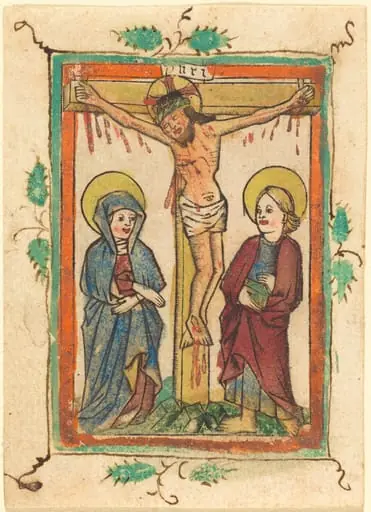
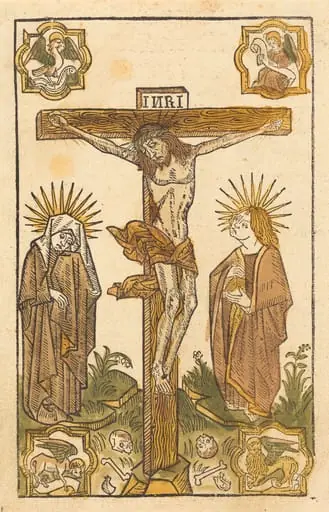
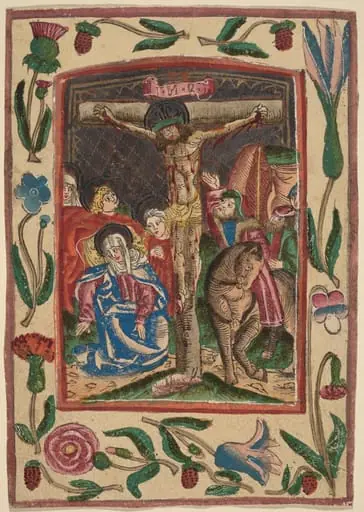
Christ on the Cross is an ink print by the Renaissance artist German 15th Century. It dates from 1450 and is held in the collection of the National Gallery of Art. This woodcut depicts Christ crucified, flanked by two figures who gaze upward.
About this work
Overview
Rendered in bold black lines on laid paper, the image was hand-colored with faint traces of yellow ocher, green, and red-orange.
This woodcut depicts Christ crucified, flanked by two figures who gaze upward. Rendered in bold black lines on laid paper, the image was hand-colored with faint traces of yellow ocher, green, and red-orange. The use of woodcut technique—carving lines into a wooden block—produces a stark, graphic quality. Halos identify the figures as sacred, emphasizing the religious subject despite the minimal palette and simplified forms.
Subject & Meaning
The scene portrays the crucifixion of Christ, with the central figure wearing a crown of thorns and bound to the cross. Two attendants, likely the Virgin Mary and John the Evangelist, stand below, their postures conveying reverence. The presence of halos confirms their holy status within Christian iconography. The composition focuses attention on sacrifice and devotion, stripping away narrative detail to highlight spiritual gravity.
Technique & Style
Executed as a woodcut, the image was created by carving lines into a wooden block, inking the surface, and pressing it onto paper. The bold, unmodulated contours reflect the medium’s capacity for strong graphic contrast. Hand-coloring with limited pigments—faded now to earth tones—adds subtle emotional tone without obscuring the linear clarity. The style favors symbolic clarity over naturalism, typical of devotional prints of the period.
History & Provenance
The work’s exact origin and early ownership are undocumented, but its technique and iconography align with late medieval or early Renaissance devotional prints produced in Central Europe. Such images were often used for private prayer or as instructional aids in religious communities. The fading of the original colors suggests prolonged exposure to light, common in objects handled or displayed over centuries.
Context
In the centuries before widespread literacy, visual religious imagery served as a primary means of conveying biblical stories. Woodcuts like this one were affordable and reproducible, making them accessible to laypeople. The simplified composition and emphasis on key figures reflect a tradition of devotional art designed for contemplation rather than elaborate storytelling.
Legacy
This print exemplifies how woodcut technology democratized religious imagery in pre-modern Europe. Its enduring presence in collections today reflects its role as a quiet, personal object of faith. Though artistically modest, it preserves the visual language of medieval piety, offering insight into how sacred narratives were communicated through accessible, repeatable forms.
Artist & collection

Artist
This 15th-century German artist carved vivid religious scenes into metal and wood, then hand-painted them in bright, symbolic colors.

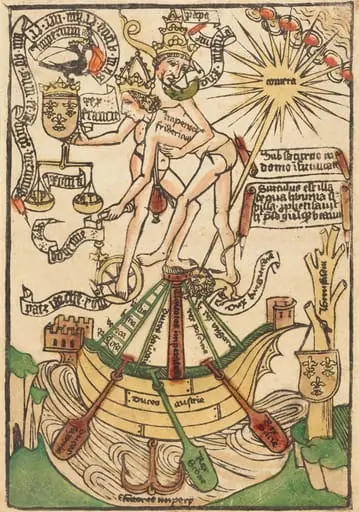 Allegory of the Meeting of Pope Paul II and Emperor Frederick III
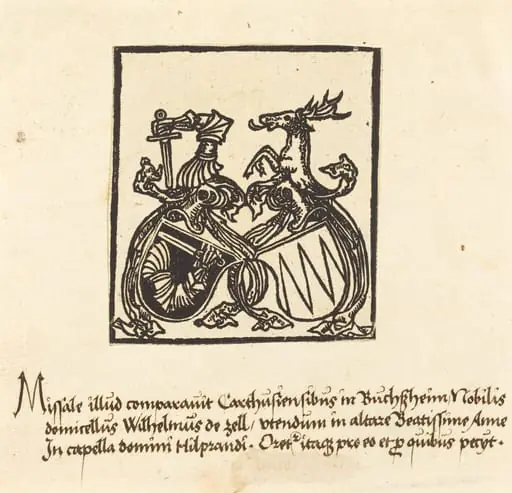 Bookplate of Wilhelm von Zell
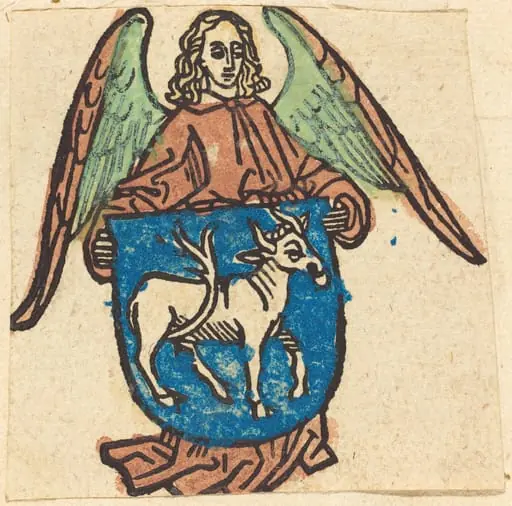 Bookplate of Hilprand Brandenburg of Bibrach
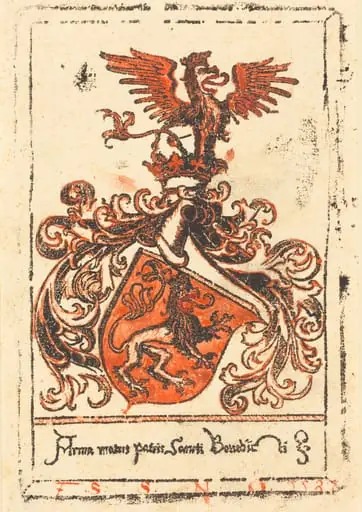 Bookplate of the Abbey of Ottobeuren
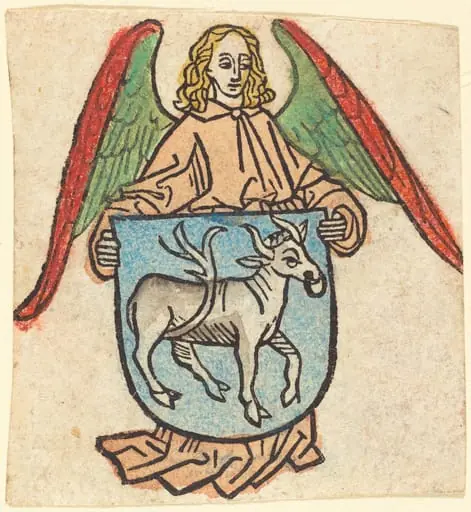 Bookplate of Hilprand Brandenburg of Bibrach
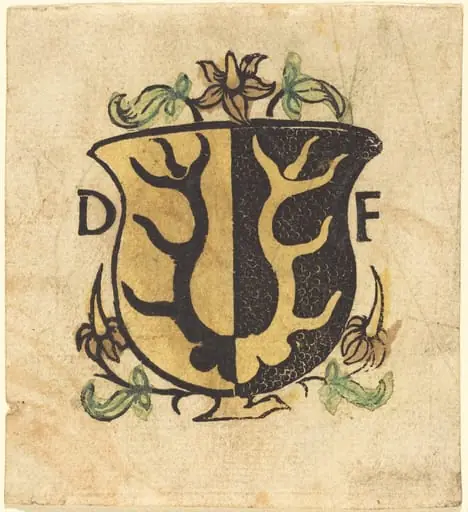 Bookplate of Dominicus Frauenfelder
![Studies for Six Figures (sheet from a model book) [recto], by German 15th Century](https://artifactworldgallery.com/img/german-15th-century--studies-for-six-figures-sheet-from-a-model-book-recto--4837429e0755bc3f-w320.webp) Studies for Six Figures (sheet from a model book) [recto]
Studies for Six Figures (sheet from a model book) [recto]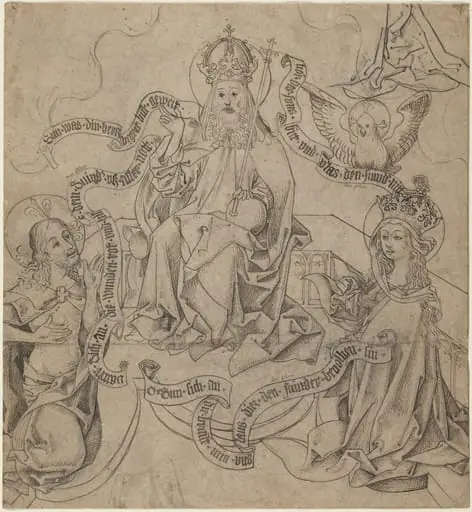 Christ and Mary Interceding with God the Father