Artwork
Christ on the Cross
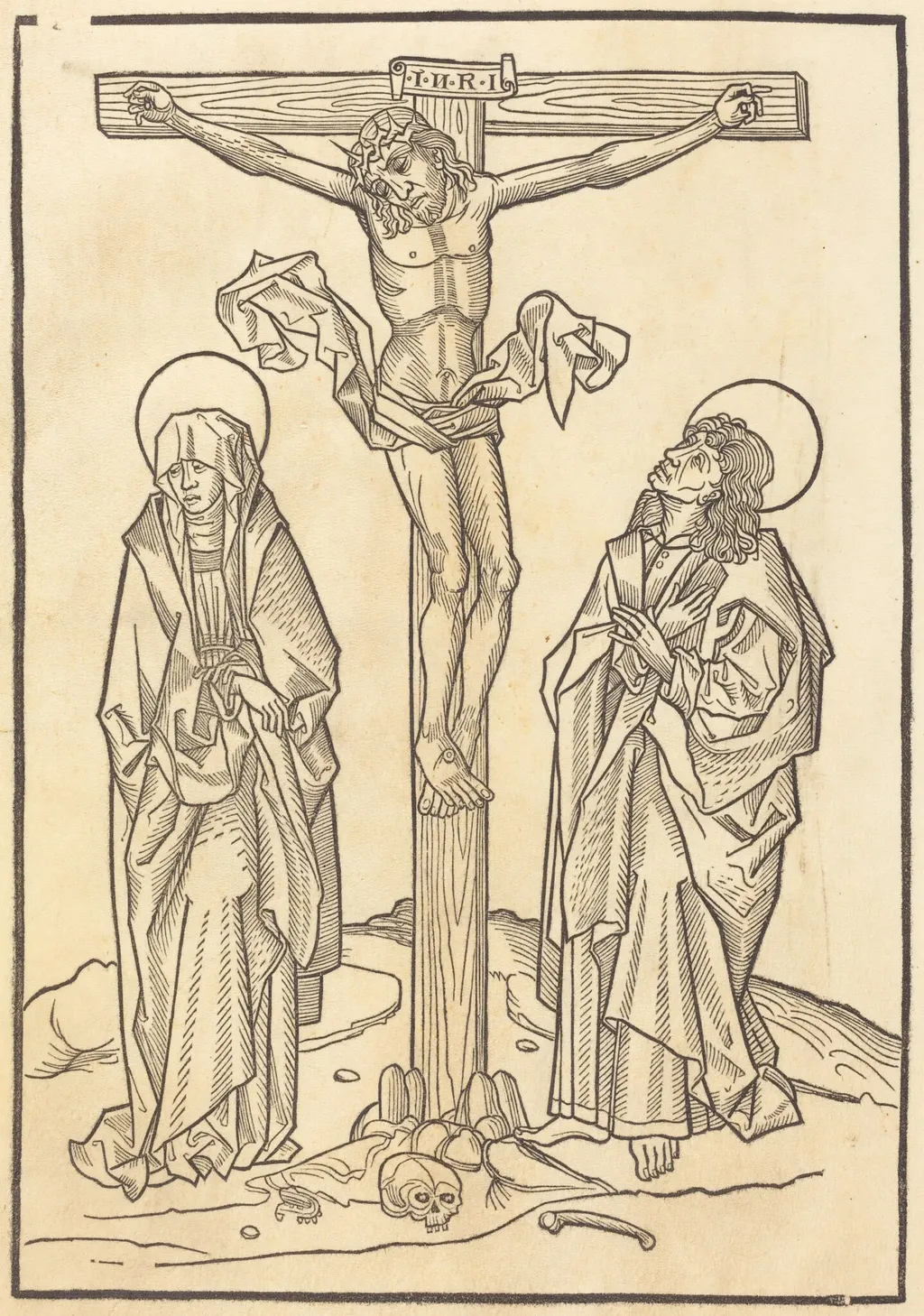
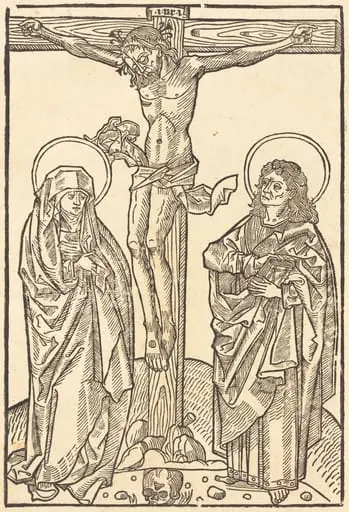
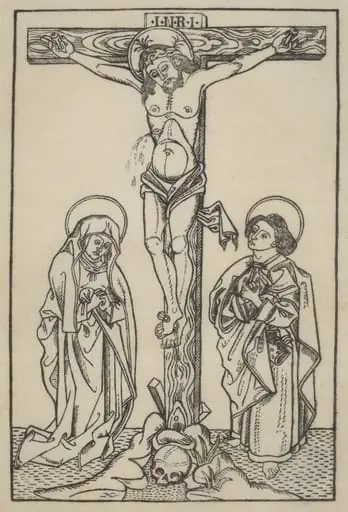
Christ on the Cross is an ink print by the Renaissance artist German 15th Century. It dates from 1490 and is held in the collection of the National Gallery of Art.
About this work
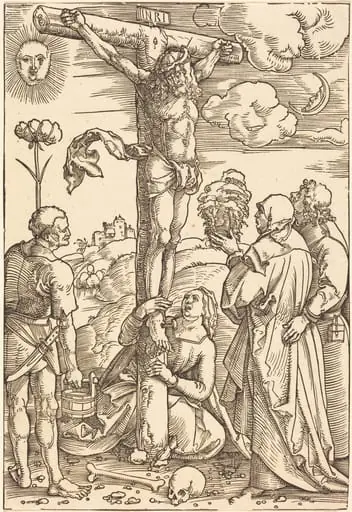
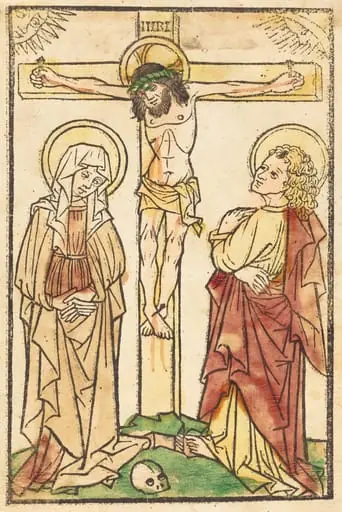
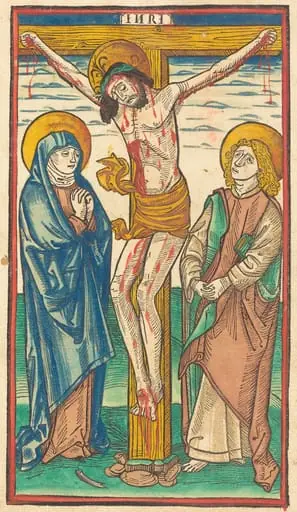
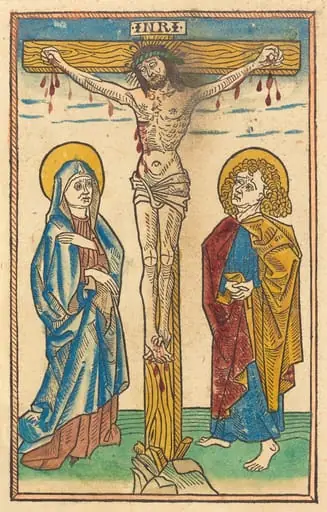
The central figure, Jesus, is shown with his arms outstretched and his body bearing the marks of crucifixion.
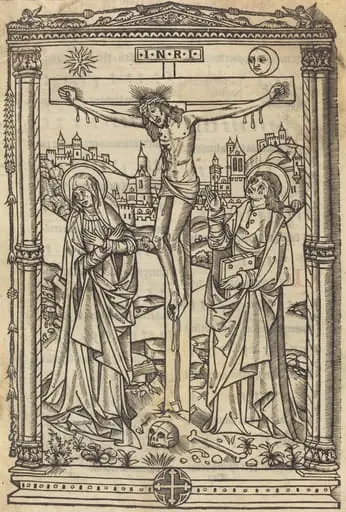
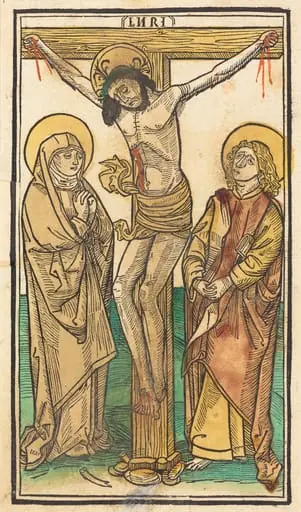
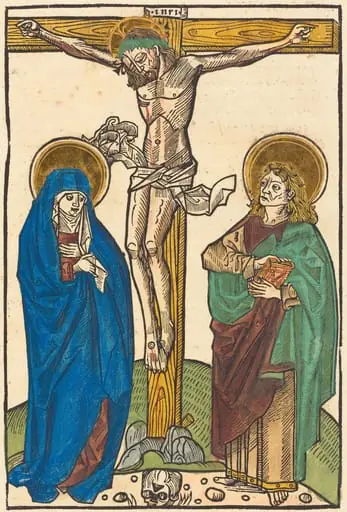
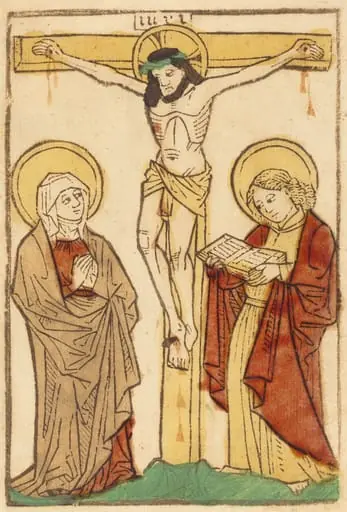
The painting depicts a scene of Jesus Christ on the cross, flanked by two figures. The central figure, Jesus, is shown with his arms outstretched and his body bearing the marks of crucifixion. The two figures on either side are dressed in robes and appear to be in a state of mourning or contemplation.
In the foreground, a skull and bones are visible, symbolizing mortality and the sacrifice of Jesus. The overall mood of the painting is one of somberness and reverence.
This painting is a woodcut on vellum, created by a German artist in the 15th century. To learn more about the technique of woodcut, explore the works of artists who have used this medium.
Overview
Christ on the Cross is a 15th-century German woodcut on vellum, depicting the crucifixion of Jesus Christ in a somber and reverent atmosphere.
Subject & Meaning
The scene centers on Jesus, arms outstretched and bearing crucifixion wounds, flanked by two robed figures in mourning or contemplation. A skull and bones in the foreground symbolize mortality and the sacrificial nature of Christ's death.
Technique & Style
Executed as a woodcut on vellum, this work showcases a traditional 15th-century German printing technique, characterized by bold lines and a limited color palette inherent to the medium.
History & Provenance
Created by an unidentified German artist in the 15th century, specific details about the work's origin, creator, and ownership history are not provided.
Context
This woodcut reflects the prevalent Christian themes in 15th-century German art, catering to the religious devotion and liturgical needs of the time.
Legacy
While the work itself is not highlighted as exceptionally influential, it represents a common religious art form of its era, with the woodcut technique itself being a significant aspect of early printmaking's spread of religious imagery.
Artist & collection

Artist
This 15th-century German artist carved vivid religious scenes into metal and wood, then hand-painted them in bright, symbolic colors.

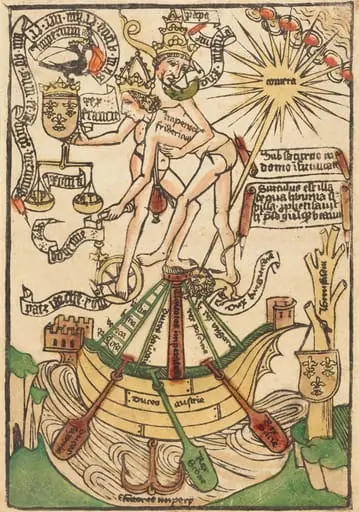 Allegory of the Meeting of Pope Paul II and Emperor Frederick III
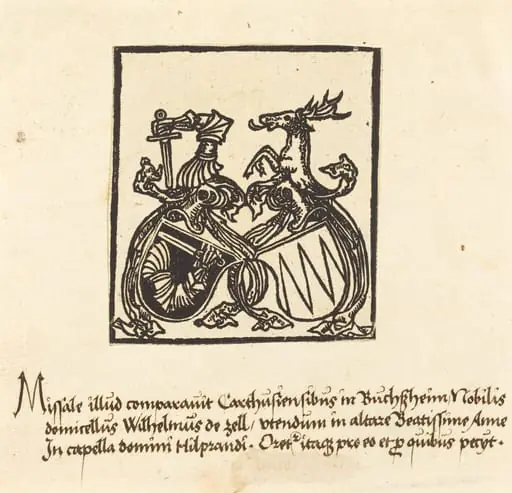 Bookplate of Wilhelm von Zell
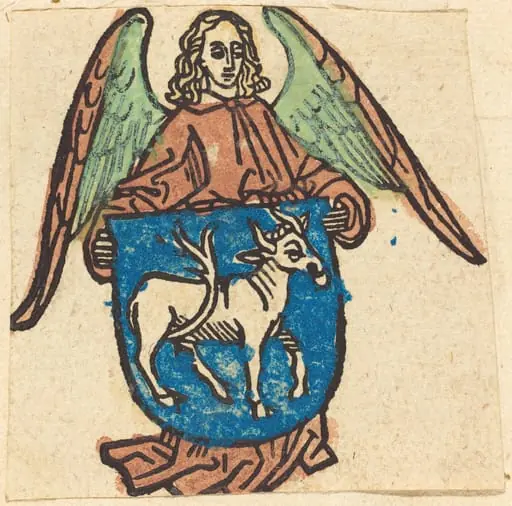 Bookplate of Hilprand Brandenburg of Bibrach
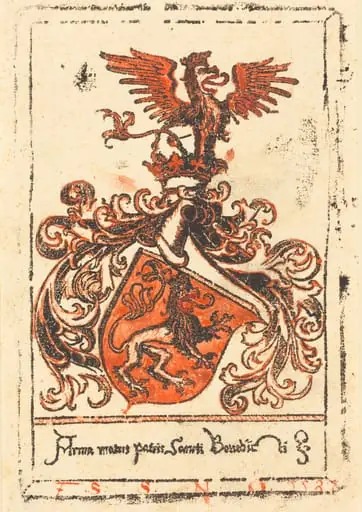 Bookplate of the Abbey of Ottobeuren
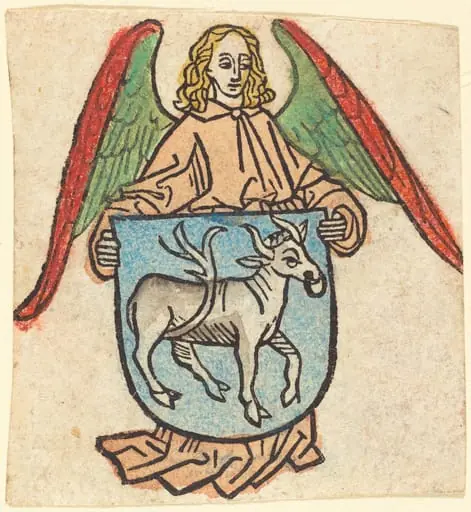 Bookplate of Hilprand Brandenburg of Bibrach
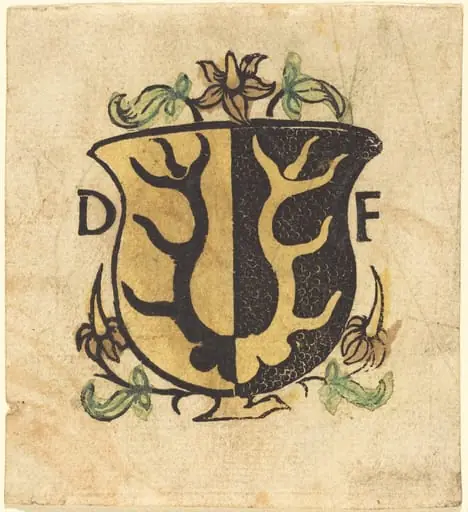 Bookplate of Dominicus Frauenfelder
![Studies for Six Figures (sheet from a model book) [recto], by German 15th Century](https://artifactworldgallery.com/img/german-15th-century--studies-for-six-figures-sheet-from-a-model-book-recto--4837429e0755bc3f-w320.webp) Studies for Six Figures (sheet from a model book) [recto]
Studies for Six Figures (sheet from a model book) [recto]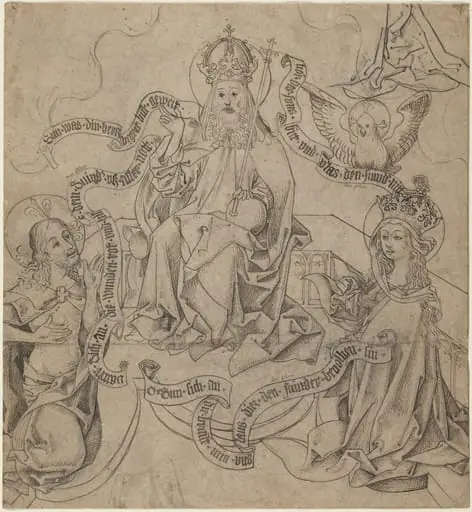 Christ and Mary Interceding with God the Father