Artwork
Monogram JHS in a Flaming Circle
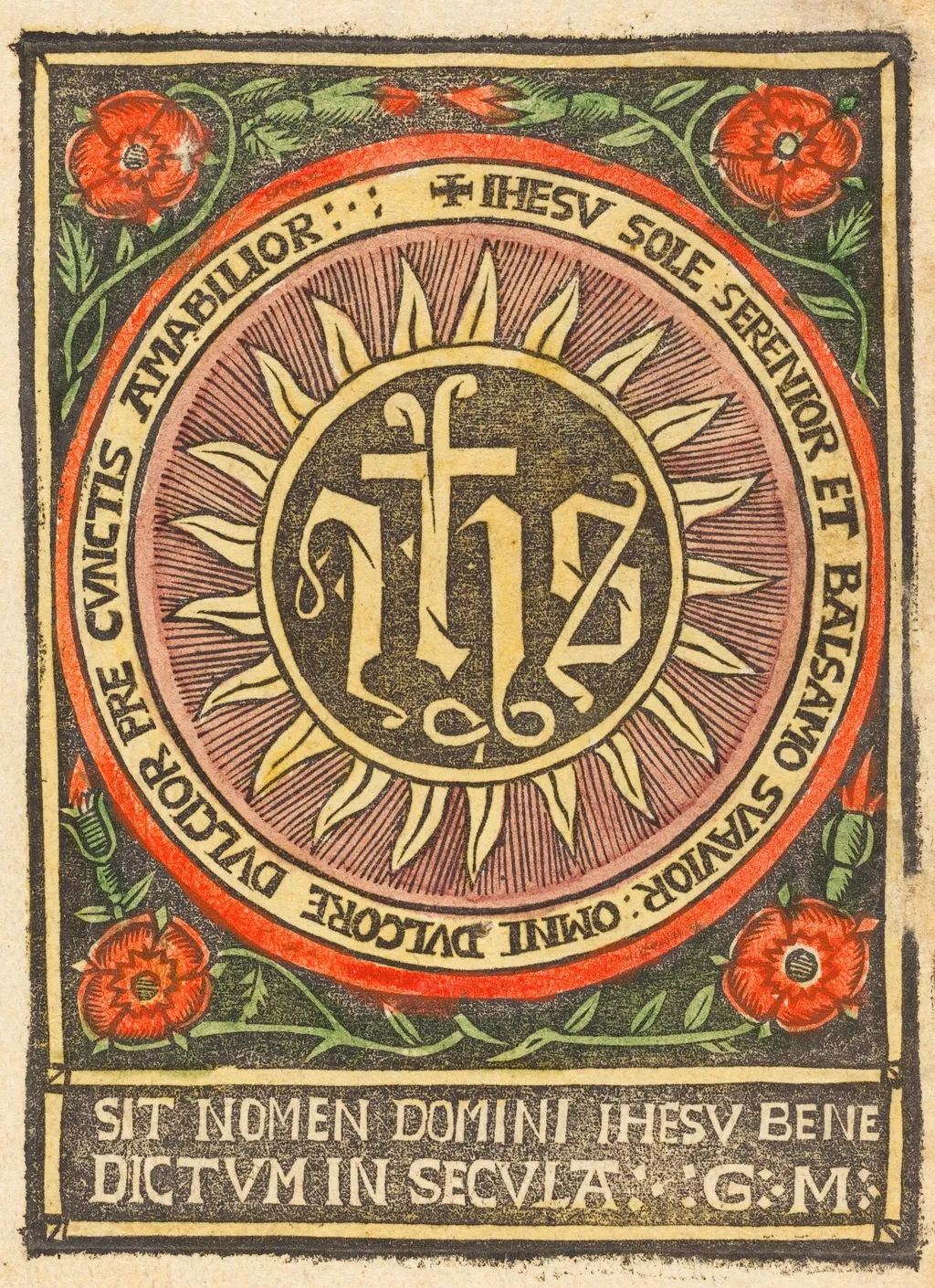
Monogram JHS in a Flaming Circle is an ink print by the Renaissance artist German 15th Century. It dates from 1500 and is held in the collection of the National Gallery of Art. This small woodcut features a flaming red circle enclosing the monogram JHS, hand-colored with red, green, yellow, and lavender-pink inks.
About this work
Overview
This small woodcut features a flaming red circle enclosing the monogram JHS, hand-colored with red, green, yellow, and lavender-pink inks.
This small woodcut features a flaming red circle enclosing the monogram JHS, hand-colored with red, green, yellow, and lavender-pink inks. The contrast between the vibrant pigments and the unadorned paper draws attention to the central symbol. Produced during a period when hand-coloring added significant cost and labor, such prints were luxury items, often intended for devotional use rather than mass distribution.
Subject & Meaning
The monogram JHS represents the first three letters of Jesus’ name in Greek (ΙΗΣΟΥΣ), a common Christogram in Christian iconography. The flaming circle suggests divine presence or sacred fire, reinforcing its religious significance. Its compact form made it suitable for inclusion in prayer books or as a devotional emblem, serving both as a visual reminder and a symbol of faith.
Technique & Style
Executed as a woodcut, the design relies on bold, simplified lines to define the circle and letters. Hand-coloring applied after printing introduced subtle tonal variations, with each impression uniquely tinted. The limited palette—focused on warm hues against white paper—enhances the emblem’s luminous quality, reflecting a preference for clarity and symbolic resonance over naturalism.
History & Provenance
Hand-colored woodcuts like this were produced in late medieval and early Renaissance Europe, primarily in regions with active print workshops such as southern Germany or the Low Countries. Their rarity stems from the labor-intensive process; few survive in original condition. Many were bound into religious texts or kept as standalone devotional objects, often in private collections.
Context
During the 15th and early 16th centuries, printed religious imagery flourished alongside the rise of personal piety. Small, portable devotional prints allowed individuals to engage with sacred symbols outside formal worship. This piece reflects a broader trend of integrating visual piety into daily life, where even modest objects carried spiritual weight through their iconography and craftsmanship.
Legacy
Though not widely attributed to a known artist, such prints contributed to the visual language of Christian devotion in the print era. Their survival offers insight into how ordinary believers interacted with sacred imagery. Today, they are valued as historical artifacts that bridge the gap between mass production and personal spirituality in pre-modern Europe.
Artist & collection

Artist
This 15th-century German artist carved vivid religious scenes into metal and wood, then hand-painted them in bright, symbolic colors.

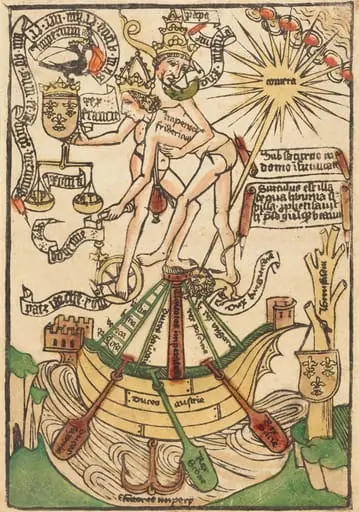 Allegory of the Meeting of Pope Paul II and Emperor Frederick III
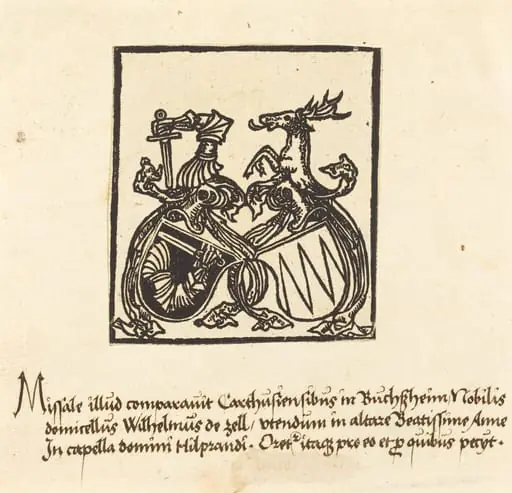 Bookplate of Wilhelm von Zell
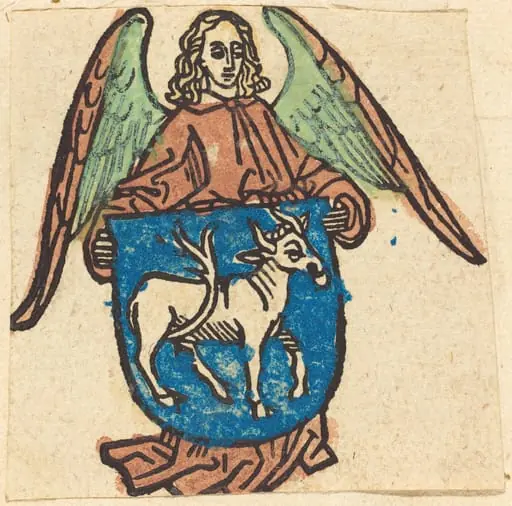 Bookplate of Hilprand Brandenburg of Bibrach
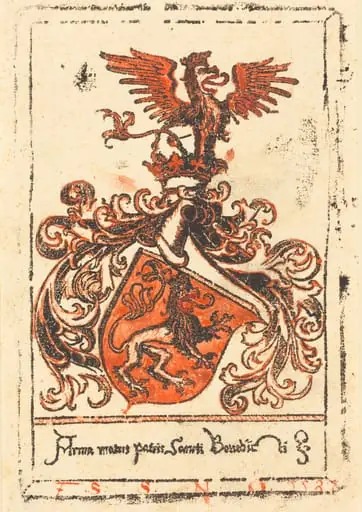 Bookplate of the Abbey of Ottobeuren
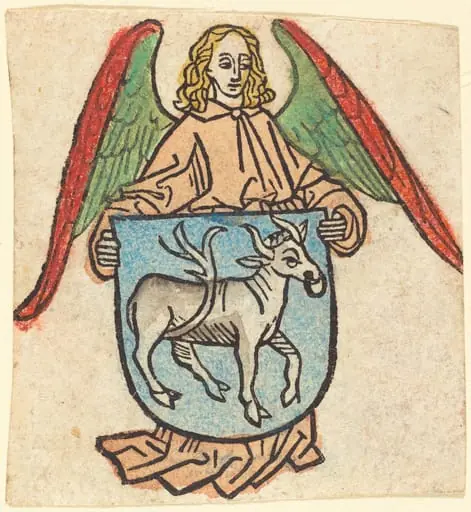 Bookplate of Hilprand Brandenburg of Bibrach
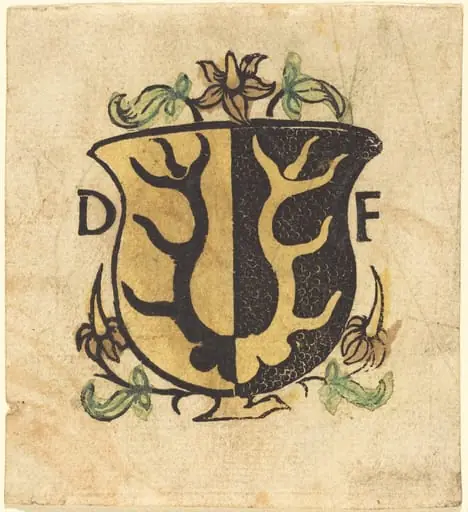 Bookplate of Dominicus Frauenfelder
![Studies for Six Figures (sheet from a model book) [recto], by German 15th Century](https://artifactworldgallery.com/img/german-15th-century--studies-for-six-figures-sheet-from-a-model-book-recto--4837429e0755bc3f-w320.webp) Studies for Six Figures (sheet from a model book) [recto]
Studies for Six Figures (sheet from a model book) [recto]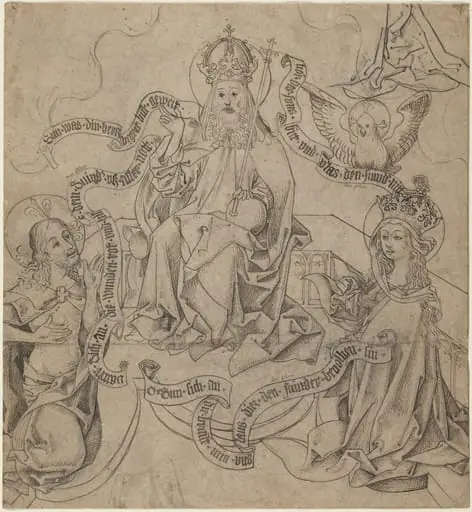 Christ and Mary Interceding with God the Father
![The Sacred Monograph with the Crucifixion and Passion Symbols [recto], by German 15th Century](https://artifactworldgallery.com/img/german-15th-century--the-sacred-monograph-with-the-crucifixion-and-passion-symbol--0037ce706250b56f-w320.webp) The Sacred Monograph with the Crucifixion and Passion Symbols [recto]
The Sacred Monograph with the Crucifixion and Passion Symbols [recto]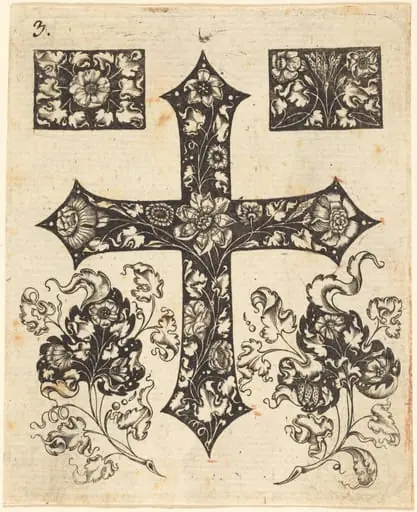 Cross Embellished with Flowers
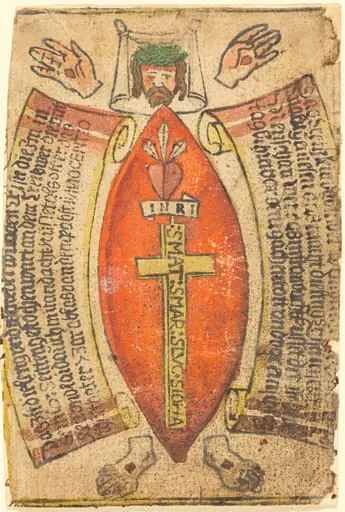 The Measure of the Side Wound and the Body of Christ
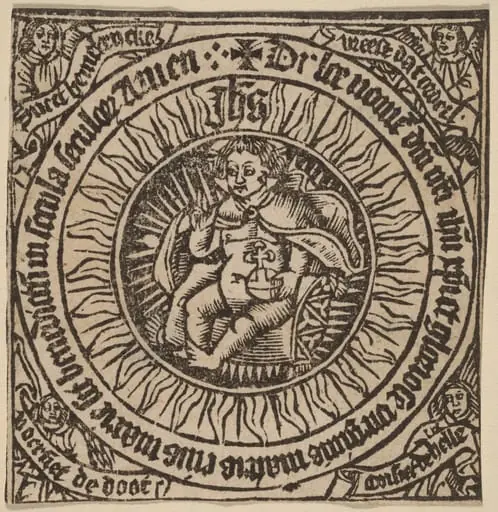 Divine Infant with the Globe in a Circle with Four Angels
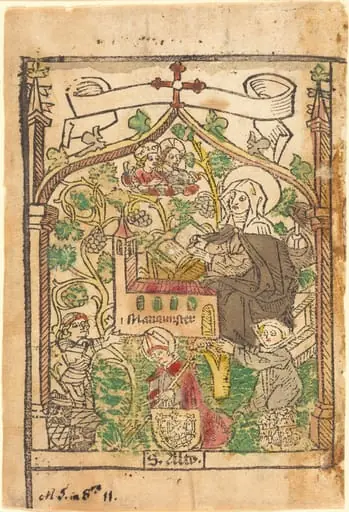 Saint Alto, Saint Bridget and the Founders of the Mariamunster
 The Cross
 The Emblem
 Madonna and Child Seated on a Grassy Bank with Angels
 Saint Dorothy
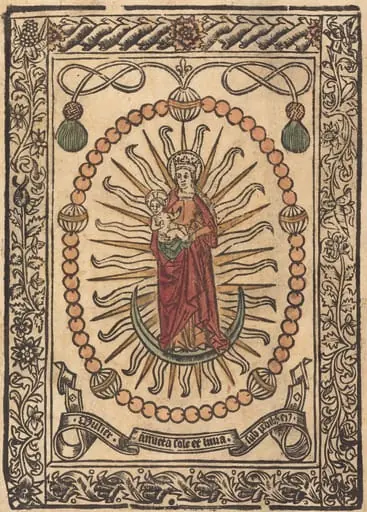 The Madonna and Child in a Rosary
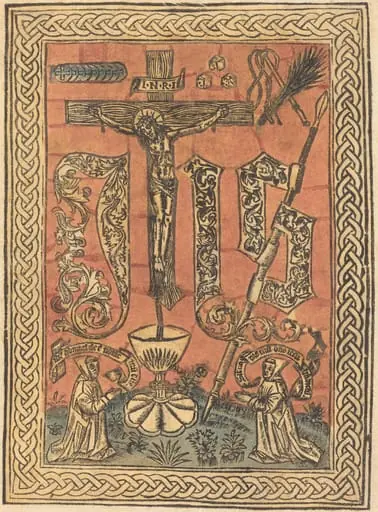 The Sacred Monogram
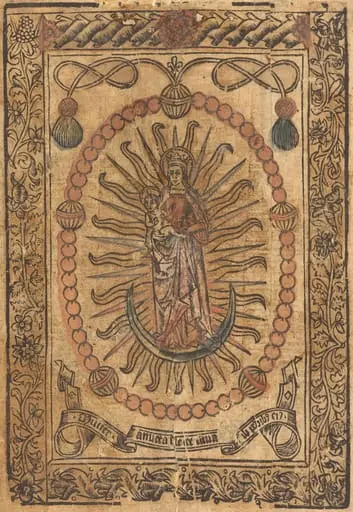 The Madonna and Child in a Rosary