Artwork
Saint Dorothy
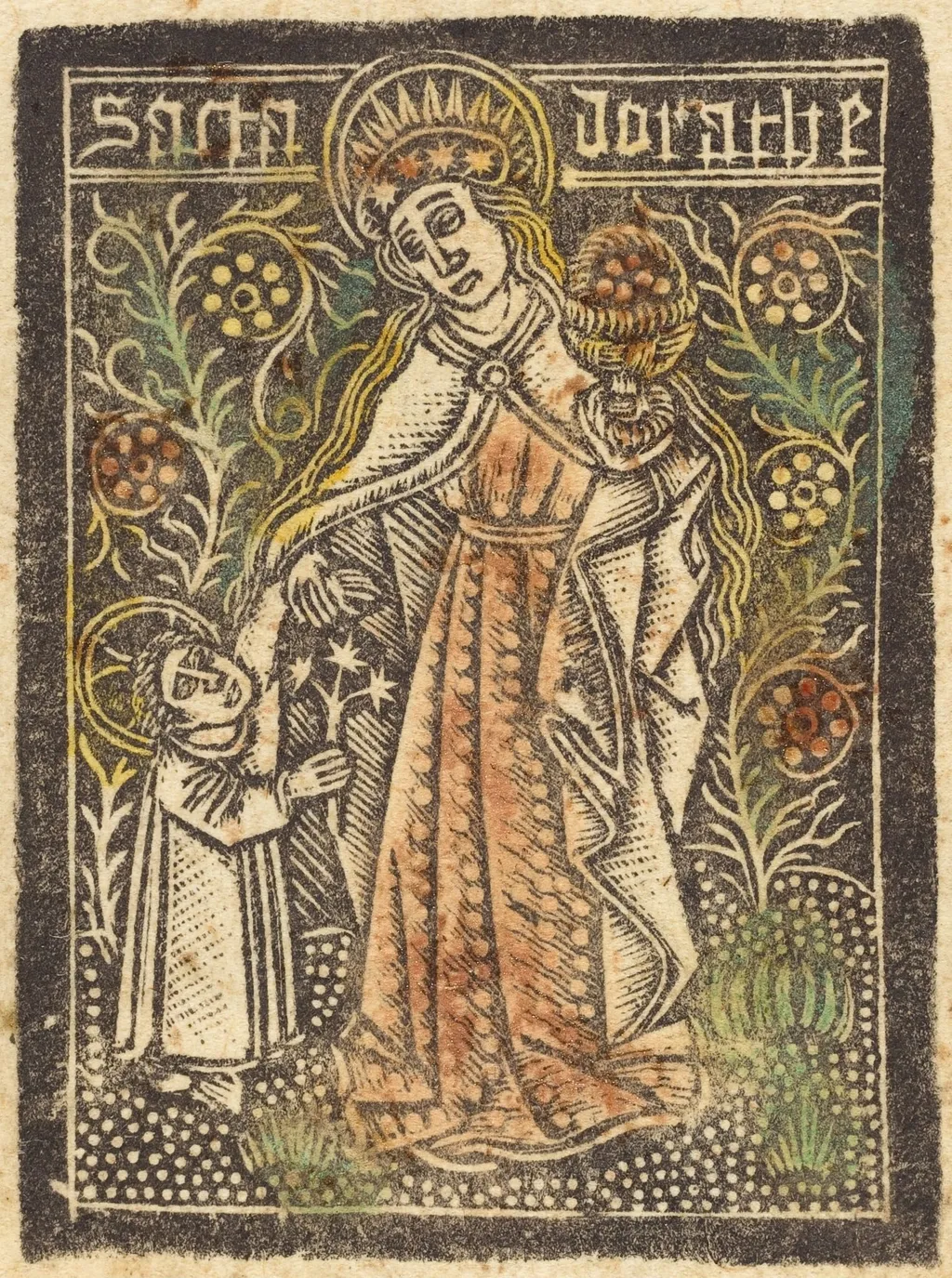
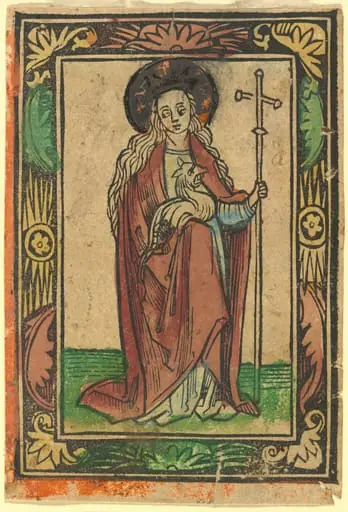
Saint Dorothy is a paint print by the Renaissance artist German 15th Century. It dates from 1470 and is held in the collection of the National Gallery of Art.
About this work
Overview
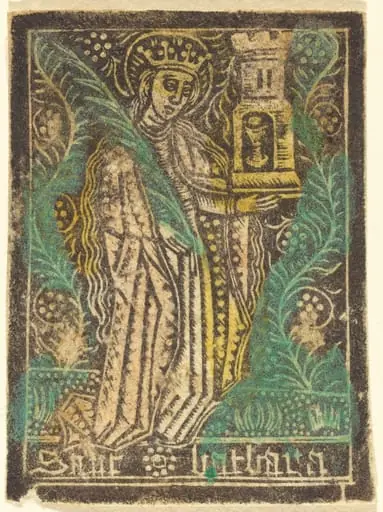
The surrounding foliage is animated by swirling vines and tiny flowers, giving the work a lively, ornamental border.
This small metalcut print, titled *Sancta Dorothea*, presents a devotional scene rendered in line engraving and subsequently hand‑colored with red, green, and yellow pigments. The composition centers on a kneeling female saint clutching a basket of blossoms and fruit, while a luminous, haloed figure draped in a lion’s pelt hovers above her. The surrounding foliage is animated by swirling vines and tiny flowers, giving the work a lively, ornamental border.
Subject & Meaning
The kneeling figure represents Saint Dorothy, a early Christian martyr traditionally associated with flowers and fruit, symbols of purity and the promise of heavenly reward. The floating, haloed presence—often identified as Christ or an angelic messenger—offers a divine endorsement of her devotion, the lion’s pelt recalling the saint’s hagiographic legend of triumph over evil.
Technique & Style
Executed as a metalcut, the image was incised into a metal plate, allowing for fine, linear detail. After printing, artisans applied color by hand, resulting in a slightly uneven but warm tonal quality. The decorative foliage and stylized figures reflect the Northern Renaissance taste for intricate, pattern‑filled compositions, bridging Gothic ornamentation and emerging naturalism.
History & Provenance
The print belongs to the early 16th‑century tradition of devotional objects produced for private contemplation. While the specific workshop remains unidentified, similar hand‑colored metalcuts circulated widely across the Holy Roman Empire, often bound in small frames for personal use. Surviving examples are typically found in private collections and regional museums.
Context
During the Renaissance, the spread of printmaking democratized access to religious imagery, allowing laypeople to own portable representations of saints. This work exemplifies how artists combined traditional iconography with the new possibilities of reproducible media, influencing later devotional prints that continued to blend intricate ornamentation with personal piety.
Artist & collection

Artist
This 15th-century German artist carved vivid religious scenes into metal and wood, then hand-painted them in bright, symbolic colors.

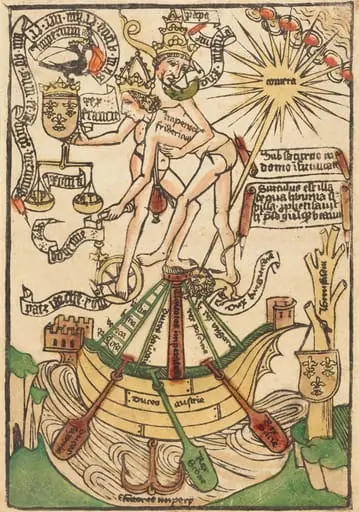 Allegory of the Meeting of Pope Paul II and Emperor Frederick III
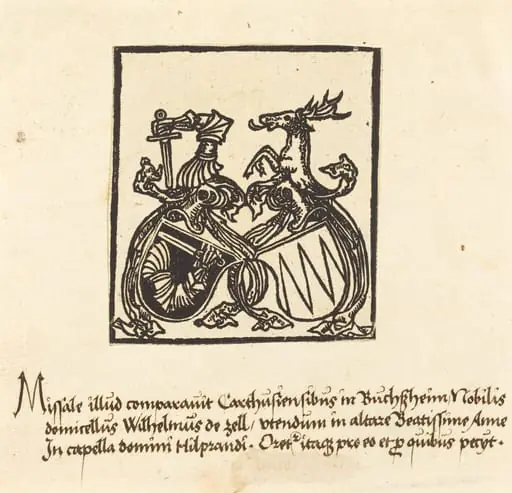 Bookplate of Wilhelm von Zell
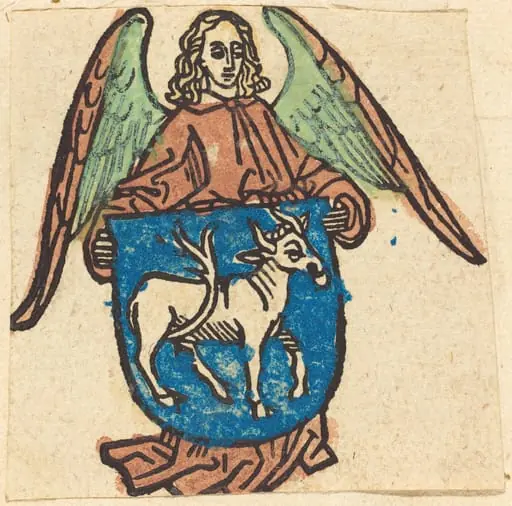 Bookplate of Hilprand Brandenburg of Bibrach
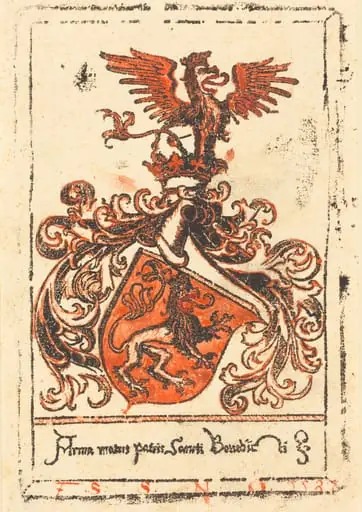 Bookplate of the Abbey of Ottobeuren
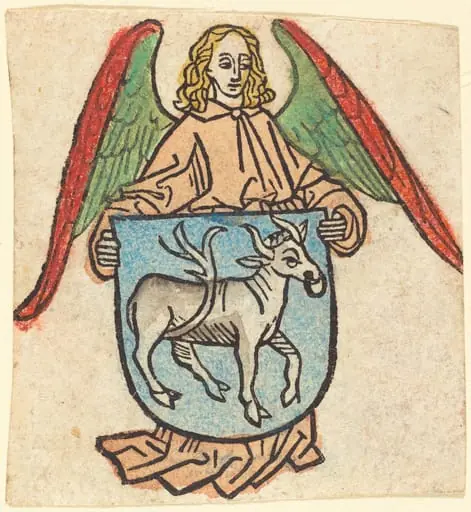 Bookplate of Hilprand Brandenburg of Bibrach
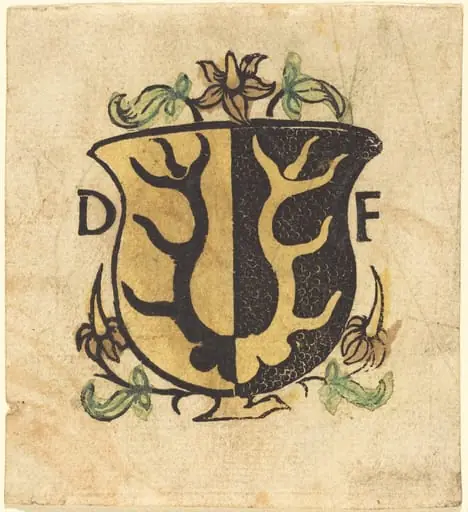 Bookplate of Dominicus Frauenfelder
![Studies for Six Figures (sheet from a model book) [recto], by German 15th Century](https://artifactworldgallery.com/img/german-15th-century--studies-for-six-figures-sheet-from-a-model-book-recto--4837429e0755bc3f-w320.webp) Studies for Six Figures (sheet from a model book) [recto]
Studies for Six Figures (sheet from a model book) [recto]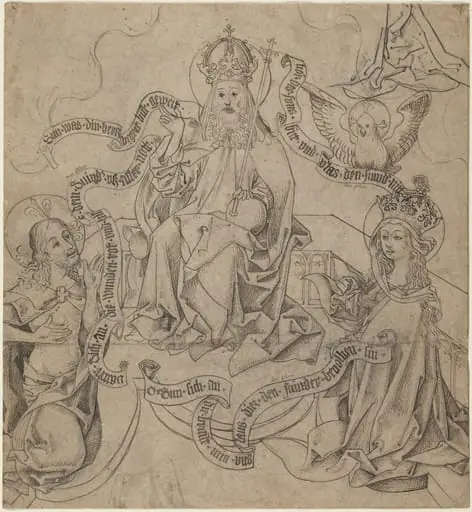 Christ and Mary Interceding with God the Father