Artwork
Saint Bridget
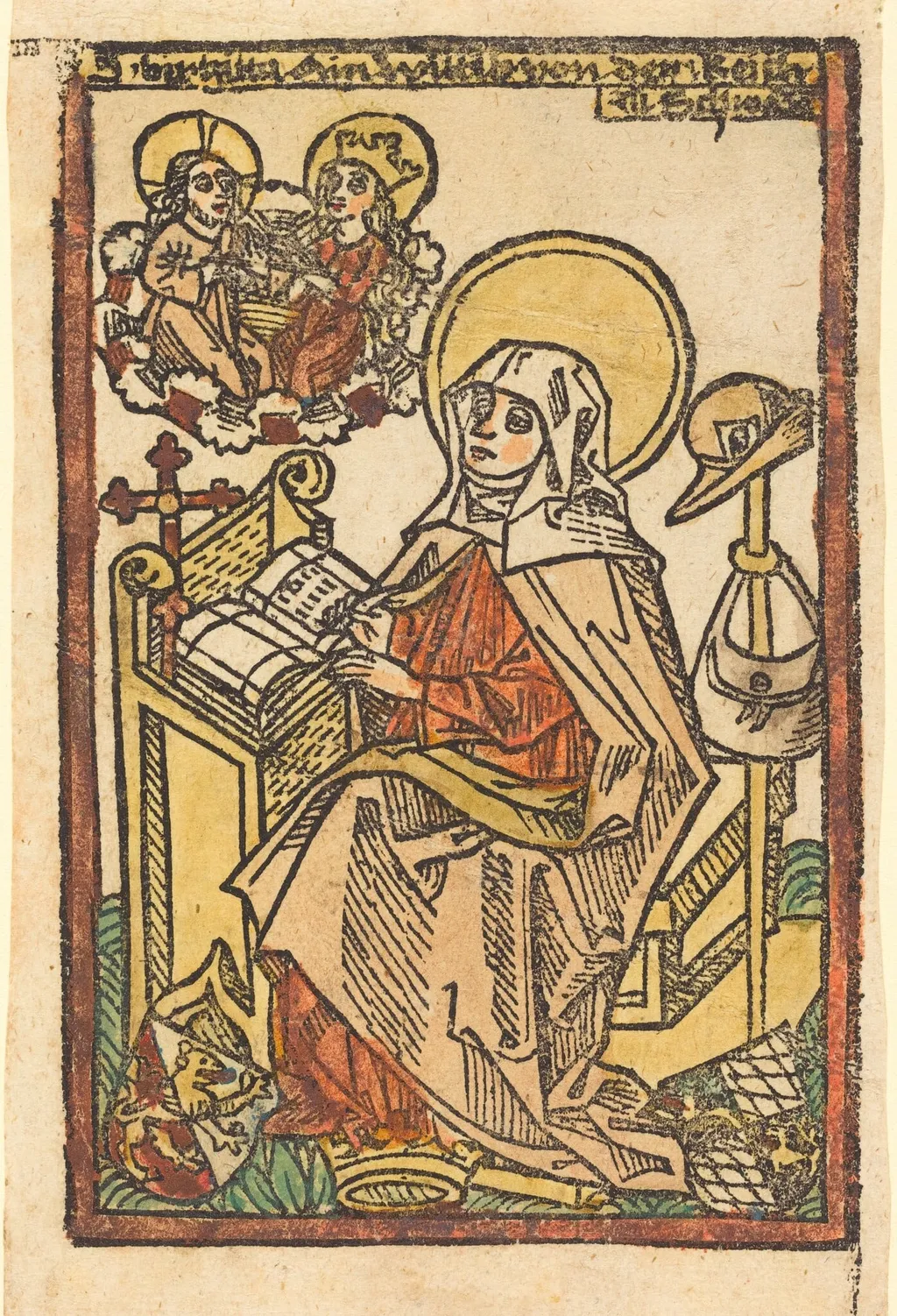
Saint Bridget is an ink print by the Renaissance artist German 15th Century. It dates from 1490 and is held in the collection of the National Gallery of Art.
About this work
Overview
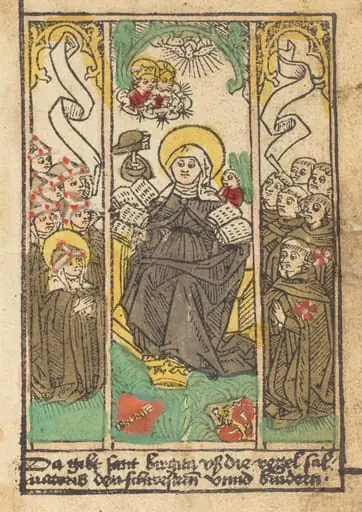
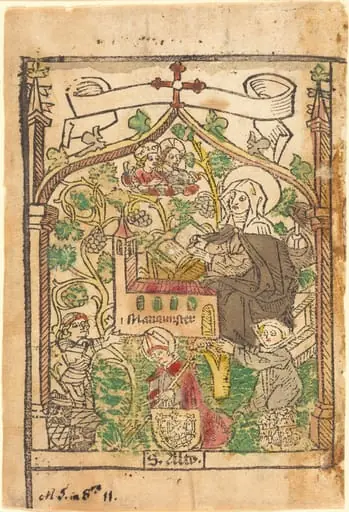
This woodcut print, titled Saint Bridget, presents a robed figure seated on a throne-like chair, holding an open book. A luminous halo encircles the head, and three smaller, haloed figures hover above, gazing downward. To the right, a diminutive figure carries a lamp-like object, while a cross and foliage appear in the background.
Subject & Meaning
The central figure is identified as Saint Bridget, a medieval mystic, depicted in a posture of teaching or contemplation. The surrounding smaller figures likely represent angels or saints, emphasizing her sanctity. The open book suggests her writings or divine revelations, and the lamp‑like object may symbolize illumination of faith.
Technique & Style
Executed as a woodcut, the image relies on carved wooden blocks to produce bold outlines and flat areas of color. Hand‑applied pigments in orange, yellow, gray, green, and orange‑brown give the print its limited palette. The figures appear stylized and rigid, reflecting the symbolic conventions of early printmaking rather than naturalistic representation.
History & Provenance
The work belongs to the early modern period when woodcut printing was a primary means of reproducing religious imagery for devotional use. Its hand‑coloring indicates a later stage of production, where individual copies were enhanced for visual impact. Specific details of its origin or ownership remain undocumented.
Context
Saint Bridget was a popular subject in Northern European devotional art, especially after her canonization in the 14th century. Woodcut prints of saints served both as instructional tools and as portable objects of veneration, often displayed in private chapels or homes.
Legacy
Prints like this contributed to the widespread visual familiarity with Saint Bridget, reinforcing her cult across Europe. The combination of woodcut technique and hand‑coloring exemplifies the transitional phase between purely mechanical reproduction and the more elaborate, colored prints of the later Baroque era.
Artist & collection

Artist
This 15th-century German artist carved vivid religious scenes into metal and wood, then hand-painted them in bright, symbolic colors.

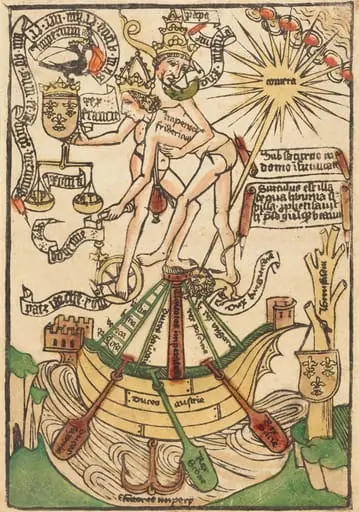 Allegory of the Meeting of Pope Paul II and Emperor Frederick III
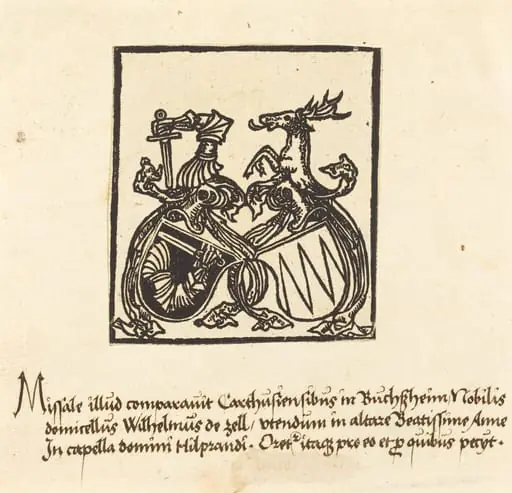 Bookplate of Wilhelm von Zell
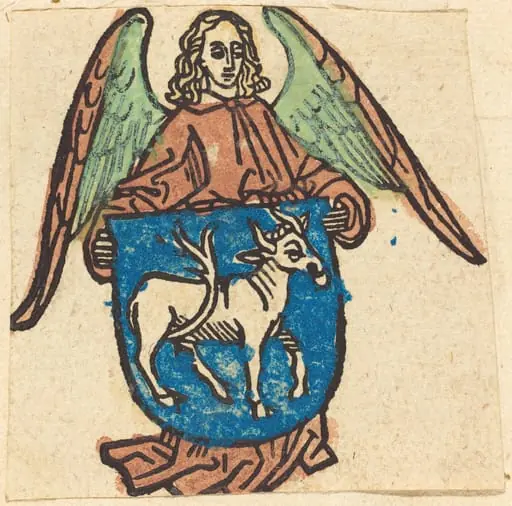 Bookplate of Hilprand Brandenburg of Bibrach
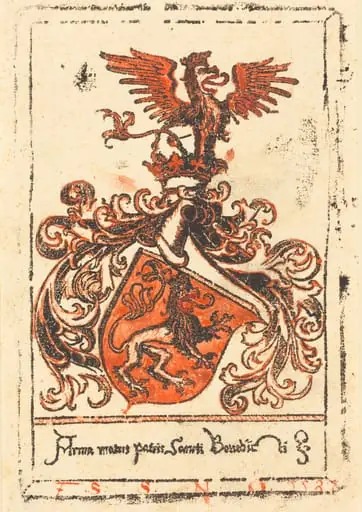 Bookplate of the Abbey of Ottobeuren
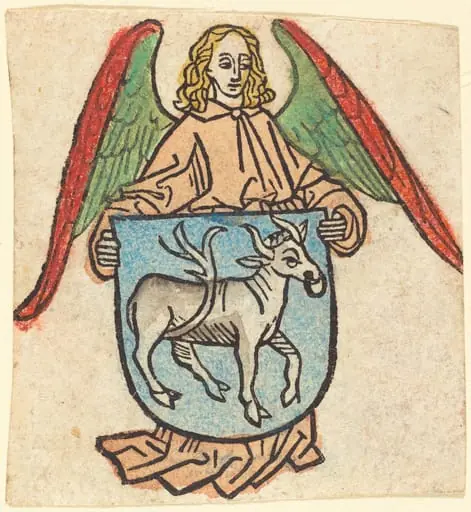 Bookplate of Hilprand Brandenburg of Bibrach
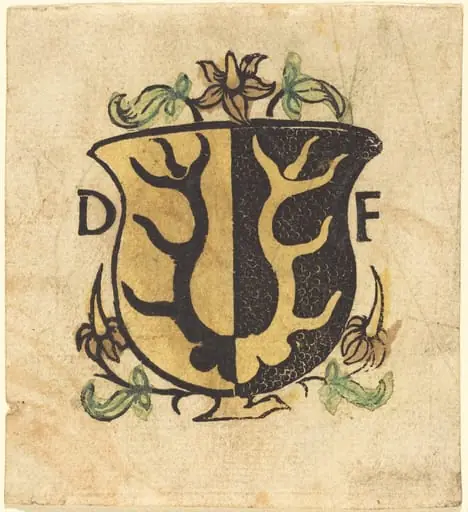 Bookplate of Dominicus Frauenfelder
![Studies for Six Figures (sheet from a model book) [recto], by German 15th Century](https://artifactworldgallery.com/img/german-15th-century--studies-for-six-figures-sheet-from-a-model-book-recto--4837429e0755bc3f-w320.webp) Studies for Six Figures (sheet from a model book) [recto]
Studies for Six Figures (sheet from a model book) [recto]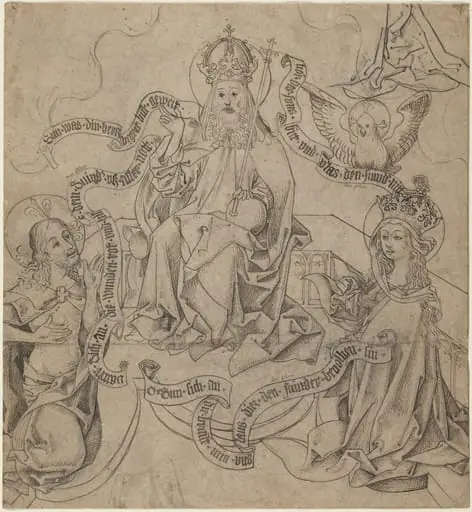 Christ and Mary Interceding with God the Father