Artwork
Saint Conrad of Constance
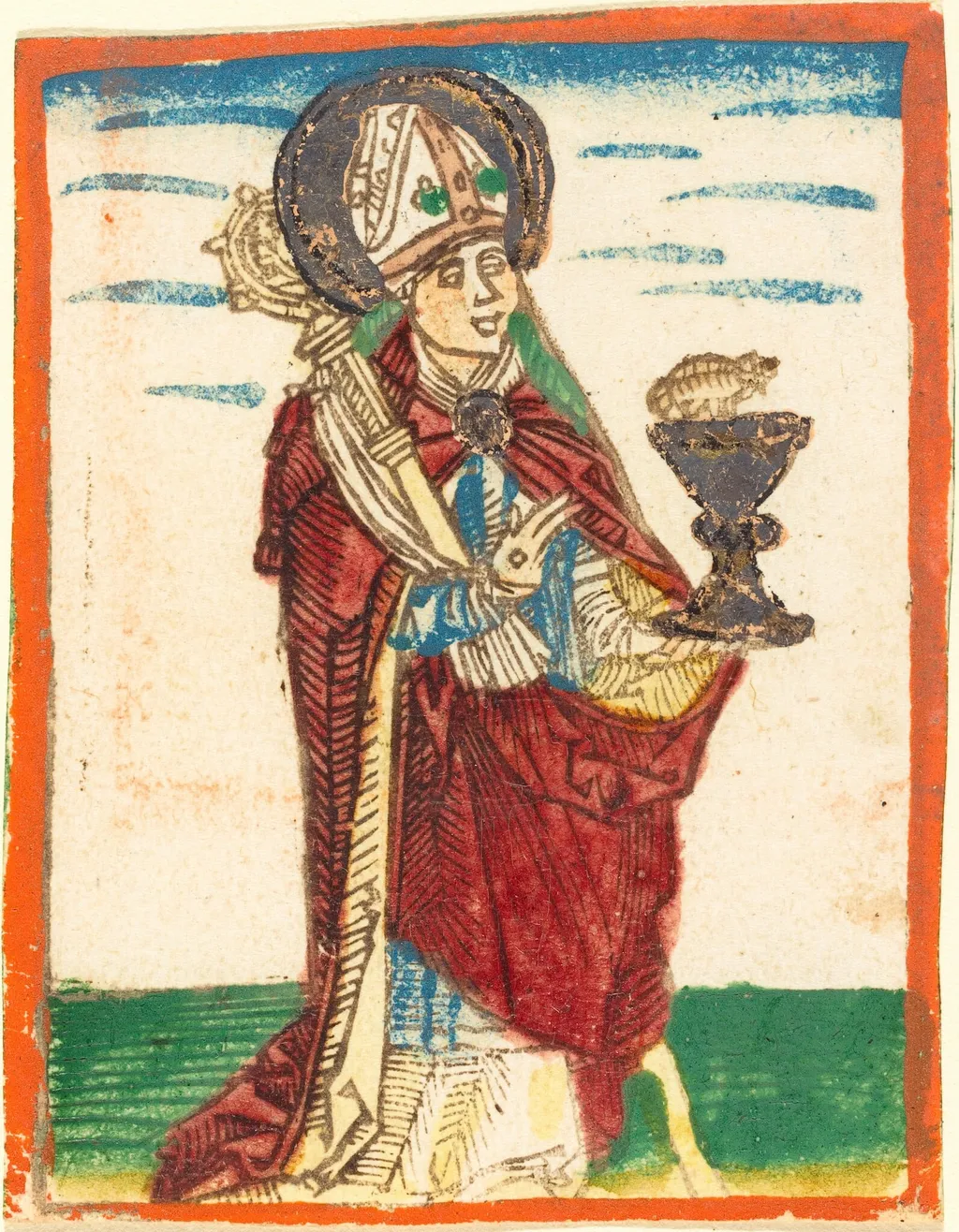
Saint Conrad of Constance is an ink print by the Renaissance artist German 15th Century. It dates from 1485 and is held in the collection of the National Gallery of Art.
About this work
Overview
Hand-coloring was a common practice in the late medieval period to enhance devotional prints, making each copy unique despite being part of a printed series.
This hand-colored woodcut depicts Saint Conrad of Constance, a 10th-century bishop, rendered in brown ink with added pigments in red lake, green, yellow, blue, gold, and orange. The image is a printed impression made by carving a design into a wooden block, then applying ink and pressing it onto paper. Hand-coloring was a common practice in the late medieval period to enhance devotional prints, making each copy unique despite being part of a printed series.
Subject & Meaning
Saint Conrad is portrayed with attributes identifying him as a bishop: a tall mitre crowned with a golden cross, a red chasuble, and a striped sash. He holds a chalice, symbolizing his role in the Eucharist, and a book, likely representing scripture or liturgical texts. The simple grass beneath his feet and the plain sky suggest a sacred, otherworldly presence rather than a specific earthly location, emphasizing his spiritual authority over temporal concerns.
Technique & Style
The image was produced using a woodcut technique, where lines and shapes were carved into a wooden block, inked, and pressed onto paper. Details such as the folds of the robe and the texture of the hat were achieved through incised lines, while the vibrant colors—applied by hand—added richness and devotional emphasis. The use of gold leaf or metallic pigment highlights sacred elements, reflecting the tradition of illuminating religious imagery to signify divine presence.
History & Provenance
Created likely in the late 15th or early 16th century, this print reflects the widespread use of woodcuts for religious instruction and personal devotion in German-speaking regions. Though its exact origin and early owners are undocumented, similar prints circulated among monasteries and lay communities. The hand-coloring suggests it was commissioned or purchased by someone with means, intended for private veneration rather than mass distribution.
Context
During the late Middle Ages, woodcuts were a primary medium for disseminating religious imagery before the rise of movable type printing. Saint Conrad, venerated in southern Germany and Switzerland, was a popular subject in regional devotional art. This print would have been used in homes or chapels to aid prayer, reinforcing the saint’s intercessory role and the importance of the Eucharist in daily spiritual life.
Legacy
As a surviving example of early printed devotional art, this woodcut illustrates the intersection of craftsmanship and piety in pre-Reformation Europe. While later printing technologies replaced hand-coloring, such works remain valuable for understanding how religious figures were visually constructed and consumed by ordinary believers. The persistence of similar imagery in regional cults underscores the enduring appeal of localized saints in medieval Christian practice.
Artist & collection

Artist
This 15th-century German artist carved vivid religious scenes into metal and wood, then hand-painted them in bright, symbolic colors.

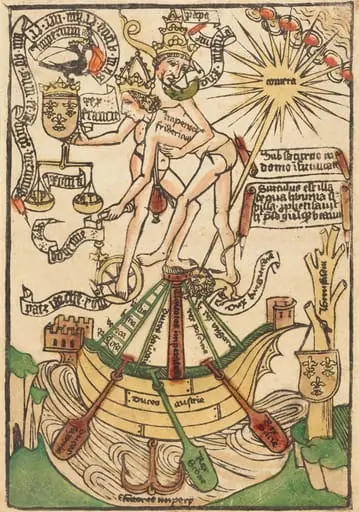 Allegory of the Meeting of Pope Paul II and Emperor Frederick III
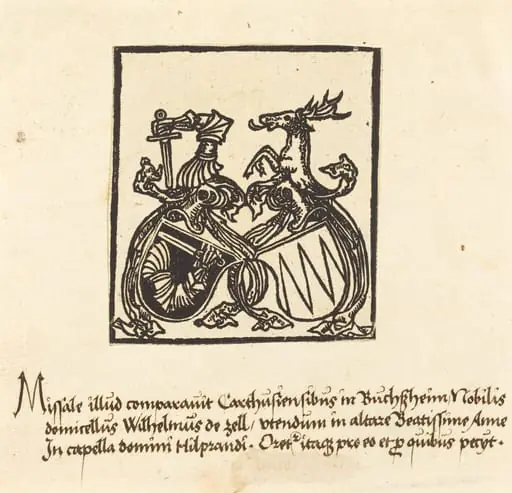 Bookplate of Wilhelm von Zell
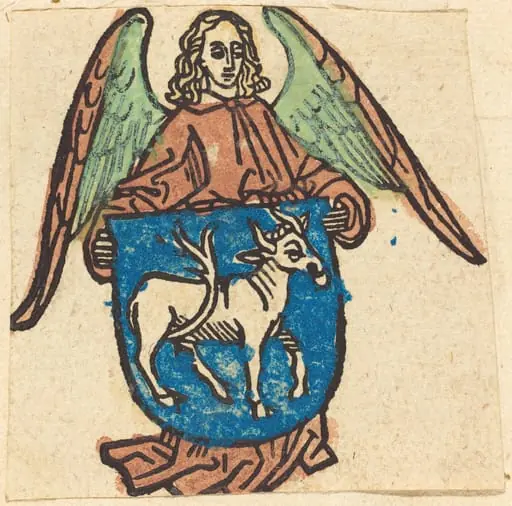 Bookplate of Hilprand Brandenburg of Bibrach
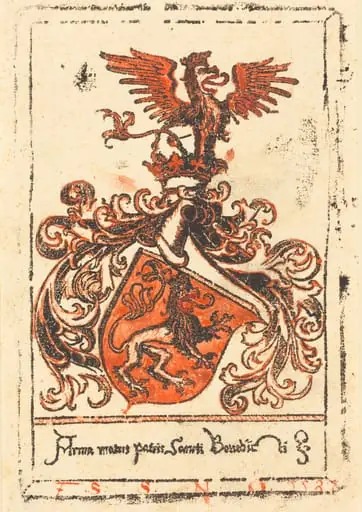 Bookplate of the Abbey of Ottobeuren
 Bookplate of Hilprand Brandenburg of Bibrach
 Bookplate of Dominicus Frauenfelder
![Studies for Six Figures (sheet from a model book) [recto], by German 15th Century](https://artifactworldgallery.com/img/german-15th-century--studies-for-six-figures-sheet-from-a-model-book-recto--4837429e0755bc3f-w320.webp) Studies for Six Figures (sheet from a model book) [recto]
Studies for Six Figures (sheet from a model book) [recto] Christ and Mary Interceding with God the Father