Artwork
The Flagellation
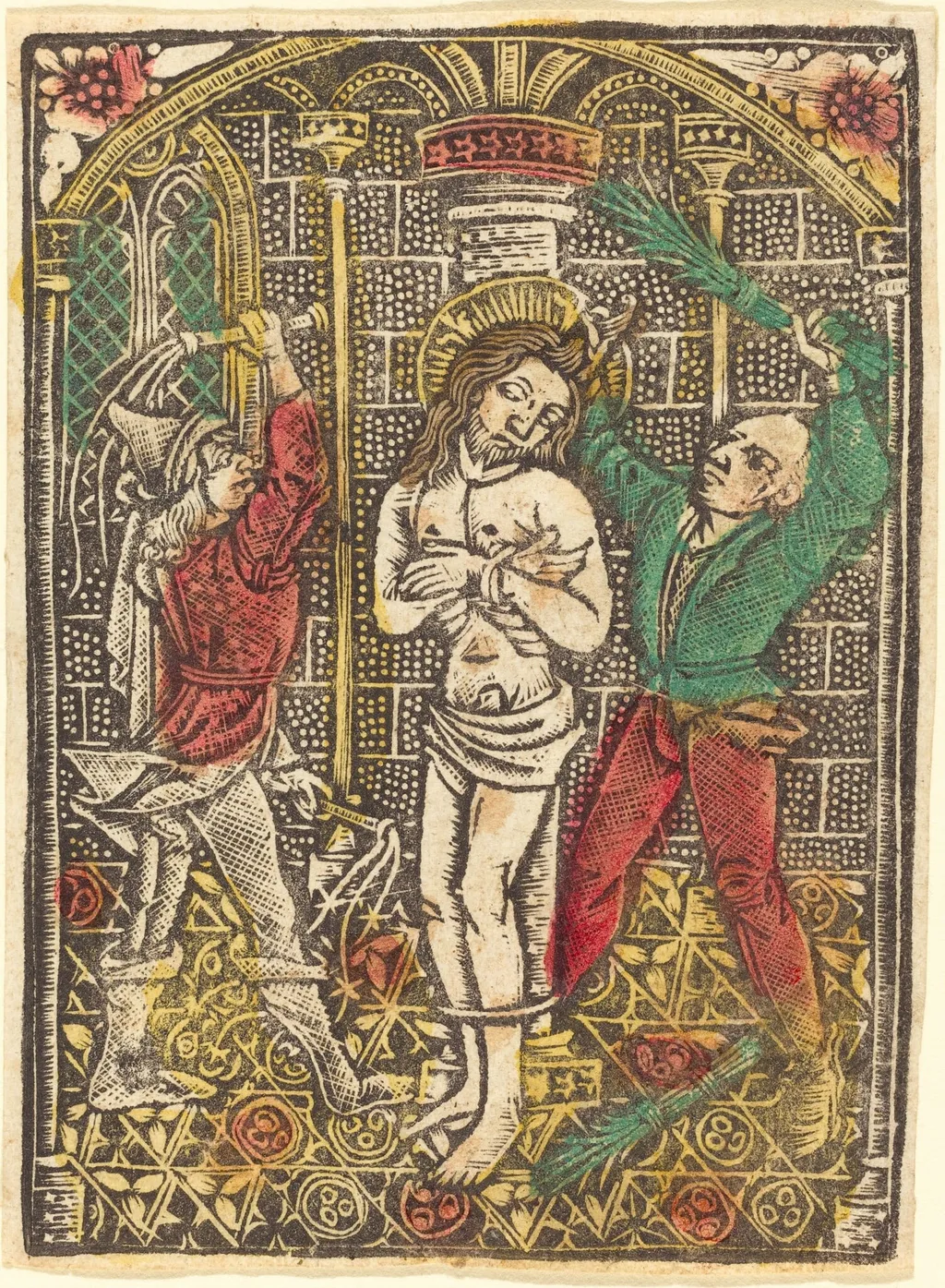
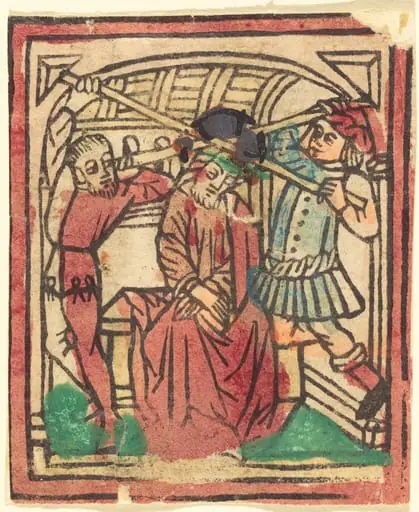
The Flagellation is a paint print by the Renaissance artist German 15th Century. It dates from 1480 and is held in the collection of the National Gallery of Art.
About this work
Overview
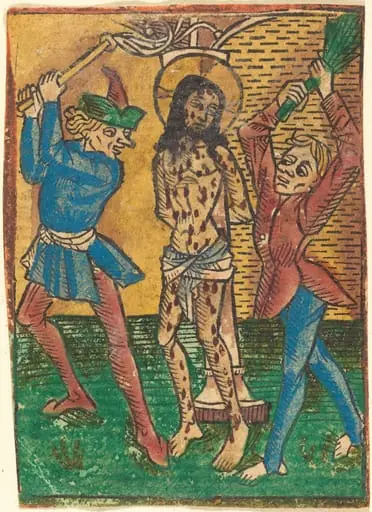
The composition centers on a bound, crowned figure, flanked by two others in vivid robes—one wielding a whip, the other observing.
This metalcut print depicts the Flagellation of Christ, rendered in hand-colored inks on laid paper. The composition centers on a bound, crowned figure, flanked by two others in vivid robes—one wielding a whip, the other observing. The dark background contrasts sharply with the bright red, green, and yellow pigments, while intricate gold-outlined patterns fill the space behind the figures, creating a dense, ornamental field.
Subject & Meaning
The scene illustrates the moment of Christ’s scourging, a key episode in the Passion narrative. The central figure’s crown of thorns and bound arms identify him as Christ, while the red-robed executioner and green-cloaked onlooker represent the human agents of suffering. The crowded, symbolic background may allude to divine presence or the chaos of earthly judgment, reinforcing the theological weight of the moment.
Technique & Style
Executed as a metalcut, the image relies on engraved lines to define forms, with color added by hand using red lake, yellow, and green pigments. The figures appear stylized and flat, lacking naturalistic modeling, yet the background features finely detailed, repetitive motifs—stars, floral forms, and abstract shapes—all outlined in gold. This contrast between simplified figures and elaborate surroundings reflects a decorative, rather than illusionistic, approach.
History & Provenance
The print likely dates to the late 15th or early 16th century, a period when metalcuts were commonly used for religious imagery in Northern Europe. Hand-coloring was typical for such prints, enhancing their devotional appeal. While its exact origin and early ownership are undocumented, its technical features align with workshop practices in regions like the Rhineland or southern Germany, where metalcut production flourished.
Context
This print was created during a time when devotional images were widely distributed to support private piety. Metalcuts offered an affordable alternative to panel paintings, allowing laypeople to engage with sacred narratives at home. The ornamental background and vivid colors reflect a taste for visual richness in religious art, even as the figures remain hieratic and symbolic rather than emotionally expressive.
Legacy
Though overshadowed by later engraving and etching techniques, this print exemplifies the transitional phase in printmaking where hand-coloring extended the visual impact of mechanical reproduction. Its combination of stylized form and intricate detail influenced later devotional prints, preserving a mode of religious imagery that valued symbolic clarity and decorative intensity over naturalism.
Artist & collection

Artist
This 15th-century German artist carved vivid religious scenes into metal and wood, then hand-painted them in bright, symbolic colors.

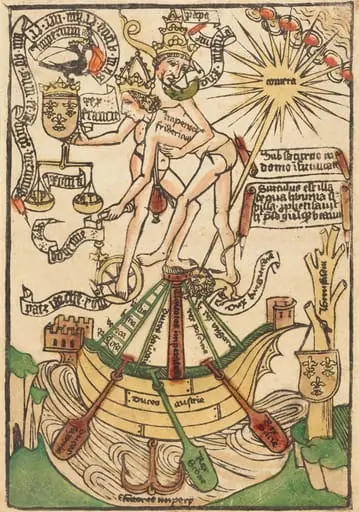 Allegory of the Meeting of Pope Paul II and Emperor Frederick III
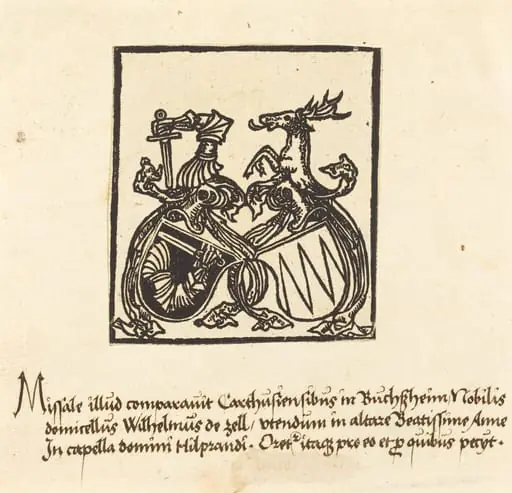 Bookplate of Wilhelm von Zell
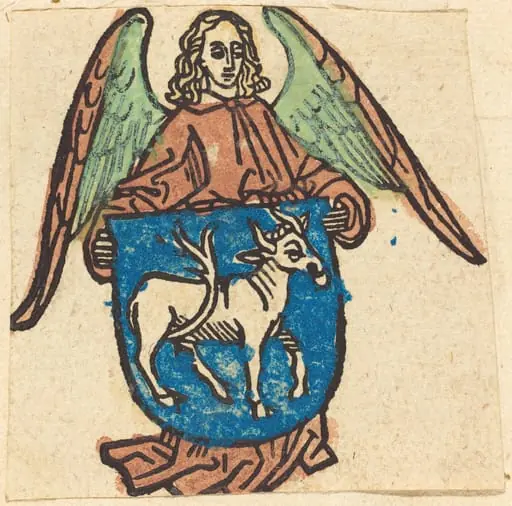 Bookplate of Hilprand Brandenburg of Bibrach
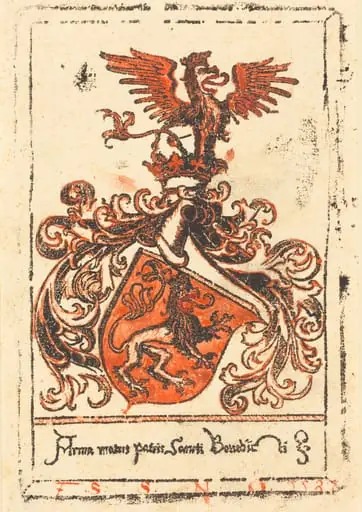 Bookplate of the Abbey of Ottobeuren
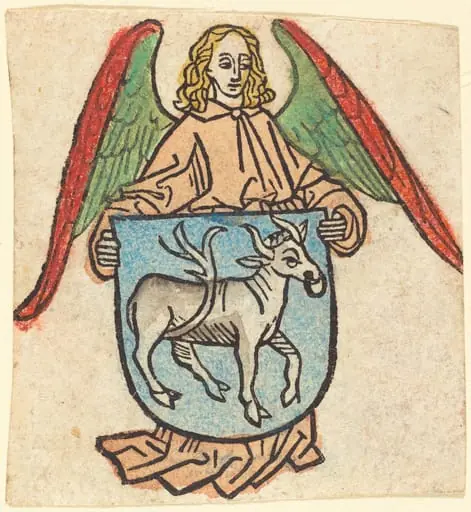 Bookplate of Hilprand Brandenburg of Bibrach
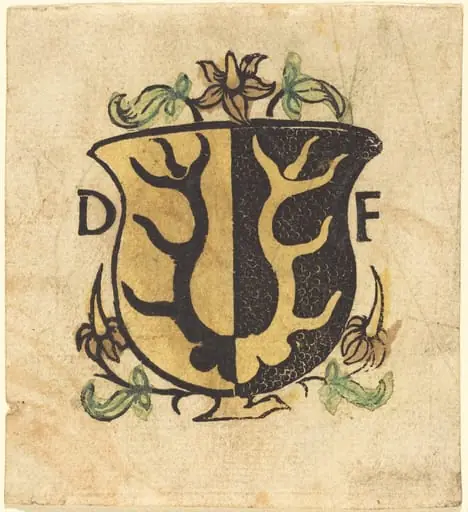 Bookplate of Dominicus Frauenfelder
![Studies for Six Figures (sheet from a model book) [recto], by German 15th Century](https://artifactworldgallery.com/img/german-15th-century--studies-for-six-figures-sheet-from-a-model-book-recto--4837429e0755bc3f-w320.webp) Studies for Six Figures (sheet from a model book) [recto]
Studies for Six Figures (sheet from a model book) [recto]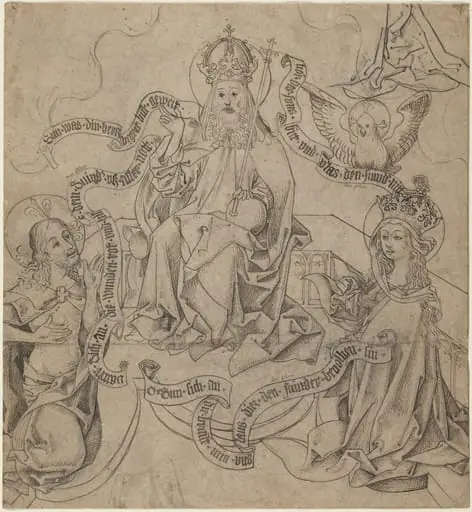 Christ and Mary Interceding with God the Father