Artwork
Figurine Seller with Two Girls
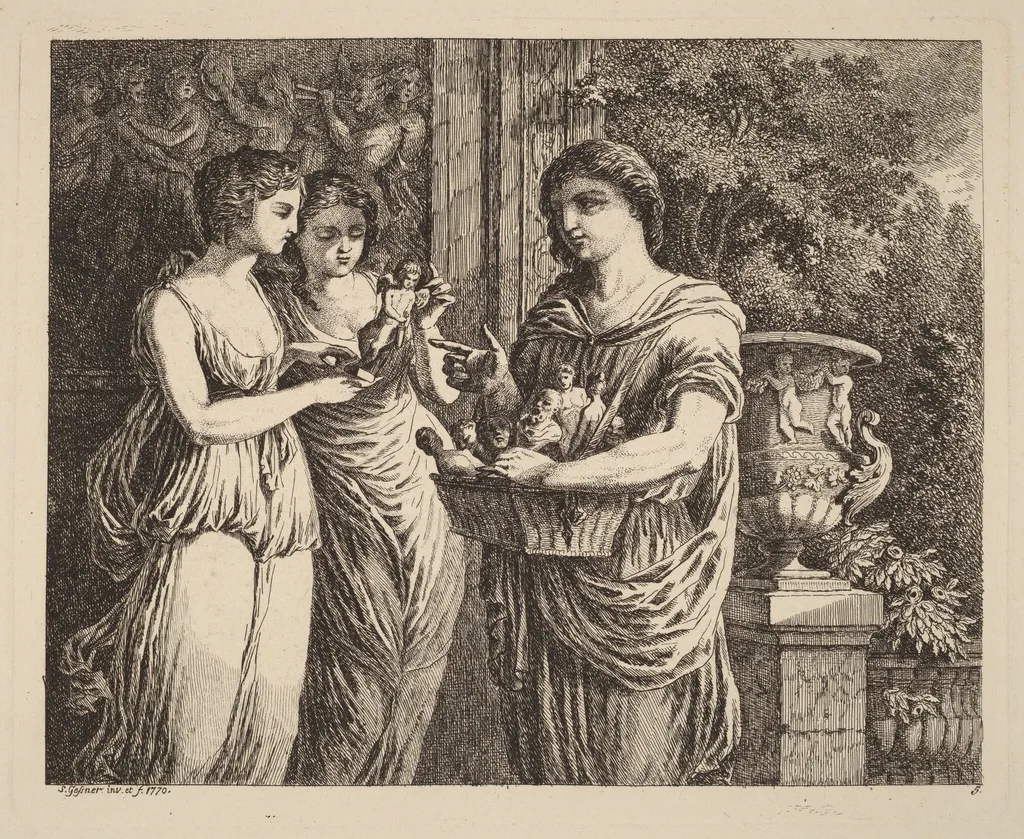
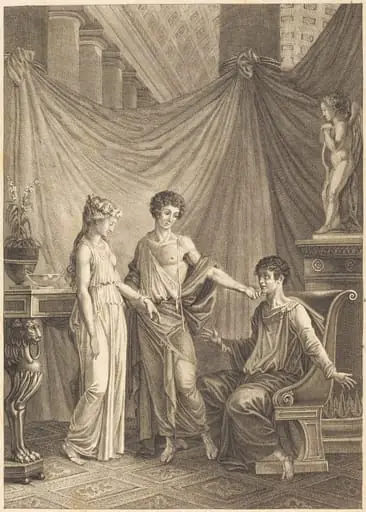
Figurine Seller with Two Girls is an ink print by the Romanticist artist Salomon Gessner. It dates from 1770 and is held in the collection of the National Gallery of Art.
About this work
Overview
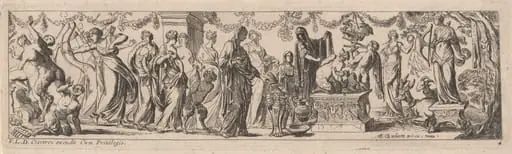
Salomon Gessner’s 1770 etching titled *Figurine Seller with Two Girls* presents a quiet interior scene rendered on laid paper. Three women occupy the composition: a figure on the right carries a basket filled with diminutive statues, while the two companions examine the objects. A substantial vase with sculpted handles rests on a pedestal behind them, its presence framed by a simple curtain.
Subject & Meaning
The work captures a moment of domestic commerce, focusing on the exchange of small figurines that may carry symbolic weight beyond mere playthings. The attentive gazes of the two women suggest curiosity or appraisal, hinting at themes of taste, collection, or the cultural value assigned to miniature sculpture in the eighteenth century.
Technique & Style
Executed as an etching, Gessner incised lines into a copper plate, allowing for delicate gradations of tone. The artist employs cross‑hatching to model the folds of the women’s flowing garments and to render the texture of the statues and vase. The contrast between light and shadow creates a sense of depth, while the laid‑paper surface adds a subtle tonal warmth to the image.
History & Provenance
Created in 1770, the print reflects Gessner’s broader interest in pastoral and genre subjects. While specific ownership records for this particular impression are scarce, the work is documented in catalogues of Gessner’s prints and has appeared in several 19th‑century collections of Swiss etchings.
Context
During the late eighteenth century, the market for small decorative objects—such as figurines and porcelain—was expanding across Europe. Gessner’s depiction aligns with contemporary interest in the material culture of collecting, and the etching’s intimate scale mirrors the private nature of such transactions.
Legacy
Although not as widely reproduced as Gessner’s landscape works, this etching contributes to an understanding of his versatility and his engagement with everyday scenes. It offers scholars insight into the visual representation of trade and leisure in the pre‑industrial era, enriching the broader narrative of European printmaking.
Artist & collection


 Arcadian Landscape with an Obelisk
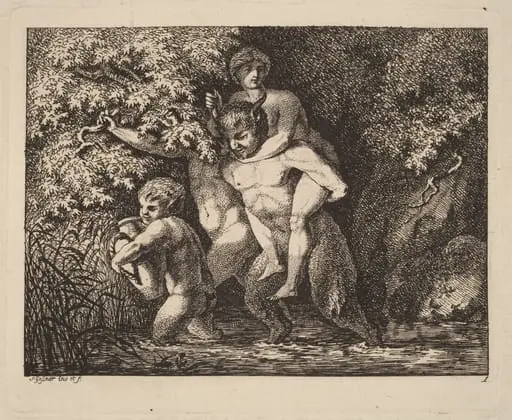 Satyr Carrying a Nymph on His Back
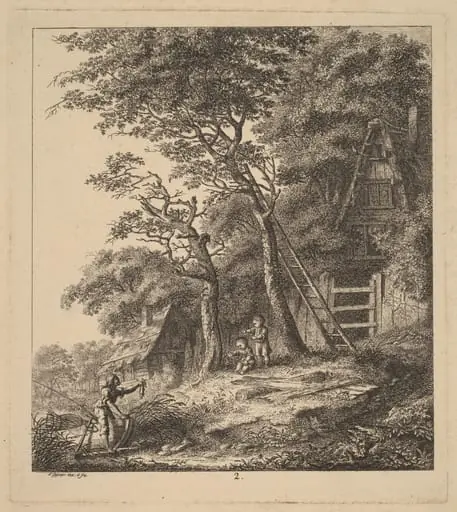 A Fisherman and Two Children in a Landscape with Thatched Cottages
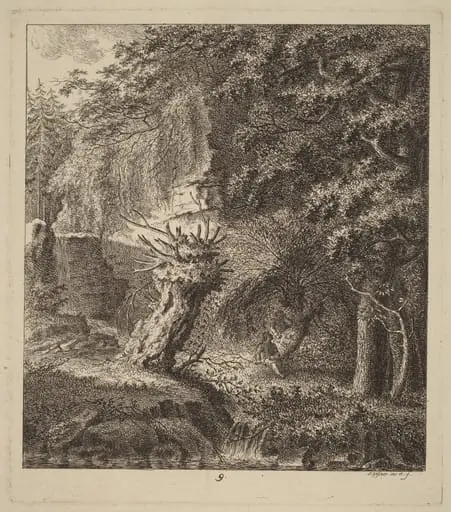 Wooded Landscape with a Pollarded Tree
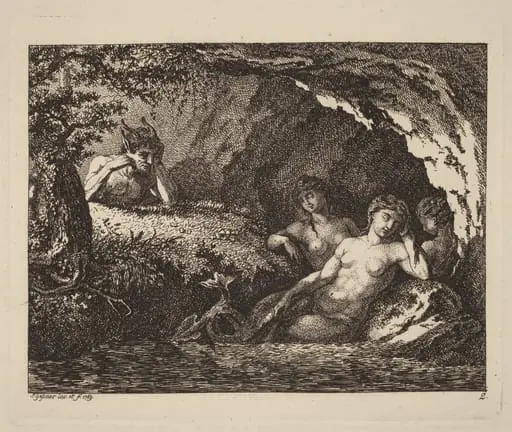 Three Sleeping Sprites with a Satyr
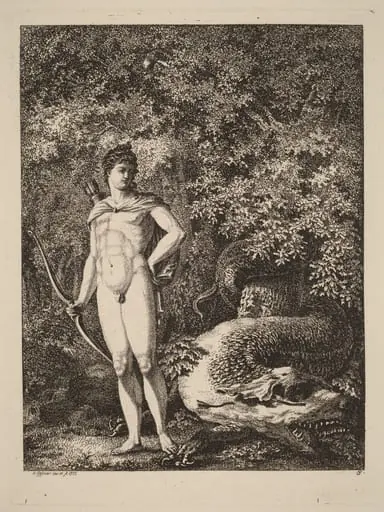 Apollo with a Bow and Dragon
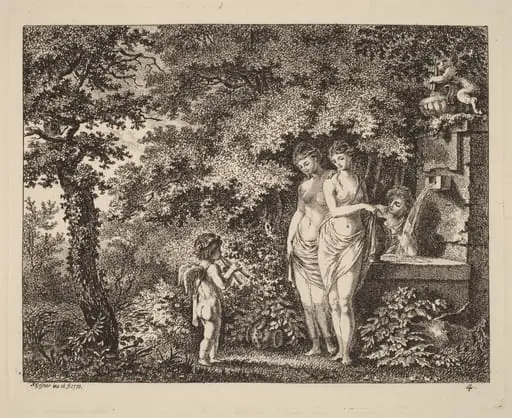 Eros with Three Girls at a Fountain
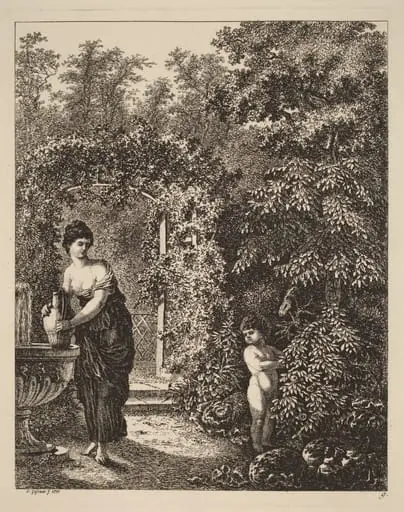 Putto Visiting a Girl at a Fountain