Artwork
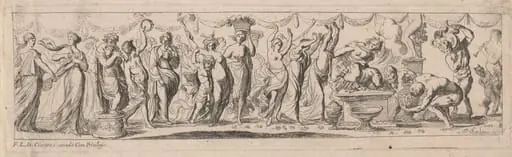
Female Satyr with Children on an Altar
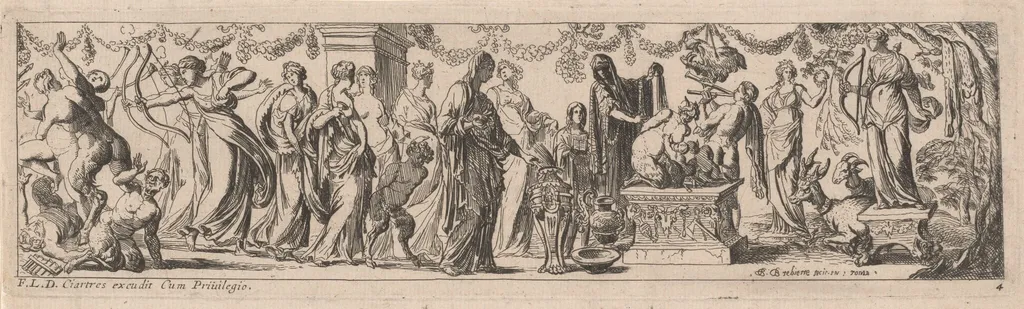
Female Satyr with Children on an Altar is an ink print by the Baroque artist Pierre Brebiette. It dates from 1626 and is held in the collection of the National Gallery of Art.
About this work
Overview
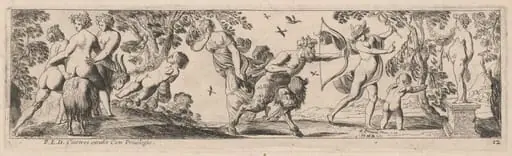
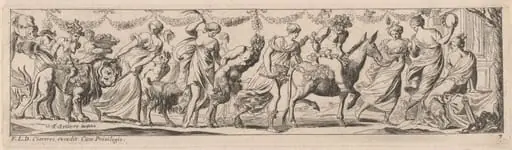
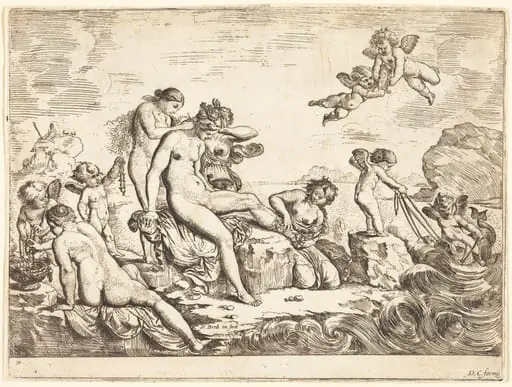
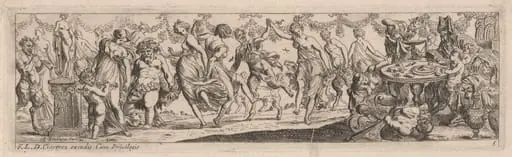
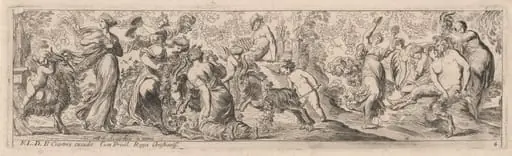
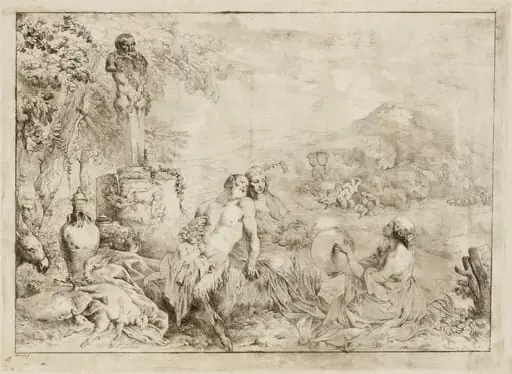
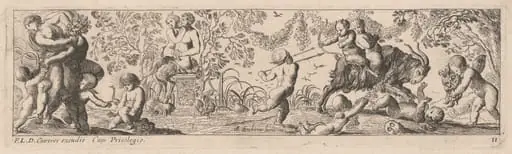
Created in 1626 by Pierre Brebiette, this etching on laid paper depicts a mythological scene populated by multiple figures in a wooded, architectural setting.
Created in 1626 by Pierre Brebiette, this etching on laid paper depicts a mythological scene populated by multiple figures in a wooded, architectural setting. Rendered in monochrome, the composition is densely packed with motion and detail, combining human activity with natural elements. The work exemplifies the printmaking techniques of the early 17th century, emphasizing line and texture over color to convey narrative and atmosphere.
Subject & Meaning
The central figure is a woman dressed plainly, standing beside an altar with a child clinging to her and a dog at her side—likely the 'Female Satyr' referenced in the title. Surrounding her, other figures engage in music, dance, and ritual, suggesting a festive or ceremonial gathering. The contrast between her simple attire and the ornate surroundings may imply a liminal or sacred role, possibly representing a nature spirit amid human revelry.
Technique & Style
Brebiette employed fine, controlled etching lines to render texture and depth, capturing the folds of fabric, the roughness of bark, and the delicate forms of animals. The composition is layered with overlapping figures and architectural elements, creating a sense of spatial complexity. The absence of color focuses attention on tonal variation and linear precision, characteristic of Northern European printmaking traditions of the period.
History & Provenance
The print was produced in 1626, during a period when mythological and pastoral themes were popular in French and Flemish print circles. While little is documented about Brebiette’s life, his works were circulated among collectors and artists familiar with classical subjects. The print’s survival in institutional and private collections suggests it was valued for its intricate detail and narrative richness.
Context
This work emerged in the wake of renewed interest in antiquity and mythological allegory, influenced by Renaissance humanism and the visual language of Italian Mannerism. Similar scenes appeared in engravings by contemporaries like Jacques Callot, who also depicted lively, crowded gatherings of satyrs and nymphs. Brebiette’s version reflects a Northern adaptation of these themes, blending folklore with classical references.
Legacy
Though Brebiette is not widely known today, this etching remains a representative example of early 17th-century narrative printmaking. It contributes to the understanding of how mythological subjects were interpreted in smaller-scale, accessible formats for private collections. The work continues to be studied for its technical finesse and its subtle negotiation of human and non-human identities in myth.
Artist & collection