Artwork
Tablou ”Vizită de lucru în Județul Argeș”, semnat artist amator Manda Vasile. În centru Nicolae și Elena Ceaușescu primind omagiul locuitorilor județului. Tabloul redă imaginea economiei argeșene în care se află fabrica de automobile ”Dacia” de la Colibașu și cea de autoturisme ”ARO” de la Câmpulung. Oferit de Comitetul Județean de Partid Argeș (1982).
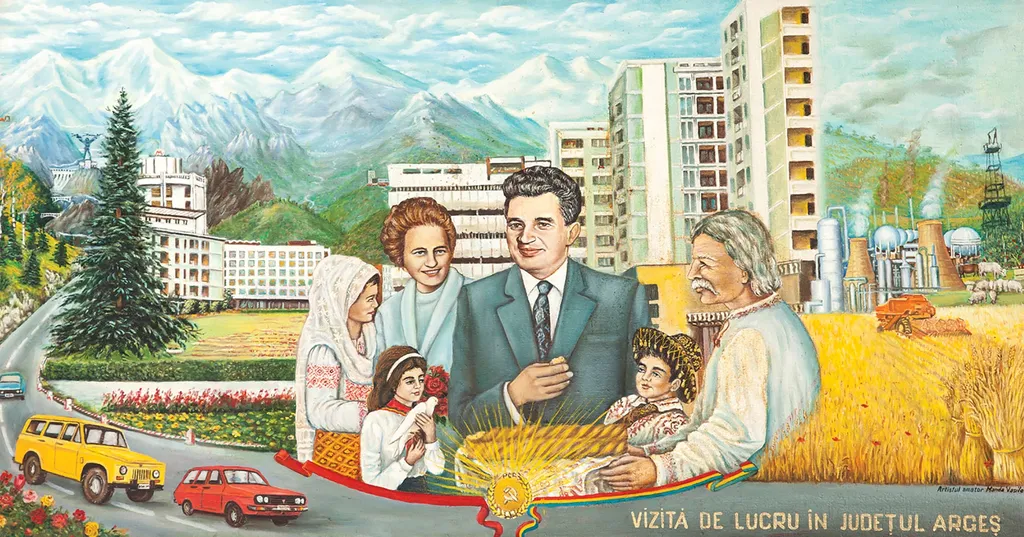
Tablou ”Vizită de lucru în Județul Argeș”, semnat artist amator Manda Vasile. În centru Nicolae și Elena Ceaușescu primind omagiul locuitorilor județului. Tabloul redă imaginea economiei argeșene în care se află fabrica de automobile ”Dacia” de la Colibașu și cea de autoturisme ”ARO” de la Câmpulung. Oferit de Comitetul Județean de Partid Argeș (1982). is a print by Manda Vasile. It is held in the collection of the National Museum of Romanian History.
About this work
Overview
Commissioned by the local Communist Party committee, the painting blends idealized depictions of industrial progress with folkloric elements.
Painted in 1982 by amateur artist Manda Vasile, this work commemorates an official visit by Nicolae and Elena Ceaușescu to Argeș County. Commissioned by the local Communist Party committee, the painting blends idealized depictions of industrial progress with folkloric elements. Its bright palette and simplified forms reflect state-sponsored artistic conventions, while its amateur execution distinguishes it from official propaganda art produced by trained painters.
Subject & Meaning
The central figures, Ceaușescu and his wife, receive symbolic offerings from local residents, including children in traditional dress, reinforcing the regime’s narrative of popular loyalty. Behind them, the Dacia and ARO automobile factories represent state-driven industrialization. The juxtaposition of rural attire with modern infrastructure suggests an attempt to reconcile tradition with socialist modernity, presenting a curated vision of harmony under party leadership.
Technique & Style
The painting employs flat, unmodulated colors and exaggerated perspective, typical of amateur work influenced by state-approved imagery. Buildings are rendered with geometric simplicity, while fields and roads curve unnaturally to frame the central group. The banner’s text is prominently placed, underscoring its propagandistic intent. The lack of shading and anatomical precision reveals the artist’s limited formal training, yet the composition remains carefully arranged to convey order and celebration.
History & Provenance
Commissioned by the Argeș County Party Committee in 1982, the painting was likely displayed in local administrative buildings as part of routine political ritual. Its survival outside institutional archives suggests it may have been retained by a participant or employee. Unlike professionally produced state art, it was never widely circulated, remaining a localized artifact of regional party culture during the late Ceaușescu era.
Context
During the early 1980s, Romania intensified its focus on heavy industry and national self-reliance, with Argeș County serving as a key industrial zone. The regime frequently staged visits by Ceaușescu to showcase economic achievements. Local communities were expected to produce symbolic gifts—paintings, textiles, or poems—to honor these occasions. This work reflects the pressure on ordinary citizens to participate in the cult of personality through artistic expression.
Legacy
The painting survives as an unpolished record of how socialist ideology permeated everyday cultural production. Its amateur quality offers a counterpoint to the polished propaganda of state artists, revealing the gap between official narratives and grassroots execution. Today, it serves as a material trace of a system that mobilized art not for aesthetic innovation, but for political performance and collective ritual.
Artist & collection
Artist
Manda Vasile signed his amateur painting “Vizită de lucru în Județul Argeș” with a felt-tip pen in 1982.

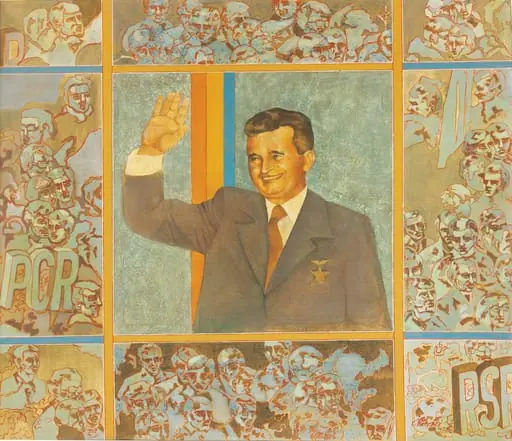 Tablou, ulei pe pânză, „Portret Nicolae Ceaușescu”, semnat în partea dreaptă jos C.Macavei și datat 1978. Tablou împărțit în mai multe registre, în plan central Nicolae Ceaușescu salutând oamenii muncii din celelalte registre. Comandat și oferit de Comitetul Județean de Partid Ilfov, 23 ianuarie 1978.
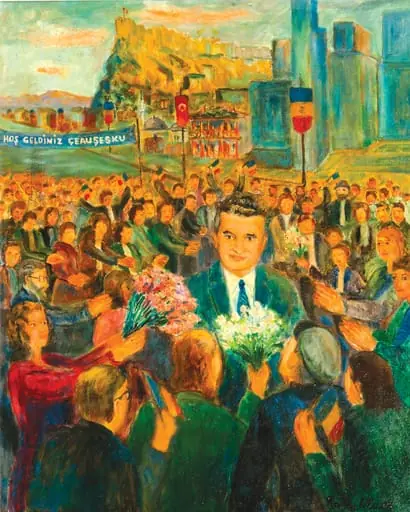 Tablou, portret Nicolae Ceaușescu în vizită la Ankara. Tablou realizat și oferit de Rami Uluer (președintele Asociației Pictorilor Turci din Ankara) lui Nicolae Ceaușescu cu ocazia vizitei la Ankara din 1985. Tabloul îl înfățișază pe Nicolae Ceaușescu într-o baie de mulțime aclamat de mulțimea entuziastă.
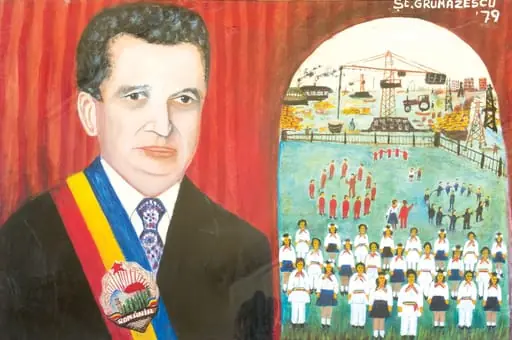 Tablou, ulei pe pânză, Nicolae Ceaușescu și copii, semnat și datat în partea dreaptă sus Șt. Grumăzescu, 1979. Nicolae Ceaușescu este prezentat în partea stângă urmărind o festivitate - pionieri, copii dansând în horă. Maniera de realizare a tabloului este una naivă. Oferit de Ștefan Grumăzescu din București.
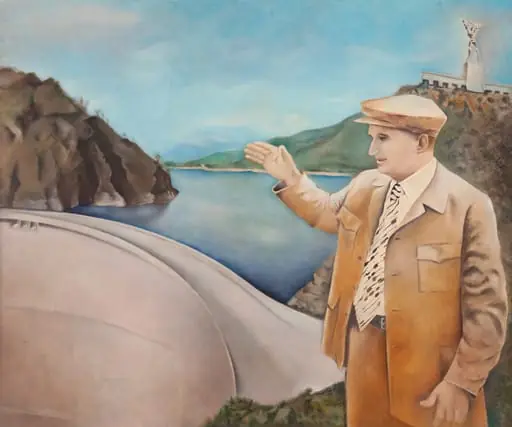 Tablou, ”Nicolae Ceaușescu la barajul Vidraru”, ulei pe pânză, nesemnat, atribuit lui Gheorghe Dobrică, nedatat. Tabloul îl înfățișază pe Nicolae Ceaușescu în timpul unei vizite de lucru la barajul Vidraru. În spatele lui Nicolae Ceaușescu statuia lui Prometeu. Construcția barajului s-a finalizat în anul 1965.Comandat și oferit de Comitetul Județean de Partid Argeș (1988).
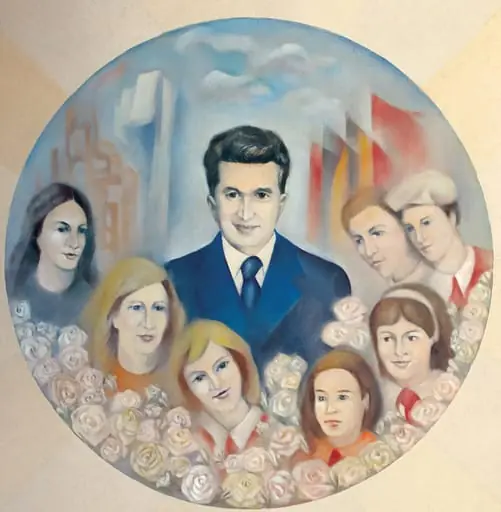 Tablou ulei pe pânză, „Nicolae Ceaușescu”, nesemnat, atribuit lui Ion Pantilie, nedatat. Nicolae Ceaușescu este reprezentat în mijlocul copiilor și tinerilor. Comandat și oferit de Comitetul Județean de Partid Argeș (1988).
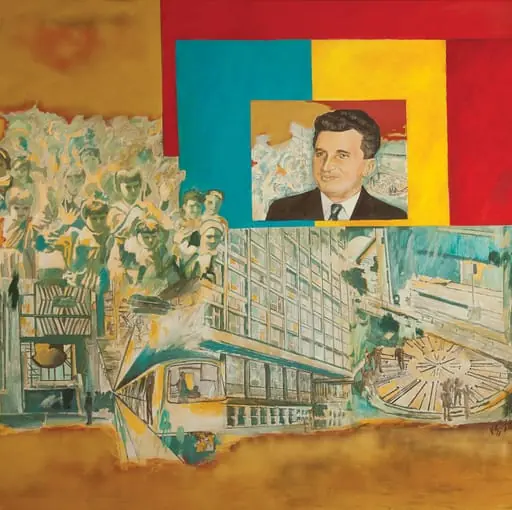 Tablou „Omagiu”, semnat Ion Bitzan și Vladimir Setran.Tabloul prezintă portretul lui Nicolae Ceaușescu încadrat de tricolor în partea dreaptă sus. Restul tabloului este completat de realizările epocii socialiste. Comandat de Comitetul Municipal de Partid 1981.
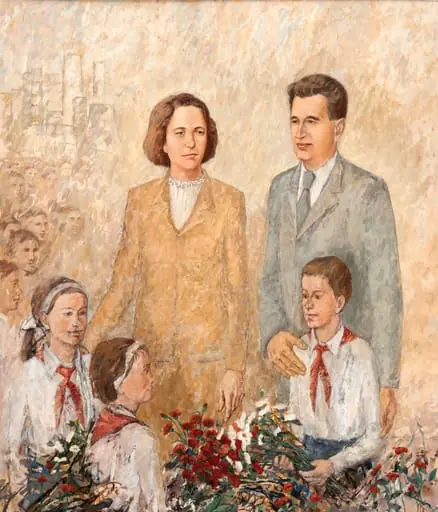 Tablou ulei pe pânză, „Omagiu”, semnat M.B, I.Ș. (atribuit Mircea Bejgu, Ion Șincă), datat 1984 în partea dreaptă jos. Elena și Nicolae Ceaușescu alături de pionieri. Comandat și oferit de Comitetul Județean de Partid Argeș (1984).
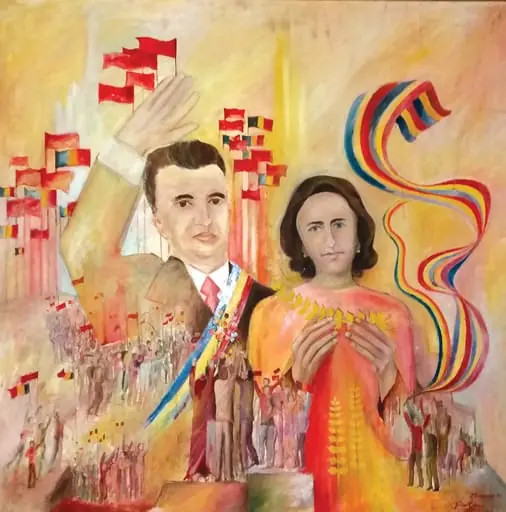 Tablou, ulei pe pânză, ”23 August”, nesemnat, atribuit Teodor Cioată. Nicolae și Elena Ceaușescu sunt prezentați în mijlocul mulțimii. Proporțiile reprezentării personajelor principale, soții Ceaușescu, nu sunt respectate de către artist - capetele sunt prea mari, la fel și mâinile care sunt ținute în poziții nefirești. În partea de jos a tabloului oameni ai muncii cu steaguri ovaționând. Tablou oferit de autor, Iași, august 1974.
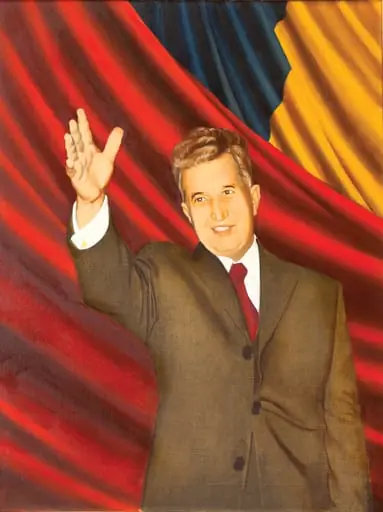 Tablou, ulei pe pânză, „Salutul președintelui”, atribuit lui Viorel Toma, nedatat. Nicolae Ceaușescu este reprezentat în centrul tabloului salutând, pe fundal steagul PCR și cel al RSR. Comandat și oferit de Comitetul Județean de Partid Timiș (1985).
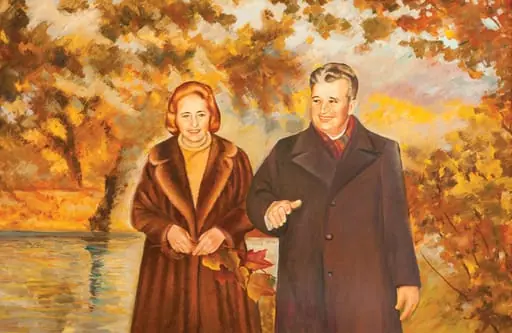 Tablou, ulei pe pânză, „Portret Nicolae și Elena Ceaușescu”, nesemnat, atribuit Cornelia Ionescu - Drăgușin. Tabloul îi prezintă pe soții Ceaușescu întru-un peisaj de toamnă pe malul unui lac. Tablou comandat și oferit de Comitetul Județean de Partid Giurgiu (1985).
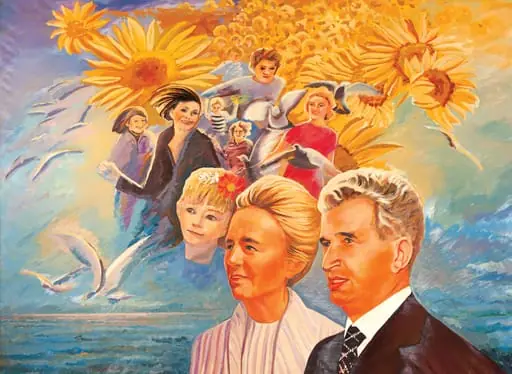 Tablou, „Omagiu”, ulei pe pânză atribuit Cornelia Ionescu Drăgușin. Cuplul Ceaușescu este reprezentat într-o atitudine de contemplare a orizontului, pe fundal marea și pescărușii. În partea de sus un joc de copii printre flori de floarea - soarelui. Oferit de Comitetul pentru Problemele Consiliilor Populare (1984)
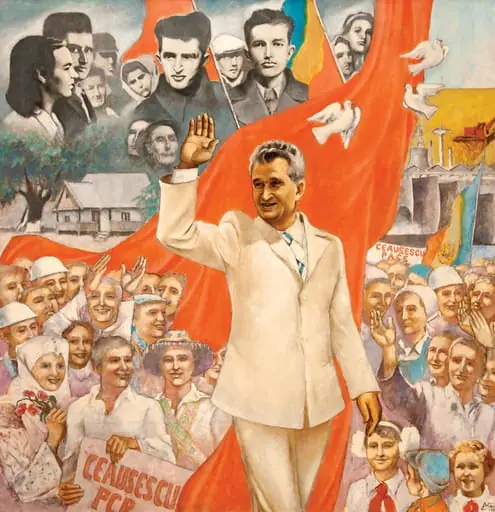 Tablou „Eroul României Socialiste” , semnat și datat în dreapta jos ”Constantin Nițescu 1988”. Comandat de Comitetul Județean de Partid Olt și oferit cadou lui Nicolae Ceaușescu la împlinirea vârstei de 70 de ani (ianuarie 1988).
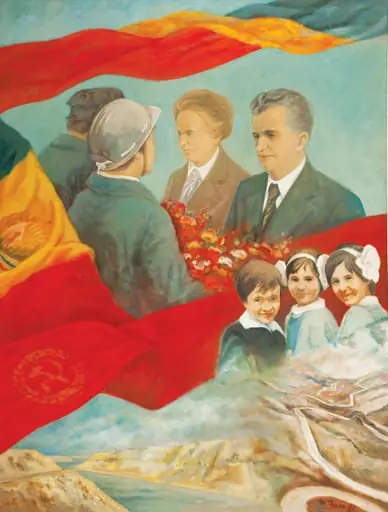 Tablou „Omagiul Președintelui Țării”, ulei pe pânză; semnat Gheorghe Pogan și datat în partea dreaptă jos. Tabloul îi prezintă pe soții Ceaușescu întâmpinați cu flori de două personaje masculine (un miner și un petrolist), învăluiți de tricolor și steagul PCR. În dreapta lui Nicolae Ceaușescu (dreapta tabloului) trei elevi. Partea de jos a tabloului este completată cu reprezentarea Transfăgărășanului și a Canalului Dunăre - Marea Neagră. Comandat și oferit de Comitetul Județean de Partid Hunedoara (1988).
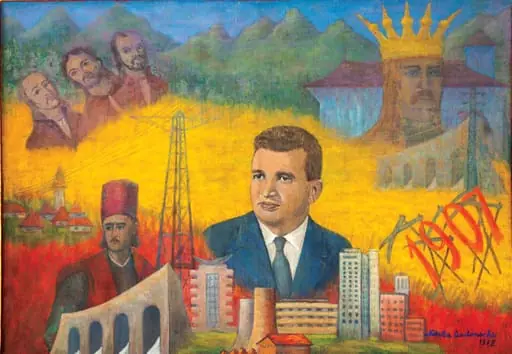 Tablou, ulei pe pânză, „Nicolae Ceaușescu și scene din istoria poporului”, semnat Natalia Gadonschi și datat 1972 în partea dreaptă jos. Nicolae Ceaușescu este reprezentat înconjurat de personalități și evenimenta cu trecut revoluționar: Horia, Cloșca și Crișan, Tudor Vladimirescu, Răscoala de la 1907, Ștefan cel Mare (în fața uneia din ctitoriile sale). Nicolae Ceaușescu este reprezentat ca un ctitor al socialismului. Tablou oferit de Natalia și Nicolae Gadonschi – Țepeș, cu ocazia aniversării zilei de naștere al lui Nicolae Ceaușescu, ianuarie 1978.
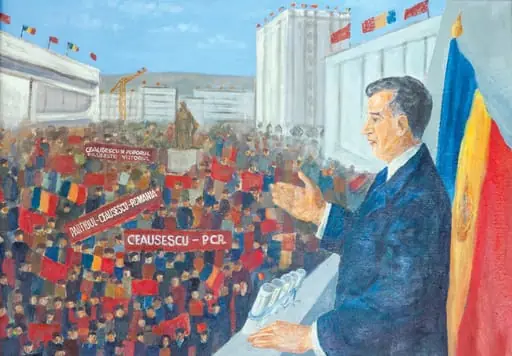 Tablou, ulei pe pânză, „Adunarea populară din Vaslui, iulie 1975”. Realizat de Cercul de Artă Plastică „Arta Vaslui”. Nicolae Ceaușescu vorbește de la balcon oamenilor muncii adunați în centrul civic din Vaslui. Se distinge statuia lui Ștefan cel Mare. Oamenii muncii flutură steaguri și pancarte (”Ceaușescu PCR”, ”Partidul - Ceaușescu - România”, ”Ceaușescu și Poporul Făurește Viitorul”. Oferit de Comitetul Județean de Partid Vaslui, 23 ianuarie 1978.
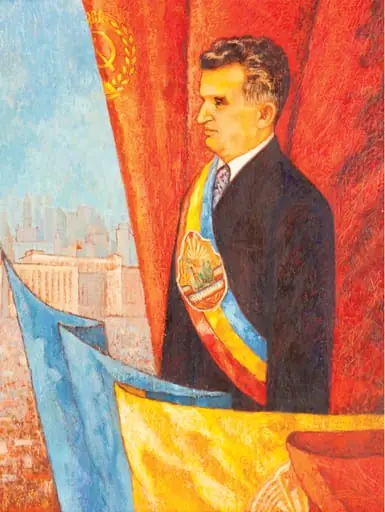 Tablou, ulei pe pânză, „Nicolae Ceaușescu, întâiul președinte al României”, semnat C.Aurel și datat 1974 în partea dreaptă jos. Nicolae Ceaușescu purtând banderolă tricoloră cu stema R.S.R., stând la balcon primind ovații din partea oamenilor muncii adunați într-o piață. În spatele său, steagul cu sigla PCR. Tablou oferit de către autor originar din Câmpina (Prahova), 19 august 1974.
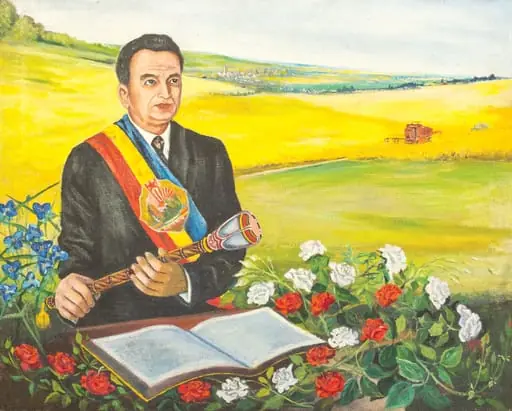 Tablou, ulei pe pânză, ”Nicolae Ceaușescu, președinte”, nesemnat, atribuit I.C. Popescu - Stolojan. Nicolae Ceaușescu este prezentat în momentul învestirii în funcția de președinte al Republicii Socialiste România. Poartă însemnele funcției eșarfa tricoloră, sceptrul prezidențial. Sala Marii Adunări Naționale a fost înlocută cu un fundal agricol - un lan de grâu treierat de o combină. Pupitrul este decorat cu trandafiri și iriși. Oferit de autor, 1976.
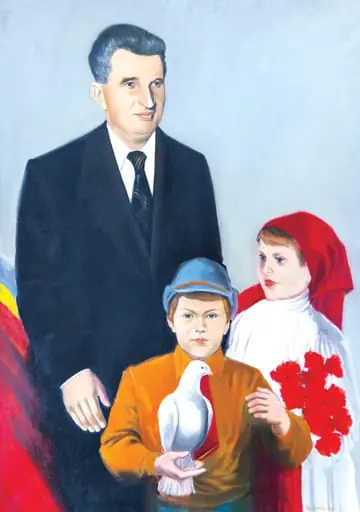 Tablou, ulei pe pânză, „Mesajul României”, semnat Nicolae Costachi în partea dreaptă jos și datat 1984. Nicolae Ceaușescu alături de doi copii, o fată îmbrăcată în costum popular ținând în mâini un buchet de garoafe roșii și un băiat în uniformă de șoim al patriei cu un porumbel alb în palma dreaptă. Comandat și oferit de Comitetul Județean de Partid Bistrița Năsăud (1985).
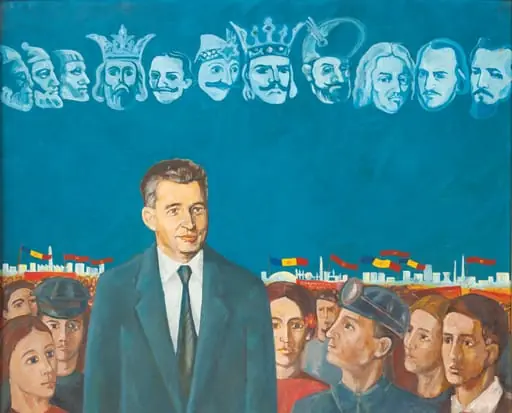 Tablou, ulei pe pânză, „Omagiu”, nesemnat. Nicolae Ceaușescu este prezentat în mijlocul oamenilor muncii vegheat de ”fantomele” eroilor neamului : Burebista, Decebal, Traian, Mircea cel Bătrân, Iancu de Hunedoara, Vlad Țepeș, Ștefan cel Mare, Mihai Viteazul, Dimitrie Cantemir, Nicolae Bălcescu, Alexandru Ioan Cuza (de la stânga la dreapta). Comandat și oferit de Comitetul Județean de Partid Tulcea, 22 ianuarie 1978.
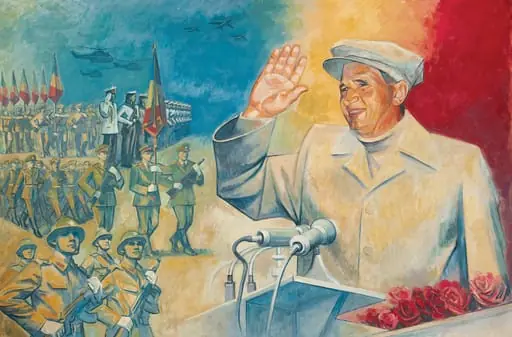 Tablou ulei pe pânză „Onor comandantului suprem”, semnat stânga jos în monogramă C.M., atribuit lui Maricel Chițac, nedatat. Tabloul îl prezintă pe ”comandantul suprem”, Nicolae Ceaușescu, la tribună primind onorul din partea aviației, trupelor de uscat și a marinei. Pe fundal tricolorul. Tablou comandat și oferit de Ministerul Apărării Naționale lui Nicolae Ceaușescu cu ocazia aniversării zilei de naștere (ianuarie 1989).