Artwork
Jasoda and Krishna
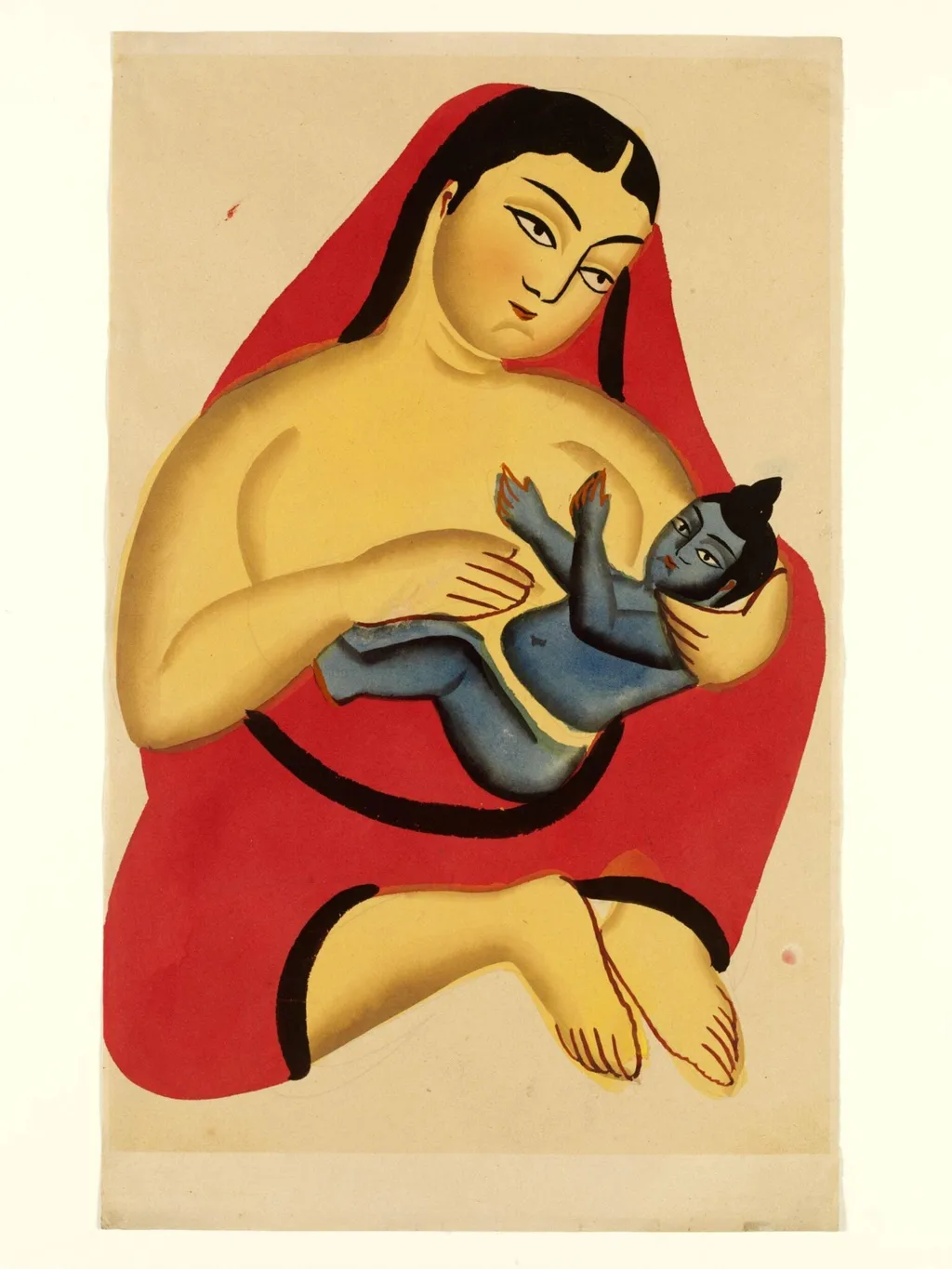
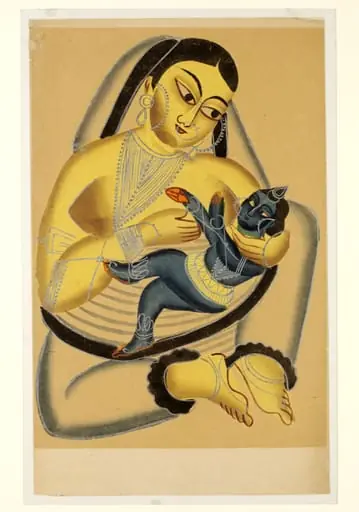
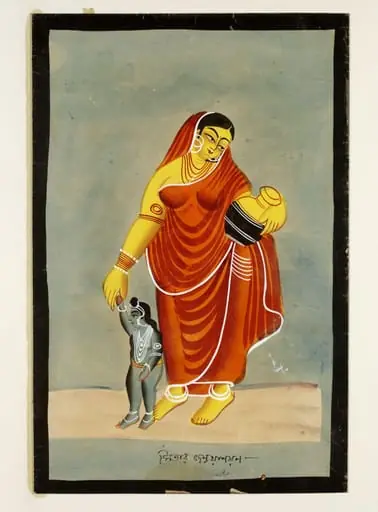
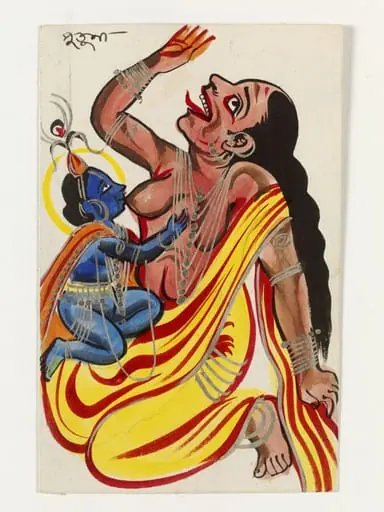
Jasoda and Krishna is a paint painting by the Indian Miniature artist Nibaran Chandra Ghosh. It dates from 1900 and is held in the collection of the Victoria and Albert Museum.
About this work
Look at the Victoria and Albert Museum to see more works from this period.
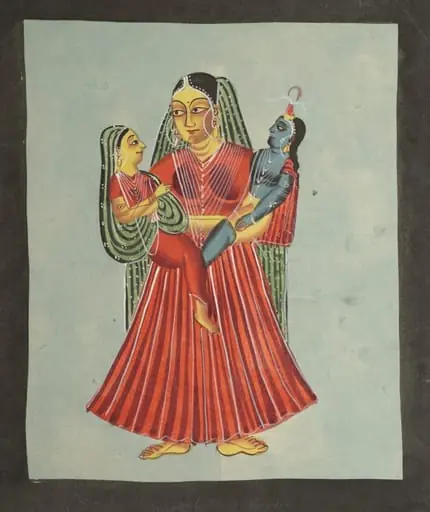
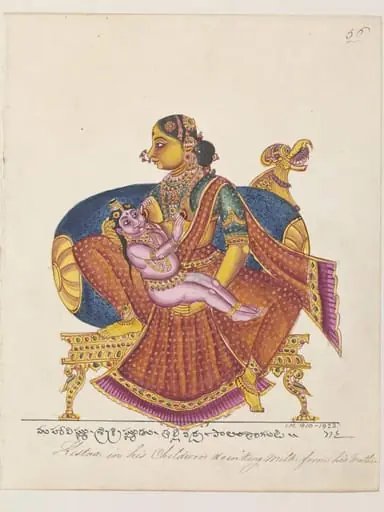
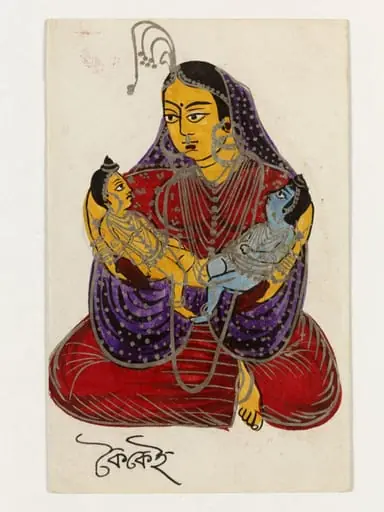
This painting shows a woman holding a baby who’s reaching out. The woman wears a red sari with gold trim and a green necklace. The baby has dark curly hair and a playful look.
The artist, Nibaran Chandra Ghosh, painted this around 1900 in Bengal. It blends Indian traditions with British influences from that time. The colors are bright but soft in places.
Look at the Victoria and Albert Museum to see more works from this period.
Overview
This watercolor on paper, created around 1900 by Nibaran Chandra Ghosh, portrays the Hindu deity Krishna as an infant being fed by his foster mother, Jasoda. Executed in the Kalighat style, the work combines bold outlines with muted washes of color, reflecting a regional artistic tradition that emerged near Kolkata during the colonial period. The painting was acquired by the Victoria and Albert Museum in 1932 from the family of fellow artist Kali Charan Ghosh.
Subject & Meaning
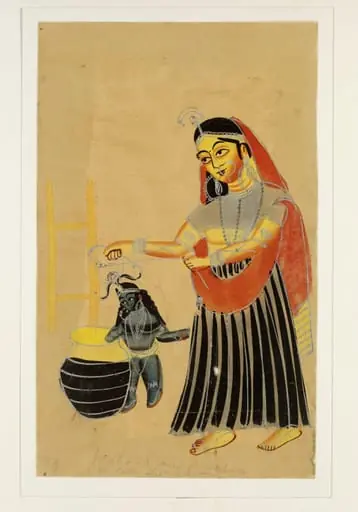
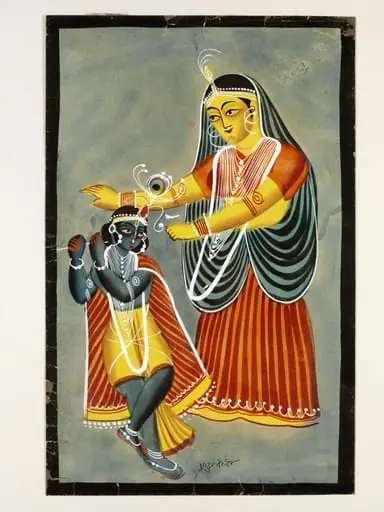
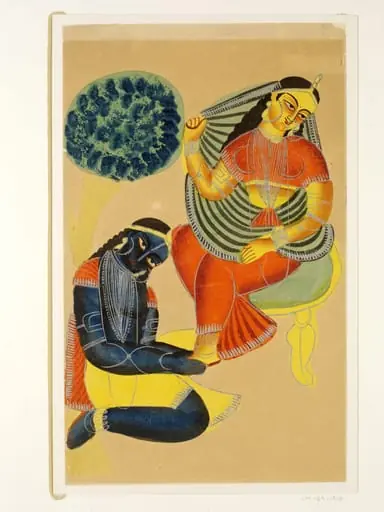
The scene captures a tender moment between Krishna and Jasoda, central to devotional narratives in Bengal. Krishna’s outstretched hand suggests curiosity or divine playfulness, while Jasoda’s calm gaze conveys maternal devotion. This imagery, drawn from Puranic texts, was commonly rendered in Kalighat art to appeal to both religious sentiment and popular taste, blending spiritual symbolism with everyday emotional resonance.
Technique & Style
The painting employs fluid brushwork and flat areas of color typical of Kalighat art, with minimal shading and strong contours. Jasoda’s red sari and gold trim contrast with the soft green of her necklace and the pale tones of the infant’s skin. The background is left unadorned, focusing attention on the figures. The palette, though vibrant, avoids harshness through diluted pigments, suggesting a transition from traditional folk methods toward more refined commercial production.
History & Provenance
The work originated in the Kalighat neighborhood of Calcutta, where artists produced devotional and satirical imagery for pilgrims and urban patrons. Nibaran Chandra Ghosh was part of a lineage of painters connected to Kali Charan Ghosh, whose family maintained a studio in the area. The painting entered the Victoria and Albert Museum’s collection in 1932 through direct acquisition from this artistic family, preserving its regional context.
Context
Produced during British colonial rule, Kalighat paintings responded to shifting social dynamics, merging indigenous iconography with new audiences and materials. While rooted in Hindu mythology, these works often adapted to urban tastes and commercial demand. The use of watercolor on paper, rather than traditional cloth or scroll, reflects the influence of Western art supplies and the rise of print culture in 19th-century Bengal.
Legacy
Works like this helped define the Kalighat style as a distinct genre of Indian folk-art modernism. Though later overshadowed by photography and mass printing, such paintings remain vital records of religious life and artistic adaptation in colonial Bengal. They continue to inform scholarly understanding of how traditional imagery evolved in response to urbanization and cross-cultural exchange.
Own this work as a print
Artist & collection
Artist
Nibaran Chandra Ghosh painted scenes from India around 1900, blending daily life with myth.