Artwork
An Allegorical Monument to Sir Isaac Newton
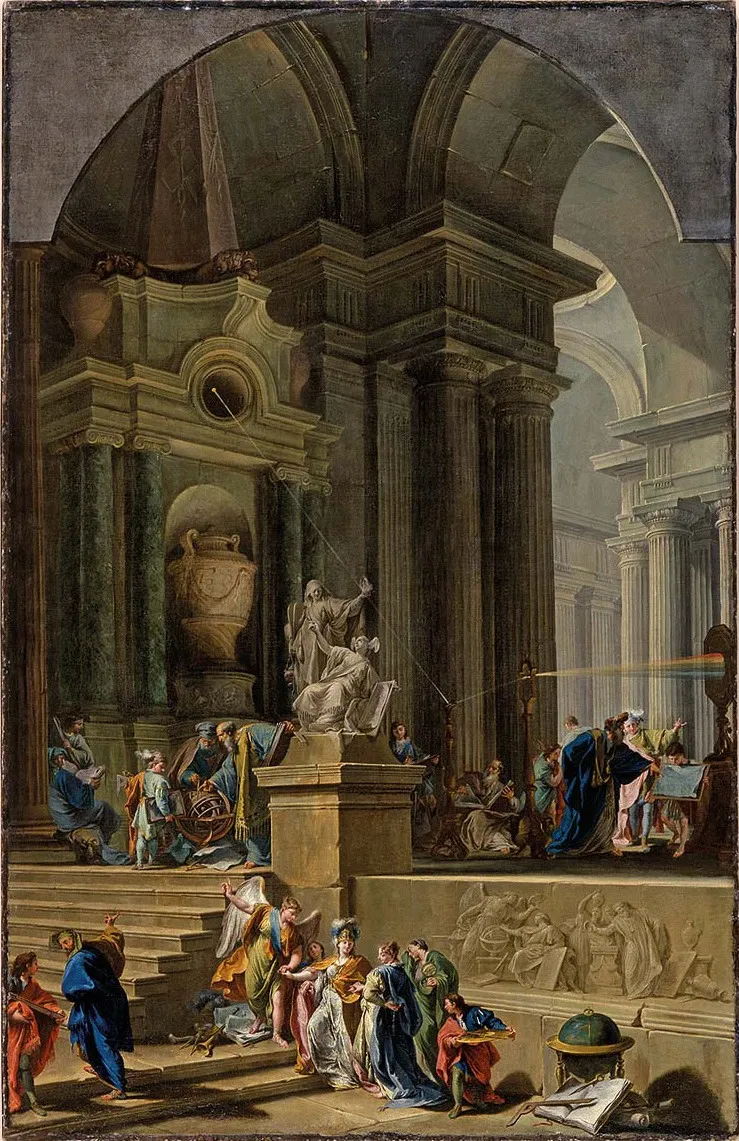
An Allegorical Monument to Sir Isaac Newton is an oil painting by the Rococo painting artist Giambattista Pittoni. It dates from 1727 and is held in the collection of the Fitzwilliam Museum.
About this work
Overview
Giambattista Pittoni’s 1727 oil on canvas, *An Allegorical Monument to Sir Isaac Newton*, merges the dynamism of late Baroque with the lighter decorative qualities of early Rococo. The painting presents an allegorical scene that honors the English scientist, situating him within a classical or mythological framework.
Subject & Meaning
The composition centers on a figure representing Sir Isaac Newton, rendered as an emblem of scientific achievement. Surrounding motifs draw on antiquity, suggesting the timeless nature of Newton’s contributions to knowledge and the Enlightenment’s reverence for rational inquiry.
Technique & Style
Pittoni employs the fluid brushwork and pastel palette typical of Rococo, while retaining the dramatic chiaroscuro and compositional vigor of the Baroque. The handling of light and texture conveys both elegance and a sense of movement across the canvas.
History & Provenance
Created in Venice, the work entered the collection of the Fitzwilliam Museum, where it remains. Pittoni, a prominent Venetian painter, co‑founded the Academy of Fine Arts of Venice and later presided over the institution in 1758, underscoring his influence in the artistic circles of his time.
Artist & collection
Artist
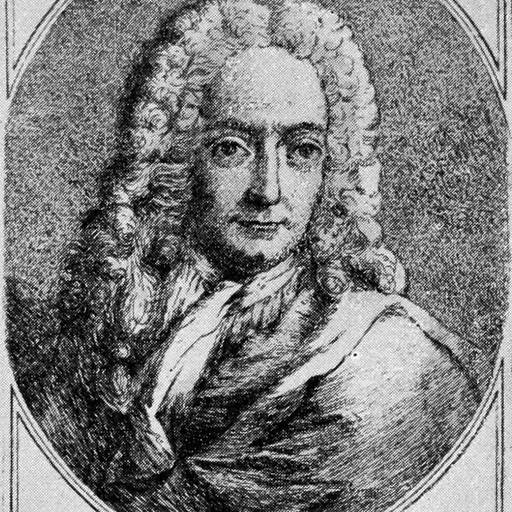
Giambattista Pittoni or Giovanni Battista Pittoni (6 June 1687 – 6 November 1767) was a Venetian painter of the late Baroque or Rococo period.

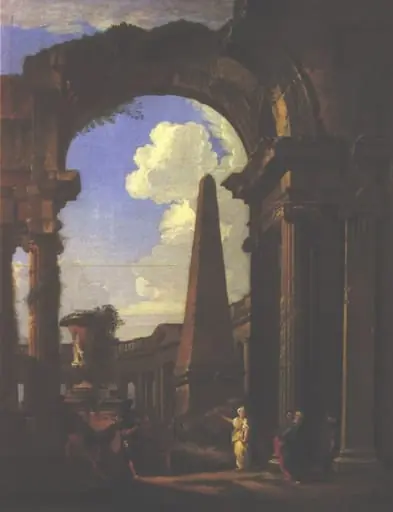 Peisaj cu ruine
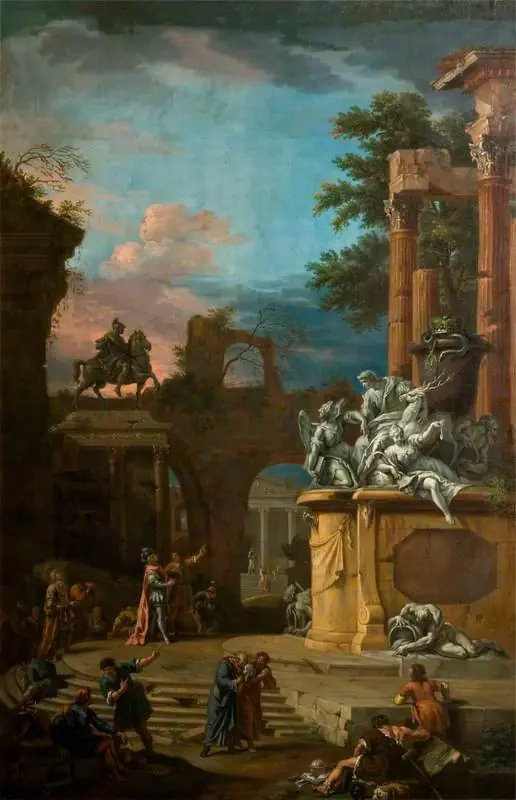 Imaginary Monument to William Cavendish (1640–1707), 1st Duke of Devonshire
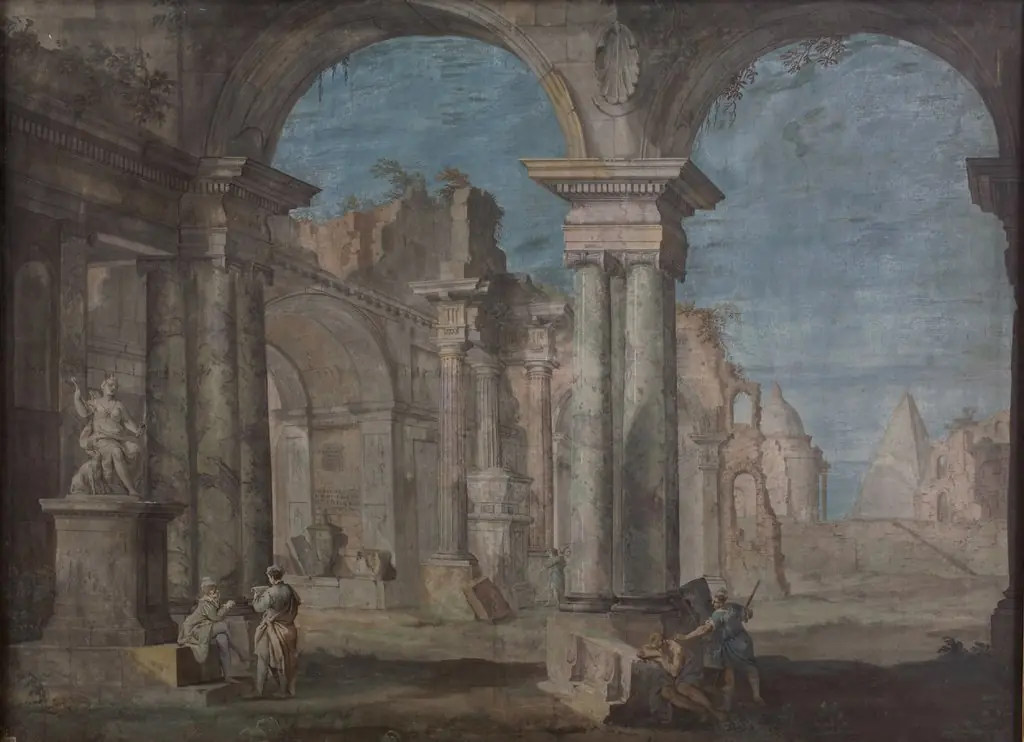 Architekturstück
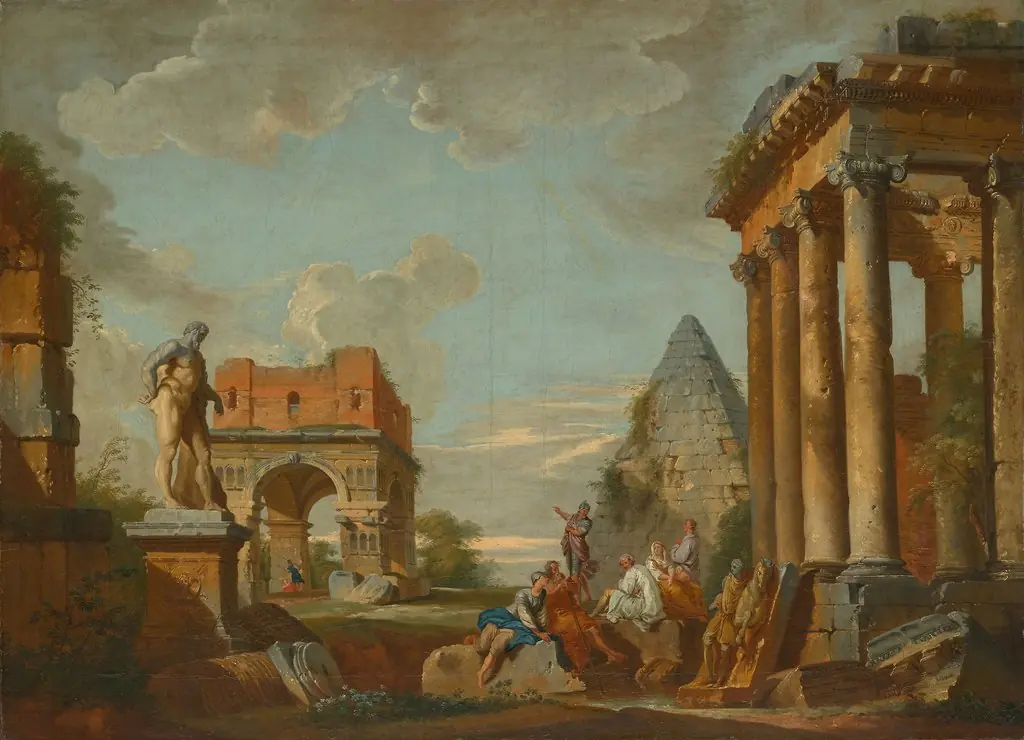 Classical Landscape
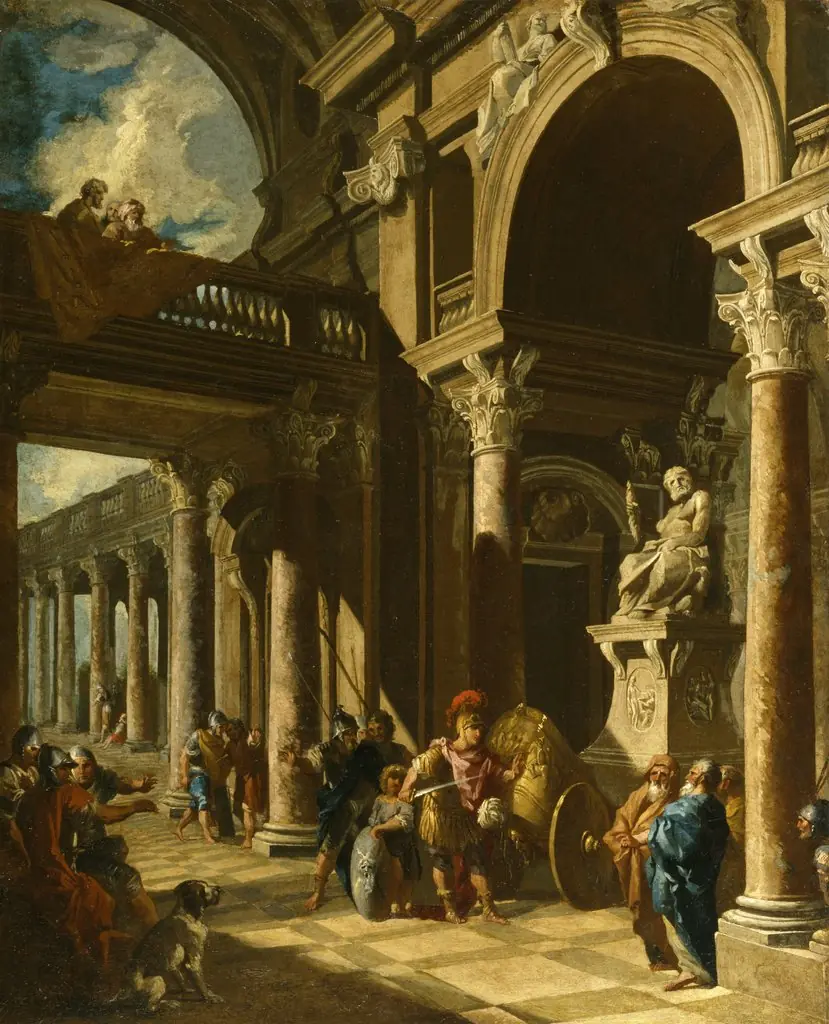 Alexander the Great Cutting the Gordian Knot
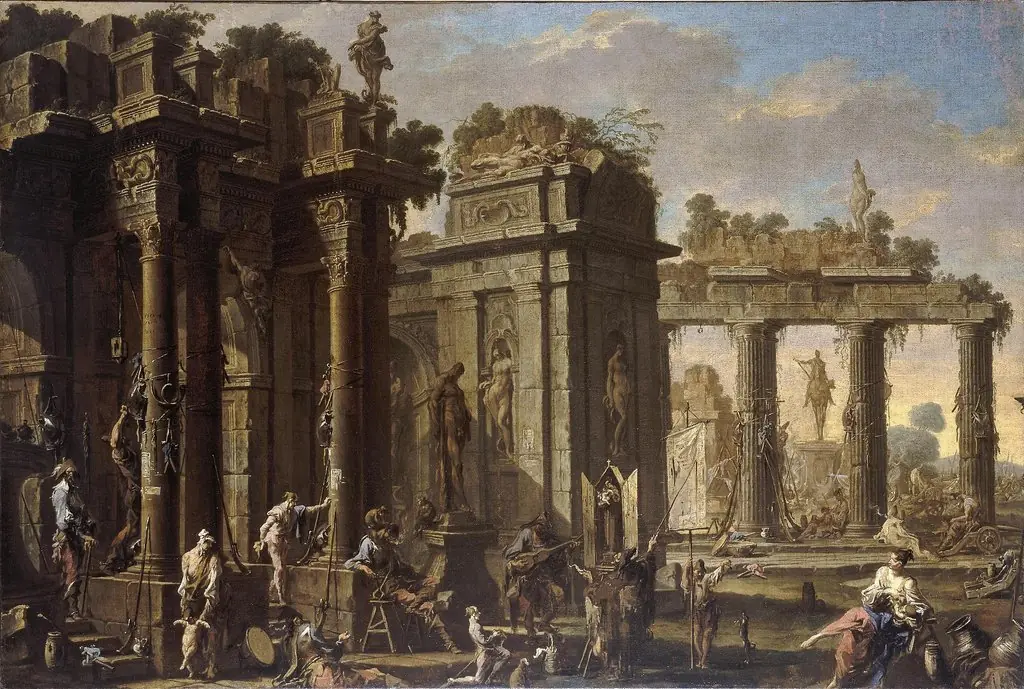 Banditti at Rest
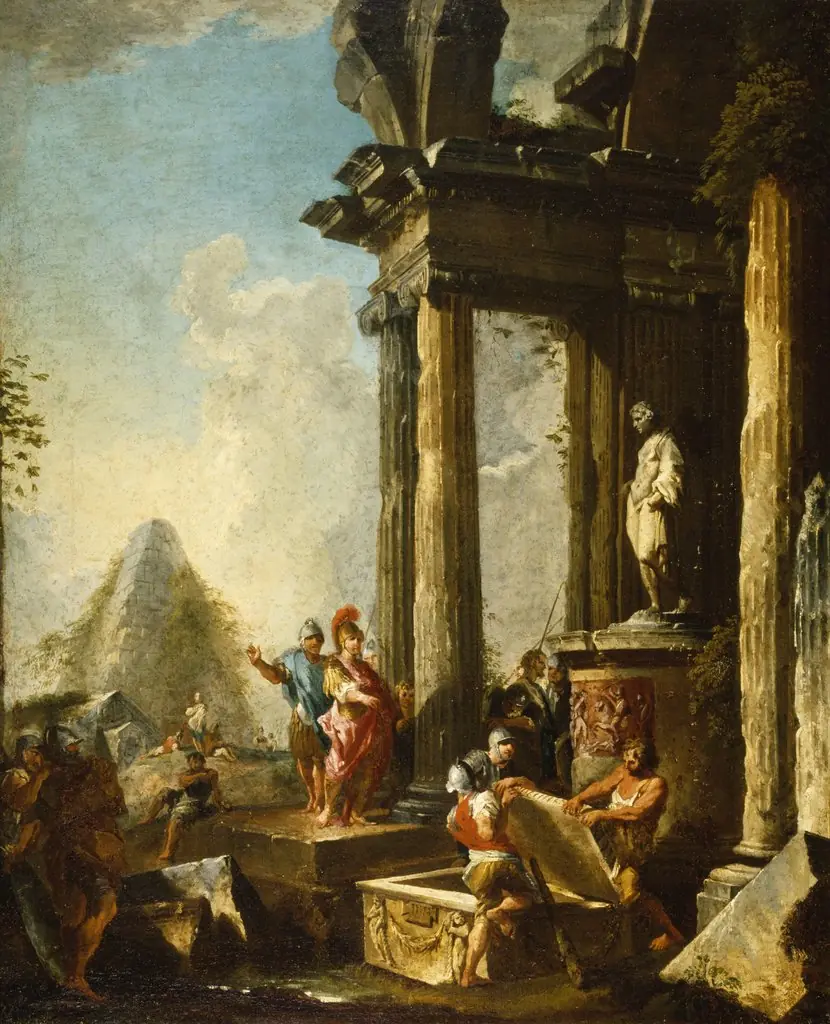 Alexander the Great at the Tomb of Achilles
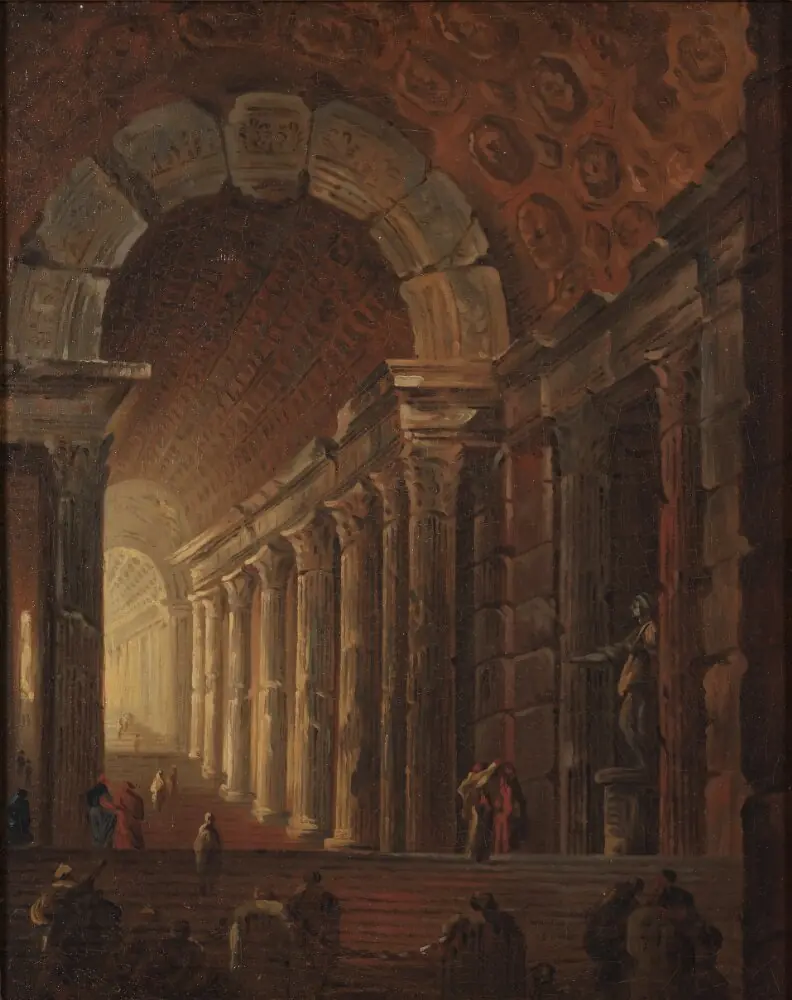 A Vaulted Staircase. Architectural Piece
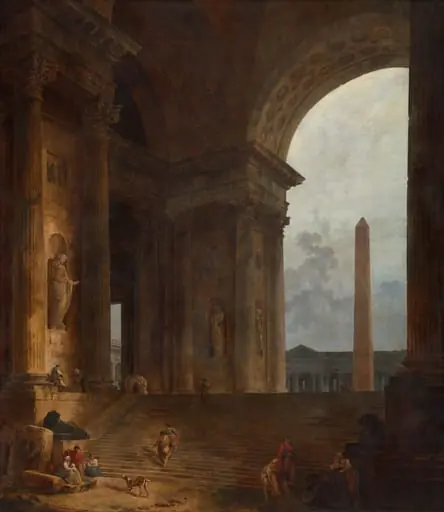 The Obelisk
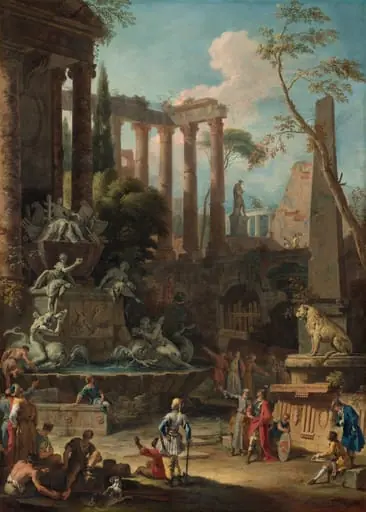 Memorial to Admiral Sir Clowdisley Shovell
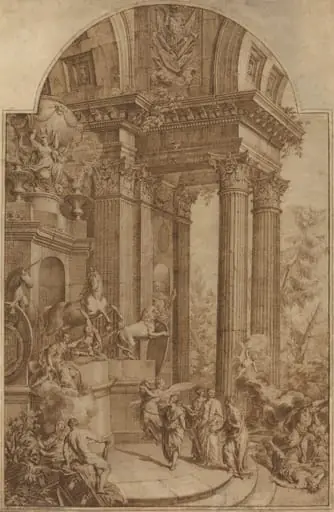 Monument to King George I
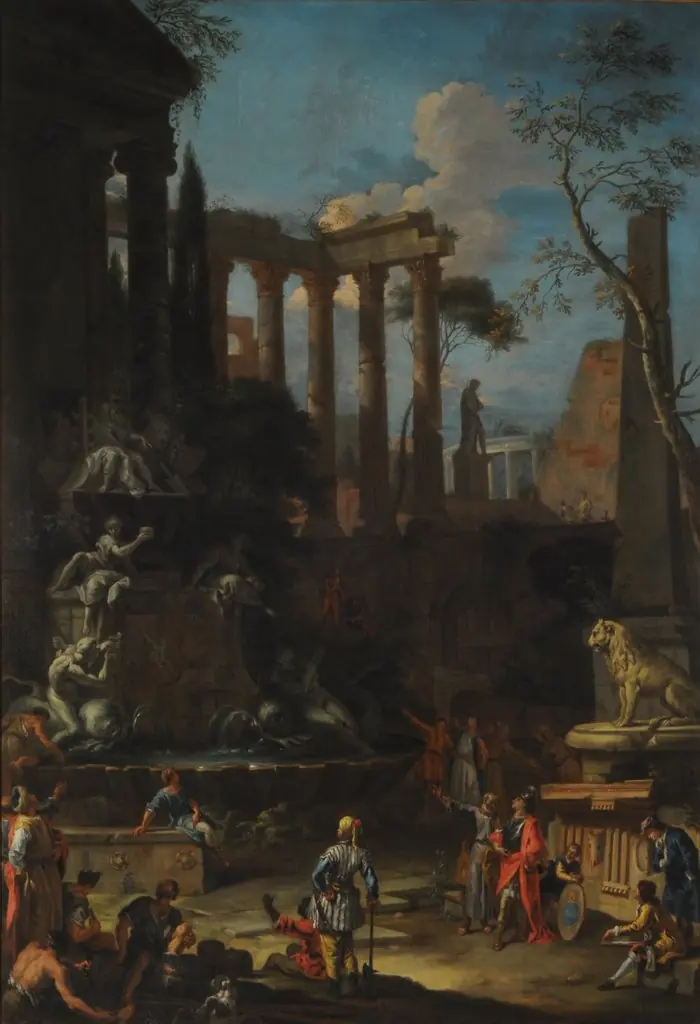 Allegorical tomb of Sir Cloudesley Shovell