Artwork
Flight in Egypt
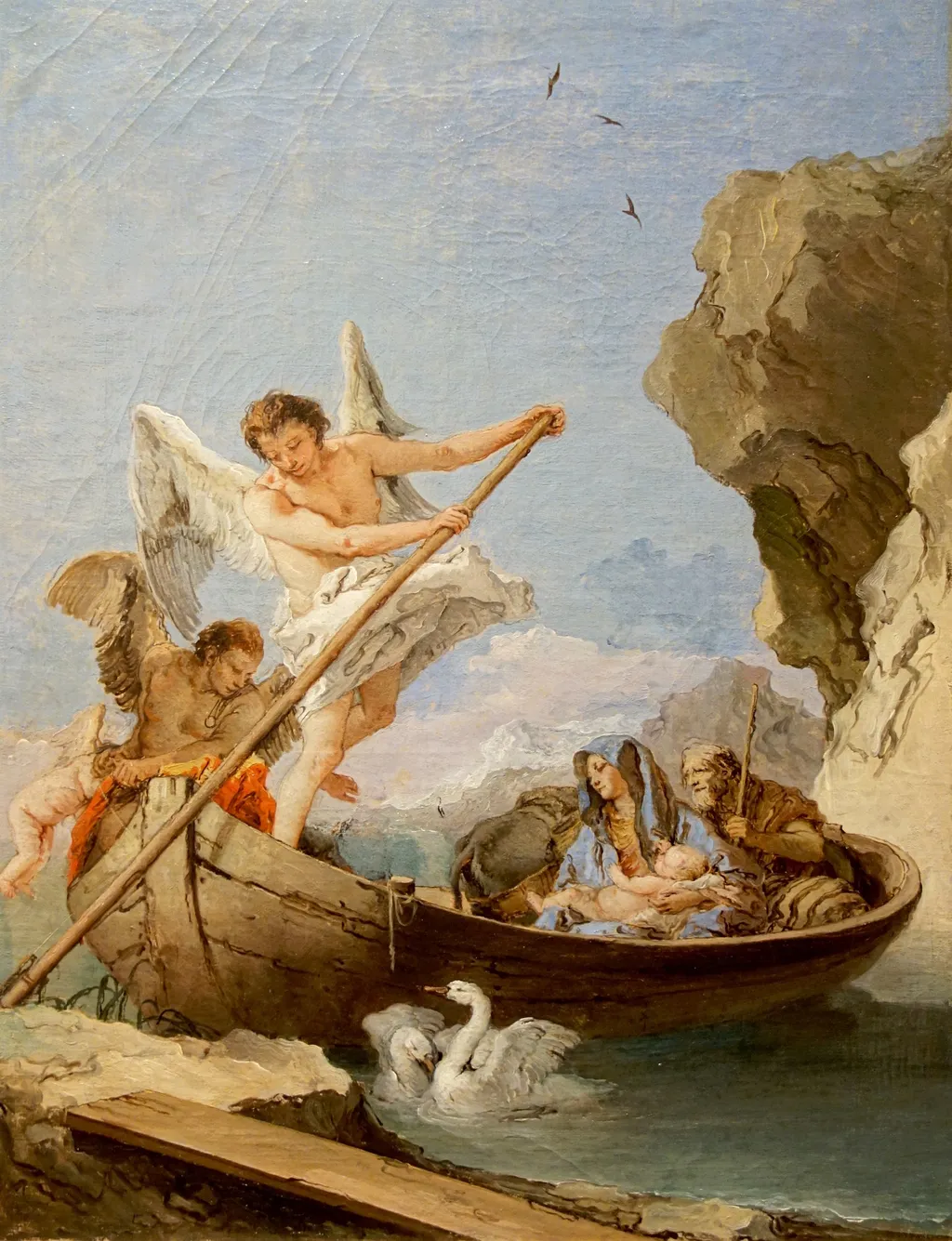
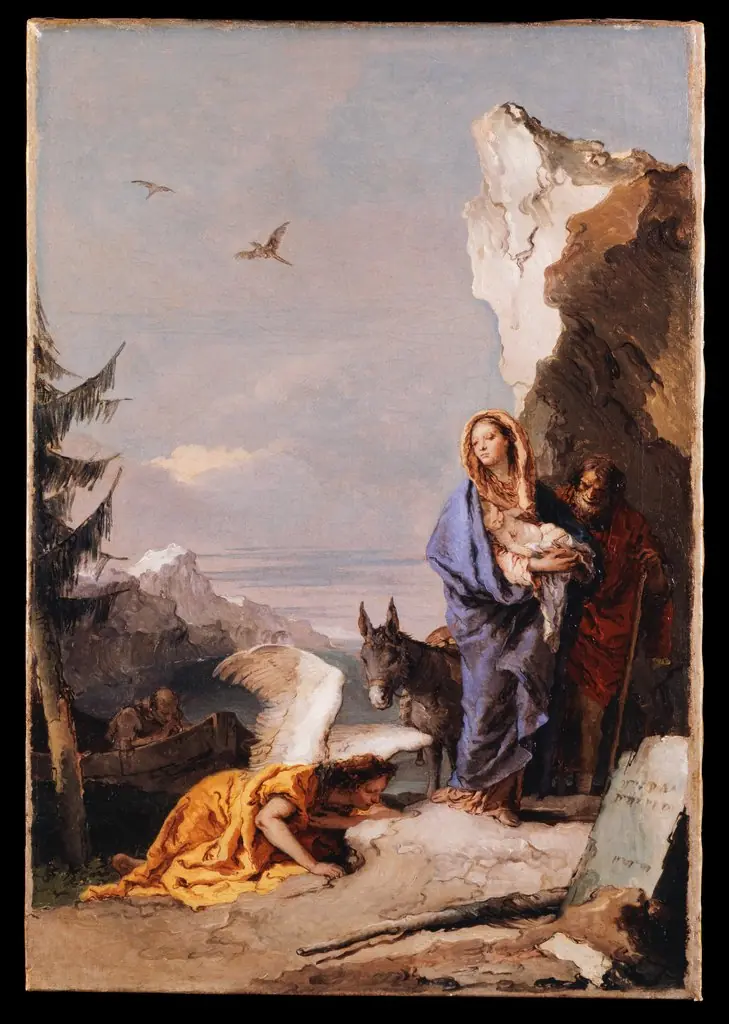
Flight in Egypt is an unspecified painting by the Rococo painting artist Giovanni Battista Tiepolo. It dates from 1750 and is held in the collection of the National Museum of Ancient Art.
About this work
Overview
Giovanni Battista Tiepolo's 'Flight in Egypt' (1764–1770) is an oil on canvas painting depicting a serene, atypical rendition of the Flight into Egypt, where the Holy Family travels by boat instead of the traditional donkey. Now housed at the Museu Nacional de Arte Antiga in Lisbon.
Subject & Meaning
The painting portrays the Holy Family (Joseph, Mary, and the Christ Child) accompanied by an angel in a boat. The angel actively rows, while Joseph and Mary are depicted in contemplative poses. Two swans in the water symbolize marital fidelity, adding a layer of thematic depth to the biblical scene.
Technique & Style
Tiepolo employs a muted color palette dominated by blues, browns, and beiges, contributing to the overall peaceful atmosphere. The use of chiaroscuro is notable, though the description provided does not delve into specific techniques used in this work.
History & Provenance
Created between 1764 and 1770, the painting's history prior to its current location in Lisbon's Museu Nacional de Arte Antiga is not detailed in the provided information.
Context
This work varies from traditional depictions of the Flight into Egypt by featuring a boat, showcasing Tiepolo's creative interpretation of a well-known biblical narrative within 18th-century European art.
Legacy
The legacy or impact of 'Flight in Egypt' on subsequent art or its reception over time is not specified in the given details.
Own this work as a print
Artist & collection

Artist
Giovanni Battista Tiepolo, also known as Giambattista Tiepolo, was an Italian painter and printmaker from the Republic of Venice who painted in the Rococo style, considered an important member of the 18th-century Venetian school.