Artwork
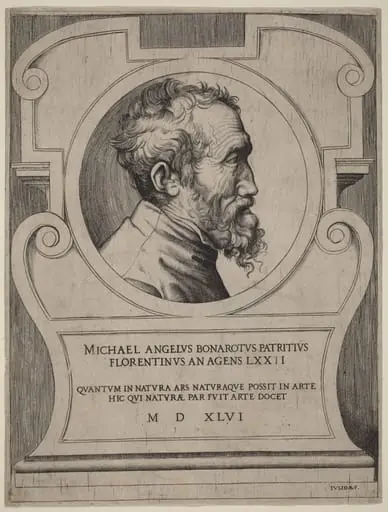
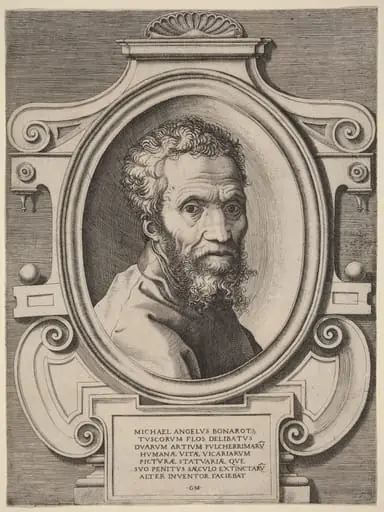
Portrait of Michelangelo in profile facing right
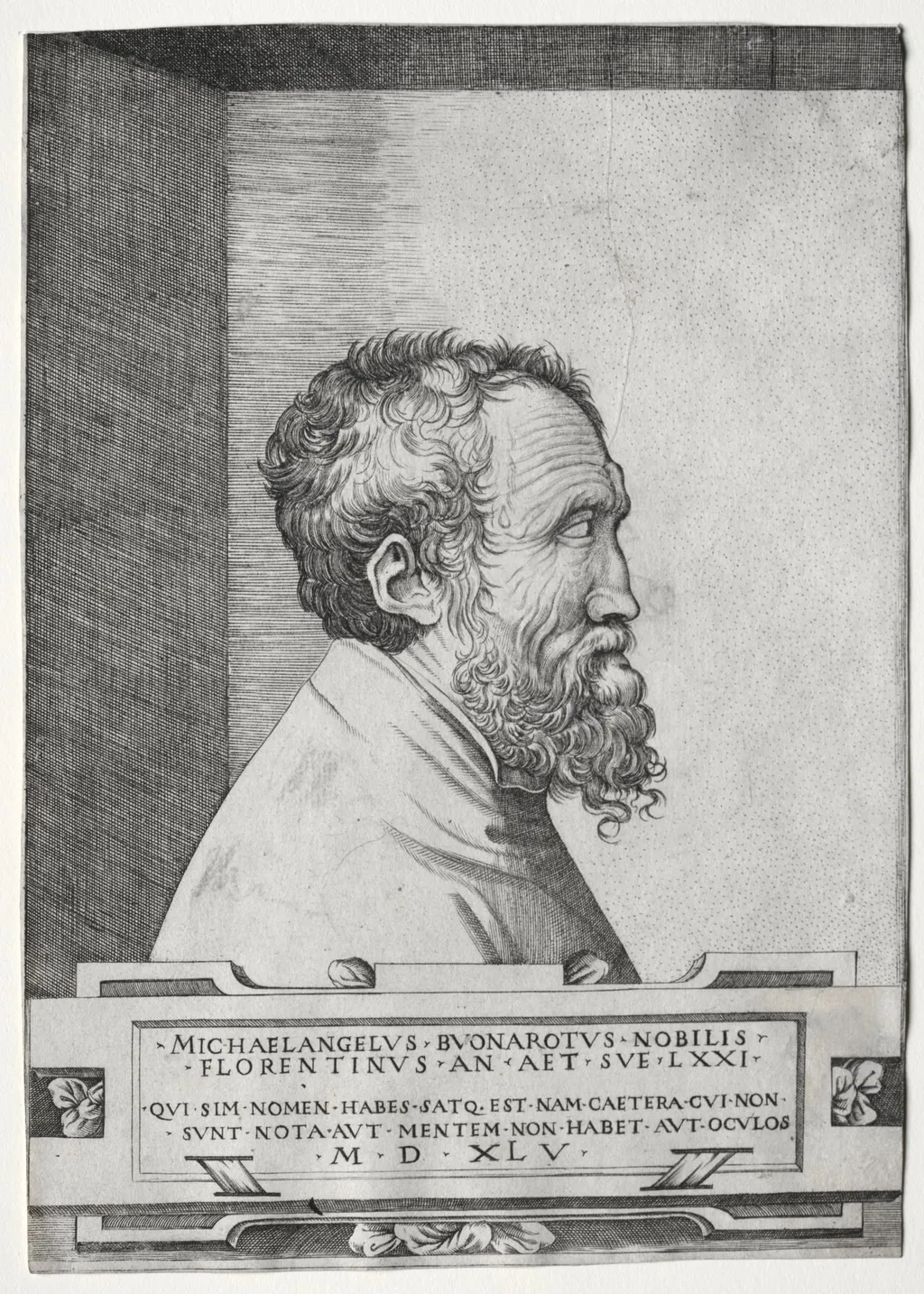
Portrait of Michelangelo in profile facing right is a print by the Renaissance artist Giulio Bonasone. It dates from 1550 and is held in the collection of the Cleveland Museum of Art.
About this work
Overview
This print, made by Giulio Bonasone around 1550, depicts Michelangelo in right-facing profile.
This print, made by Giulio Bonasone around 1550, depicts Michelangelo in right-facing profile. Executed in engraving, it captures the artist-sculptor with quiet intensity. The composition is restrained, focusing on the figure against a flat background. Bonasone’s precision in line work emphasizes texture and form, particularly in the hair and beard, while the absence of elaborate setting directs attention to the subject’s contemplative presence.
Subject & Meaning
The portrait presents Michelangelo not as a public figure but as a thinker, his gaze directed beyond the frame. His furrowed brow and solemn expression suggest introspection, aligning with contemporary perceptions of him as a solitary genius. The high-collared robe implies dignity and intellectual stature, reinforcing his identity as a revered artist rather than a mere craftsman. The image functions as a visual tribute, capturing his inner gravity rather than external grandeur.
Technique & Style
Bonasone employed fine-line engraving to render intricate details in Michelangelo’s hair and beard, each strand carefully etched to suggest volume and texture. Chiaroscuro is achieved through controlled contrasts of light and shadow, modeling the face with subtle gradations. The background remains unadorned, enhancing the figure’s presence. The style reflects Renaissance ideals of naturalism and psychological depth, prioritizing clarity and restraint over ornamentation.
History & Provenance
Created in 1550, the print was made during Michelangelo’s lifetime, likely based on earlier drawings or direct observation. It entered the Cleveland Museum of Art’s collection through established acquisition channels, becoming part of its holdings of Renaissance graphic arts. The print’s survival in good condition reflects its historical value as a contemporary likeness, preserved through centuries of scholarly and artistic interest.
Context
In mid-16th-century Italy, engraved portraits of prominent figures served as tools for intellectual and artistic legacy. Bonasone, known for translating paintings into prints, contributed to the circulation of such images among educated elites. Michelangelo’s rising fame made him a frequent subject; this portrait aligns with a broader trend of using print to immortalize cultural icons beyond the reach of painting or sculpture.
Legacy
This engraving remains one of the most recognizable depictions of Michelangelo from his own era. Its restrained elegance and psychological nuance influenced later portraiture in print. While not widely reproduced in its time, its preservation in major collections has ensured its role as a key reference for understanding how Renaissance artists were visually conceptualized by their contemporaries.
Artist & collection

Artist
Giulio Bonasone (c. 1498 – after 1574) (or Giulio de Antonio Buonasone or Julio Bonoso) was an Italian painter and engraver born in Bologna. He possibly studied painting under Lorenzo Sabbatini, and painted a Purgatory…