Artwork
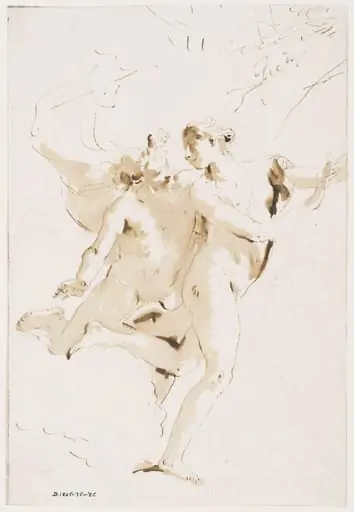
Apollo and Daphne
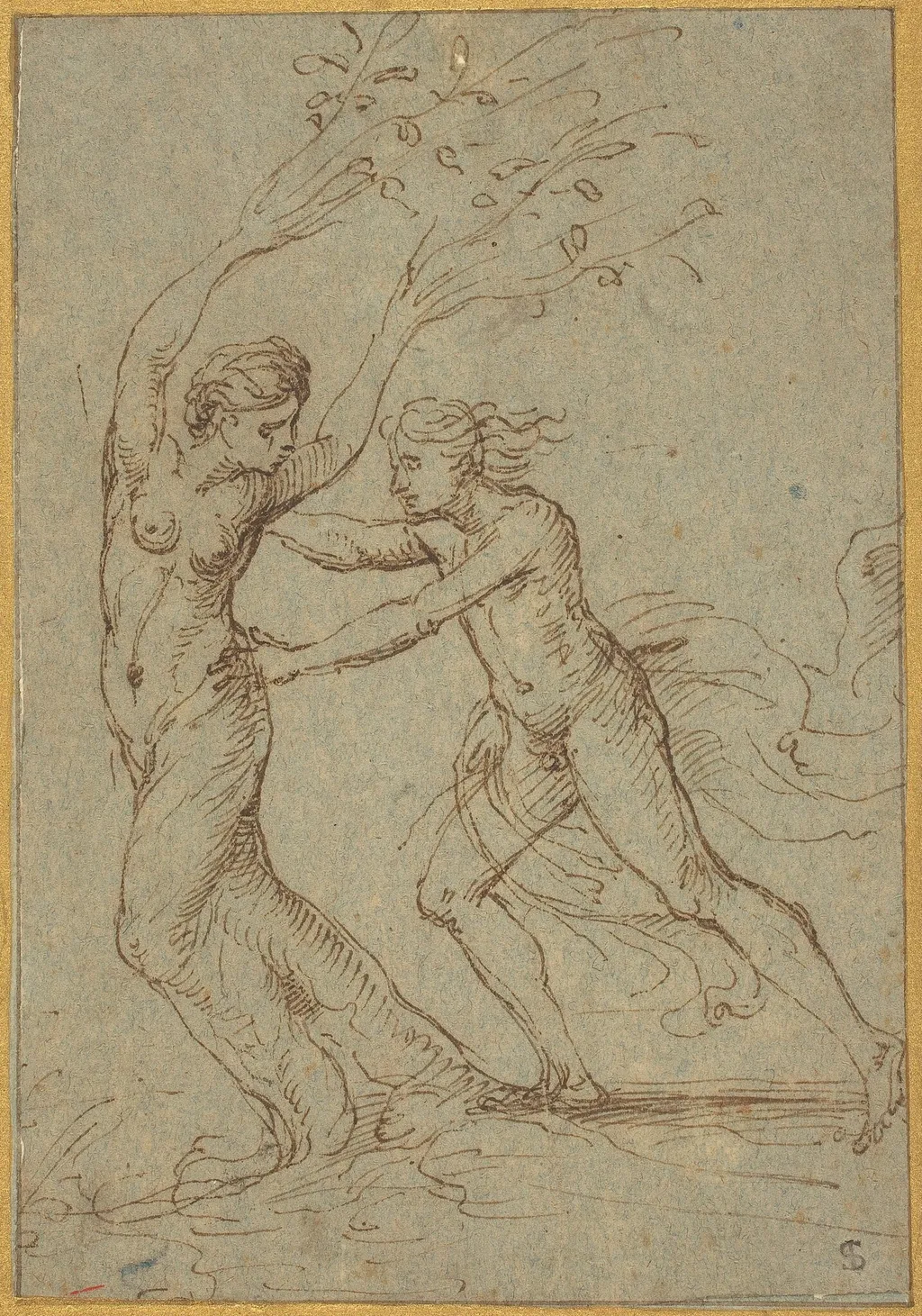
Apollo and Daphne is an ink drawing by the Renaissance artist Giulio Romano. It dates from 1522 and is held in the collection of the National Gallery of Art.
About this work
Overview
Giulio Romano’s drawing *Apollo and Daphne* was executed in 1522 with pen and brown ink on a sheet of green‑blue laid paper. The work captures a fleeting mythological encounter, rendered in a swift, gestural manner that emphasizes motion and tension between the figures. Its modest size and monochrome palette reflect the preparatory nature of many Renaissance studies.
Subject & Meaning
The composition portrays the climax of the Ovidian myth: Apollo, the god of archery, reaches for the fleeing nymph Daphne, whose outstretched arms suggest her transformation into laurel. The intertwined bodies and opposing twists convey the dramatic struggle between desire and escape, a theme frequently explored in sixteenth‑century Italian art.
Technique & Style
Romano employs rapid, sketchy strokes and cross‑hatching to model form and suggest foliage, creating a sense of kinetic energy. The brown ink, applied with a pen, varies in density, allowing subtle tonal shifts on the tinted paper. This approach aligns with the emerging Mannerist aesthetic, which favored exaggerated poses and expressive line over the balanced harmony of the High Renaissance.
History & Provenance
As a pupil of Raphael, Romano inherited a workshop tradition that prized drawing as a tool for design. The piece was collected by connoisseurs of the period, who prized his drafts for their inventive composition. Later, engraver Marcantonio Raimondi reproduced the drawing, helping to circulate Romano’s Mannerist idiom throughout Europe.
Context
*Apollo and Daphne* exemplifies the shift toward stylized, dynamic figures that characterized early Mannerism in Italy. Its dissemination through Raimondi’s prints contributed to the broader adoption of exaggerated anatomy and complex poses among artists beyond Rome, influencing subsequent generations who explored the tension between classical narrative and expressive form.
Artist & collection
Artist
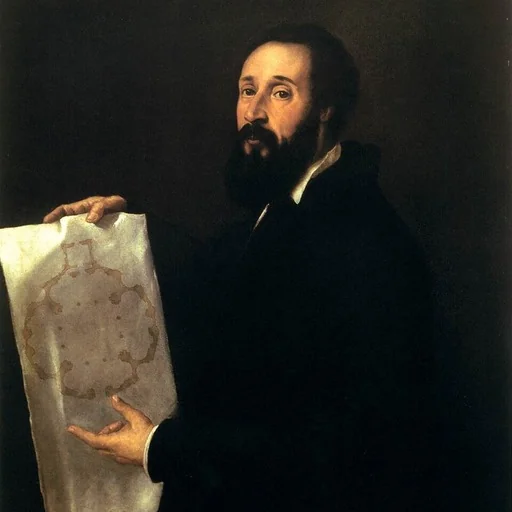
Giulio Pippi (c. 1499 – 1 November 1546), known as Giulio Romano (US: JOOL-yoh rə-MAH-noh( Italian: ) and sometimes known in French as Jules Romain, was an Italian painter and architect. He was a pupil of Raphael, and…

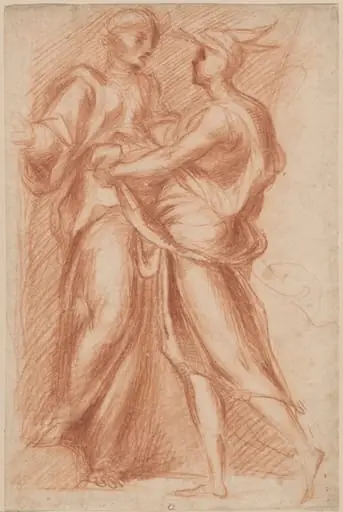 Mercury and Aglauros
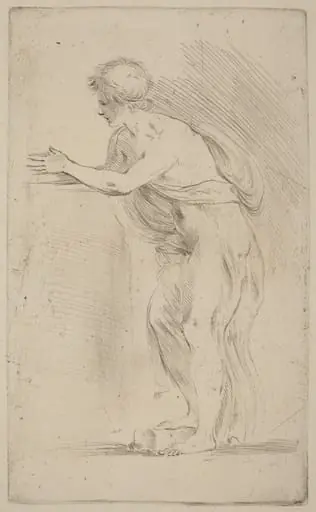 Academy of a Young Man
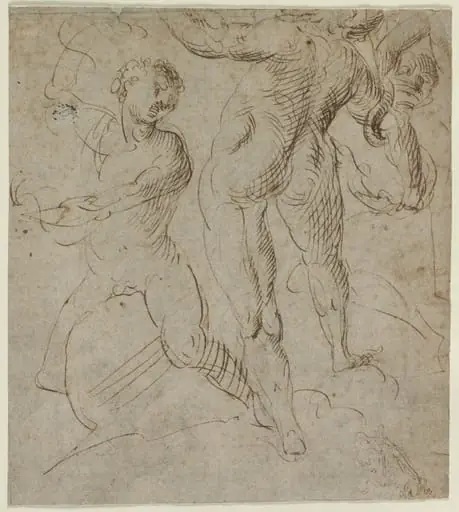 Laocoön (recto)
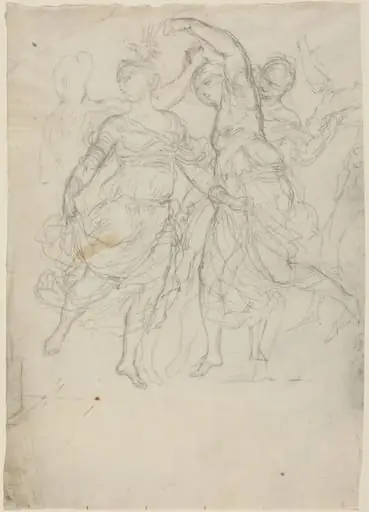 Women Dancing
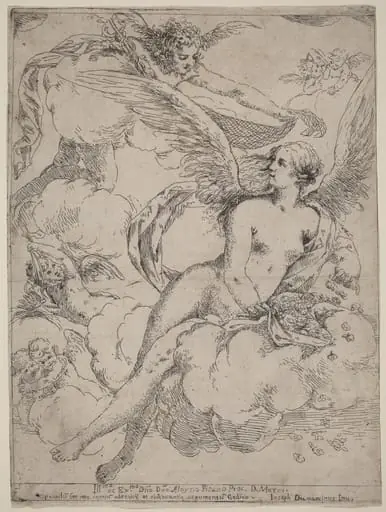 Flora and Mercury
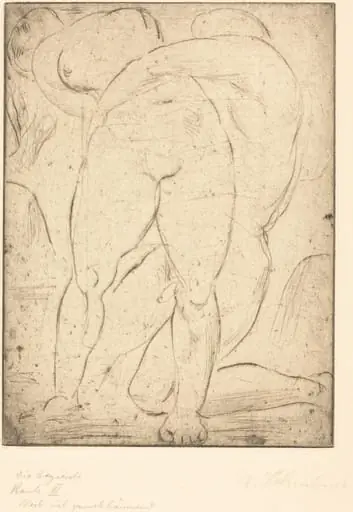 Passion II (Leidenschaft II)
![Two Studies of the Statue of Alexander and Bucephalus [verso], by Hubert Robert](https://artifactworldgallery.com/img/hubert-robert--two-studies-of-the-statue-of-alexander-and-bucephalus-verso--c8baec3f622cceea-w320.webp) Two Studies of the Statue of Alexander and Bucephalus [verso]
Two Studies of the Statue of Alexander and Bucephalus [verso] Paris Awarding the Apple to Venus
 Door Knocker with Triton, Nereid, and Putti
 Women dancing
 Standing Woman Holding a Scroll
 Apollo and Daphne