Artwork
Esther before Ahasuerus
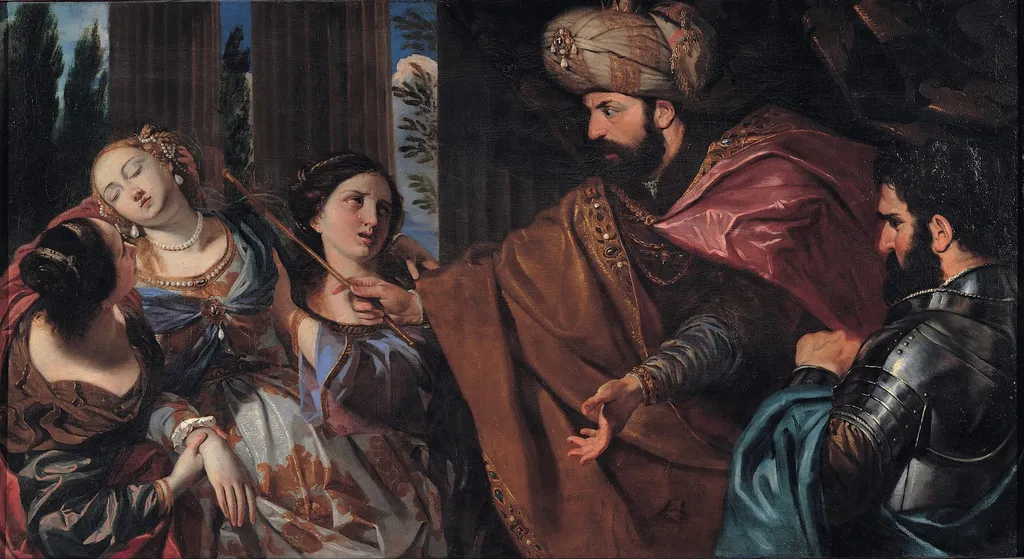
Esther before Ahasuerus is an oil painting by the Early Baroque Italian artist Giuseppe Bonati. It dates from 1650 and is held in the collection of the Capitoline Museums.
About this work
Overview
Giuseppe Bonati, an Italian painter of the mid‑17th century, executed the oil work *Esther before Ahasuerus* around 1650. The canvas, now part of the Capitoline Museums’ collection, illustrates the biblical moment when Queen Esther approaches King Ahasuerus. Bonati’s career unfolded in Rome and Ferrara, where he absorbed the prevailing Baroque aesthetic.
Subject & Meaning
The composition presents five figures: a regal king in a red robe and turban, the queen‑to‑be in a blue dress, and three courtiers. The monarch leans toward Esther, who gazes upward with a calm, pleading expression, suggesting the tension of her petition. The surrounding attendants observe the exchange, underscoring the drama of the royal audience.
Technique & Style
Bonati employs strong chiaroscuro, allowing the luminous garments to emerge from a muted, darkened background. The contrast between the vibrant reds and blues of the principal figures and the shadowy surroundings creates depth and emphasizes the emotional focus on the central dialogue.
History & Provenance
Trained initially with Francesco Costanzo Cattaneo, Bonati later joined the circles of Guercino and Pier Francesco Mola. He worked under the patronage of Cardinal Carlo Pio di Savoia, a notable collector of the period. The painting eventually entered the state holdings of Rome and is displayed in the Capitoline Museums.
Context
Created during the early Baroque phase in Italy, the work reflects the period’s interest in dramatic narrative, theatrical lighting, and vivid coloration. Biblical subjects were common commissions for ecclesiastical and aristocratic patrons, allowing artists like Bonati to demonstrate both devotional content and technical skill.
Artist & collection
Artist
Giuseppe Bonati (1635 – 12 March 1681) was an Italian painter of the Baroque period, active in Rome and Ferrara.

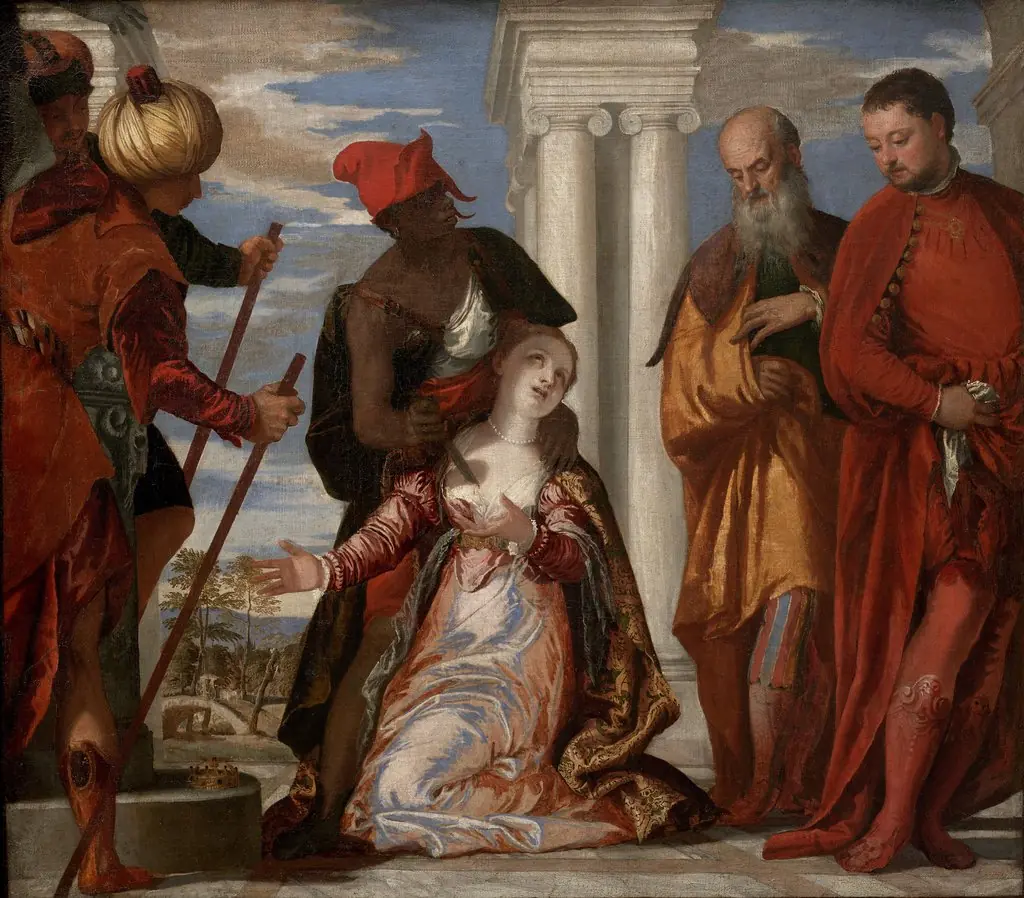 The Martyrdom of Saint Justina
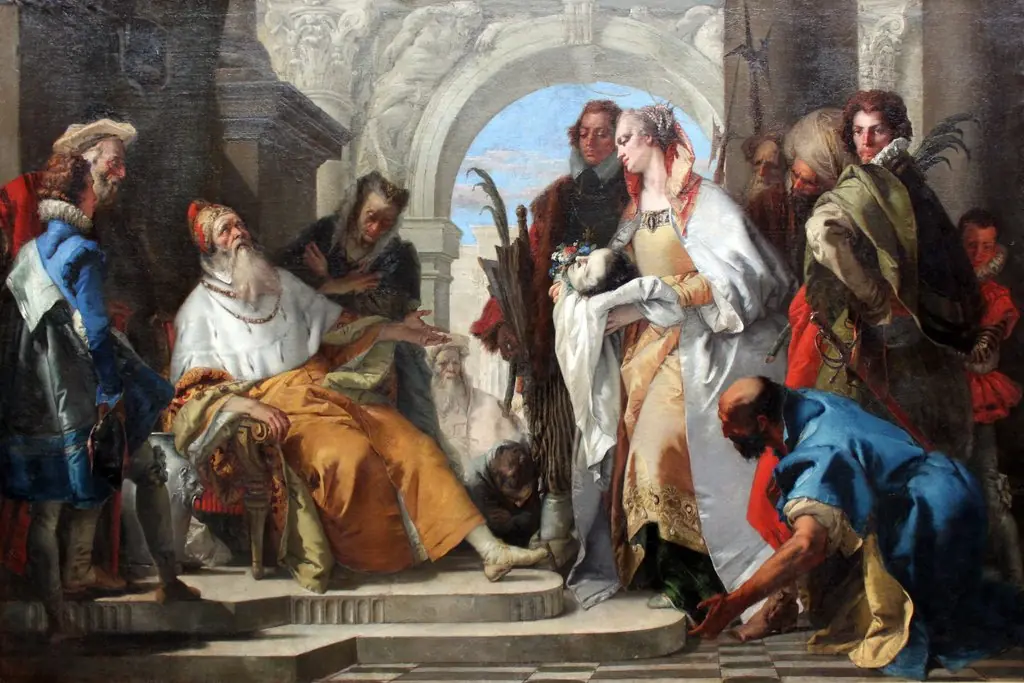 The Patron Saints of the Crotta Family
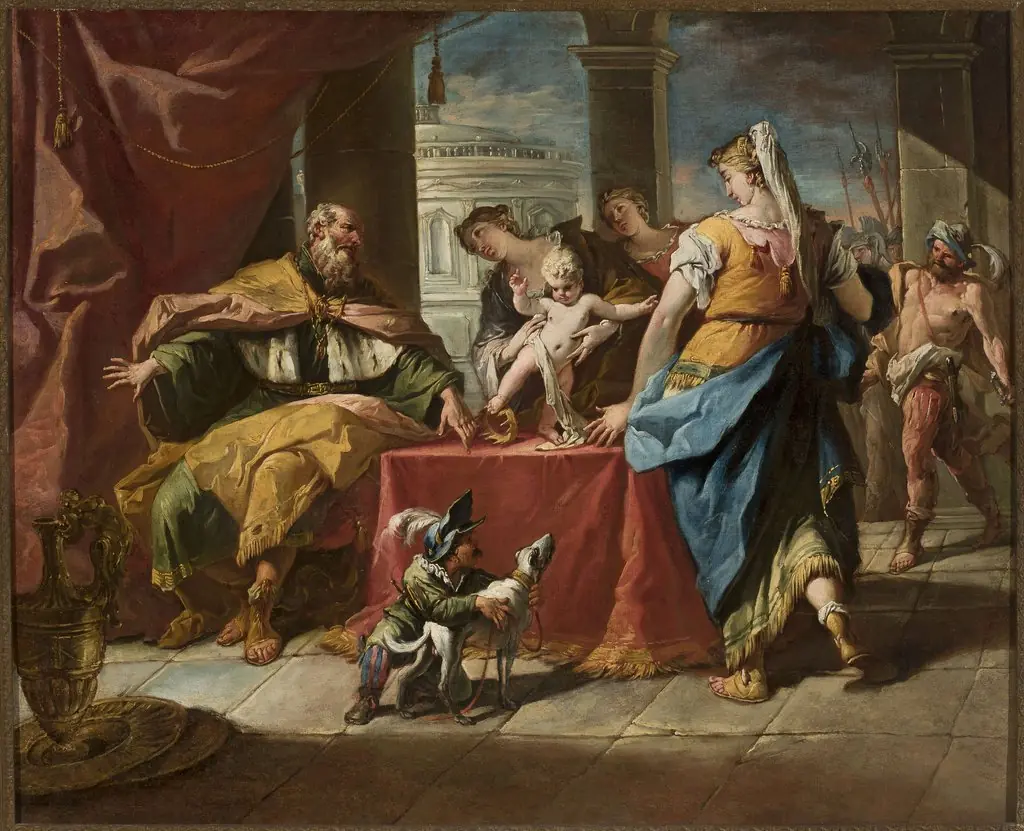 Moses trampling on the Pharaoh’s crown
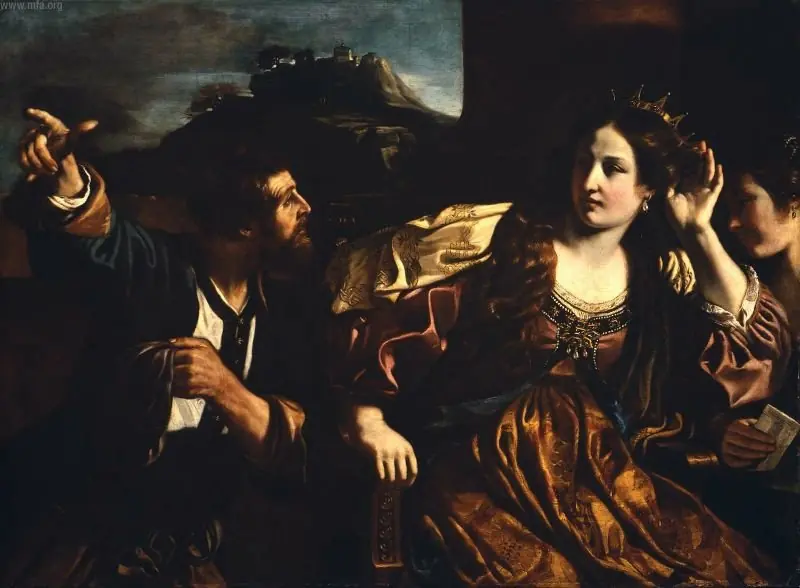 Semiramis Receiving Word of the Revolt of Babylon
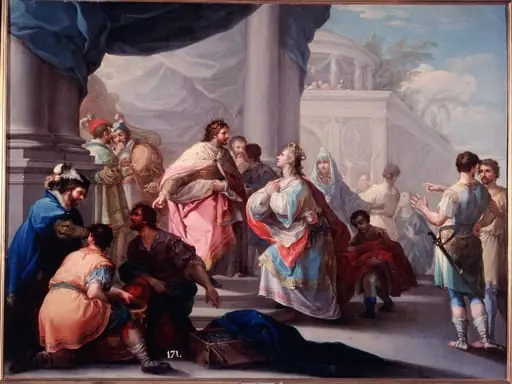 The Empress Marta de Constantinople before Alfonso X. Ramón Bayeu and Subías
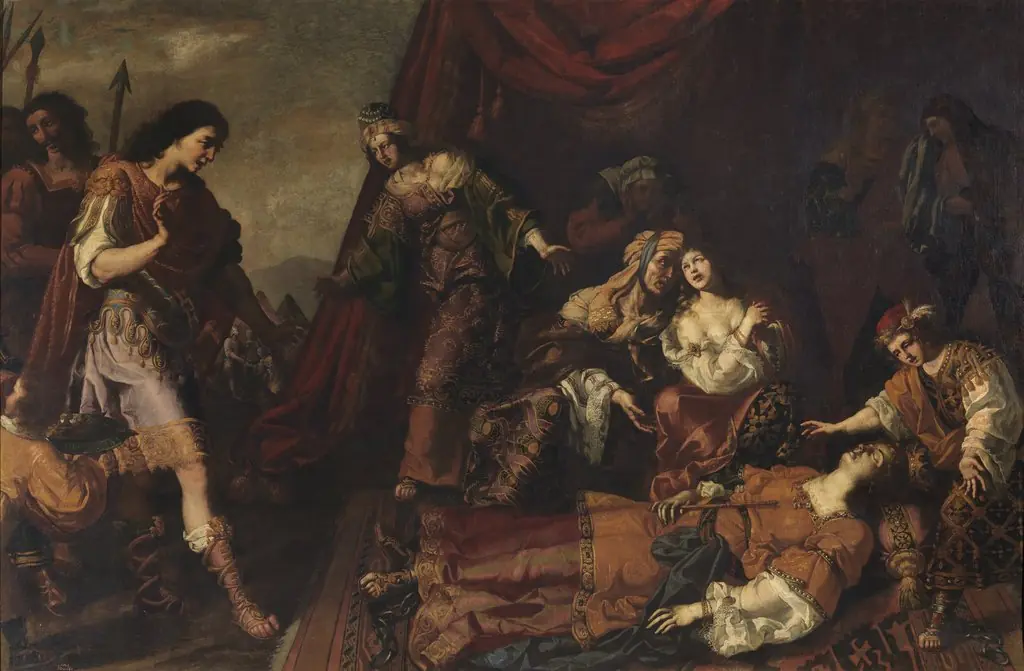 Masinissa Mourning Over the Death of Sophonisba (?)
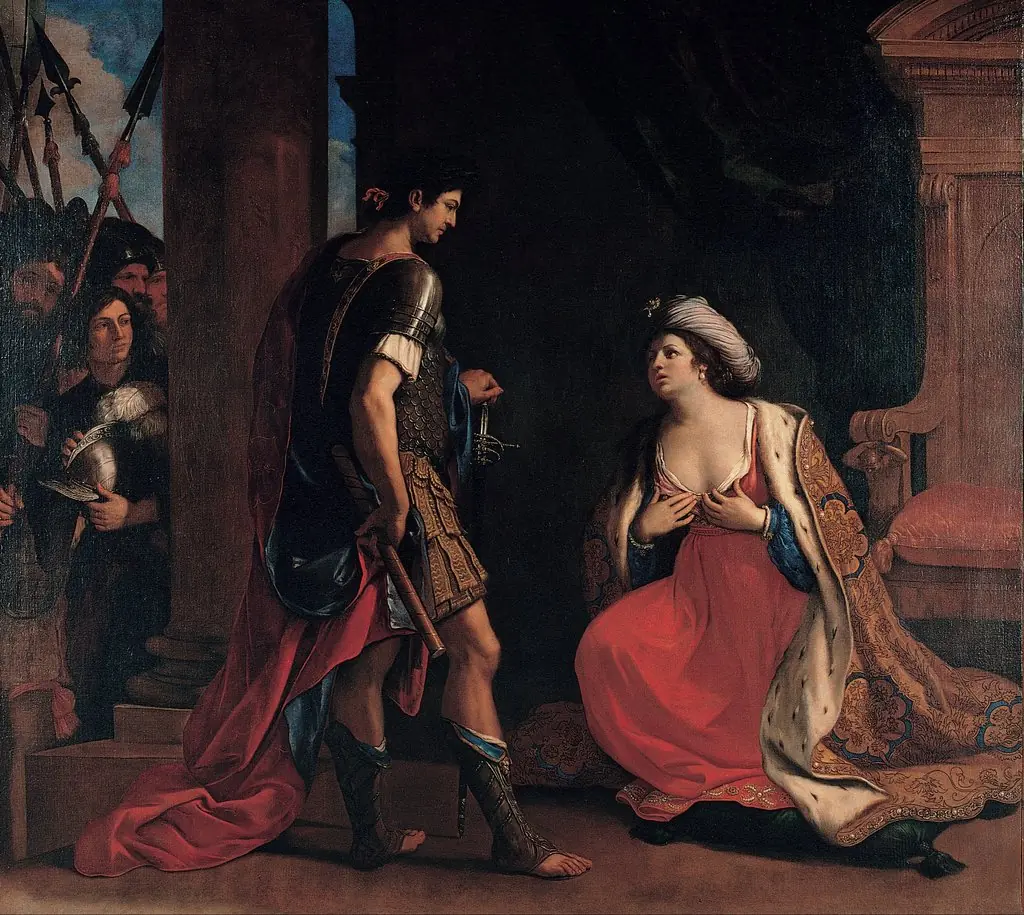 Cleopatra and Octavian
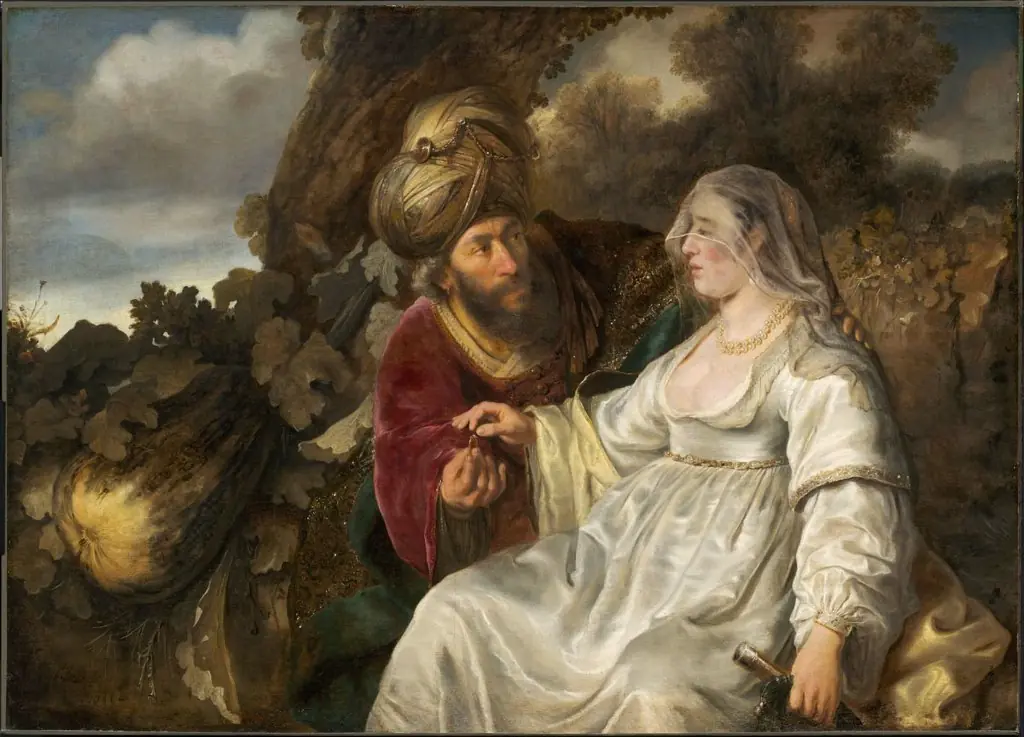 Judah and Tamar
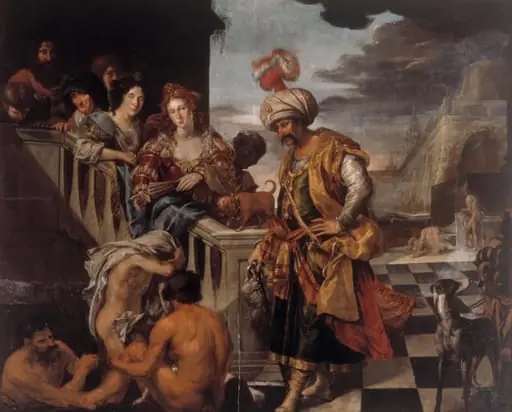 Bathing in an Oriental Harbour
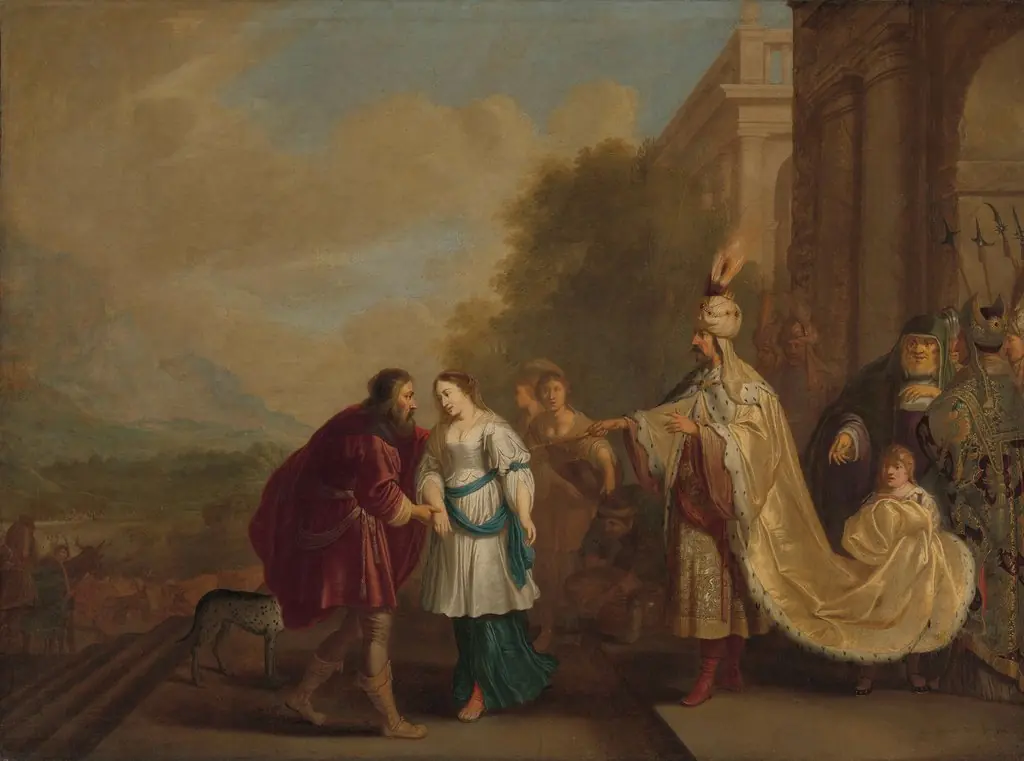 Pharaoh gives Sarah back to Abraham
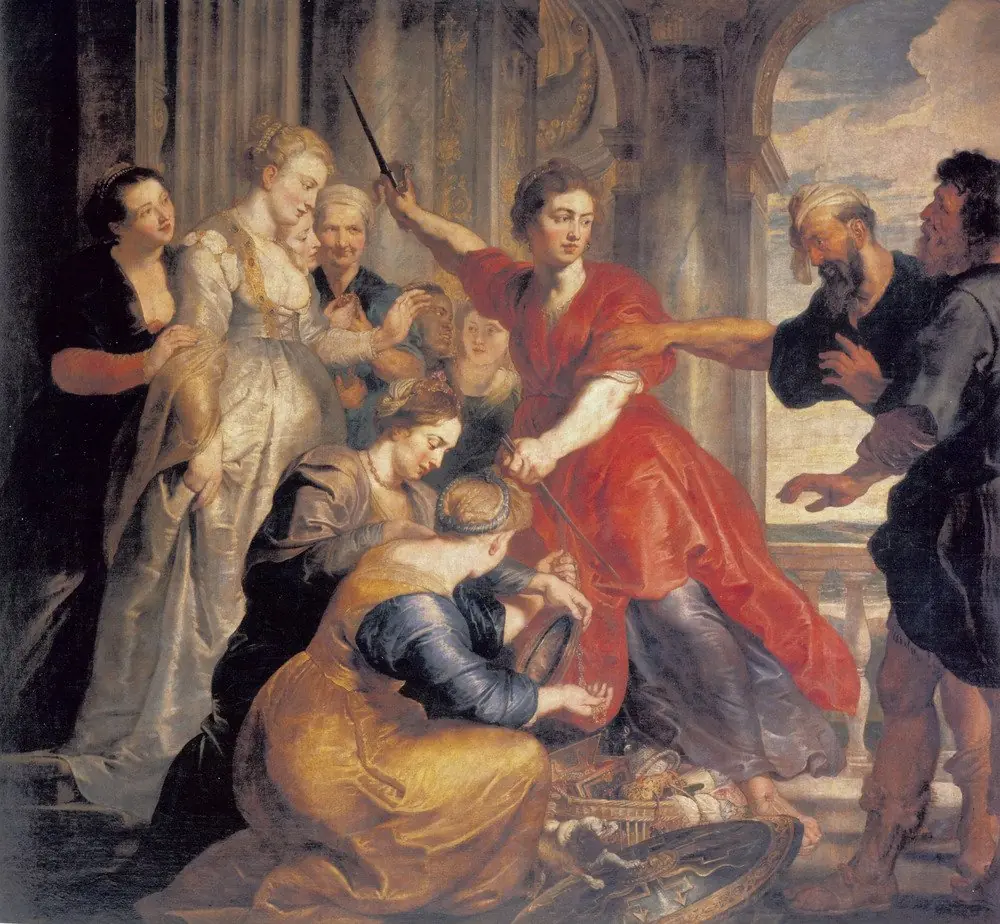 Achilles discovered by Ulysses and Diomedes
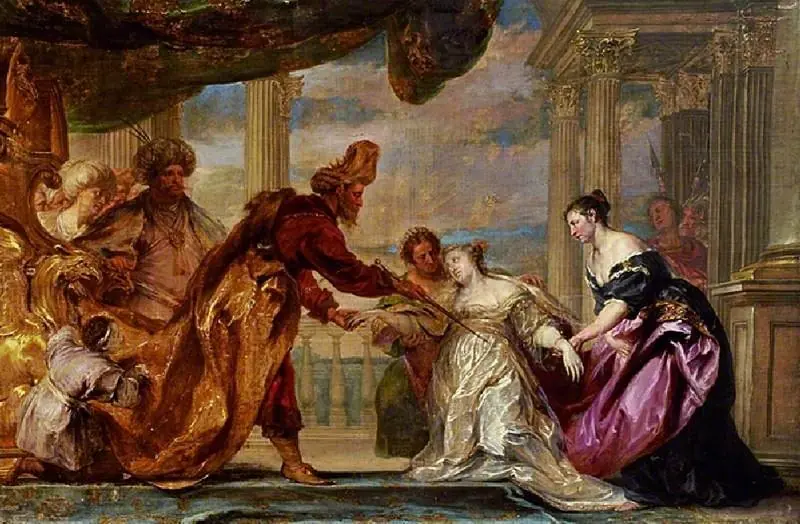 Esther before Ahasuerus