Artwork
Pair of Cranes in Bamboo Grove
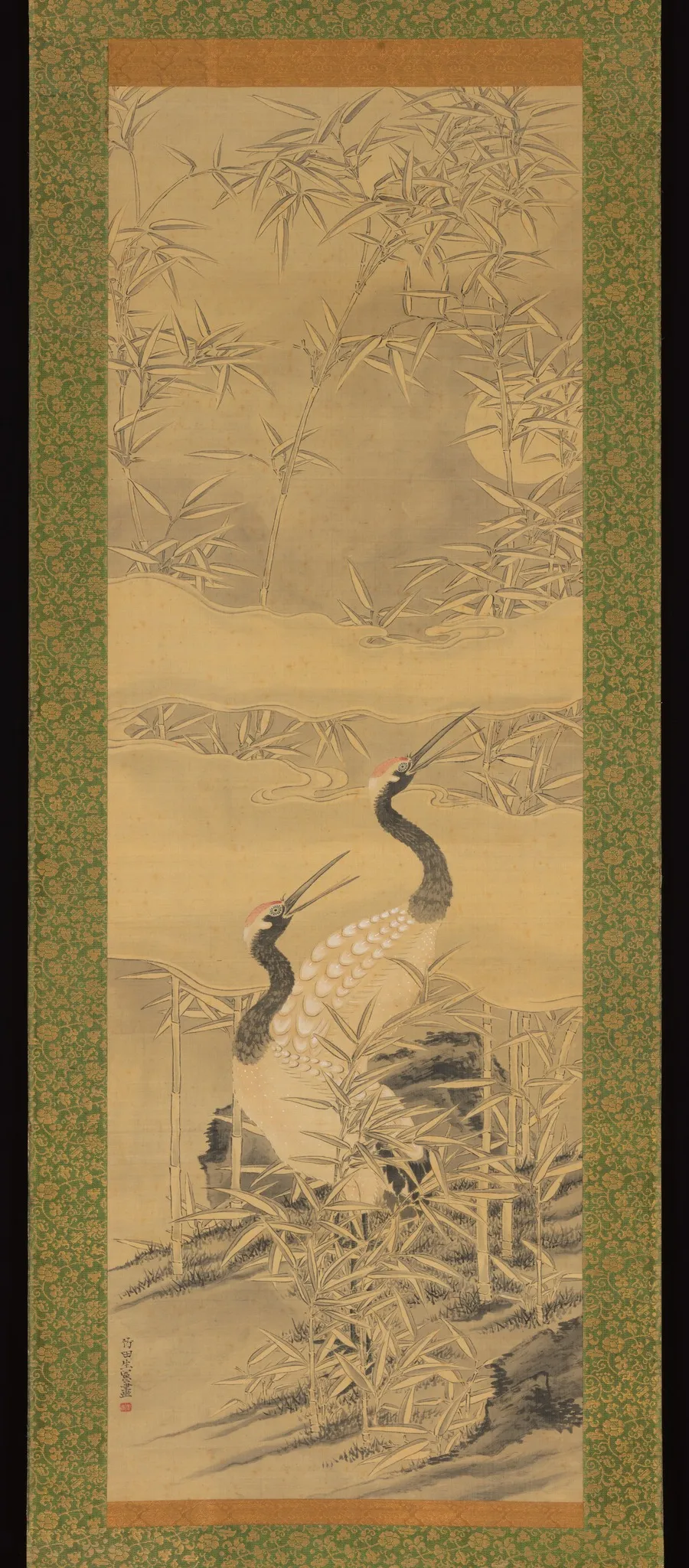
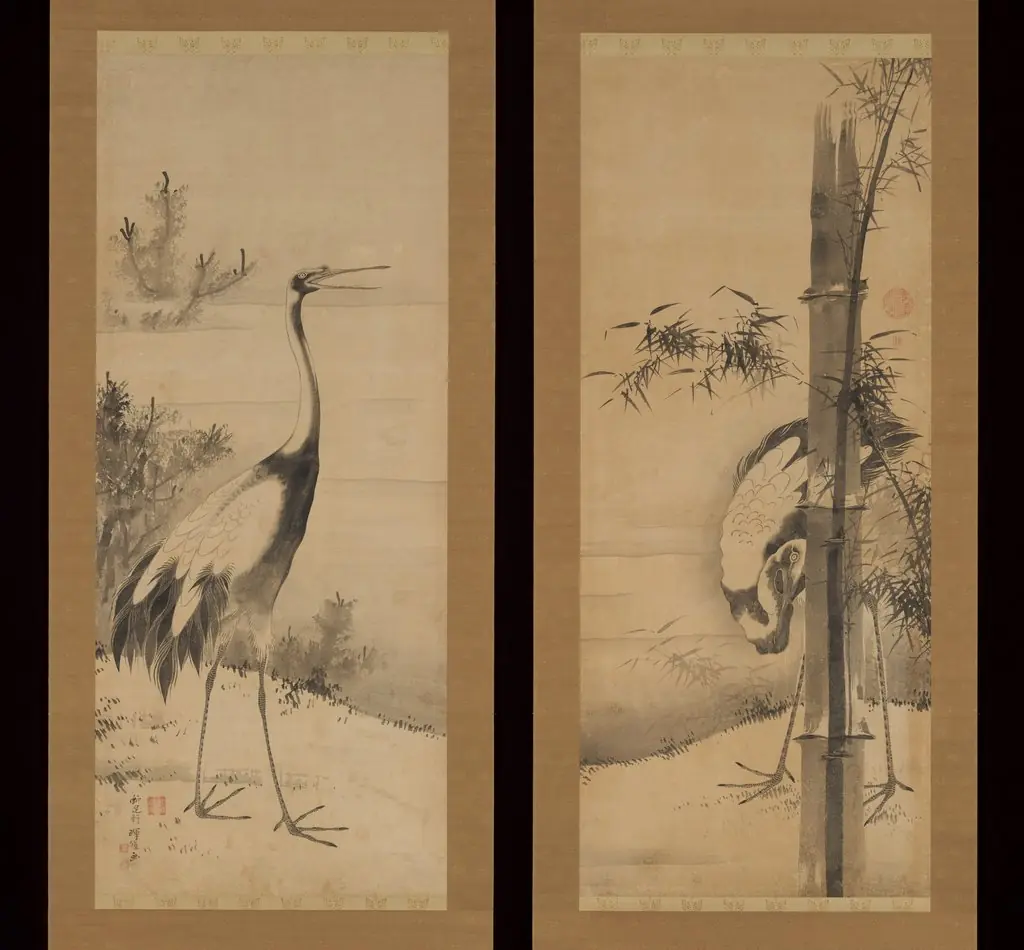
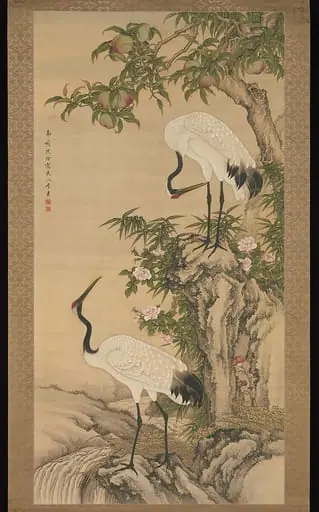
Pair of Cranes in Bamboo Grove is an unspecified painting by Tanomura Chikuden. It dates from 1830 and is held in the collection of the Metropolitan Museum of Art.
About this work
Overview
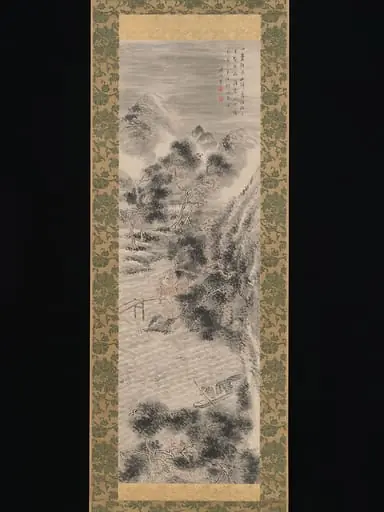
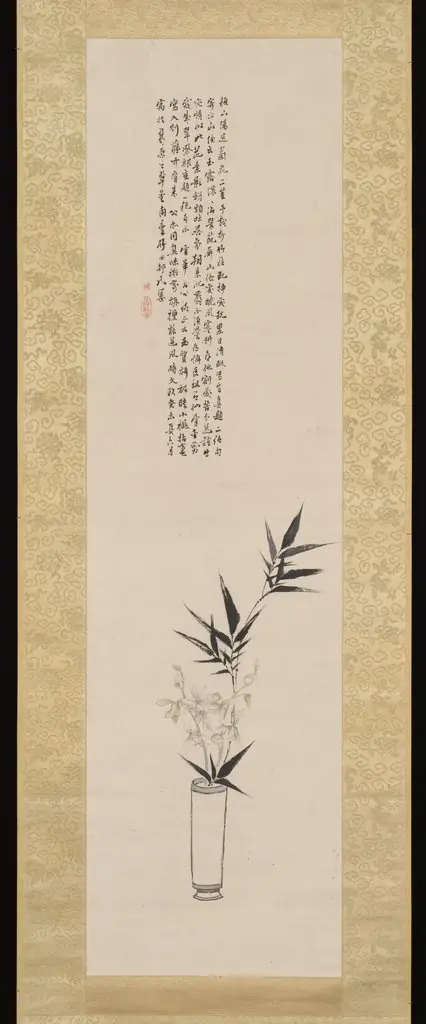
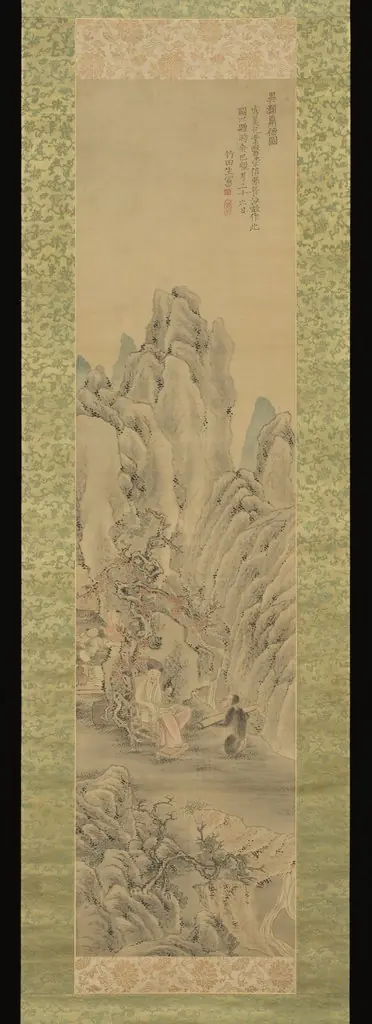
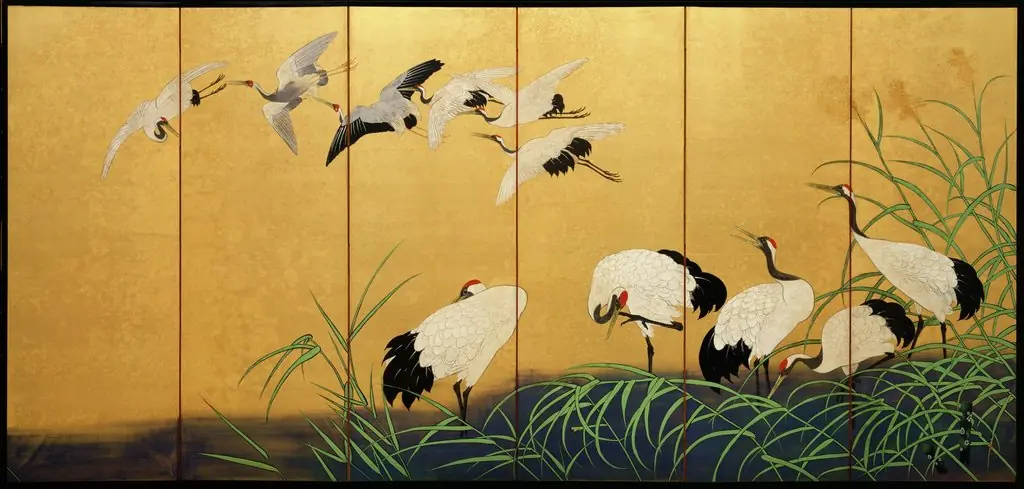
Tanomura Chikuden’s 1830 painting Pair of Cranes in Bamboo Grove is part of the Metropolitan Museum of Art’s collection. The work presents a quiet natural setting where two cranes stand amid a bamboo thicket, rendered with subtle tonal variations that convey depth and a calm atmosphere.
Subject & Meaning
The composition centers on a pair of cranes, traditional symbols of longevity and fidelity in East Asian culture, positioned facing one another within a grove of bamboo. Their poised stance and the surrounding foliage suggest a harmonious interaction between wildlife and the natural world, inviting contemplation of balance and serenity.
Technique & Style
Executed in ink and color on paper, the painting employs layered washes of green and brown to model the bamboo stalks, while the cranes are outlined with delicate brushwork. Light and shadow are suggested through gradations rather than stark contrasts, creating a sense of atmospheric depth characteristic of Edo‑period literati painting.
History & Provenance
Created in the late Edo period, the piece entered the Metropolitan Museum of Art’s holdings through acquisition in the early twentieth century. Its provenance traces back to Japanese collections before crossing to the United States, where it has been displayed as an example of Tanomura’s refined brush technique.
Context
Tanomura Chikuden (1777‑1835) was a scholar‑artist associated with the Nanga school, which emphasized personal expression over formal realism. This work reflects the school’s aesthetic values, integrating poetic subject matter with understated, contemplative execution, aligning with contemporary Japanese artistic trends that favored nature as a conduit for moral reflection.
Artist & collection