Artwork
Balthasar Bathory de Somlyo
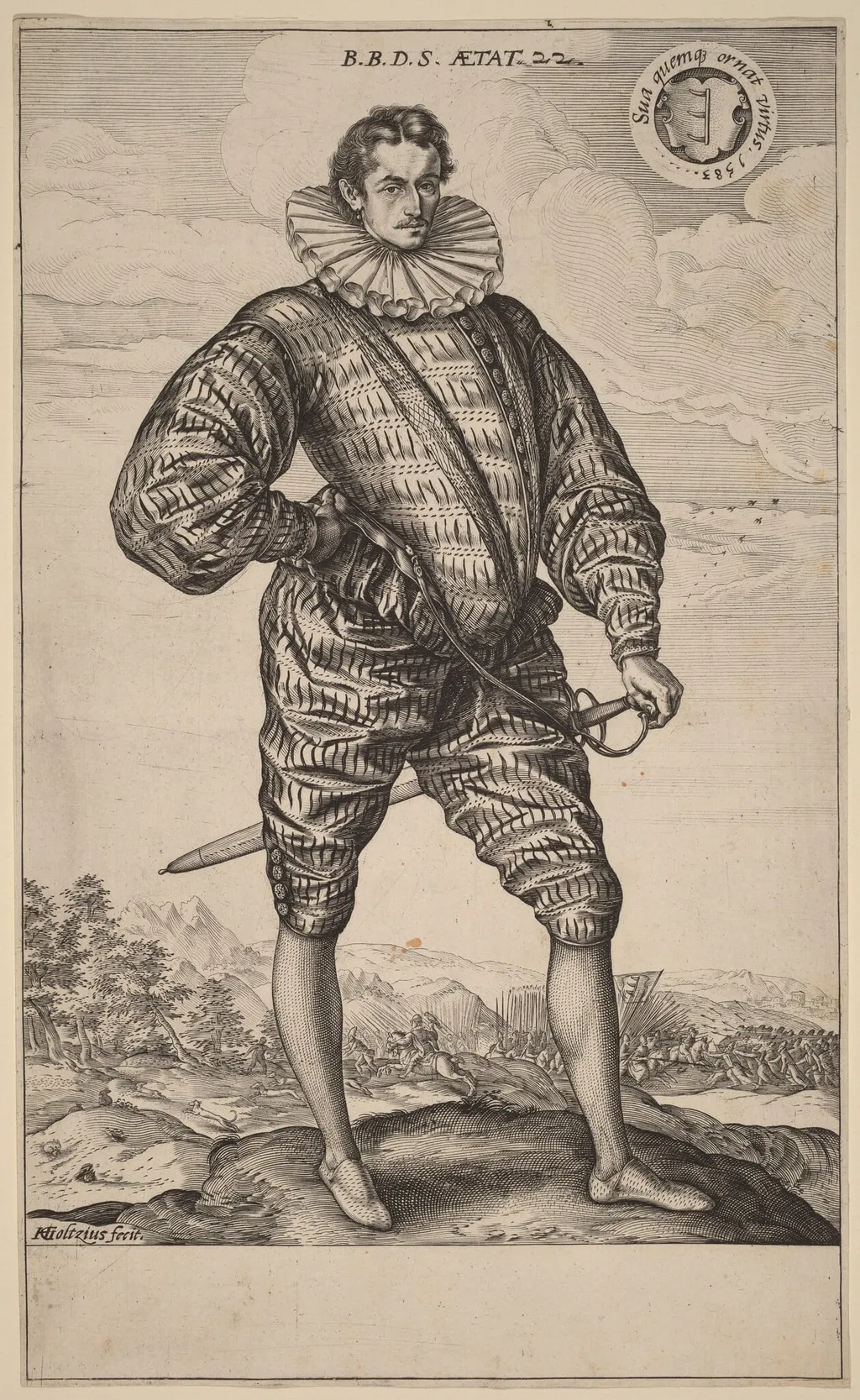
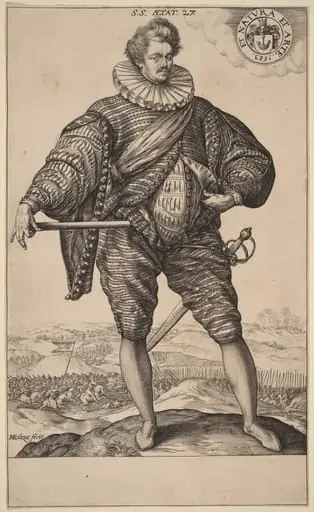
Balthasar Bathory de Somlyo is an ink print by the Renaissance artist Hendrik Goltzius. It dates from 1583 and is held in the collection of the National Gallery of Art. Created in 1583 by Hendrick Goltzius, this engraving depicts Balthasar Báthory de Somlyo, a Hungarian nobleman and military figure.
About this work
Overview
Created in 1583 by Hendrick Goltzius, this engraving depicts Balthasar Báthory de Somlyo, a Hungarian nobleman and military figure.
Created in 1583 by Hendrick Goltzius, this engraving depicts Balthasar Báthory de Somlyo, a Hungarian nobleman and military figure. Goltzius, a Dutch artist of German origin, was renowned for his technical precision in printmaking during the late 16th century. The work belongs to a series of portrait engravings he produced at the height of his career, showcasing his ability to render complex textures and spatial depth through fine line work.
Subject & Meaning
Balthasar Báthory de Somlyo, a Transylvanian noble and soldier, is portrayed in full armor, conveying his status and martial role. The pose—hand on hip, sword held ready—suggests authority and readiness for action. The distant battle scene in the rocky landscape implies his involvement in broader conflicts, likely tied to the Habsburg-Ottoman struggles in Eastern Europe. The ruff and ornate armor reflect contemporary elite dress, emphasizing social rank over individual likeness.
Technique & Style
Goltzius employed fine, controlled engraving lines to model form and texture, using cross-hatching to achieve tonal variation and three-dimensionality. The armor’s metallic sheen, the fabric of the ruff, and the rugged terrain are rendered with meticulous detail. His style, rooted in Northern Mannerism, favors intricate surface patterns and elongated proportions, balancing naturalism with stylized elegance. The black-and-white medium heightens contrast, directing focus to the figure’s posture and attire.
History & Provenance
The engraving was made during Goltzius’s most productive period, when he was actively documenting European elites through portraiture. It likely circulated among collectors and diplomats, serving both as a record of a nobleman and as a demonstration of printmaking skill. Early ownership records are sparse, but the work entered major collections by the 18th century, reflecting its enduring reputation among connoisseurs of graphic art.
Context
In the 1580s, engraved portraits were prized for their reproducibility and portability, allowing noble families to disseminate their image across Europe. Goltzius’s work aligned with broader trends in Northern Renaissance print culture, where technical virtuosity and symbolic detail were valued. The depiction of Báthory reflects the political tensions in Hungary and Transylvania, where local nobles navigated loyalty between Habsburg and Ottoman powers.
Legacy
This engraving exemplifies Goltzius’s influence on later printmakers, particularly in the use of line to suggest volume and texture. While not widely reproduced in modern times, it remains a key example of late 16th-century portrait engraving. Art historians cite it as evidence of how printmaking served as both documentation and artistic expression, bridging the gap between personal identity and public representation in early modern Europe.
Artist & collection
Artist
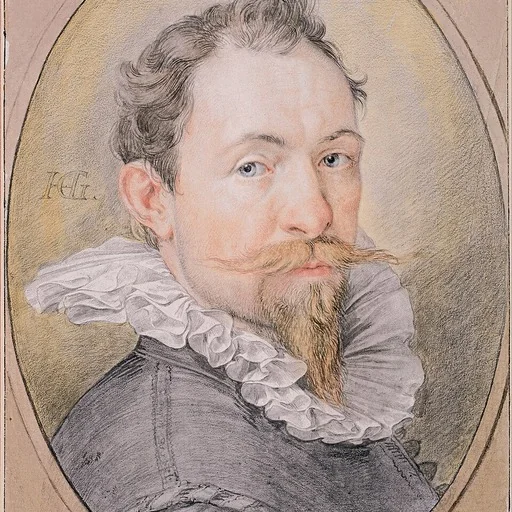
Hendrick Goltzius (German: , Dutch: ; né Goltz; January or February 1558 – 1 January 1617) was a German-born Dutch printmaker, draftsman, and painter.

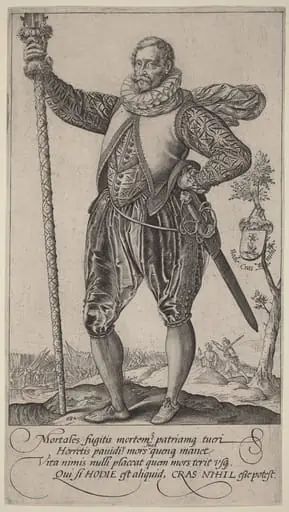 A Pike-Man Turned to the Left
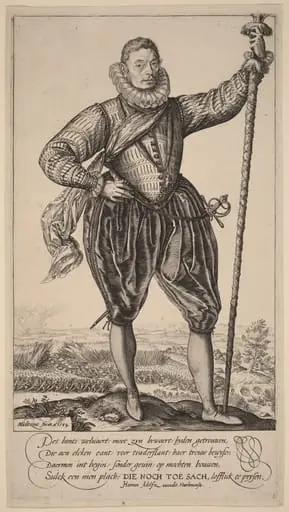 Gerrit de Jong
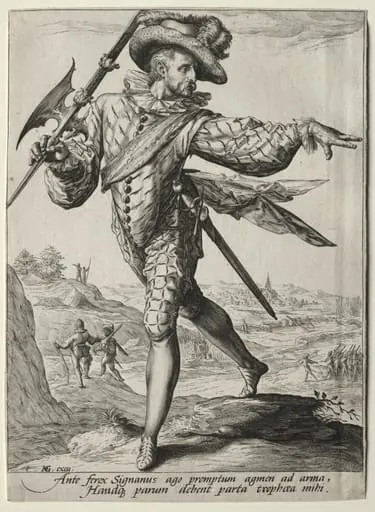 Officers and Soldiers of the Bodyguard of Emperor Rudolf II: Sergeant
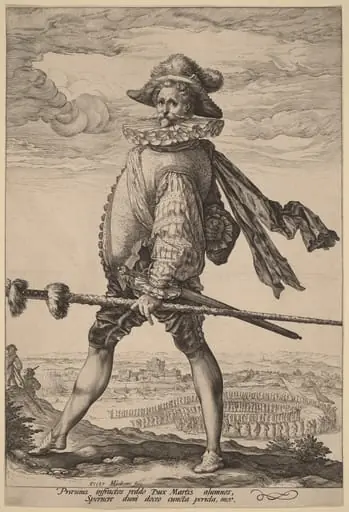 The Captain of the Infantry
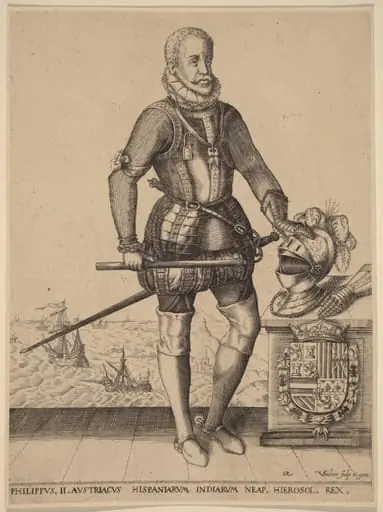 Philip II, King of Spain
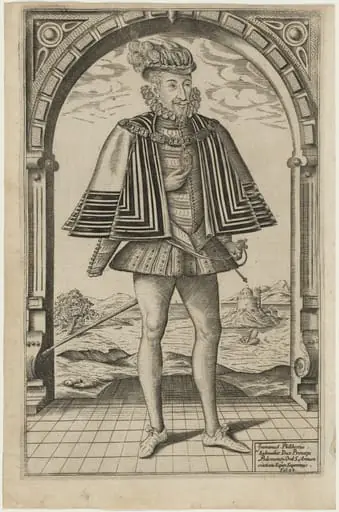 Emmanuel Philibert, Duke of Savoy
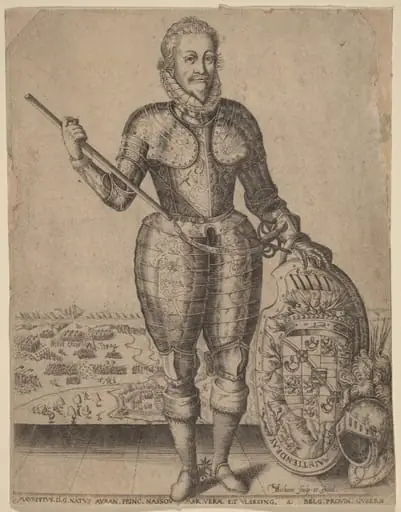 Maurice of Nassau, Prince of Orange
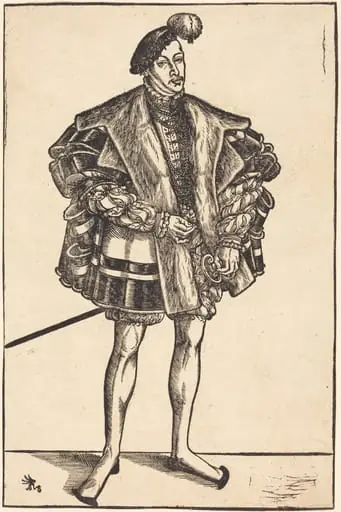 John William, Duke of Saxe-Coburg
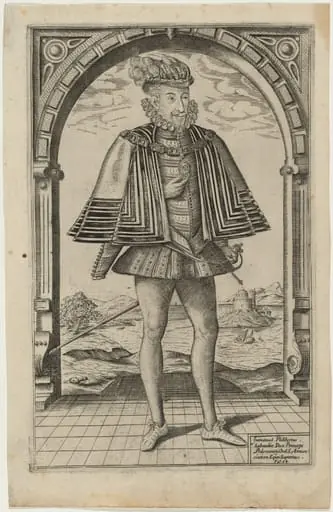 Emmanuel Philibert of Savoy
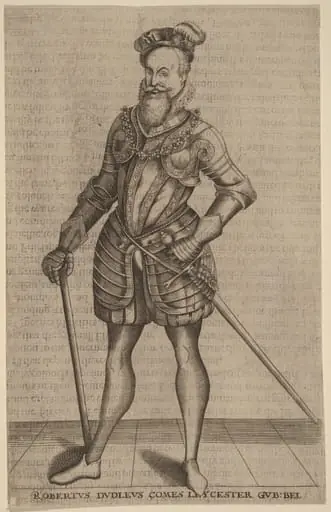 Robert Dudley, Earl of Leicester
 James, Second Marquis of Hamilton
 Stanislaw Sobocki (?)