Artwork
Emmanuel Philibert, Duke of Savoy
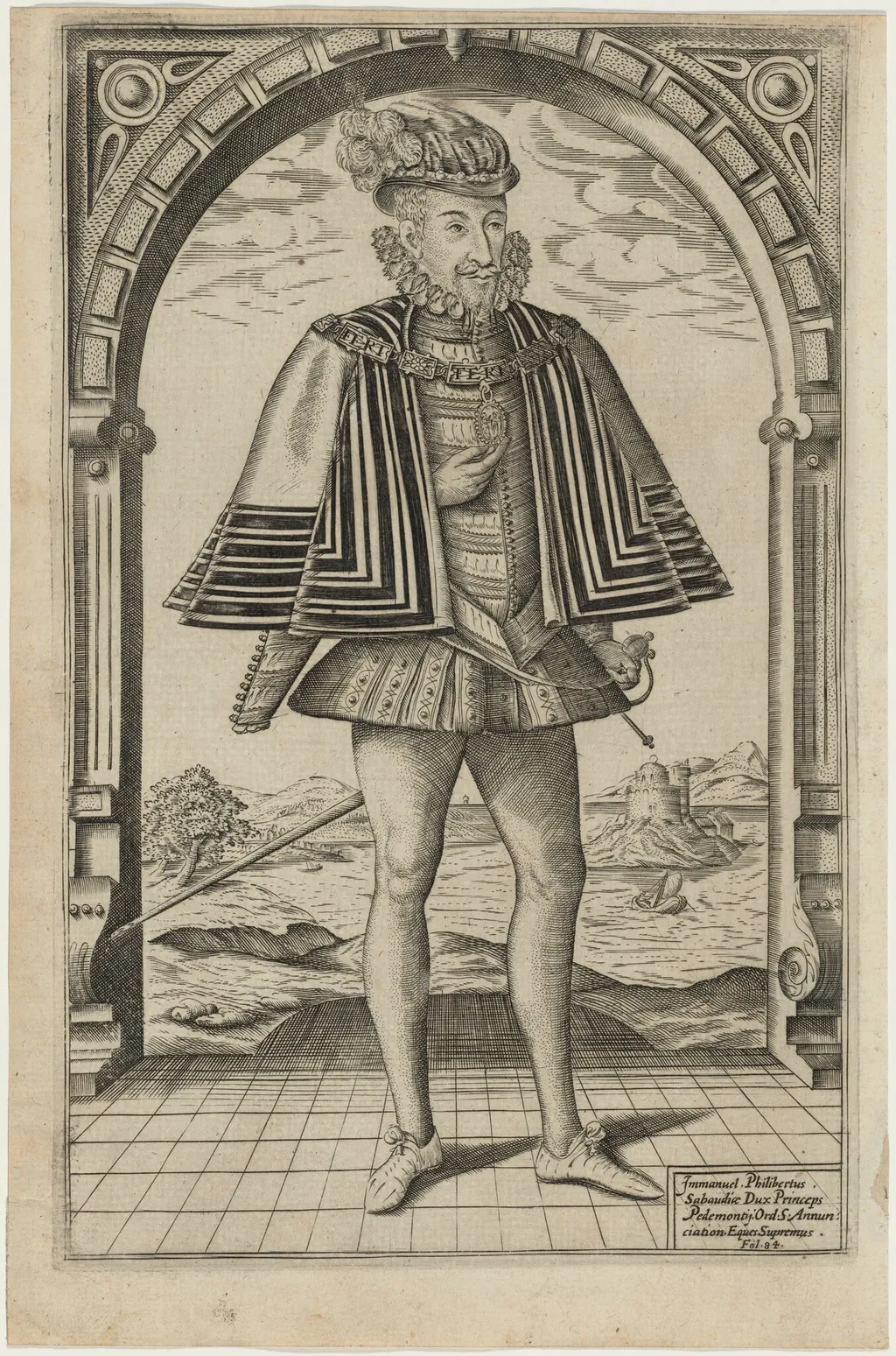
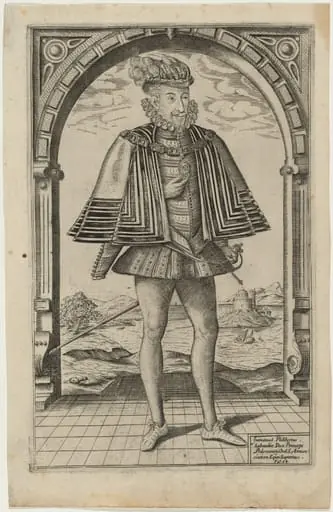
Emmanuel Philibert, Duke of Savoy is an ink print by the Baroque artist William Rogers. It dates from 1602 and is held in the collection of the National Gallery of Art.
About this work
Overview
The composition centers the nobleman against a distant landscape, combining portraiture with subtle environmental context.
This 1602 engraving by William Rogers depicts Emmanuel Philibert, Duke of Savoy, in formal attire. Rendered in monochrome, the portrait relies on fine, controlled lines to define texture and form. The composition centers the nobleman against a distant landscape, combining portraiture with subtle environmental context. The work belongs to the tradition of early modern printed portraiture, intended for dissemination among elite audiences.
Subject & Meaning
Emmanuel Philibert, a key political figure in 16th-century Italy and France, is portrayed with the regalia of authority: a striped doublet, ornate chain of office, and tall hat. His pose—hand on hip, the other holding an object—conveys composure and command. The inclusion of a landscape behind him suggests territorial sovereignty, reinforcing his status as a ruler rather than merely a nobleman.
Technique & Style
Rogers employed engraving techniques common in early 17th-century England, using a burin to incise precise lines into a metal plate. The fine cross-hatching captures the texture of fabric, the sheen of metal, and the soft contours of the ruffled collar. The background landscape is rendered with minimal detail, contrasting with the intricate rendering of the figure to direct focus toward the subject.
History & Provenance
Created in 1602, the engraving likely served to circulate the duke’s image across Europe, reinforcing his political presence after his return to Savoy in 1559. As a printed medium, it allowed for multiple copies, making it accessible to diplomats, collectors, and courtiers. Its survival suggests it was valued within aristocratic circles, though its early ownership remains undocumented.
Context
This portrait emerged during a period when printed images of rulers were increasingly used to project legitimacy and continuity. England’s print culture, though distinct from continental traditions, absorbed continental iconography. Rogers’ work reflects the transnational exchange of visual styles, blending Italianate portraiture with Northern European engraving precision.
Legacy
Though not widely reproduced today, the engraving stands as an example of how early modern elites leveraged print technology to shape public perception. It illustrates the role of engravers as intermediaries between courtly imagery and broader audiences. Its survival offers insight into the visual language of power during the transition from Renaissance to Baroque representation.
Artist & collection

 Henry IV of France
 James I of England and James VI of Scotland
 John William, Duke of Saxe-Coburg
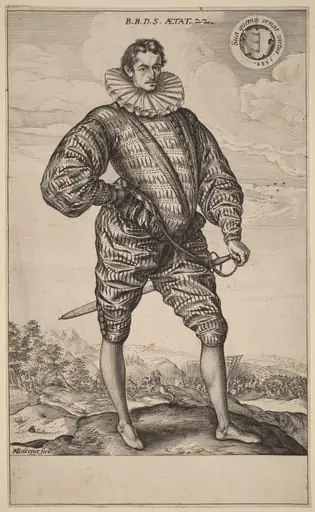 Balthasar Bathory de Somlyo
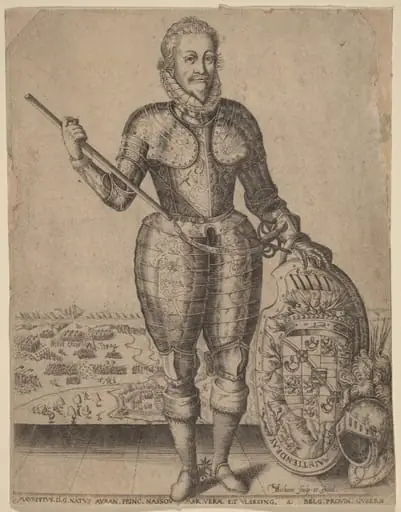 Maurice of Nassau, Prince of Orange
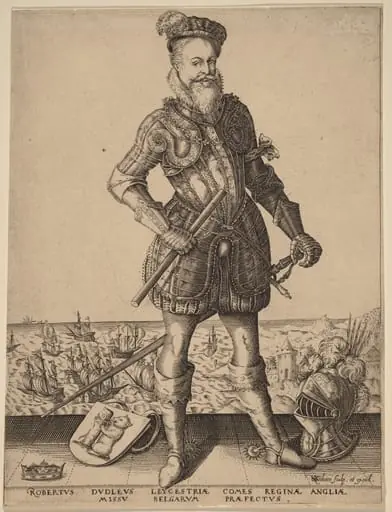 Robert Dudley, Earl of Leicester
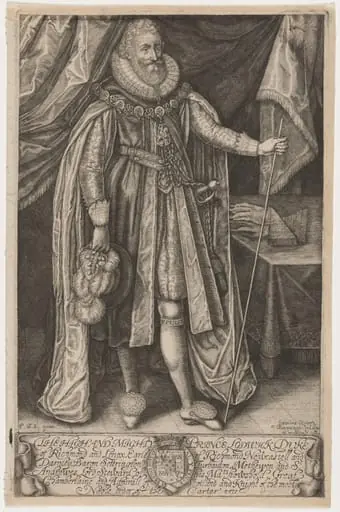 Lodovick Stuart, Duke of Richmond and Lennox
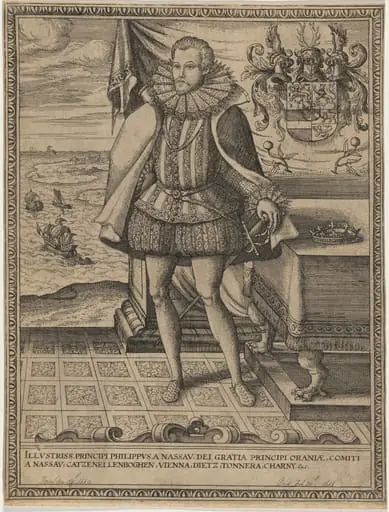 Philip William, Prince of Nassau
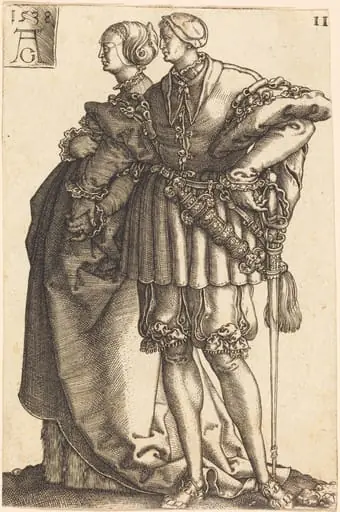 Large Wedding Dancers
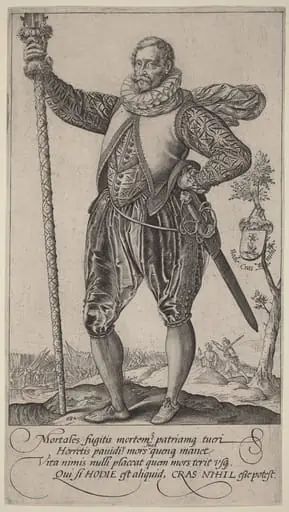 A Pike-Man Turned to the Left
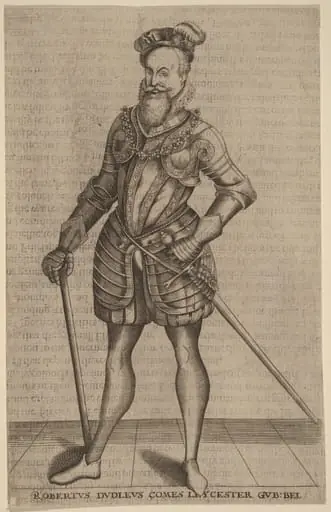 Robert Dudley, Earl of Leicester