Artwork
Polyhymnia
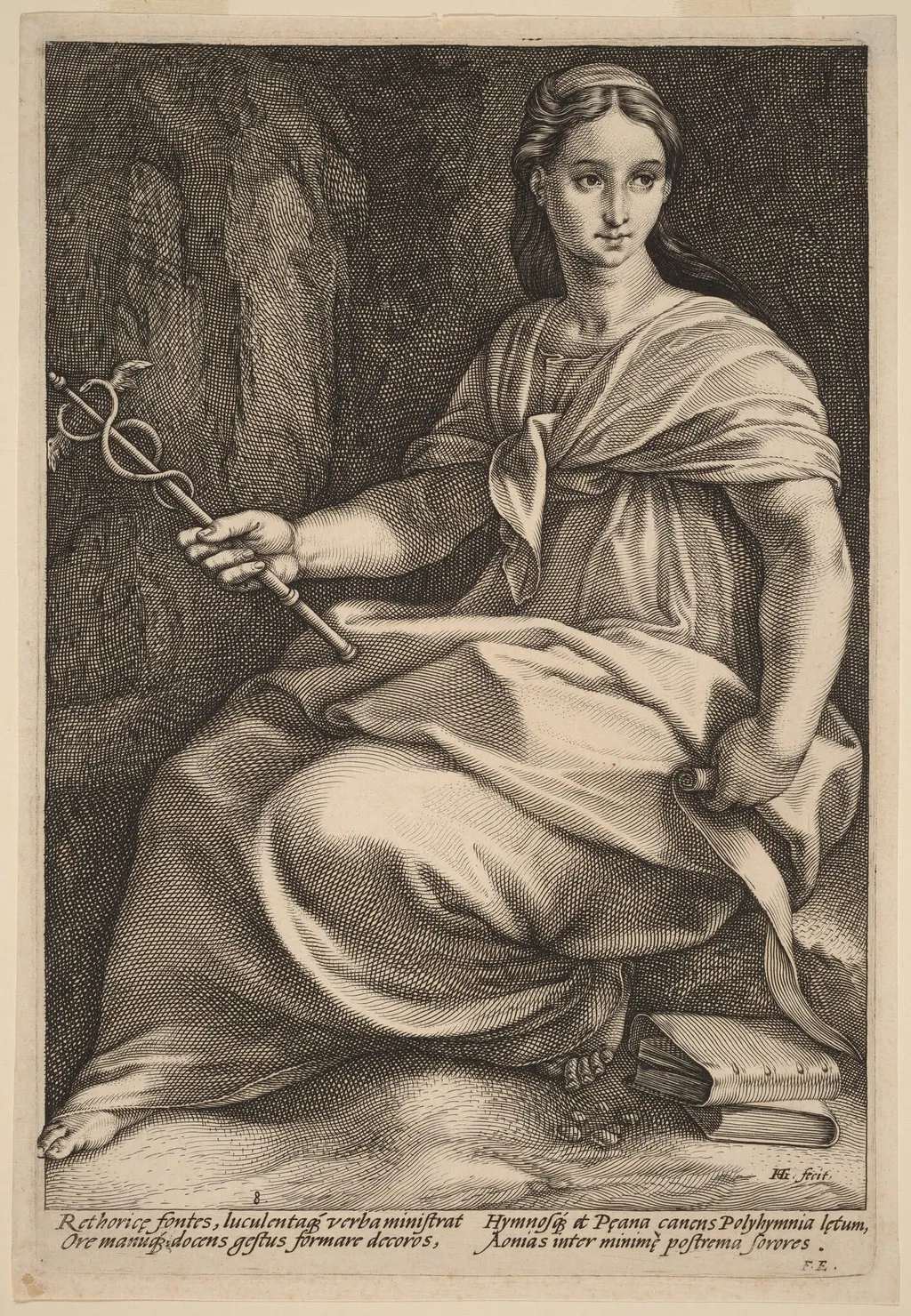
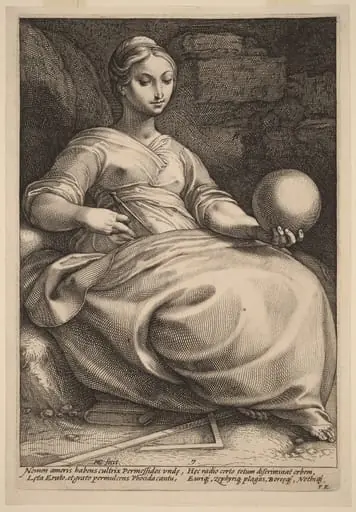
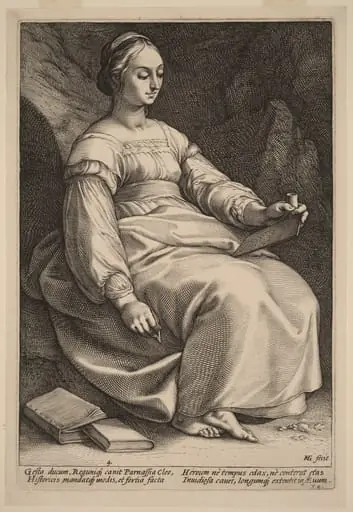
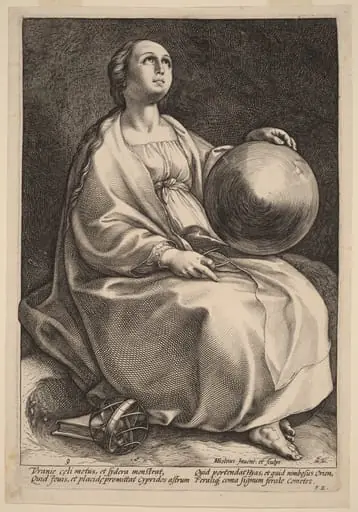
Polyhymnia is an ink print by the Renaissance artist Hendrik Goltzius. It dates from 1592 and is held in the collection of the National Gallery of Art.
About this work
Overview
Though primarily known for prints, Goltzius would later turn to painting, but his engraving technique remained foundational to his artistic identity.
Created around 1592, *Polyhymnia* is an engraving by Hendrick Goltzius, a German-born artist active in the Netherlands. As one of the most accomplished printmakers of his time, Goltzius elevated engraving through precise line work and expressive form. This piece belongs to a series depicting the Muses, reflecting his engagement with classical themes during the late Renaissance. Though primarily known for prints, Goltzius would later turn to painting, but his engraving technique remained foundational to his artistic identity.
Subject & Meaning
The figure represents Polyhymnia, the Greek Muse of sacred poetry and hymnody. She is depicted seated, holding a scroll in one hand and a pen in the other, suggesting contemplation and creative composition. Her serene expression and modest posture convey intellectual stillness rather than theatrical drama. The plain background focuses attention on her form and attributes, reinforcing her role as an embodiment of learned stillness. The imagery aligns with Renaissance humanist ideals that elevated poetry and scholarship as noble pursuits.
Technique & Style
Goltzius employed fine, controlled engraving lines to model form and texture with remarkable subtlety. The folds of the robe, the contours of the face, and the delicate rendering of the pen and scroll demonstrate his command of chiaroscuro through line alone. Shading is achieved not by wash or tone, but by the density and direction of incised marks. His style blends Northern precision with Mannerist elongation, resulting in a composition that feels both intimate and monumental despite its monochromatic medium.
History & Provenance
The engraving was produced during Goltzius’s most prolific printmaking phase, when he was based in Haarlem and widely admired across Europe. It circulated among collectors and artists as a model of technical excellence. While its early ownership records are incomplete, it was likely part of a set of Muses commissioned or sold as a group. The work remained in circulation through private collections and print portfolios, contributing to Goltzius’s lasting reputation in printmaking circles.
Context
In the late 16th century, Northern Europe saw a surge in interest in classical mythology and allegorical imagery, especially among humanist patrons. Printmakers like Goltzius translated these themes into accessible formats for educated audiences. Engravings of the Muses served both decorative and didactic purposes, reinforcing cultural values tied to learning and the arts. Goltzius’s version stands apart for its restrained elegance, contrasting with more flamboyant Italianate treatments of the same subjects.
Legacy
Goltzius’s *Polyhymnia* influenced generations of printmakers through its demonstration of line as a vehicle for emotional and physical presence. Its technical rigor became a benchmark for engraving, studied by artists across Europe. Though later movements favored broader strokes and tonal effects, this work preserved the value of meticulous craftsmanship in reproductive art. It remains a key reference in the history of printmaking, illustrating how intellectual themes could be rendered with quiet authority.
Artist & collection
Artist
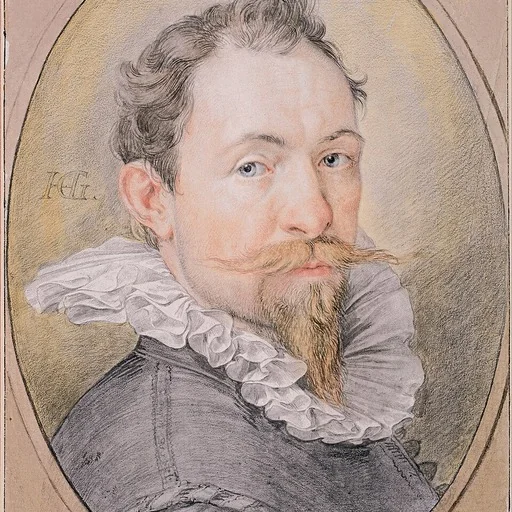
Hendrick Goltzius (German: , Dutch: ; né Goltz; January or February 1558 – 1 January 1617) was a German-born Dutch printmaker, draftsman, and painter.