Artwork
Clio
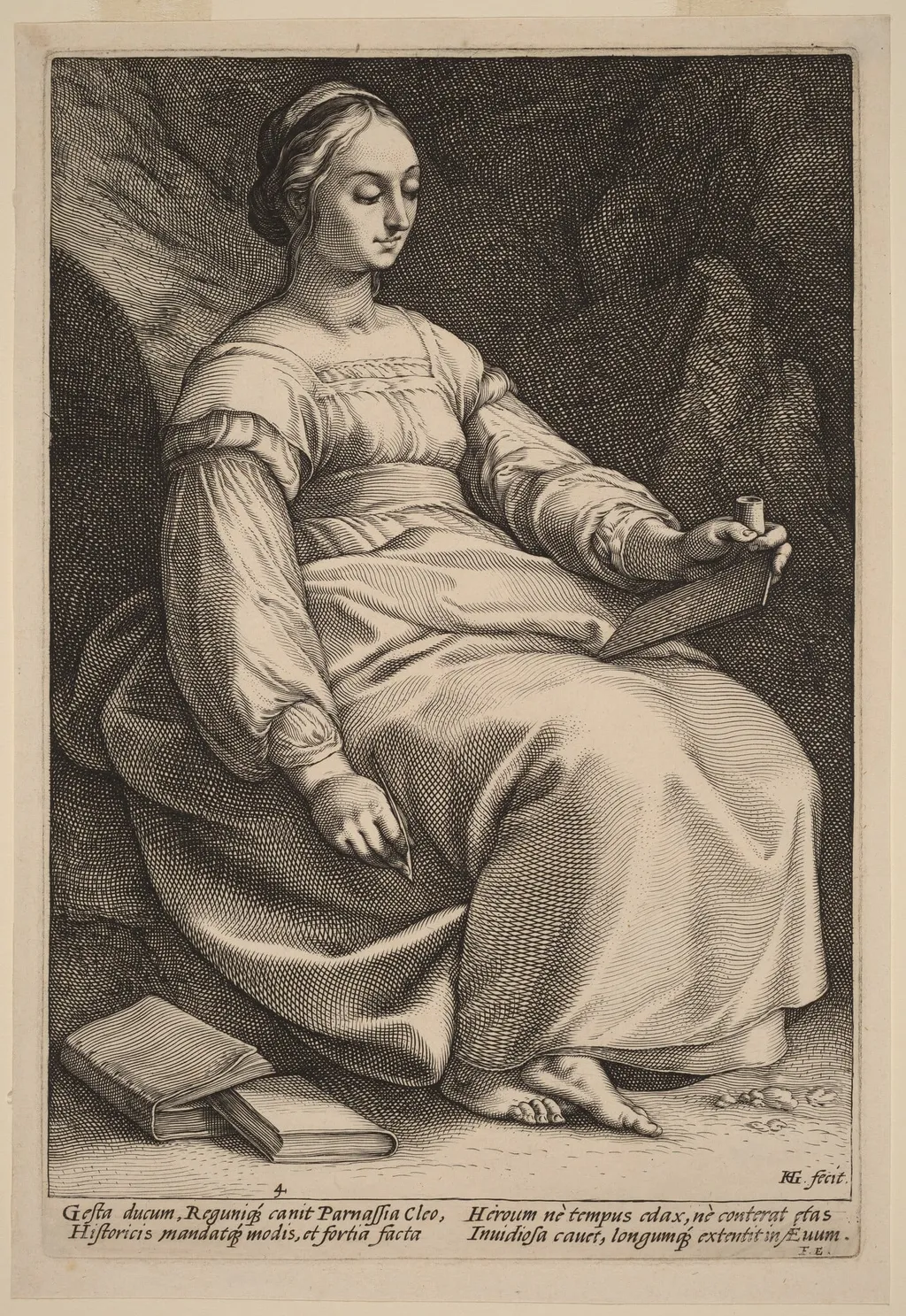
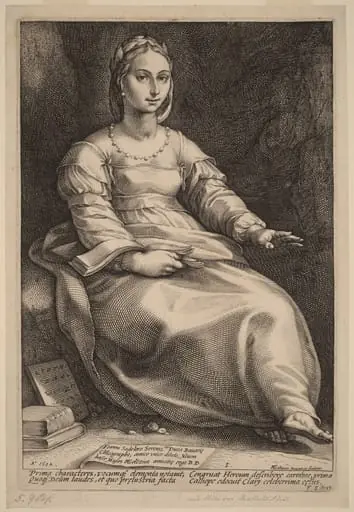
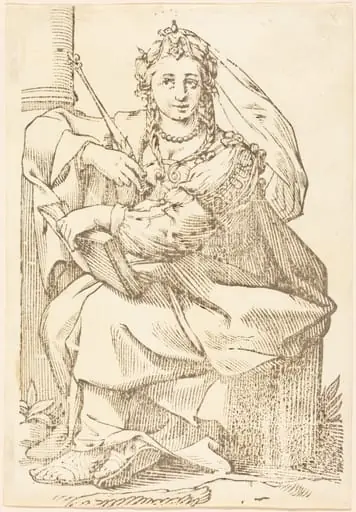
Clio is an ink print by the Renaissance artist Hendrik Goltzius. It dates from 1592 and is held in the collection of the National Gallery of Art.
About this work
Overview
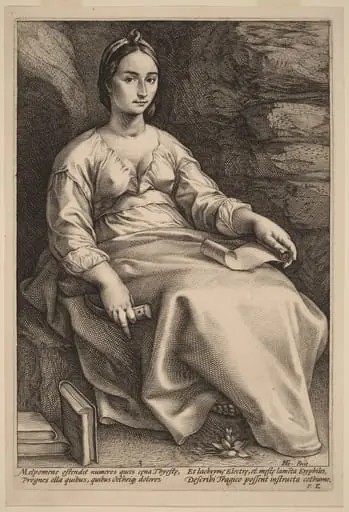
Around 1592, the Dutch engraver Hendrick Goltzius produced a black‑and‑white print titled *Clio*. The image presents a seated female figure, draped in a loose garment with exaggerated sleeves, her legs crossed and hands poised, set against an unadorned backdrop that hints at a simple floor covering. The work exemplifies the meticulous line work typical of Goltzius’s prints.
Subject & Meaning
The figure represents Clio, the classical muse linked to history and epic poetry. She is shown holding a small object—often interpreted as a scroll or tablet—symbolizing the recording of past events. Her thoughtful pose and the intimate setting underscore the intellectual and narrative responsibilities traditionally assigned to this muse.
Technique & Style
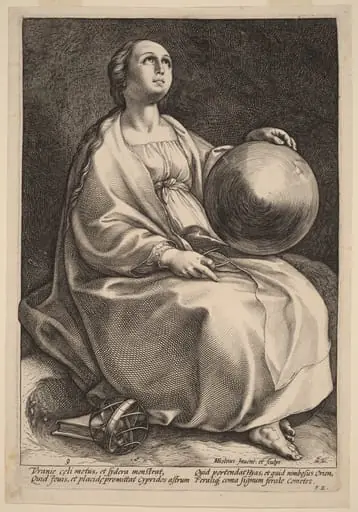
Goltzius employed fine engraving, carving intricate lines into a copper plate. Dense cross‑hatching creates subtle tonal variations, while tight, precise strokes around the face and hands give a sculptural impression of volume. The composition reflects the Northern Mannerist taste for elaborate detail and controlled elegance, balancing decorative richness with clear anatomical rendering.
History & Provenance
Born in Germany but active in the Dutch Republic, Goltzius emerged as a pre‑eminent printmaker of the early Baroque era. *Clio* was likely produced for the market of educated collectors interested in classical themes. Surviving copies appear in several European print collections, documenting the work’s circulation among connoisseurs of the late 16th century.
Artist & collection
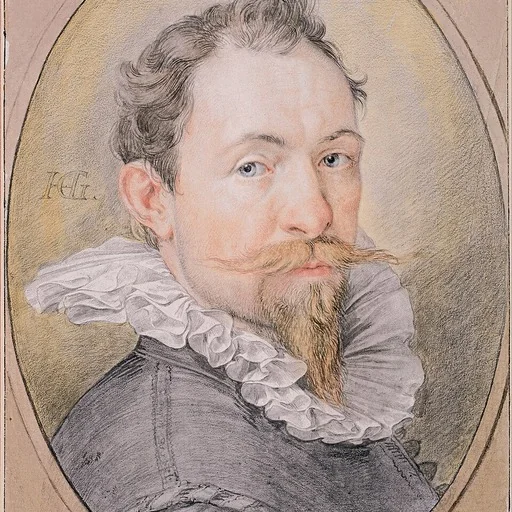
Artist
Hendrick Goltzius (German: , Dutch: ; né Goltz; January or February 1558 – 1 January 1617) was a German-born Dutch printmaker, draftsman, and painter.