Artwork
Urania
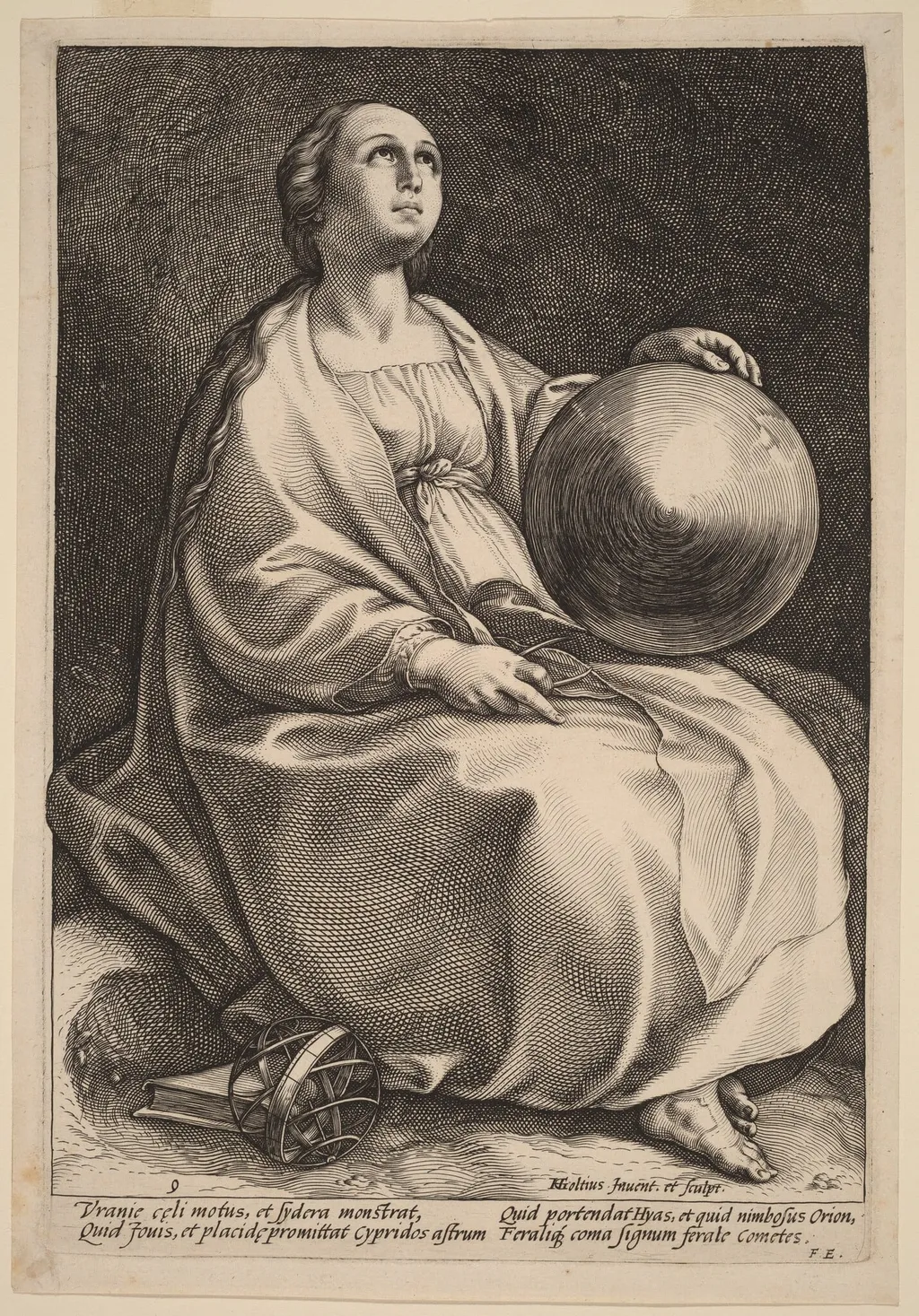
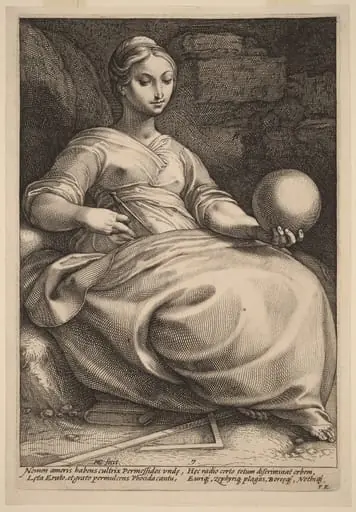
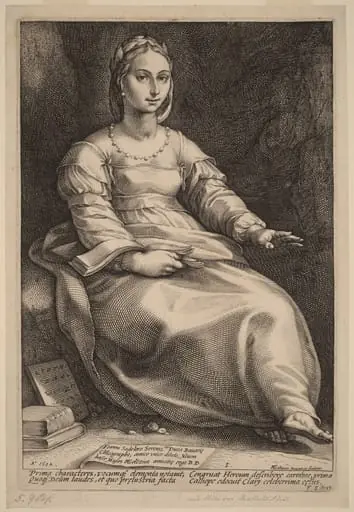
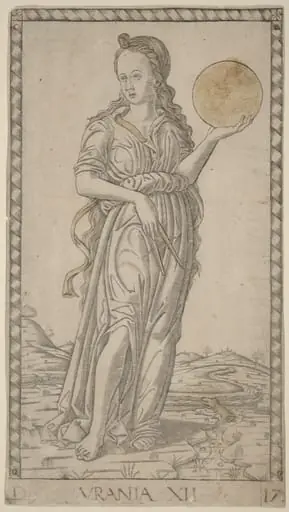
Urania is an ink print by the Renaissance artist Hendrik Goltzius. It dates from 1592 and is held in the collection of the National Gallery of Art.
About this work
Overview
Hendrick Goltzius, a German‑born artist who worked in the Netherlands, produced the engraving titled Urania circa 1592. Executed as a print, the work exemplifies his reputation as a leading figure in early Baroque, or Northern Mannerist, printmaking.
Subject & Meaning
The image presents a seated female figure, draped in a long robe with her hair gathered back. She holds a large sphere in her left hand and a smaller object in her right, her expression calm and contemplative, suggesting an intellectual or celestial theme associated with the muse of astronomy.
Technique & Style
Goltzius employs fine cross‑hatching to render the folds of the robe and the surrounding darkness, creating a nuanced sense of volume and depth. The meticulous line work demonstrates his technical mastery and his capacity for intricate, densely patterned compositions.
History & Provenance
Created around 1592, Urania belongs to the period when Goltzius was establishing himself as the pre‑eminent Dutch engraver. The print circulated among collectors of the time, contributing to his growing reputation for inventive designs and precise execution.
Context
The engraving reflects the Northern Mannerist interest in allegorical subjects and complex, decorative arrangements. Its focus on a learned female figure aligns with contemporary humanist ideals that celebrated the arts and sciences through personified muses.
Artist & collection
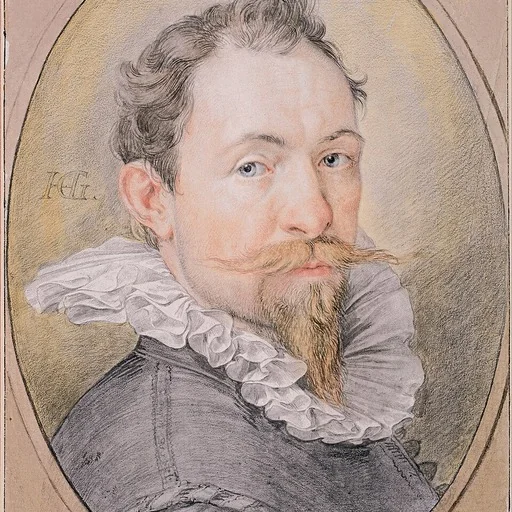
Artist
Hendrick Goltzius (German: , Dutch: ; né Goltz; January or February 1558 – 1 January 1617) was a German-born Dutch printmaker, draftsman, and painter.