Artwork
Melpomene
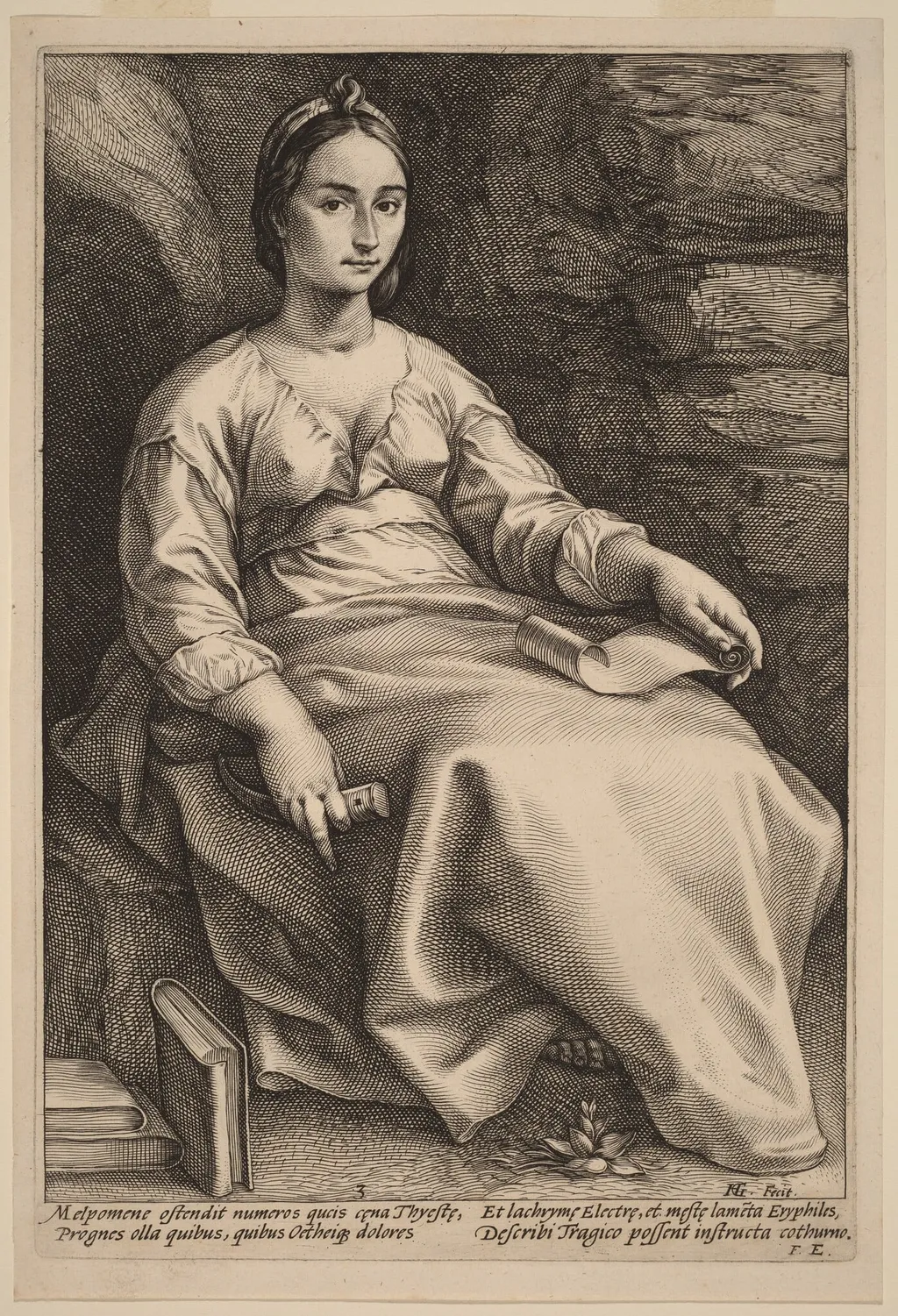
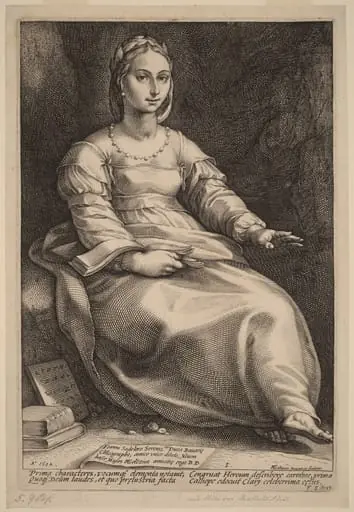
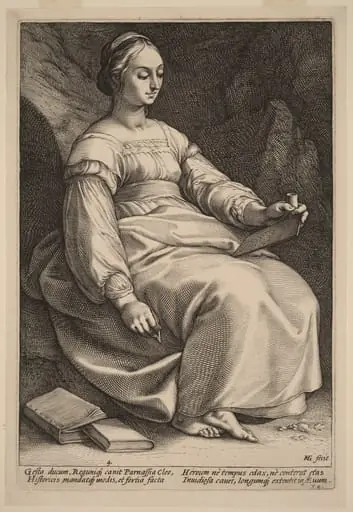
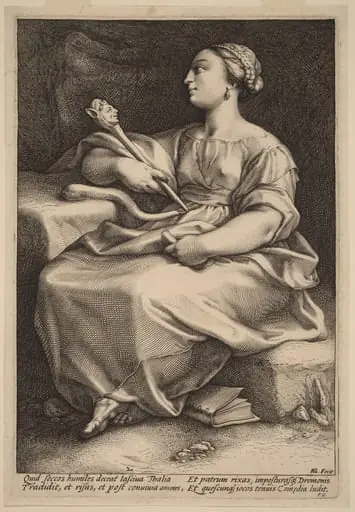
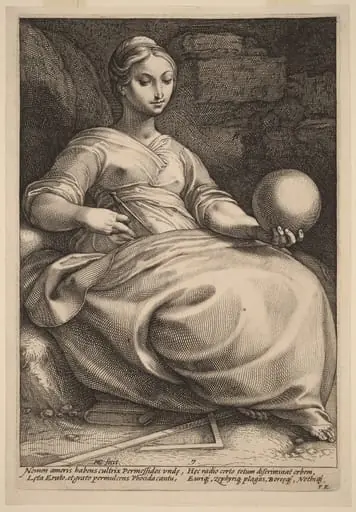
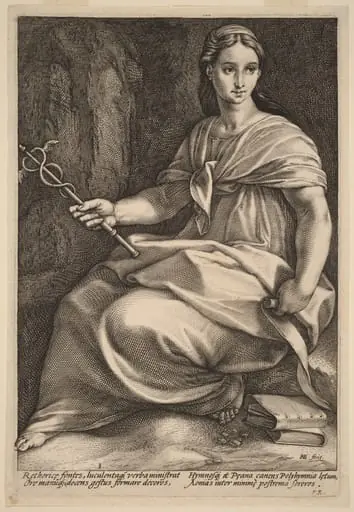
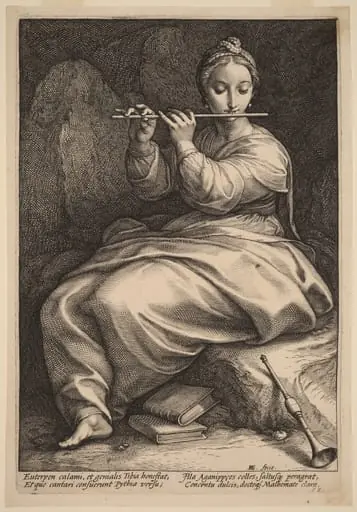
Melpomene is an ink print by the Renaissance artist Hendrik Goltzius. It dates from 1592 and is held in the collection of the National Gallery of Art.
About this work
Overview
Hendrick Goltzius, a Dutch printmaker of German origin, produced the engraving titled *Melpomene* circa 1592. Executed in black‑and‑white, the image depicts a seated female figure rendered with finely incised lines that model light and shadow across her form.
Subject & Meaning
The central figure is a woman seated with crossed legs, one arm resting on her knee and the other positioned behind her back. She wears a loosely draped robe, her hair pulled back, and a scroll lies on the floor nearby, suggesting a connection to the muse of tragedy, Melpomene, though the work does not include explicit narrative elements.
Technique & Style
Goltzius employs the engraving technique, using dense, intersecting lines to create texture and tonal variation. The rendering of the face and hands showcases his precise line work, while the overall composition reflects the intricate, mannered aesthetic associated with Northern Mannerism and early Baroque printmaking.
History & Provenance
Created around 1592, the print belongs to the period when Goltzius was recognized as the pre‑eminent Dutch engraver. It exemplifies his reputation for drawing with a painterly authority and for producing images intended for further reproduction by other artists and printers.
Context
*Melpomene* emerges from a time when Dutch artists were exploring complex, stylized compositions that combined classical motifs with elaborate decorative detail. Goltzius’s work contributed to the spread of such visual vocabularies across Europe through the reproducible nature of prints.
Artist & collection
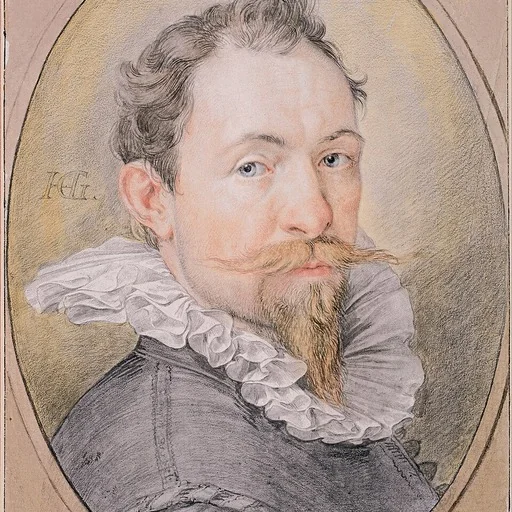
Artist
Hendrick Goltzius (German: , Dutch: ; né Goltz; January or February 1558 – 1 January 1617) was a German-born Dutch printmaker, draftsman, and painter.