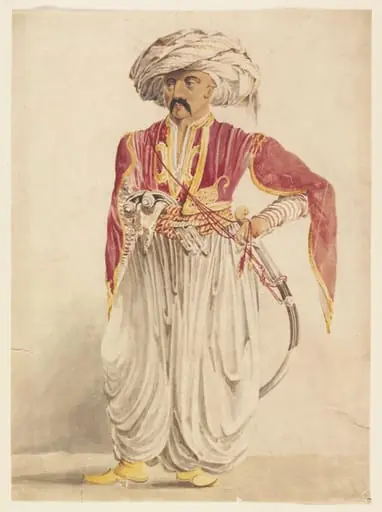
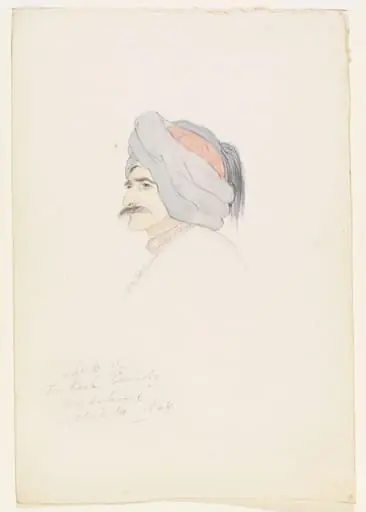
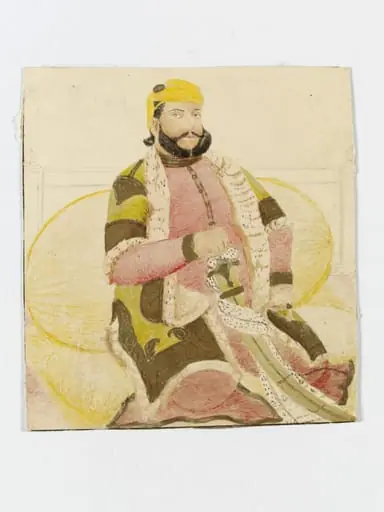
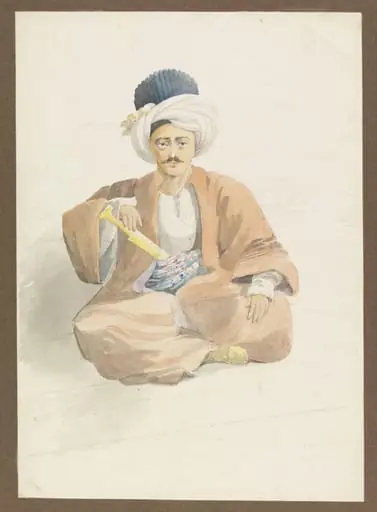
Artwork
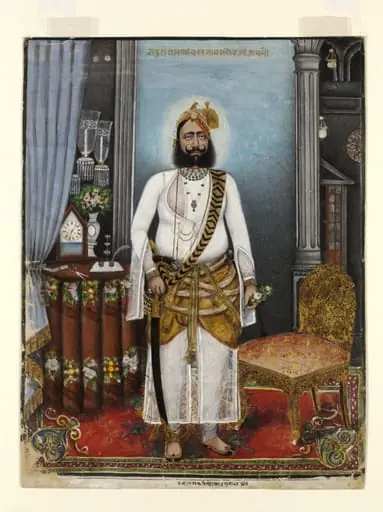
Portrait of Thakur Bhoj Raj Singh
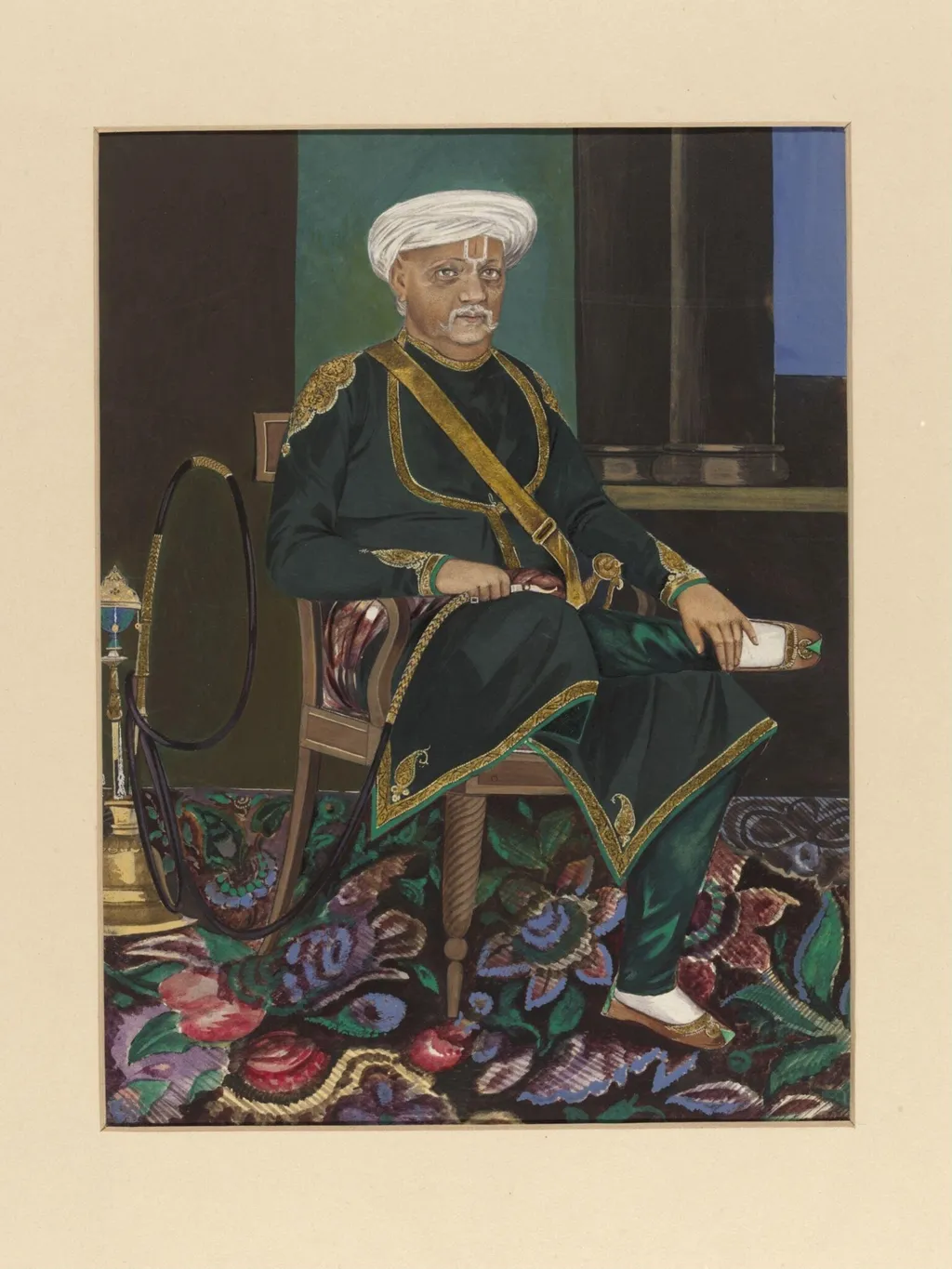
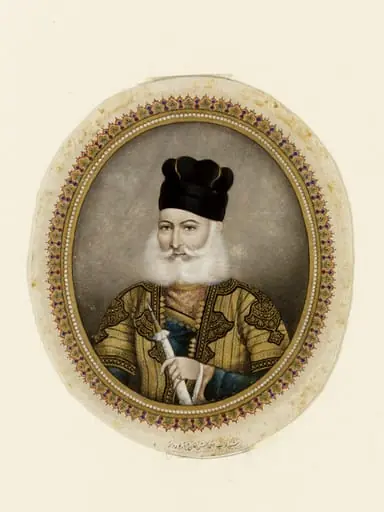
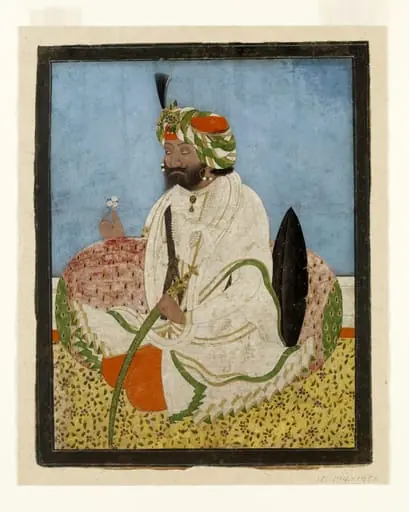
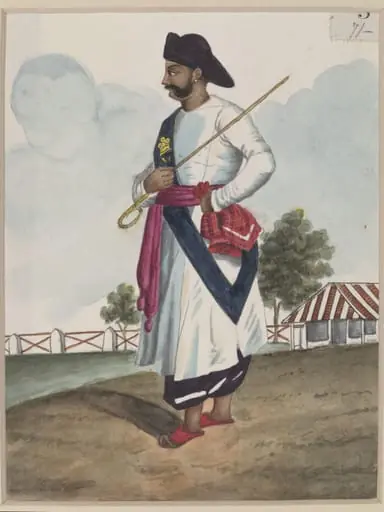
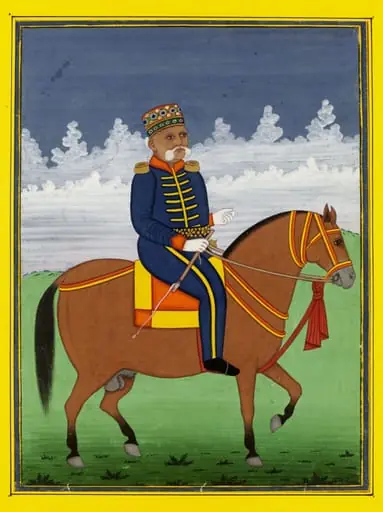
Portrait of Thakur Bhoj Raj Singh is a paint painting by the Patna School of Painting artist Gopal. It dates from 1874 and is held in the collection of the Victoria and Albert Museum.
About this work
Overview
Painted in the Company style, it reflects a hybrid aesthetic developed for European patrons in colonial India.
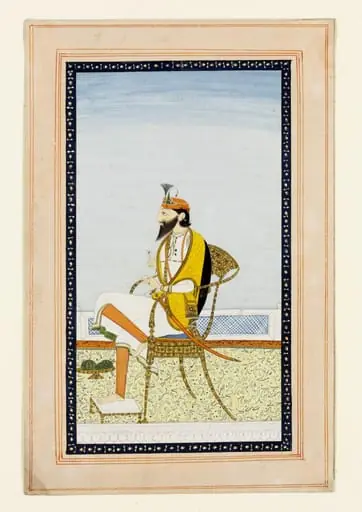
This portrait, created in 1874 by the artist Gopal in Agra, depicts Thakur Bhoj Raj Singh, a Rajput nobleman, seated on a European-style chair while holding a huqqa. Painted in the Company style, it reflects a hybrid aesthetic developed for European patrons in colonial India. The work bears price markings and was acquired by the India Museum in 1874 before being transferred to the South Kensington Museum in 1879, now part of the V&A collection.
Subject & Meaning
Thakur Bhoj Raj Singh, a title denoting the son of a deceased Rajput ruler, is portrayed in traditional attire, emphasizing his status within a regional aristocracy. The inclusion of the huqqa and the European chair suggests a negotiation between indigenous customs and colonial influences. Though his personal history remains undocumented, the portrait functions as a visual assertion of identity amid shifting cultural and political landscapes in late 19th-century India.
Technique & Style
Gopal employed a blend of Indian miniature traditions with Western naturalism, evident in the precise rendering of fabric textures, facial features, and the chair’s carved woodwork. While the composition follows European portraiture conventions—such as frontal pose and spatial depth—the detail in ornamentation and color remains rooted in local aesthetics. The work avoids dramatic lighting or sfumato, favoring clarity and decorative precision over atmospheric effects.
History & Provenance
Painted in Agra in 1874, the work was sold for £4 and acquired by the India Museum shortly thereafter. In 1879, it was transferred to the South Kensington Museum, now the Victoria and Albert Museum, where it remains in the collection. The presence of price labels on both front and back indicates its commercial nature, typical of Company paintings produced for export or local European buyers seeking souvenirs or ethnographic records.
Context
Company paintings emerged as a distinct genre during British colonial rule, created by Indian artists who adapted their techniques to meet European tastes. These works often documented local figures, customs, and flora, serving both as ethnographic records and decorative objects. While some were commissioned by officials, many were produced for open markets, reflecting a commercial art economy shaped by cross-cultural demand and colonial curiosity.
Legacy
This portrait exemplifies the complex cultural intersections of colonial India, where indigenous artistic practices were reshaped by external patronage. Though once dismissed as mere commercial products, such works are now recognized as vital records of identity, adaptation, and agency. Gopal’s painting contributes to broader scholarly efforts to re-evaluate Company art as a legitimate and nuanced expression of its time.
Artist & collection
Artist
Gopal didn’t just paint portraits—he seemed to know his sitters inside out before picking up a brush.