Artwork
Alpheus and Arethusa
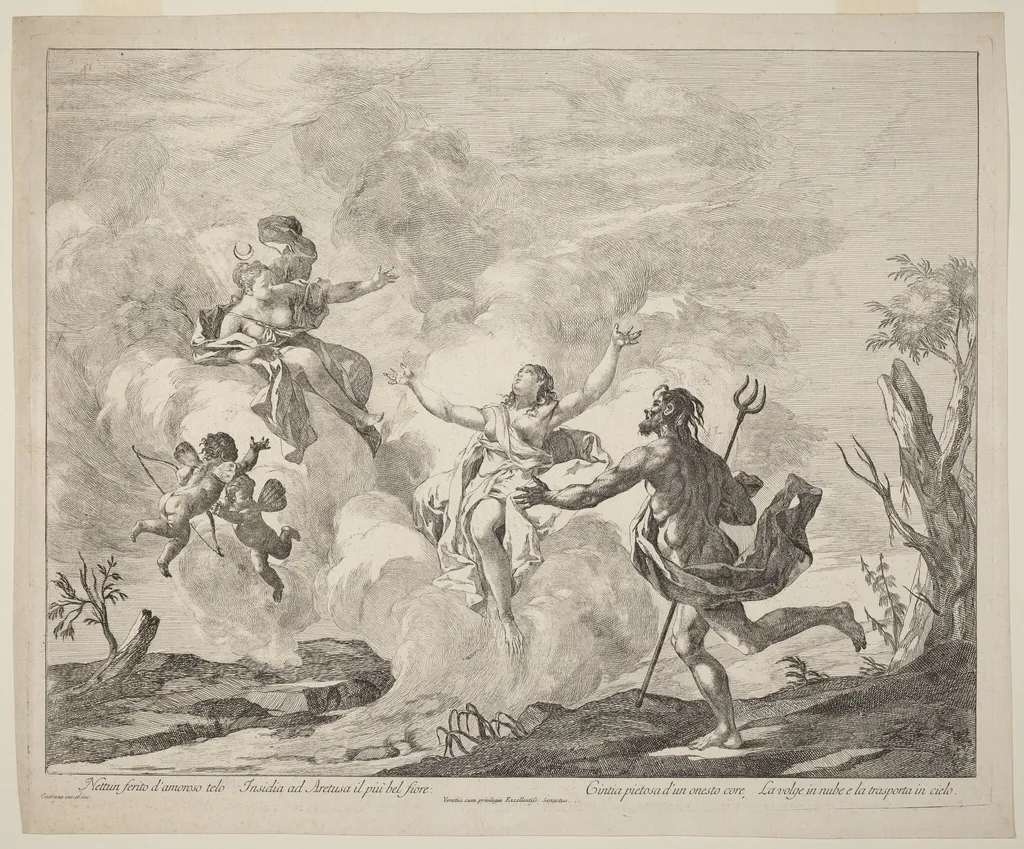
Alpheus and Arethusa is an ink print by the Romanticist artist Jacopo Guarana. It dates from 1775 and is held in the collection of the National Gallery of Art.
About this work
Overview
Executed in etching and engraving on heavy laid paper, it captures the transformation of Arethusa as she escapes the river god Alpheus.
Created in 1775 by Jacopo Guarana, this print depicts a mythological moment from Ovid’s Metamorphoses. Executed in etching and engraving on heavy laid paper, it captures the transformation of Arethusa as she escapes the river god Alpheus. The composition emphasizes motion and transition, rendered through delicate line work and tonal gradations characteristic of 18th-century reproductive printmaking.
Subject & Meaning
The scene illustrates Arethusa, a nymph pursued by the river god Alpheus, as she begins to turn into a spring to escape him. Her flowing form dissolves into mist, while Alpheus, holding a trident, reaches toward her. Cherubs swirl around them, symbolizing divine intervention or the fluidity of nature. The moment captures transformation as both escape and metamorphosis, rooted in classical narratives of divine pursuit and bodily change.
Technique & Style
Guarana employed fine etched lines and controlled engraving to suggest texture and movement. Soft, feathery strokes model the clouds and Arethusa’s dissolving form, while sharper lines define Alpheus’s trident and musculature. The contrast between delicate atmospheric effects and solid, angular forms creates visual tension. The use of heavy laid paper enhances the print’s tactile presence and archival durability.
History & Provenance
The print was made during Guarana’s active period in Venice, where he specialized in reproductive engravings after classical and mythological subjects. Likely produced for collectors or as part of a series illustrating Ovid, it reflects the 18th-century European appetite for mythological imagery. Its survival in institutional collections suggests early recognition of its technical refinement and thematic resonance.
Context
In the late 18th century, mythological themes remained central to academic art, often serving as vehicles for exploring emotion, transformation, and the sublime. Guarana’s work aligns with Venetian printmakers who translated paintings into accessible formats for educated audiences. This print responds to broader Enlightenment interests in classical literature and the visual representation of natural forces.
Legacy
Though not widely known today, Guarana’s print exemplifies the skill of reproductive engravers who preserved and disseminated mythological narratives before photography. Its technical precision and emotional restraint influenced later printmakers interested in classical subjects. The work endures as a quiet testament to the enduring appeal of Ovid’s tales in European visual culture.
Artist & collection


 The Sacrifice of Iphigenia
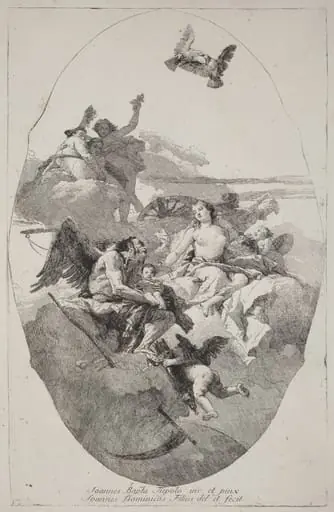 Venus Entrusting Cupid to Time
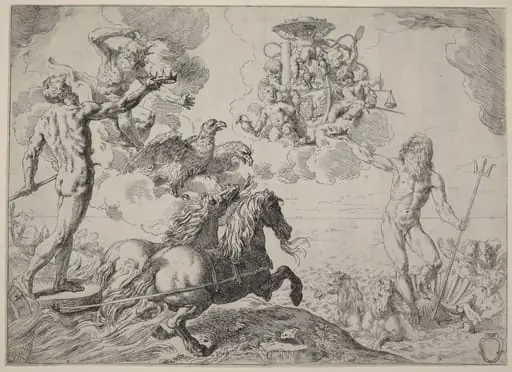 Jupiter, Neptune and Pluto
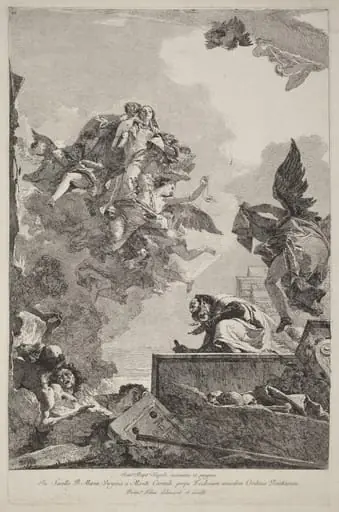 The Madonna del Carmelo Appearing to Saint Simon Stock
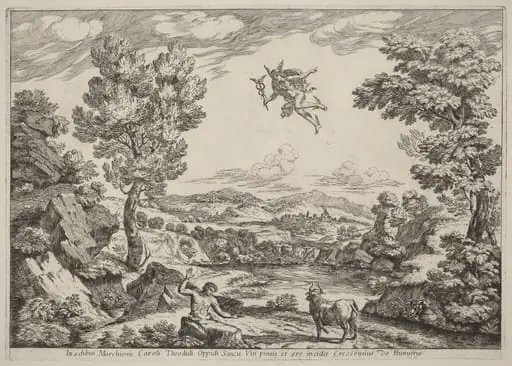 Balthus Turned to Stone
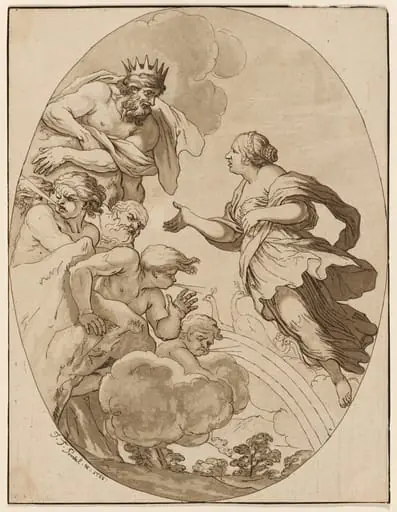 Jupiter and Juno
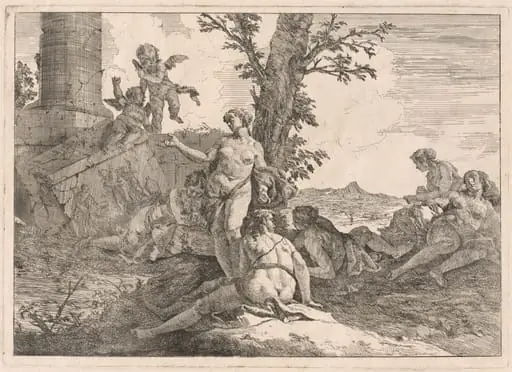 Six Nymphs and Two Cupids in a Landscape
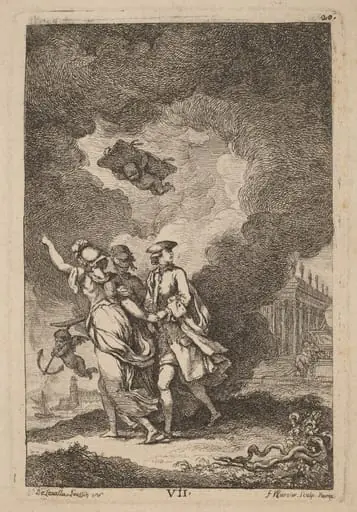 Nella Venuta in Roma: pl. 7
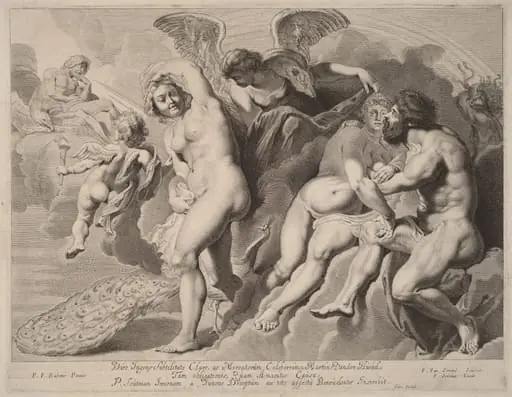 Ixion Deceived by Juno
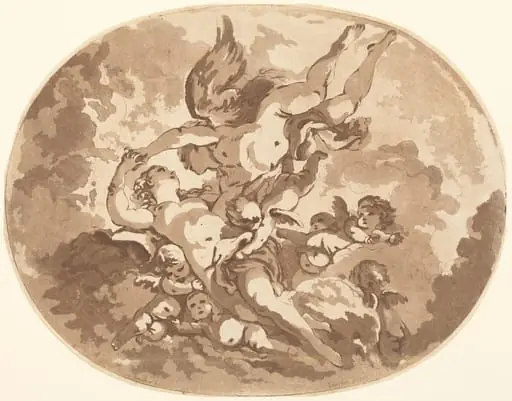 Eros and Psyche
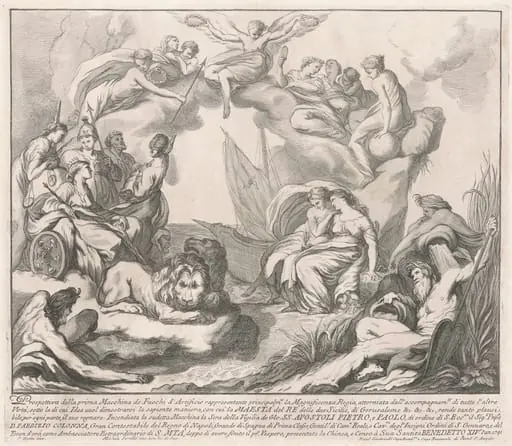 The Prima Macchina for the Chinea of 1741: Allegory of Regal Magnificence
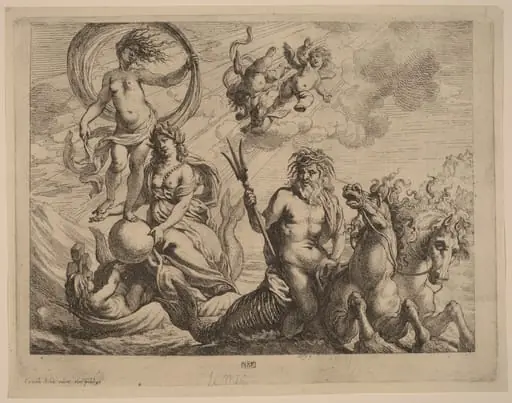 Neptune with Two Horses on the Sea