Artwork
Martyrdom of St Catherine
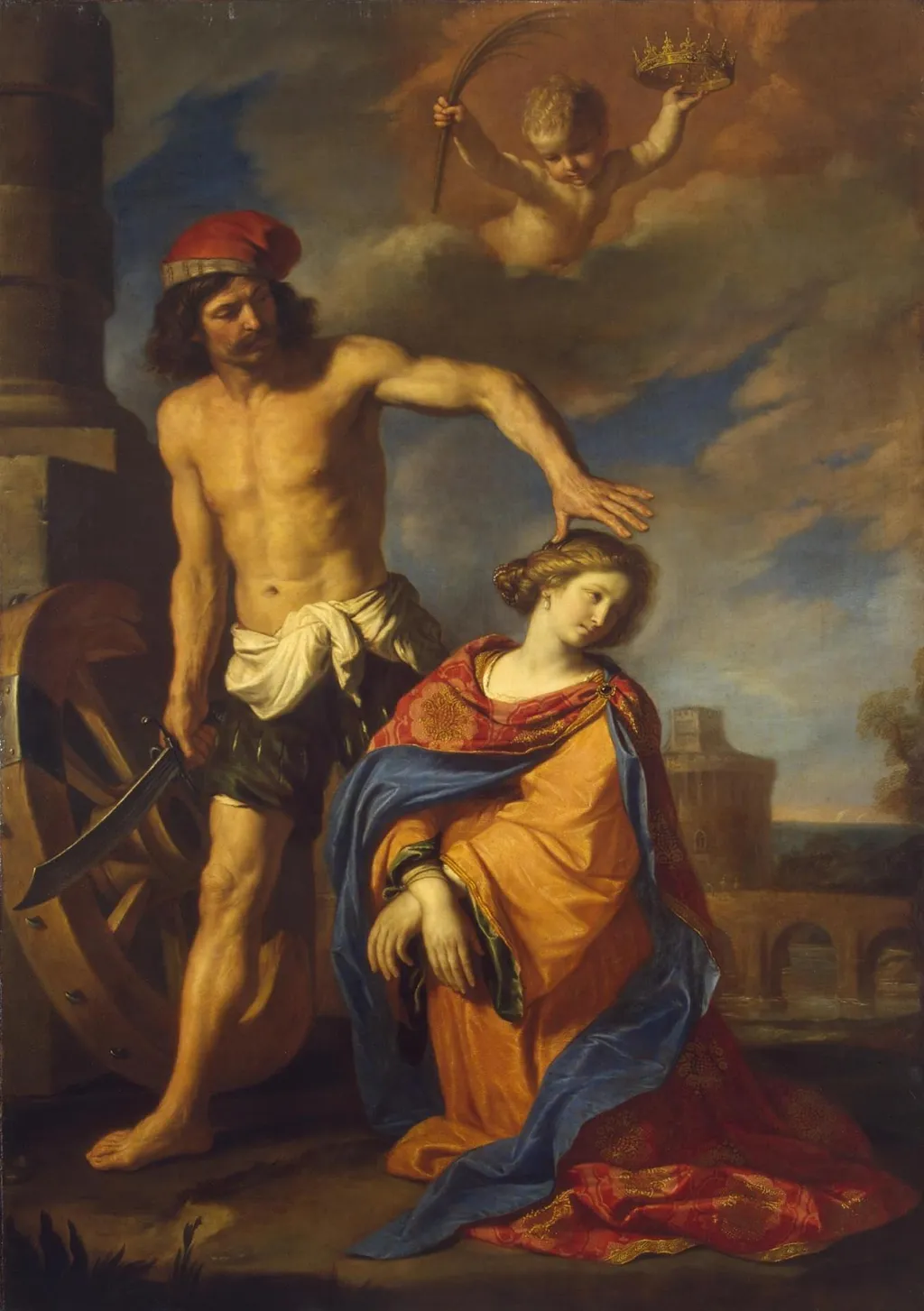
Martyrdom of St Catherine is an oil painting by the Early Baroque Italian artist Guercino. It dates from 1653 and is held in the collection of the Hermitage Museum.
About this work
Overview
Created in 1653, this oil on canvas by the Italian Baroque painter Guercino portrays the martyrdom of Saint Catherine.
Created in 1653, this oil on canvas by the Italian Baroque painter Guercino portrays the martyrdom of Saint Catherine. The composition captures a tense moment in which a nude, red‑capped figure looms over a seated woman in a long robe, while a cherubic figure in the distance holds a crown and palm fronds. The scene is set against a cloudy sky and a faint architectural outline, emphasizing the drama of the narrative.
Subject & Meaning
The work illustrates the legendary death of Saint Catherine, who faced execution rather than renounce her faith. The calm demeanor of the woman contrasts with the aggressor’s poised sword, suggesting inner spiritual resolve amidst physical peril. The cherub’s presence, bearing symbols of victory and martyrdom, reinforces the saint’s triumph over earthly suffering.
Technique & Style
Guercino employs the hallmark Baroque tactics of chiaroscuro and dynamic movement. Strong contrasts of light illuminate the figures, while the swirling clouds and distant building create depth. The painter’s vigorous brushwork and vivid coloration heighten emotional intensity, drawing the viewer into the moment of impending violence.
History & Provenance
The painting was commissioned by the town of Cento as a diplomatic gift for Cardinal Alderano Cibo, the papal legate stationed in Ferrara. This patronage reflects the period’s practice of using art to cement political and ecclesiastical relationships. The work has remained in the cardinal’s collection, documenting its original purpose as a symbol of piety and alliance.
Own this work as a print
Artist & collection
Artist
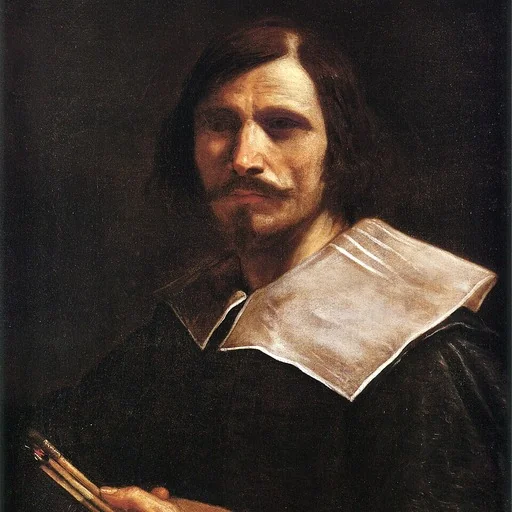
Giovanni Francesco Barbieri (8 February 1591 – 22 December 1666), better known as (il) Guercino (Italian pronunciation: ), was an Italian Baroque painter and draftsman from Cento in the Emilia region, who was active in Rome and Bologna.

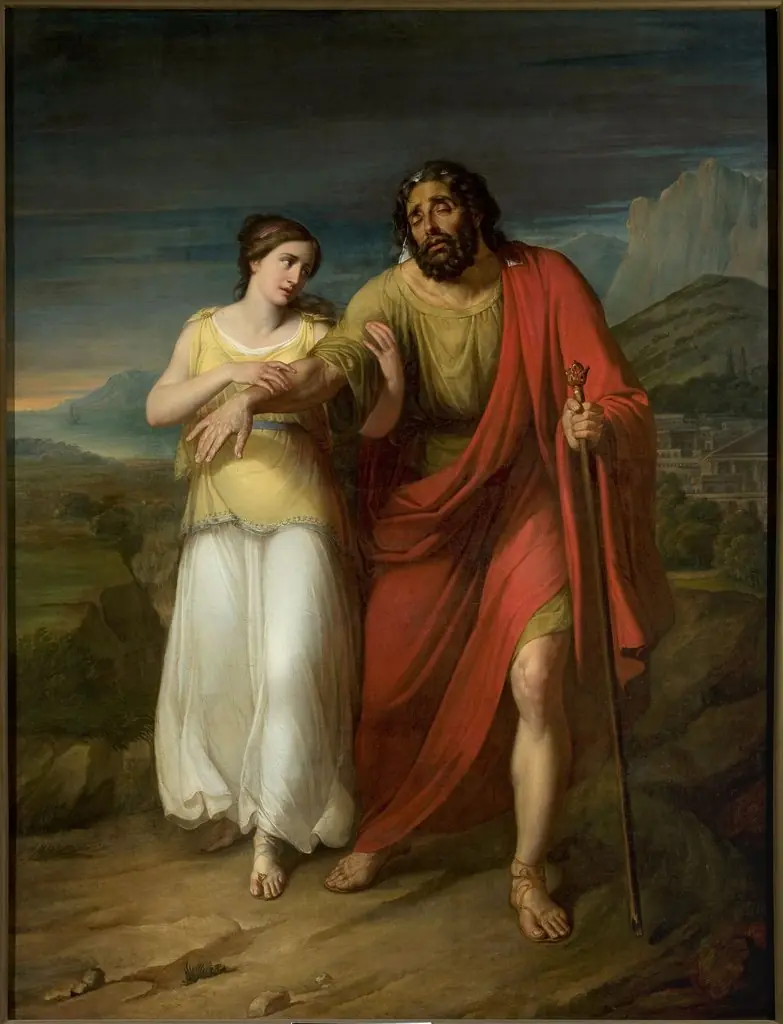 Oedipus and Antigone
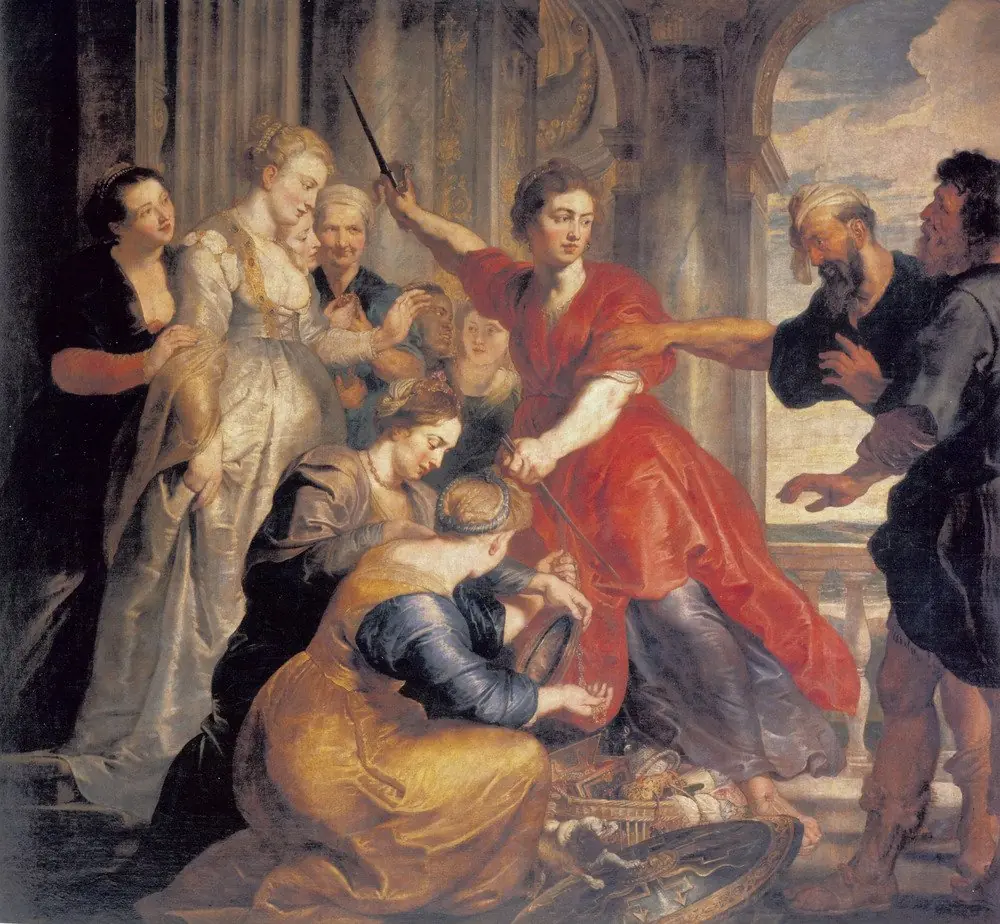 Achilles discovered by Ulysses and Diomedes
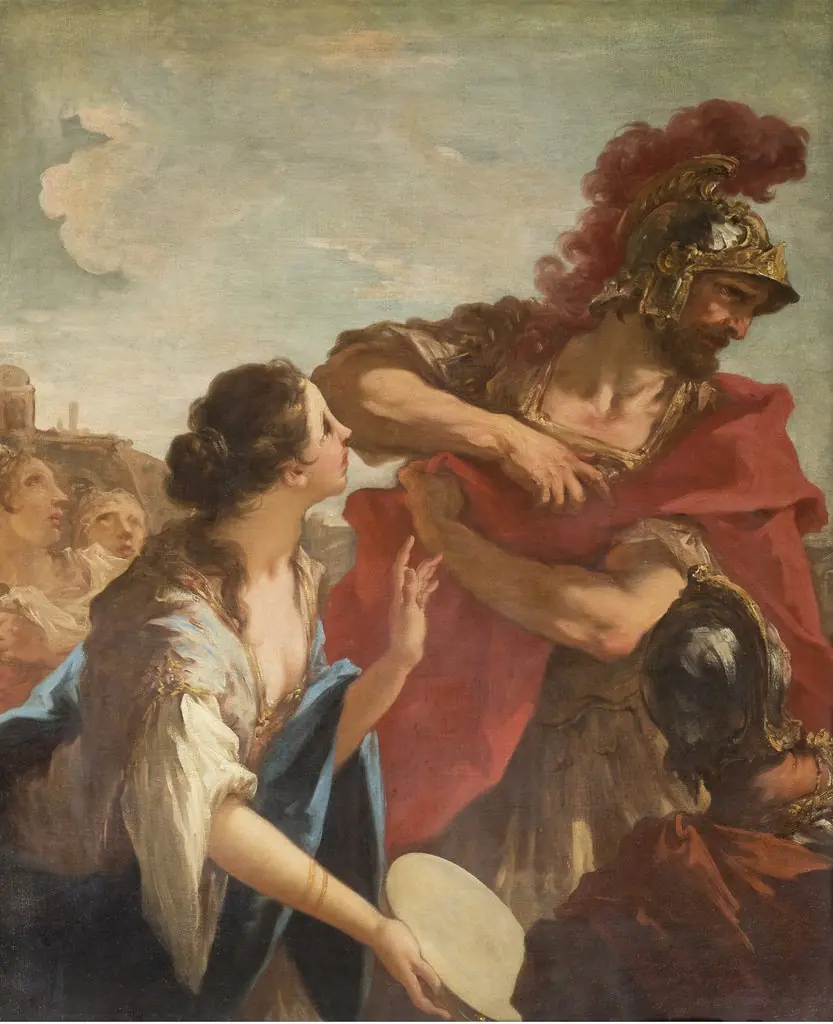 Jephthah returning from Battle is greeted by his Daughter
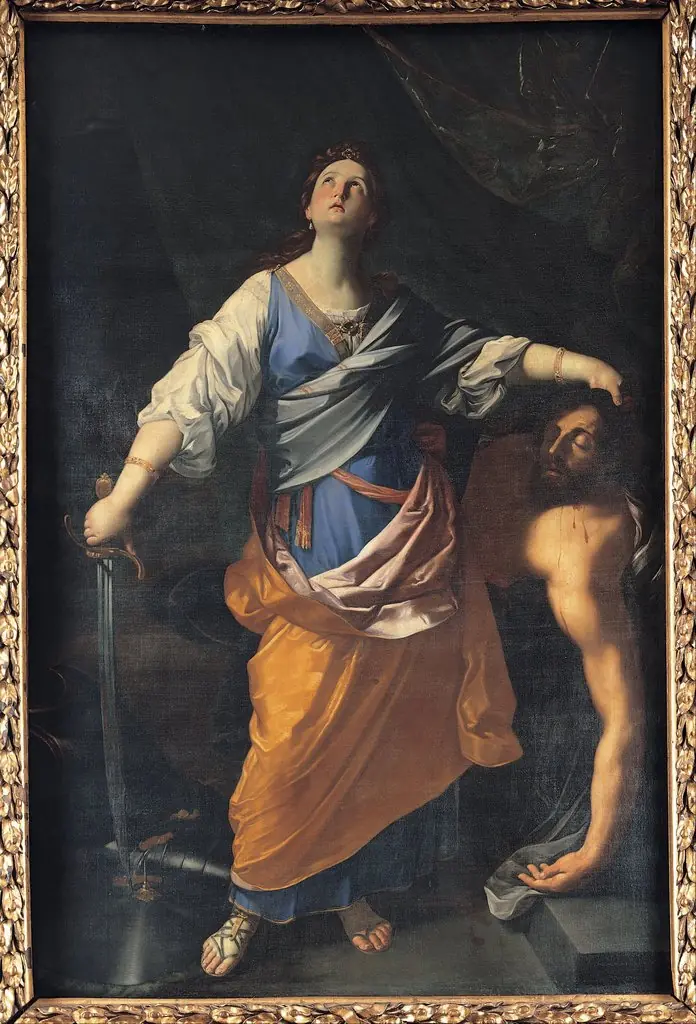 Judith
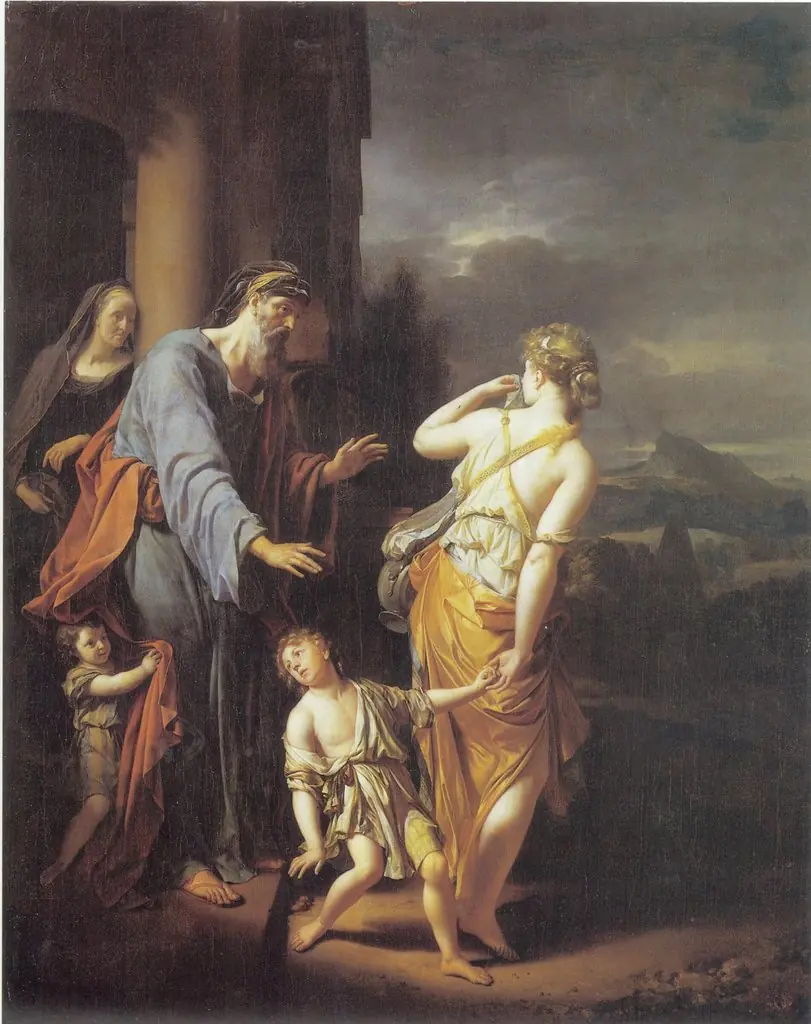 The Banishment of Hagar
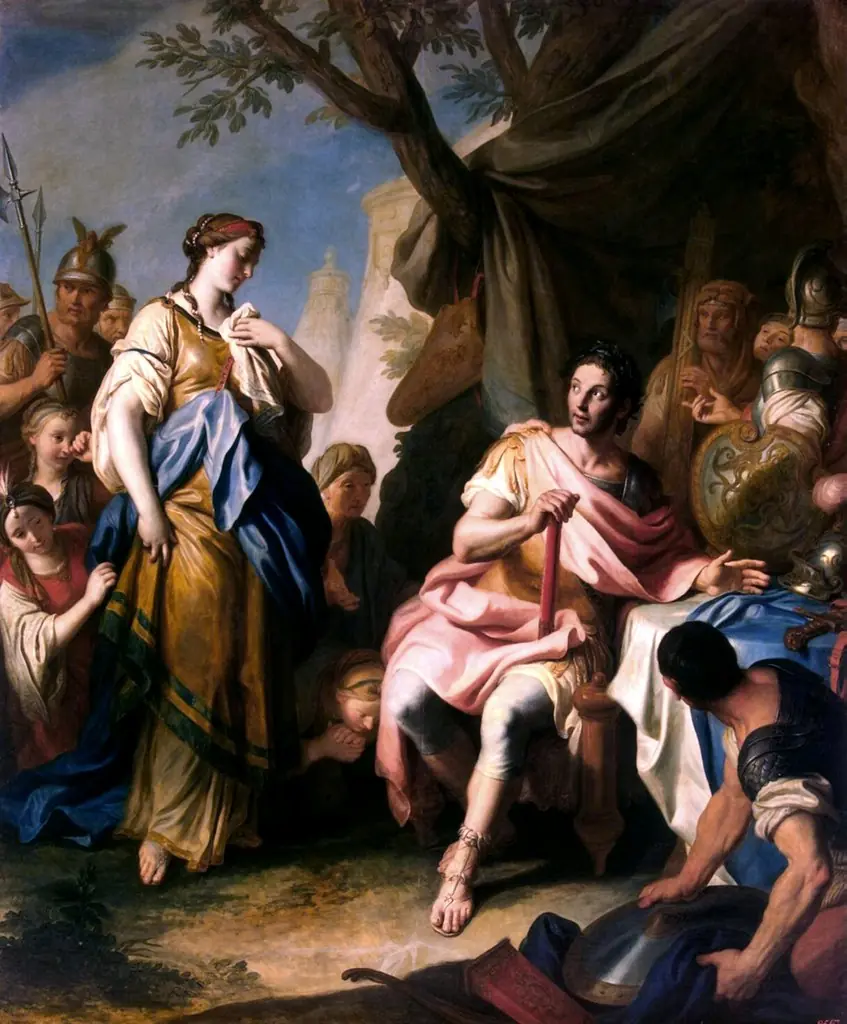 Alexander the Great and Roxana
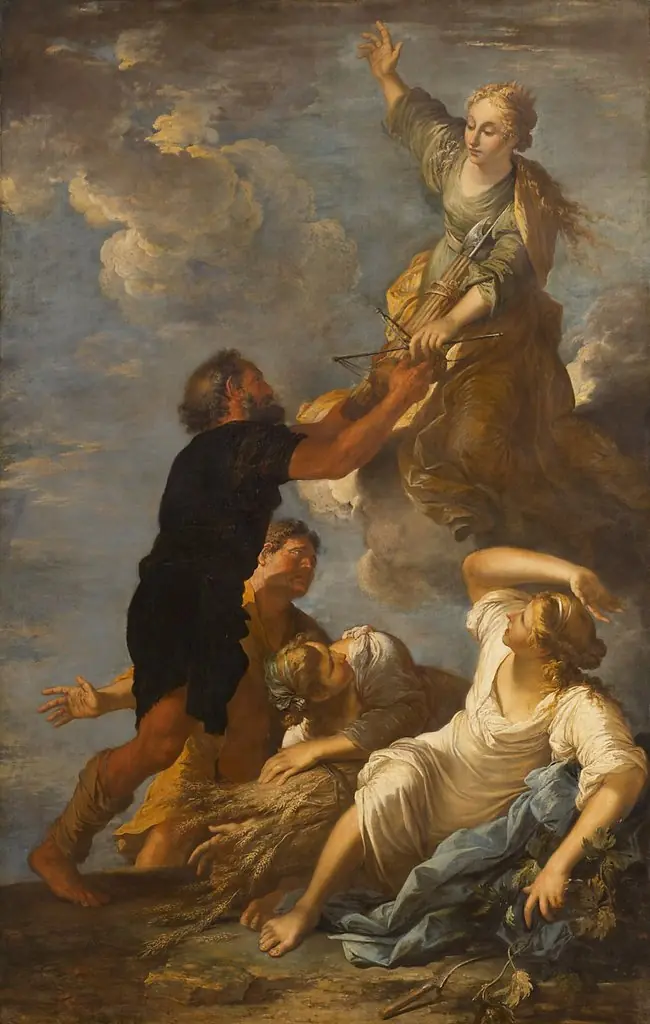 Astraea leaves the earth
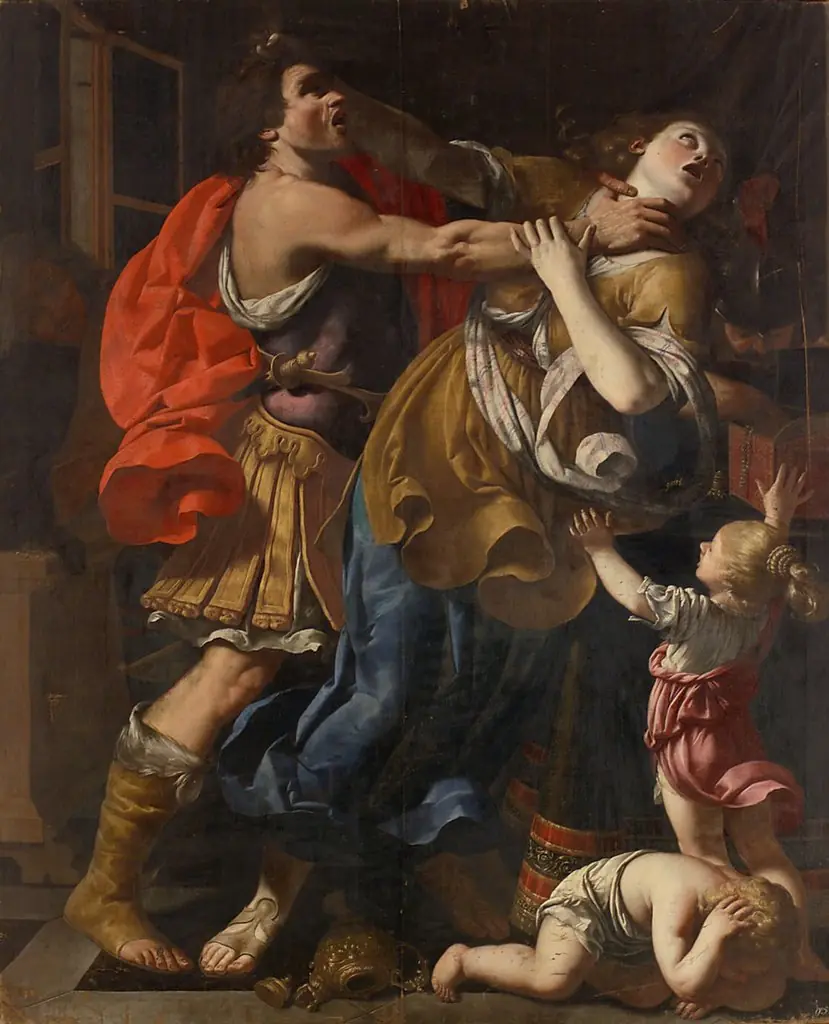 Predatory attack
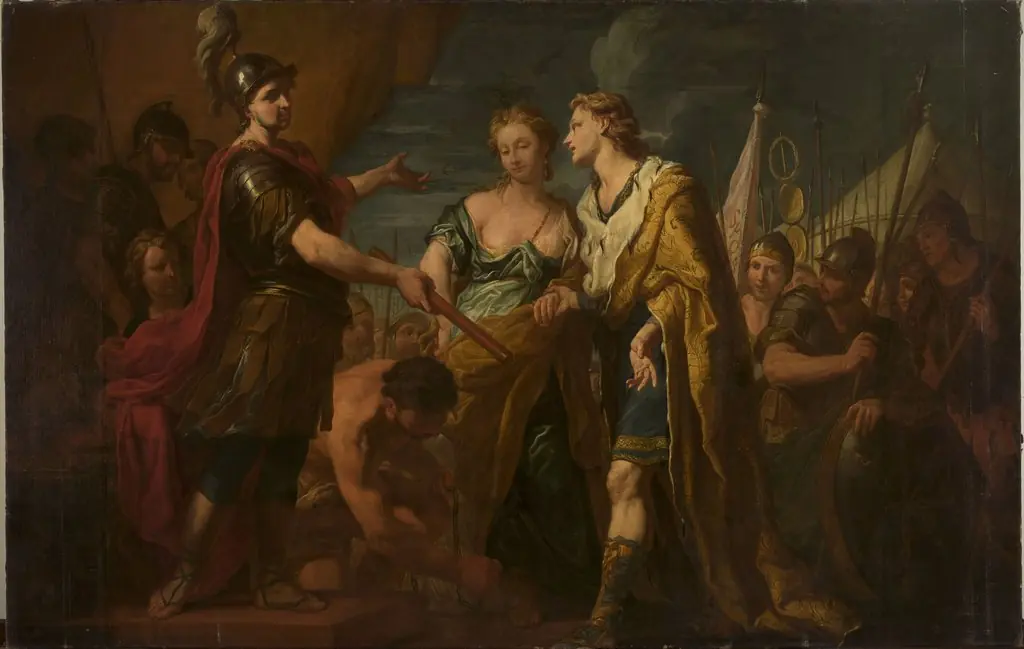 Magnanimity of Scipio
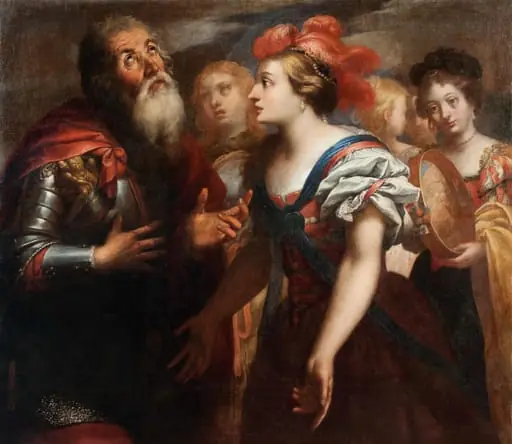 Scenă de cruciadă
 Erminia and the shepherds
 Martyrdom of the Saint Woman