Artwork
The Holy Family
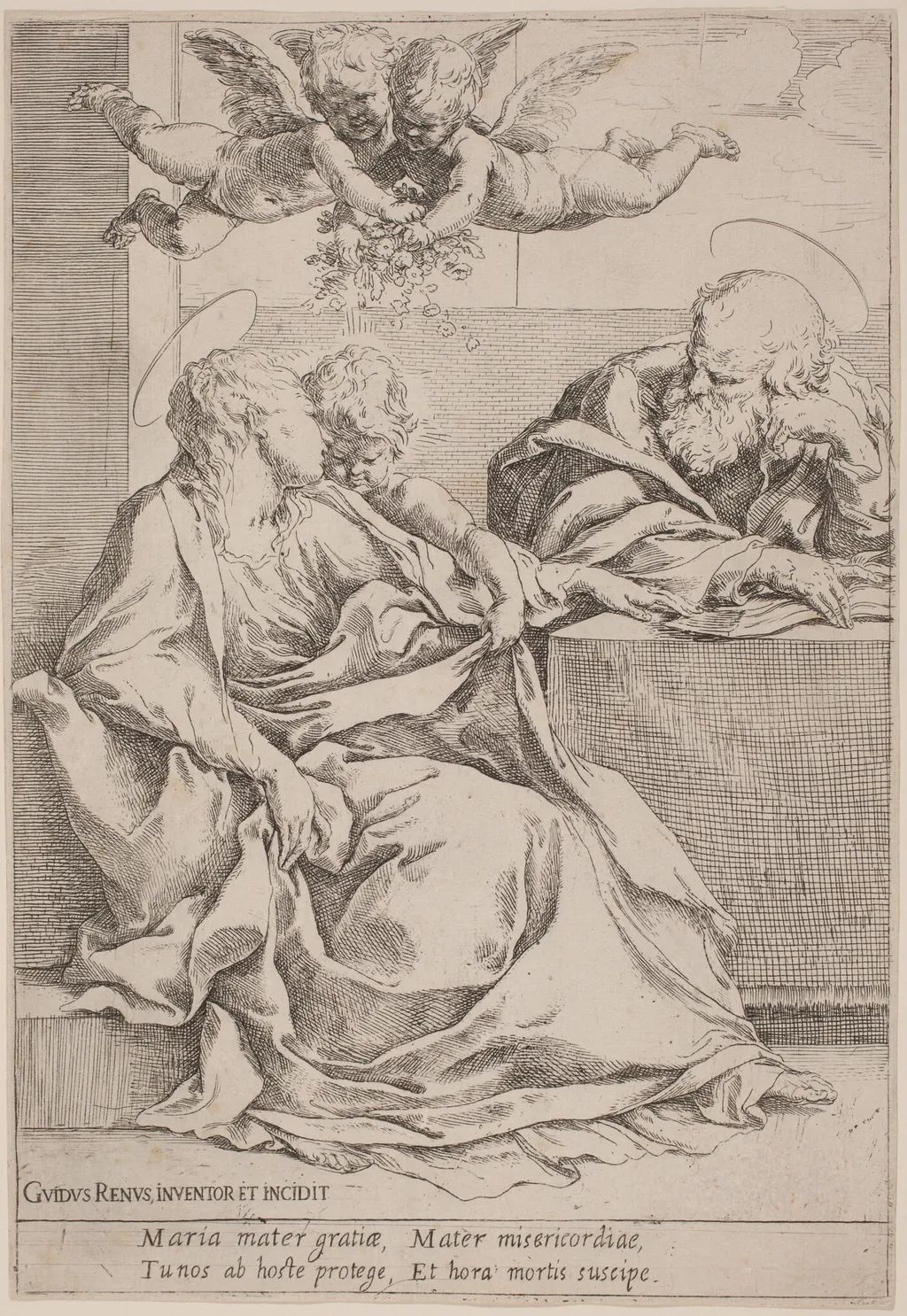
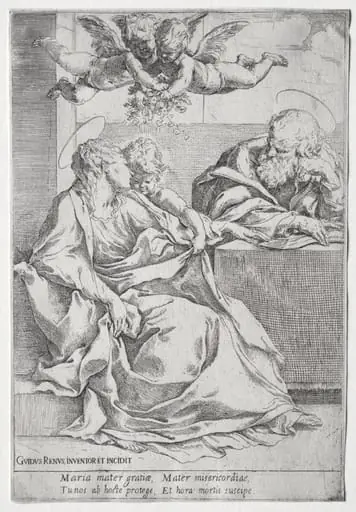
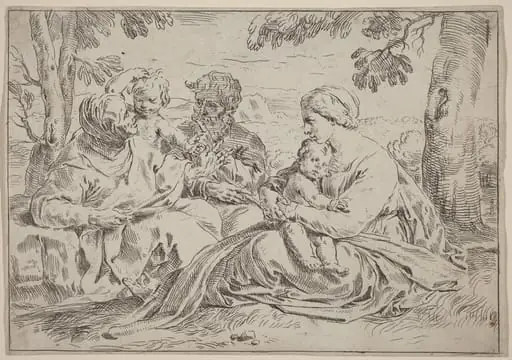
The Holy Family is an ink print by the Renaissance artist Guido Reni. It dates from 1608 and is held in the collection of the National Gallery of Art.
About this work
Overview
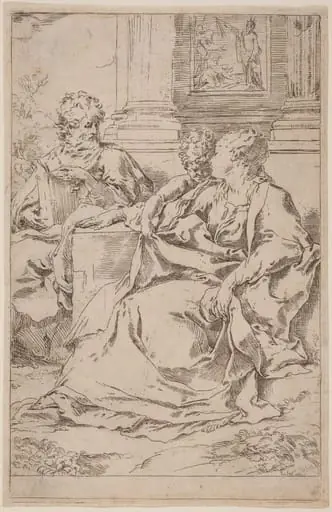
Created in 1608, this etching presents a quiet gathering of the Holy Family: the Virgin Mary cradles the infant Jesus, while Joseph sits nearby, his gaze directed toward the child. The figures are arranged within a modest interior space rendered with soft, linear shading, emphasizing intimacy and devotion without elaborate background detail.
Subject & Meaning
The composition underscores the familial bond and spiritual significance of the Nativity scene. By focusing on the tender interaction among the three figures, the work invites contemplation of Christ’s humanity and the protective roles of his parents, reflecting Counter‑Reformation ideals that emphasized personal piety and the sanctity of family.
Technique & Style
Executed through etching, the image was incised on a copper plate and transferred to paper, allowing fine line work and subtle tonal variation. Reni’s handling combines naturalistic detail with a measured classical composure, evident in the balanced arrangement of forms and the restrained use of chiaroscuro that softens the scene’s atmosphere.
History & Provenance
The print originates from Guido Reni, a prominent Bolognese artist associated with the Carracci reform of Italian painting. Produced during his mature period, the work circulated among collectors of devotional prints in the early seventeenth century, contributing to Reni’s reputation as a leading interpreter of religious subjects across Rome, Naples, and Bologna.
Artist & collection
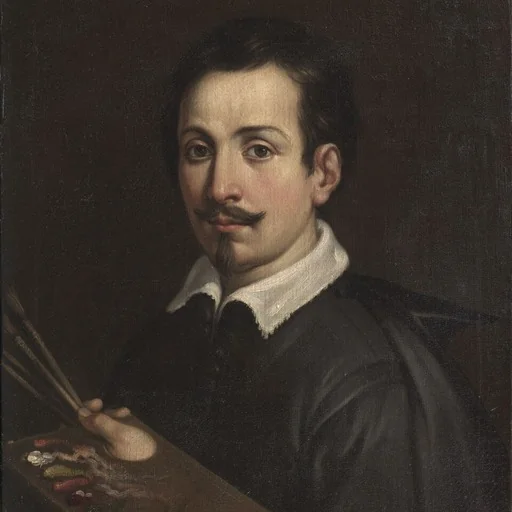
Artist
Guido Reni was an Italian Baroque painter, although his works showed a classical manner, similar to Simon Vouet, Nicolas Poussin, and Philippe de Champaigne.