Artwork
Portrait of the emperor Charles V
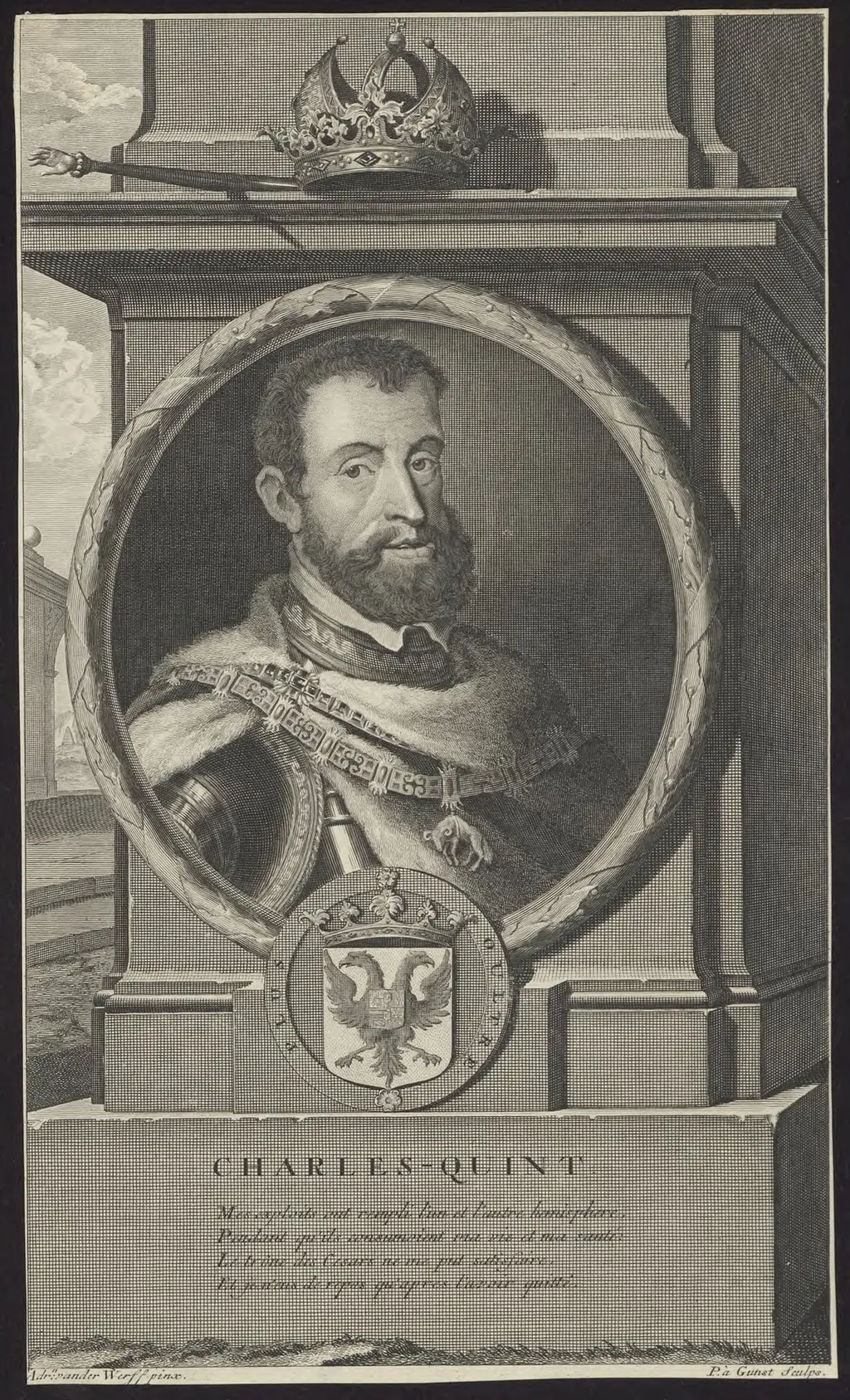
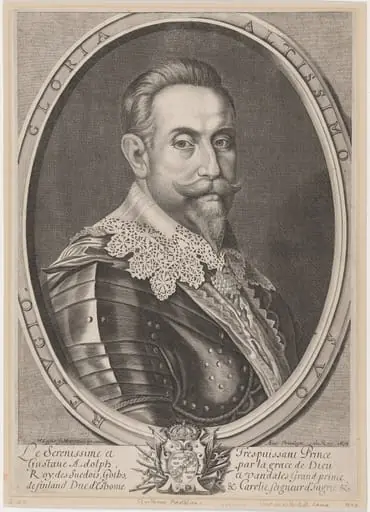
Portrait of the emperor Charles V is an unspecified painting by the Rococo painting artist Pieter van, Gunst. It dates from 1650 and is held in the collection of the Leiden University Libraries. This portrait depicts Emperor Charles V in a composed, frontal stance, derived from a painting by Adriaen van der Werff.
About this work
Overview
A French verse is inscribed beneath the figure, distinguishing it from conventional imperial imagery by introducing a literary layer.
This portrait depicts Emperor Charles V in a composed, frontal stance, derived from a painting by Adriaen van der Werff. The image is rendered in a formal, courtly style typical of early 16th-century portraiture. A French verse is inscribed beneath the figure, distinguishing it from conventional imperial imagery by introducing a literary layer. The composition emphasizes dignity over dynamism, aligning with the emperor’s role as a sovereign figure.
Subject & Meaning
Charles V is portrayed not as a warrior or ruler in action, but as a contemplative monarch, his serious expression conveying authority and introspection. The inclusion of a French poem beneath the image suggests an appeal to cultural refinement and multilingual diplomacy, reflecting his dominion over diverse European territories. The text may express loyalty, political philosophy, or personal reflection, deepening the portrait’s narrative beyond visual representation.
Technique & Style
The rendering follows the refined realism of Dutch portraiture, with attention to textile detail and subtle tonal transitions. While not employing sfumato in the manner of Leonardo, the work uses soft modeling to define facial contours and fabric folds, avoiding harsh outlines. The background remains muted, directing focus to the figure. The inscription is carefully integrated, treated as an architectural element rather than an afterthought.
History & Provenance
The portrait originates from a lost painting by Adriaen van der Werff, likely commissioned during Charles V’s reign. Its current form may be a reproduction or engraving, possibly created for diplomatic distribution. The French poem indicates circulation among French-speaking courts or intellectual circles. The reference to entries 40 and 227 suggests it was cataloged within a larger collection of imperial imagery, possibly in a Habsburg archive.
Context
In the early 1500s, portraits of rulers increasingly combined visual authority with textual elements to reinforce legitimacy. Charles V, ruling over Spain, the Netherlands, and the Holy Roman Empire, was frequently depicted to project unity across linguistic and cultural divides. The use of French verse here reflects the language of European elite culture, positioning the emperor as a patron of letters as much as a political leader.
Legacy
This work exemplifies how imperial portraiture evolved to incorporate literary and multilingual symbolism. Though not widely known today, its integration of text and image influenced later courtly portraiture in Europe. The practice of embedding poetry or mottoes beneath royal likenesses persisted in Habsburg and Bourbon collections, reinforcing the idea that rulership was as much a cultural performance as a political one.
Artist & collection
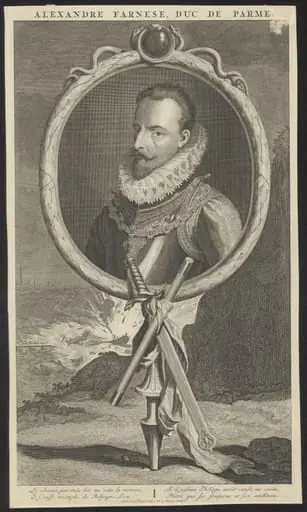 Portrait of Alexander Farnese, Duke of Parma
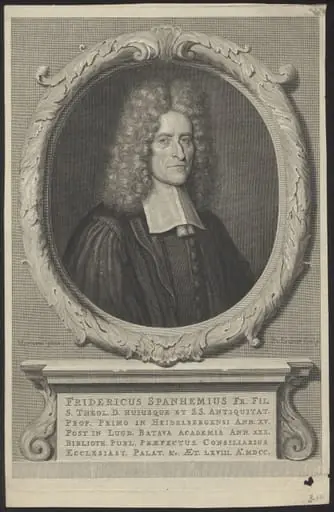 Portrait of Fridericus Spanhemius, professor of Theology and Antiquities
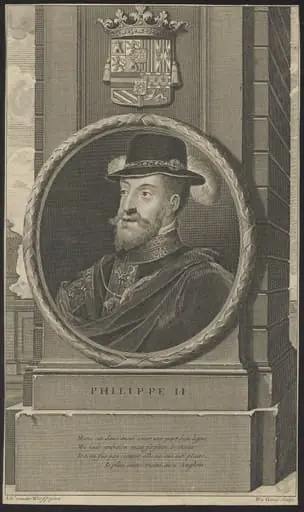 Portrait of Philips II, king of Spain
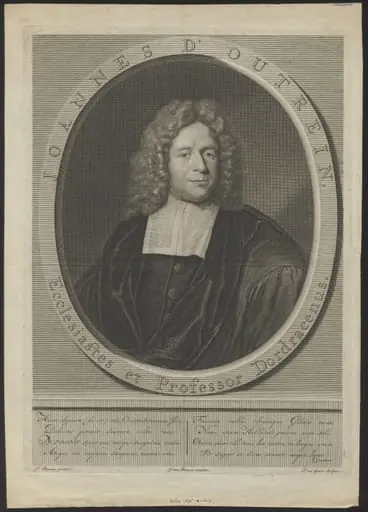 Portrait of Johannes D'Outrein, minister and professor in Dordrecht
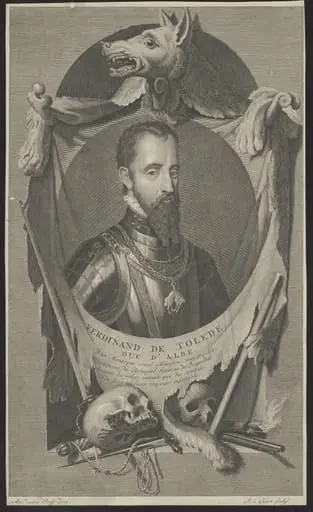 Portrait of Ferdinand de Toledo, Duke of Alva
![Portrait of J. Basnage, [Walloon minister and historian], by Pieter van, Gunst](https://artifactworldgallery.com/img/pieter-van-gunst--portrait-of-j-basnage-walloon-minister-and-historian--be59663770daddd2-w320.webp) Portrait of J. Basnage, [Walloon minister and historian]
Portrait of J. Basnage, [Walloon minister and historian]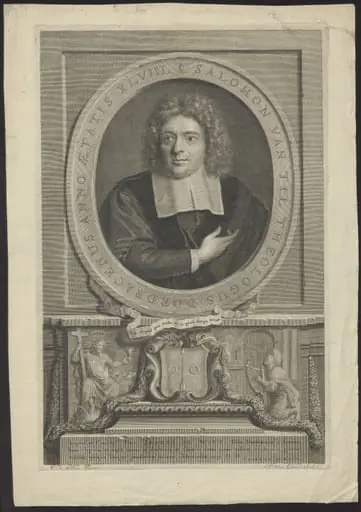 Portrait of Salomon van Til, Theologian
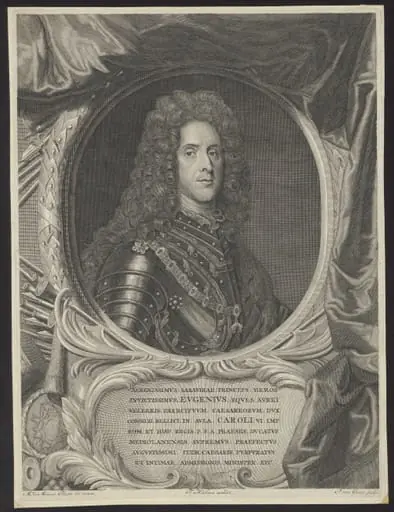 Portrait of Prince Eugenius of Savoye