Artwork
Calf's Head and Ox Tongue
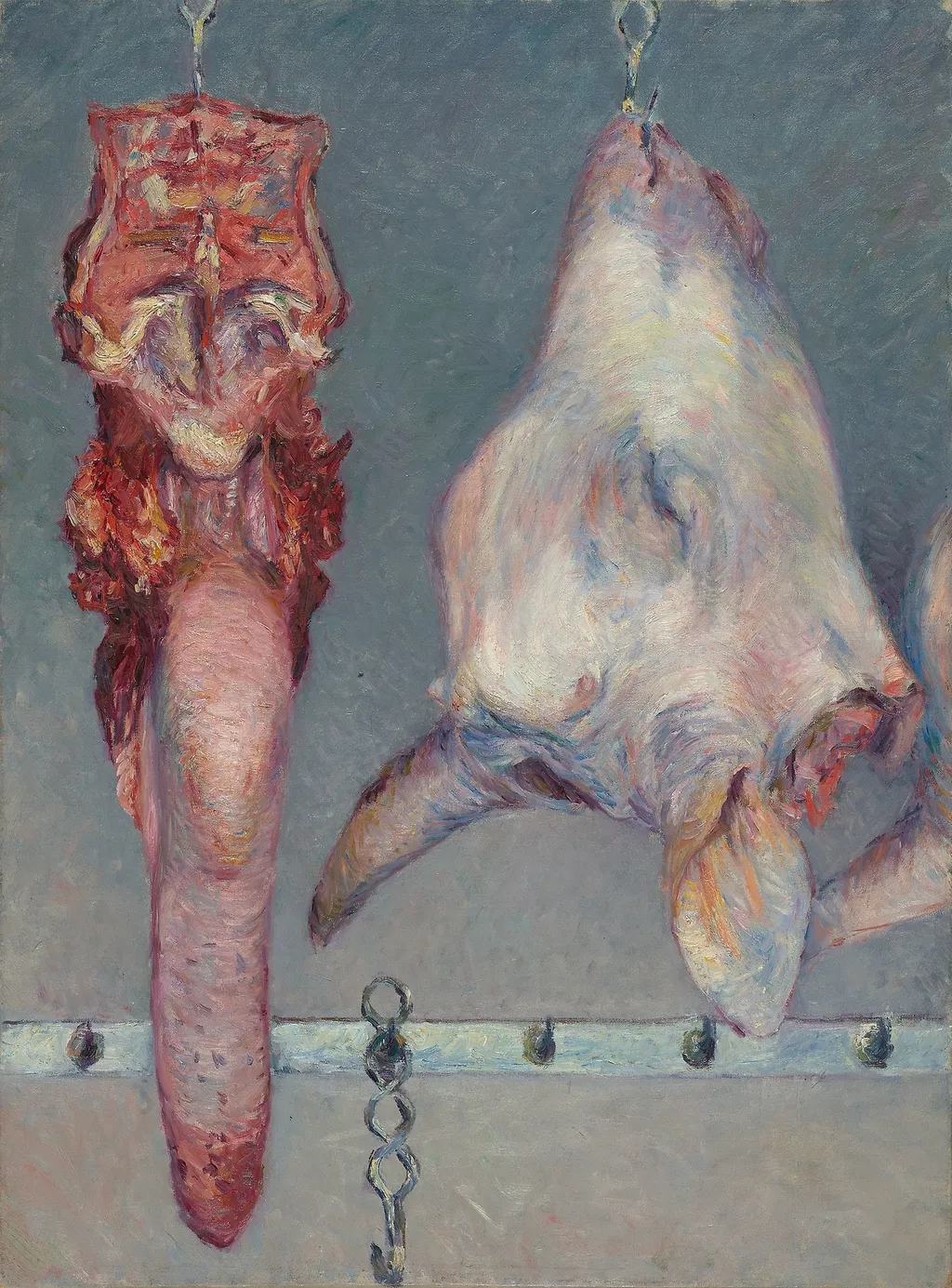
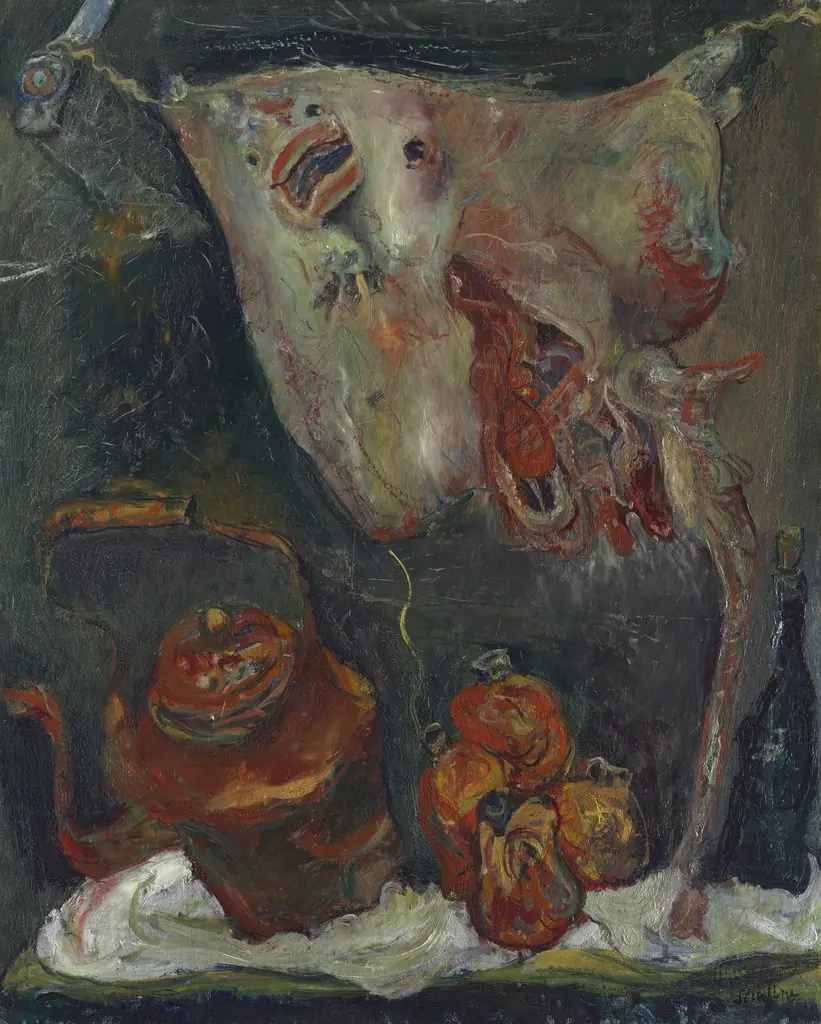
Calf's Head and Ox Tongue is an oil painting by the Impressionist artist Gustave Caillebotte. It dates from 1892 and is held in the collection of the Art Institute of Chicago.
About this work
Overview
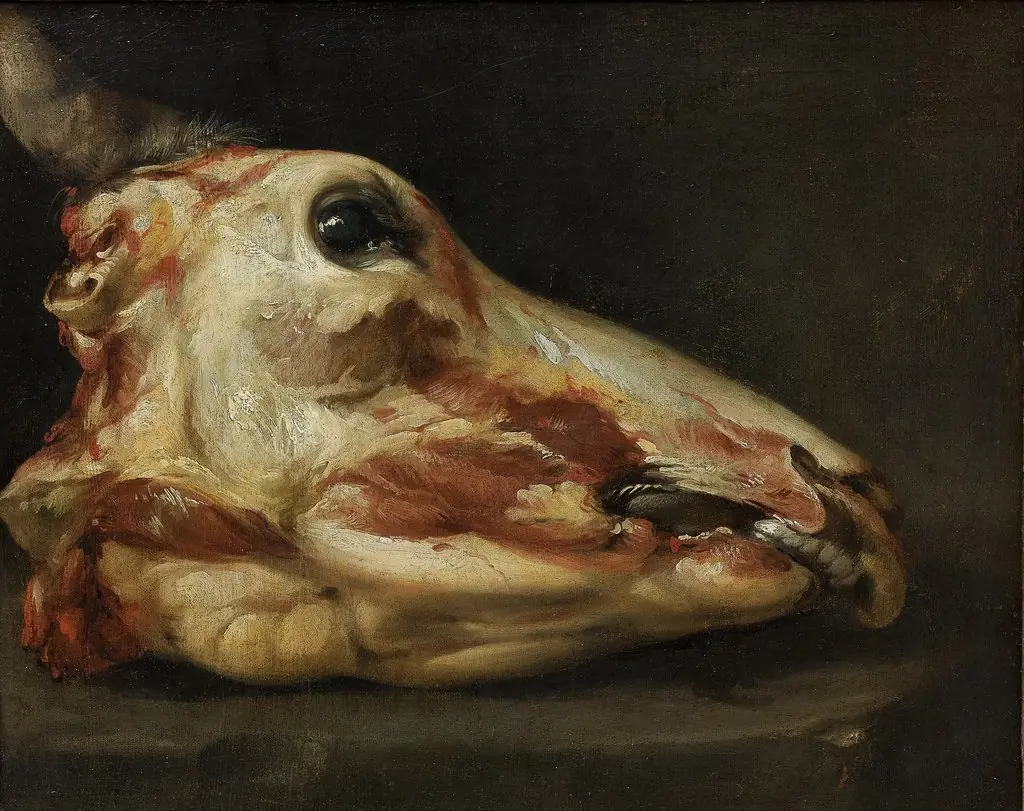
Gustave Caillebotte’s 1892 oil painting *Calf’s Head and Ox Tongue* presents a stark still‑life composition. Rendered in muted gray tones, the work shows a calf’s head on the left and an ox tongue on the right, each hanging from a simple hook. The subdued palette and quiet arrangement emphasize the physicality of the objects rather than decorative appeal.
Subject & Meaning
The painting isolates two animal parts—head and tongue—rendered with meticulous detail, inviting contemplation of flesh, texture, and mortality. By suspending the specimens against a neutral background, Caillebotte removes narrative context, allowing the viewer to focus on the material presence of the subjects and the quiet, introspective atmosphere they create.
Technique & Style
Caillebotte employs a restrained palette and careful modeling to capture the varied surfaces of skin, muscle and bone. His handling of light creates subtle chiaroscuro, highlighting the three‑dimensional form while maintaining a flat, almost photographic clarity. The work reflects his realist inclination within the broader Impressionist circle, emphasizing precision over loose brushwork.
History & Provenance
Created during the later phase of Caillebotte’s career, the painting entered the collection of the Art Institute of Chicago, where it remains on view. The artist, a financially independent patron of the Impressionists, produced the work using resources afforded by his family’s wealth, underscoring his dual role as creator and supporter of the movement.
Own this work as a print
Artist & collection
Artist
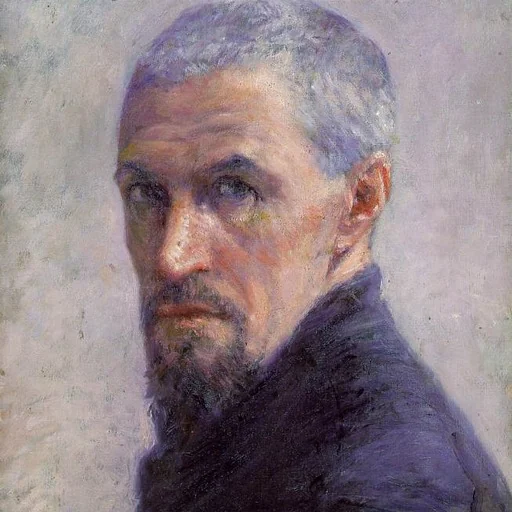
Gustave Caillebotte (French: ; 19 August 1848 – 21 February 1894) was a French painter who was a member and patron of the Impressionists, although he painted in a more realistic manner than many others in the group.