Artwork
Sancho Panza
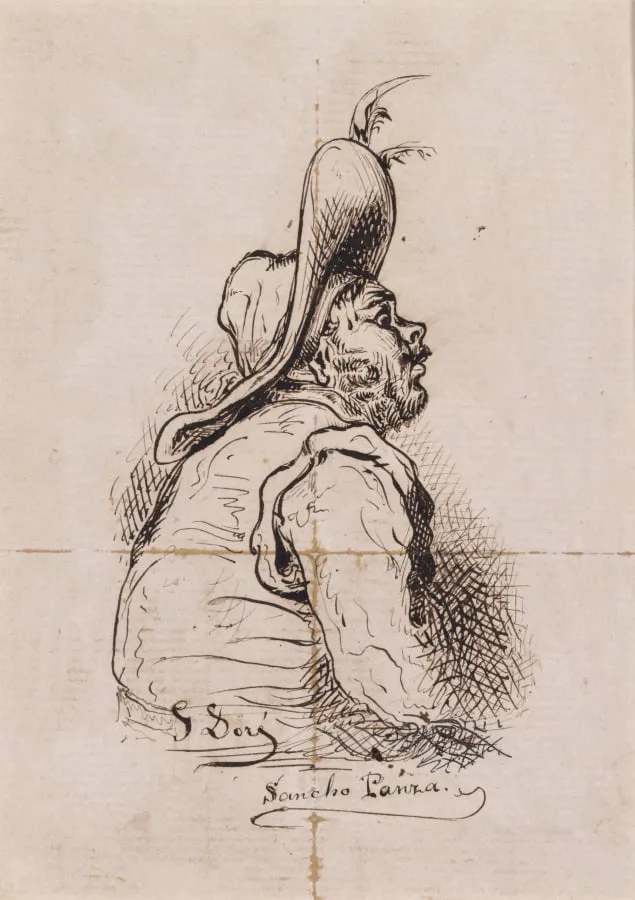
Sancho Panza is a drawing by the Impressionist artist Gustave Doré. It dates from 1863 and is held in the collection of the Cleveland Museum of Art.
About this work
If you like how Doré turns words into pictures, look up *chiaroscuro*—the way he uses light and shadow to give his drawings depth.
A chubby man in a wide-brimmed hat leans forward, hands on knees, peering at something just out of view. His round belly strains against a simple tunic, and his face is all curiosity.
This is Sancho Panza, sidekick to Don Quixote in Cervantes’ famous novel. Doré drew him for an 1863 illustrated edition—one of over 300 pictures he made for the book. The small, round shape of the image makes Sancho feel like a living comic-strip panel.
If you like how Doré turns words into pictures, look up *chiaroscuro*—the way he uses light and shadow to give his drawings depth.
Overview
This drawing by Gustave Doré is one of more than three hundred illustrations created for the 1863 French edition of Don Quixote. It captures Sancho Panza in a compact, intimate format, typical of Doré’s chapter-end vignettes. Rendered in pen and ink with subtle tonal variations, the image isolates the character in a moment of quiet anticipation, reinforcing his role as the novel’s grounded, observant companion to the idealistic knight.
Subject & Meaning
Sancho Panza is portrayed in a moment of focused attention, his posture suggesting curiosity rather than action. His rounded form and simple clothing reflect his peasant origins, while his alert gaze implies an awareness of the world beyond his immediate surroundings. Unlike the delusional Don Quixote, Sancho embodies practical perception, and this image underscores his role as the novel’s moral and emotional counterweight.
Technique & Style
Doré employed fine pen lines and controlled ink washes to model Sancho’s form, using chiaroscuro to suggest volume without heavy shading. The tight cropping and circular composition draw focus to the figure’s posture and expression. The lack of background elements isolates Sancho, enhancing the immediacy of his presence and lending the scene a timeless, almost theatrical quality.
History & Provenance
Created for the 1863 French edition of Don Quixote, this drawing was part of Doré’s comprehensive visual interpretation of Cervantes’ text. The illustrations were widely reproduced and helped shape European perceptions of the novel’s characters. Though originally printed as small wood engravings, Doré’s original drawings were preserved in private collections and later entered institutional holdings.
Context
In mid-19th-century France, illustrated literary editions were popular among the middle class, and Doré’s work set a new standard for narrative illustration. His approach to Don Quixote blended realism with expressive exaggeration, aligning with contemporary tastes for dramatic, emotionally resonant imagery. The drawing reflects both literary reverence and the era’s fascination with visual storytelling.
Legacy
Doré’s illustrations for Don Quixote became the definitive visual representation of the characters for generations. Sancho Panza’s depiction in this drawing influenced later comic and cartoon portrayals of the character, particularly in the use of exaggerated form and expressive posture. The work remains a reference point in the history of book illustration and the visual adaptation of literature.
Artist & collection
Artist
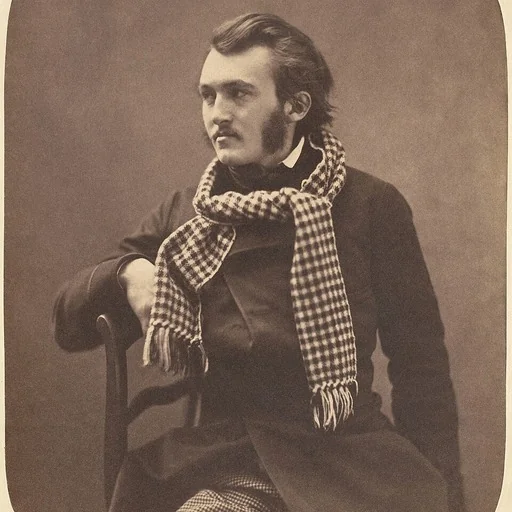
Paul Gustave Louis Christophe Doré was a French printmaker, illustrator, painter, comics artist, caricaturist, and sculptor.

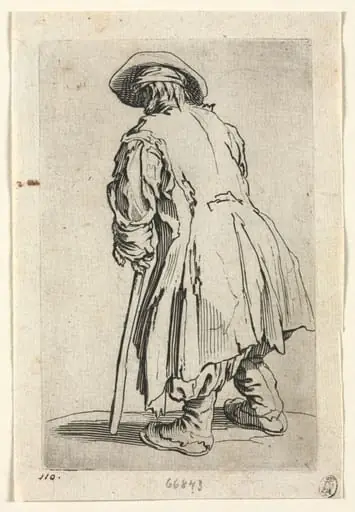 The Beggars: Old Beggar on One Single Crutch
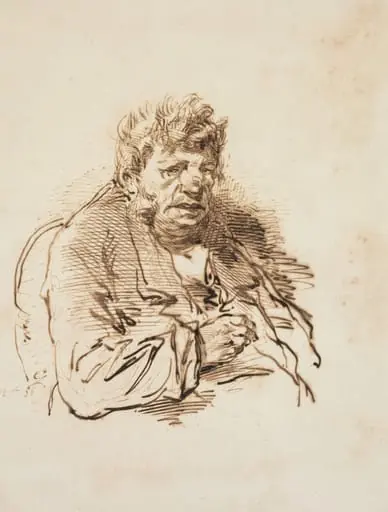 Head of an Old Man
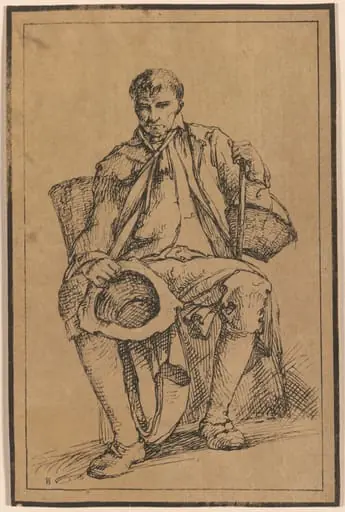 Forty Lithographic Impressions from Drawings of Landscape Scenery by Thomas Barker, Selected from His Studies of Rustic Figures after Nature: Seated Man with Baskets Holding Hat and Walking Stick
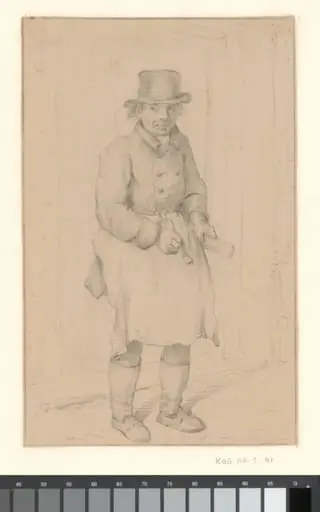 Untitled
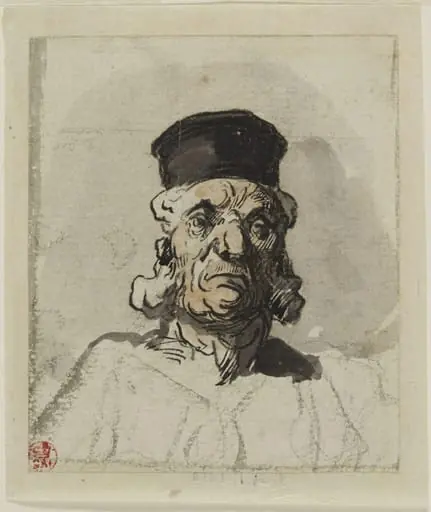 Tête de juge
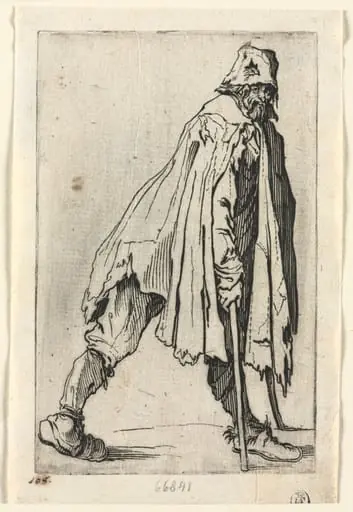 The Beggars: The Beggar on Crutches, Wearing a Cap
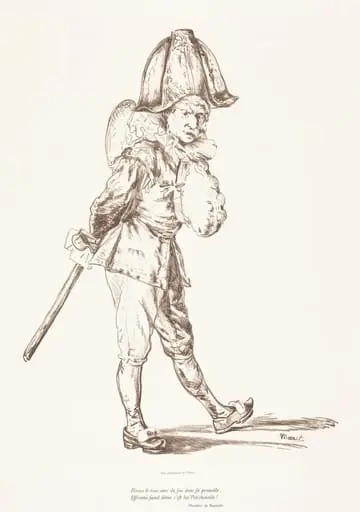 Polichinelle
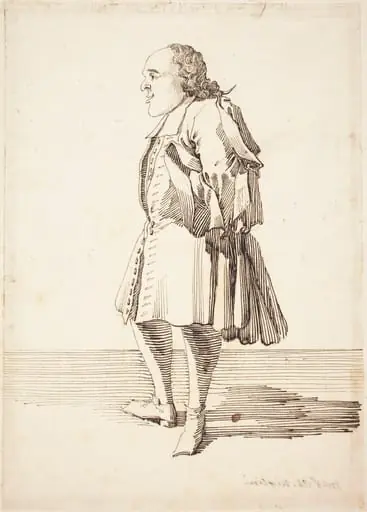 Abbot Antonio Niccolini
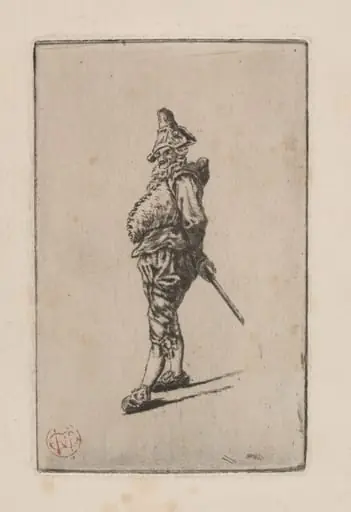 Punchinello, after Meissonier
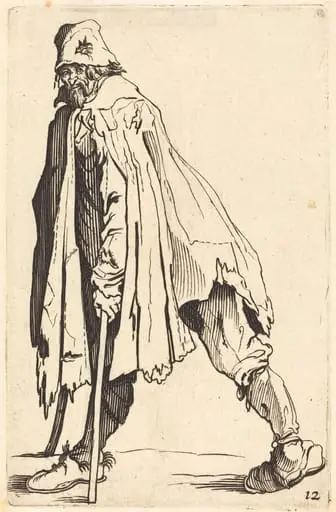 Beggar with Crutches and Cap
 The Beggars: Beggar with Pot
 A Gentleman Standing with His Arms Crossed