Artwork
Snake Charmer with an Egyptian Cobra
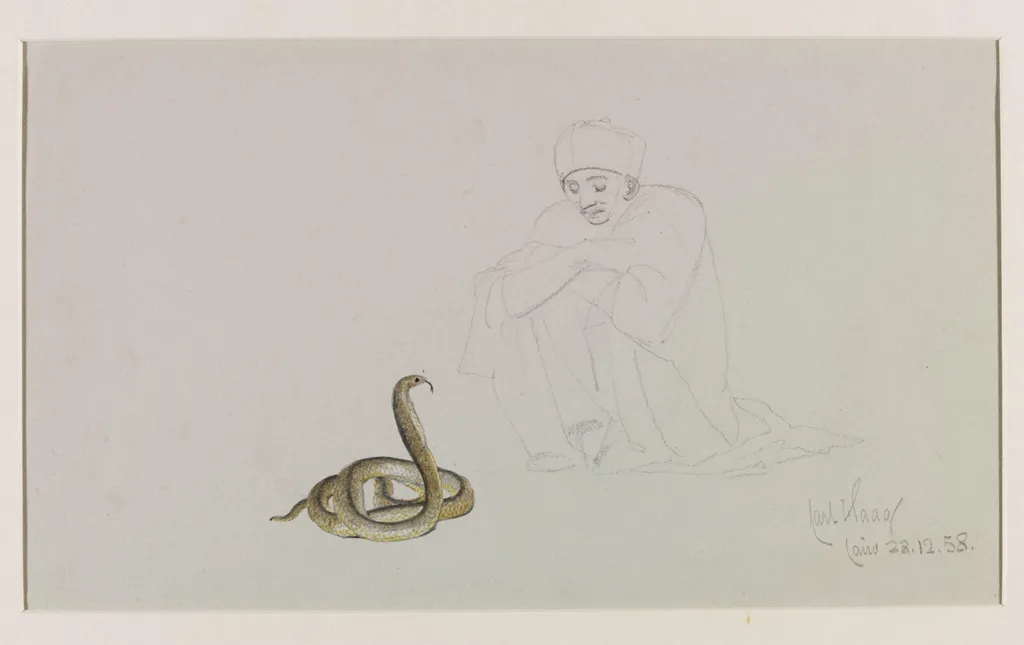
Snake Charmer with an Egyptian Cobra is a watercolor work on paper by the Impressionist artist Carl Haag. It dates from 1858 and is held in the collection of the Victoria and Albert Museum.
About this work
Overview
Executed with precision, the work belongs to a series of Orientalist studies Haag produced during his travels in North Africa and the Middle East.
Carl Haag's 1858 watercolour, *Snake Charmer with an Egyptian Cobra*, captures a solitary figure in quiet interaction with a venomous serpent. Executed with precision, the work belongs to a series of Orientalist studies Haag produced during his travels in North Africa and the Middle East. The medium’s transparency allows for subtle gradations of tone, reinforcing the stillness of the moment without theatrical flourish.
Subject & Meaning
The snake charmer, seated with arms crossed and gaze lowered, appears composed rather than performative. The cobra, poised with head lifted, suggests a mutual awareness between human and animal. The scene resists exoticism, presenting the encounter as a moment of quiet concentration rather than spectacle. The absence of audience or props implies an intimate, perhaps ritualistic, exchange grounded in familiarity.
Technique & Style
Haag employs fine brushwork to render the snake’s scaled skin and the textured folds of the charmer’s garments with clinical accuracy. The watercolour is applied in thin, layered washes, preserving the paper’s luminosity while building depth in shadows. The plain grey background eliminates distraction, directing focus to the figures and their delicate interplay of form and stillness.
History & Provenance
Created during Haag’s time in Egypt, the work reflects his engagement with local subjects after relocating from Germany. It was likely produced for private collectors interested in ethnographic realism. Though dated 1858, it was not exhibited publicly until later in the century. Its provenance traces through European private collections before entering its current institutional holding.
Context
In mid-19th-century Britain, Orientalist themes gained popularity among watercolour societies like the Royal Watercolour Society, of which Haag was a member. Artists often depicted North African and Middle Eastern life with attention to detail, though rarely with cultural insight. Haag’s approach, while still framed by colonial perspectives, stands apart for its restraint and absence of melodrama.
Legacy
Haag’s watercolours, including this piece, contributed to a shift in British Orientalism toward observational precision over fantasy. Though overshadowed by larger oil paintings of the era, his works influenced later generations of illustrators and naturalists seeking authenticity in depicting non-European subjects. The quiet dignity of his figures remains a quiet counterpoint to more sensationalized contemporaries.
Artist & collection
Artist
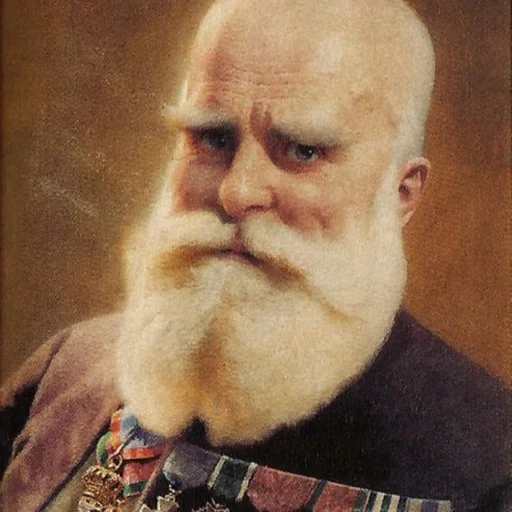
Carl Haag was a Bavarian-born painter who became a naturalized British subject and was court painter to the duke of Saxe-Coburg and Gotha.

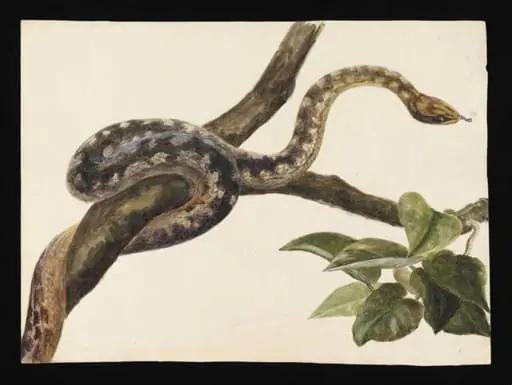 Study of a snake
![Hiding the "louis" [verso], by Jean-Louis Forain](https://artifactworldgallery.com/img/jean-louis-forain--hiding-the-louis-verso--7d597357f4c4f17d-w320.webp) Hiding the "louis" [verso]
Hiding the "louis" [verso]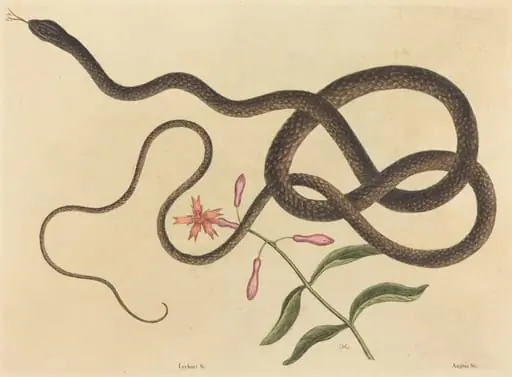 The Coach-whip Snake (Coluber flagellum)
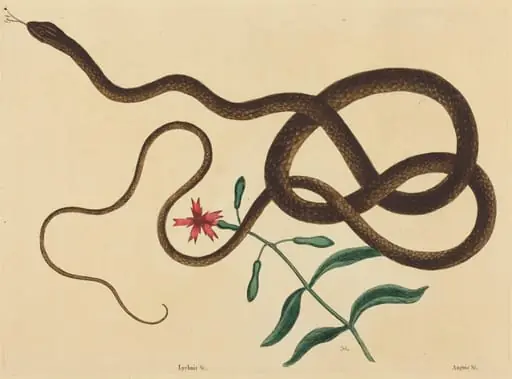 The Coach-Whip Snake (Coluber flagellum)
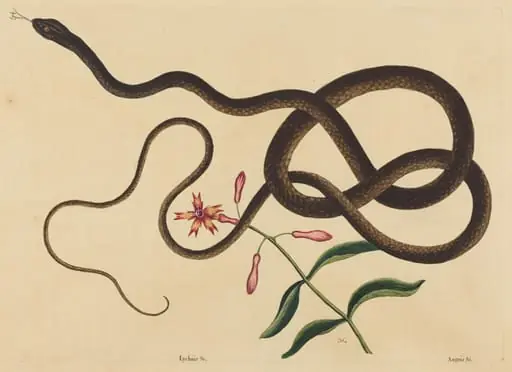 The Coach-Whip Snake (Coluber flagellum)
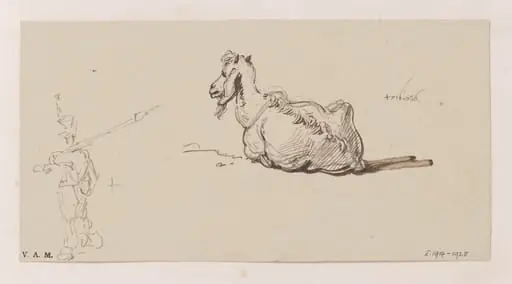 A goat, and a soldier
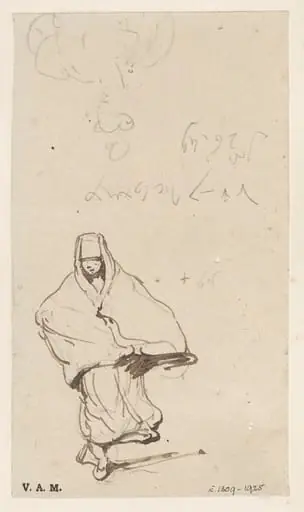 A Macanese woman walking in a cape
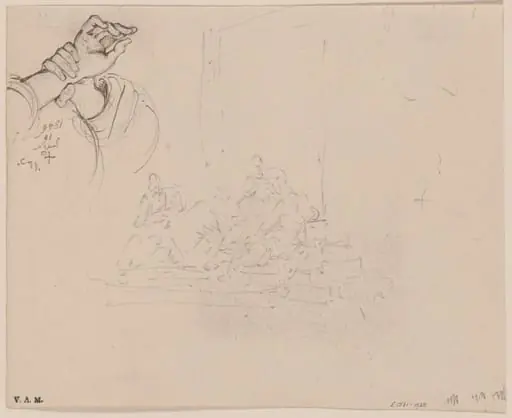 Clasped hands, and a sketch of Chinese figures
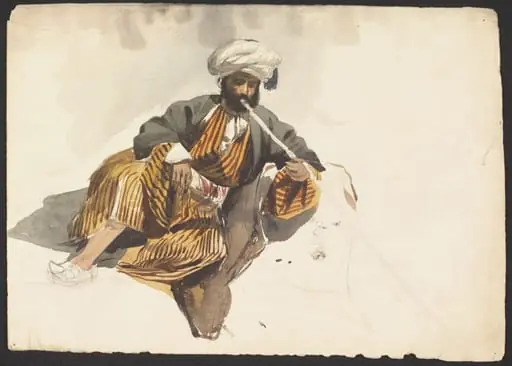 Figure of a Man in Arab dress, reclining, smoking a chibouk