Artwork
The Sugar Cane Girl
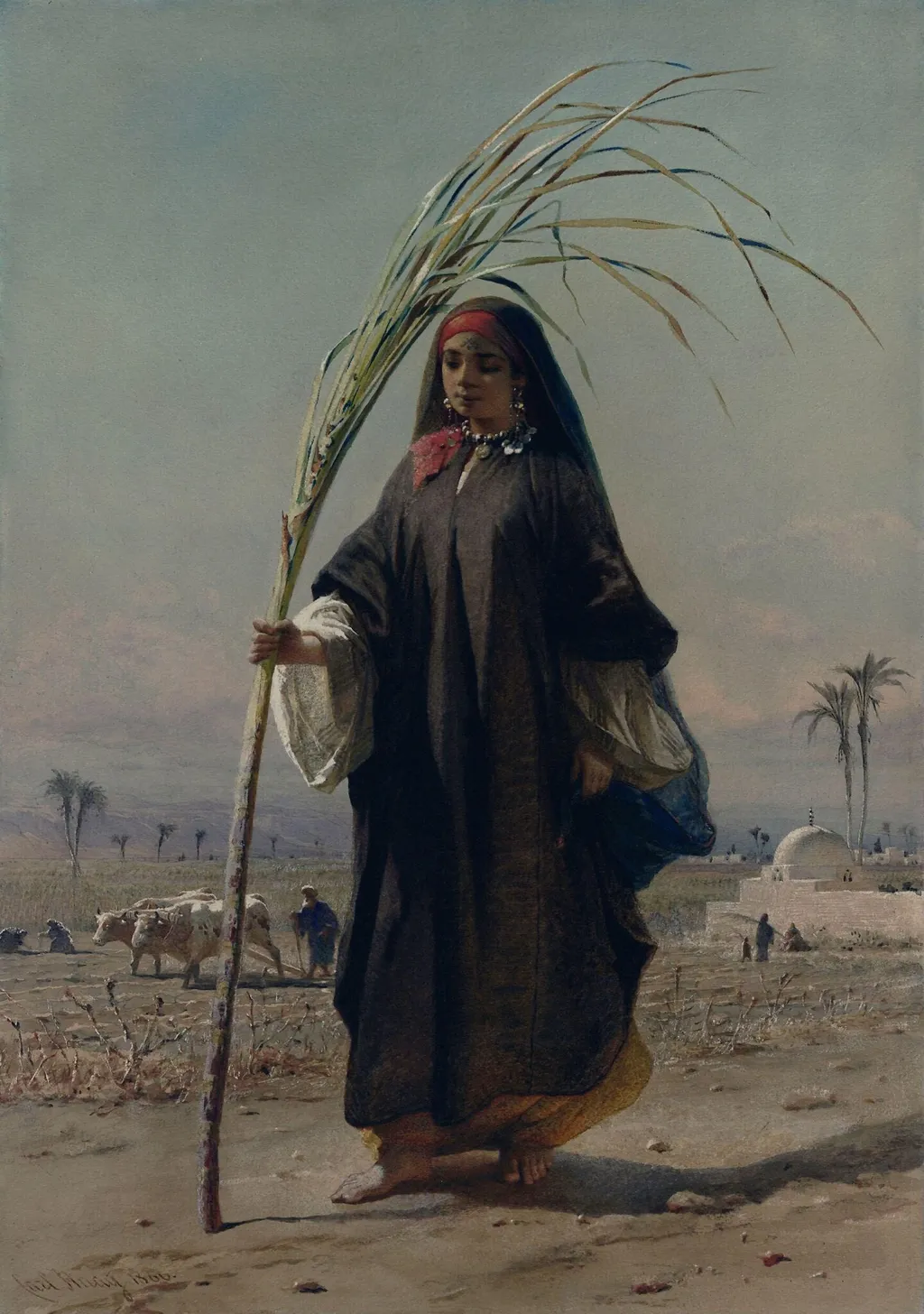
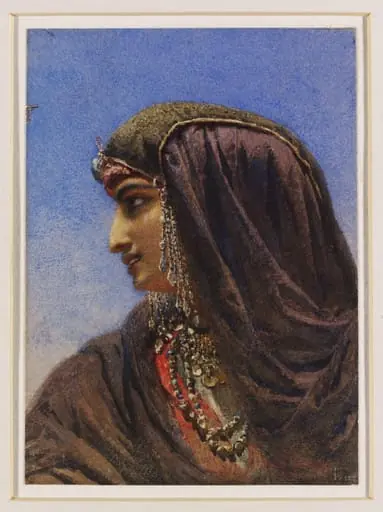
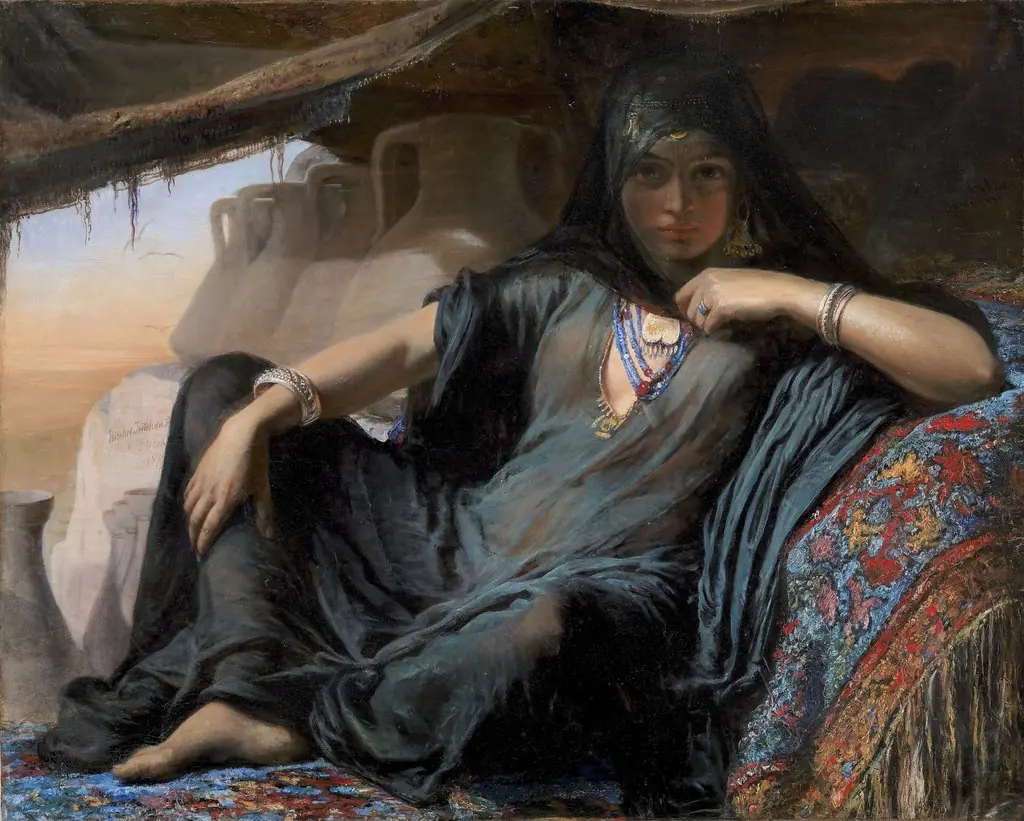
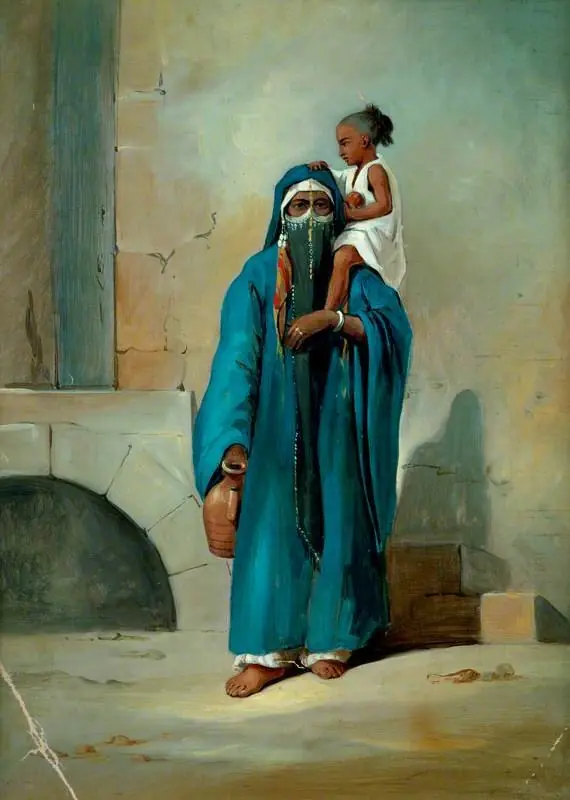
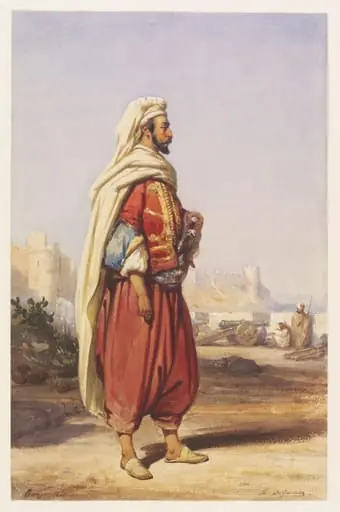
The Sugar Cane Girl is a watercolor work on paper by the Biedermeier artist Carl Haag. It dates from 1866 and is held in the collection of the Victoria and Albert Museum.
About this work
Overview
The work exemplifies Haag’s practice of rendering individual figures to convey a sense of the region’s everyday life for a European audience.
Carl Haag’s watercolour, created during his desert crossing from Cairo to Suez, depicts a solitary young girl holding a stalk of sugar cane. Dressed in traditional North African attire, she stands against an unadorned background that emphasizes her presence. The work exemplifies Haag’s practice of rendering individual figures to convey a sense of the region’s everyday life for a European audience.
Subject & Meaning
The central figure is a youthful girl, rendered with modest detail, clutching a piece of sugar cane—a common agricultural product in the area. Her isolation within the composition draws attention to the individual experience of rural life, suggesting both the simplicity and the cultural specificity of the setting.
Technique & Style
Executed in transparent watercolour, the painting relies on delicate washes to model the figure’s clothing and the surrounding space. Haag’s approach isolates the subject, using minimal background elements to focus the viewer’s eye, a method typical of his series of Orientalist watercolours produced for a Western market.
History & Provenance
Haag, a German‑born artist who settled in Britain, produced this piece for the British market during the late 19th‑century surge of interest in Oriental subjects. The work was among a larger body of watercolours he created while traveling across Egypt, intended for sale and exhibition to a European audience fascinated by exotic locales.
Context
The painting reflects the Victorian era’s fascination with the ‘Orient,’ where travelers and artists often highlighted picturesque individuals to satisfy Western curiosity. Haag’s choice to portray a solitary figure aligns with contemporary trends that emphasized romanticized, yet observational, depictions of North African people and customs.
Artist & collection
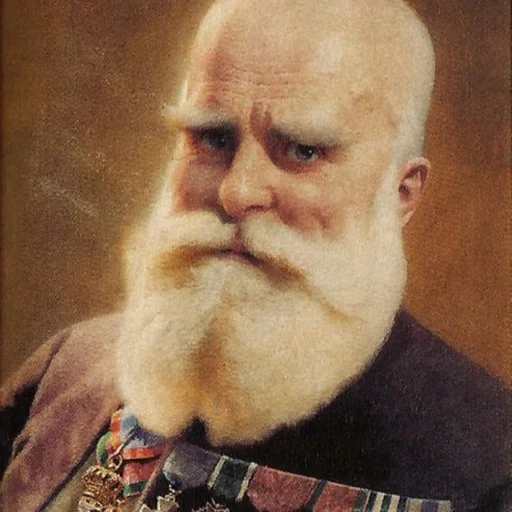
Artist
Carl Haag was a Bavarian-born painter who became a naturalized British subject and was court painter to the duke of Saxe-Coburg and Gotha.