Artwork
Mistreț și dropie
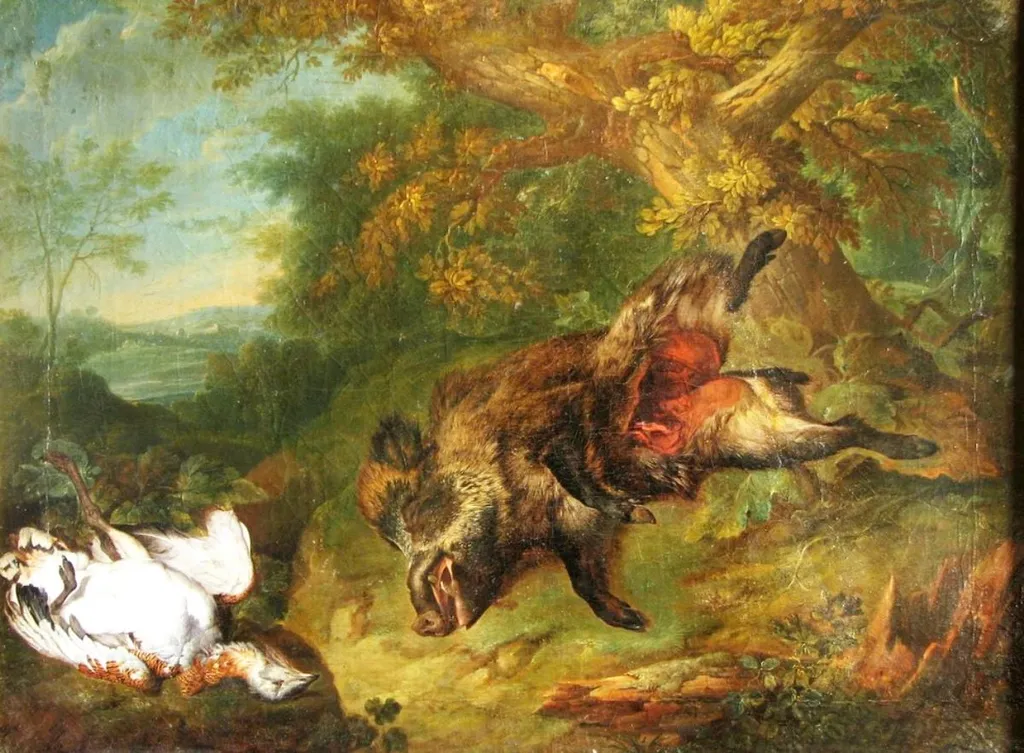
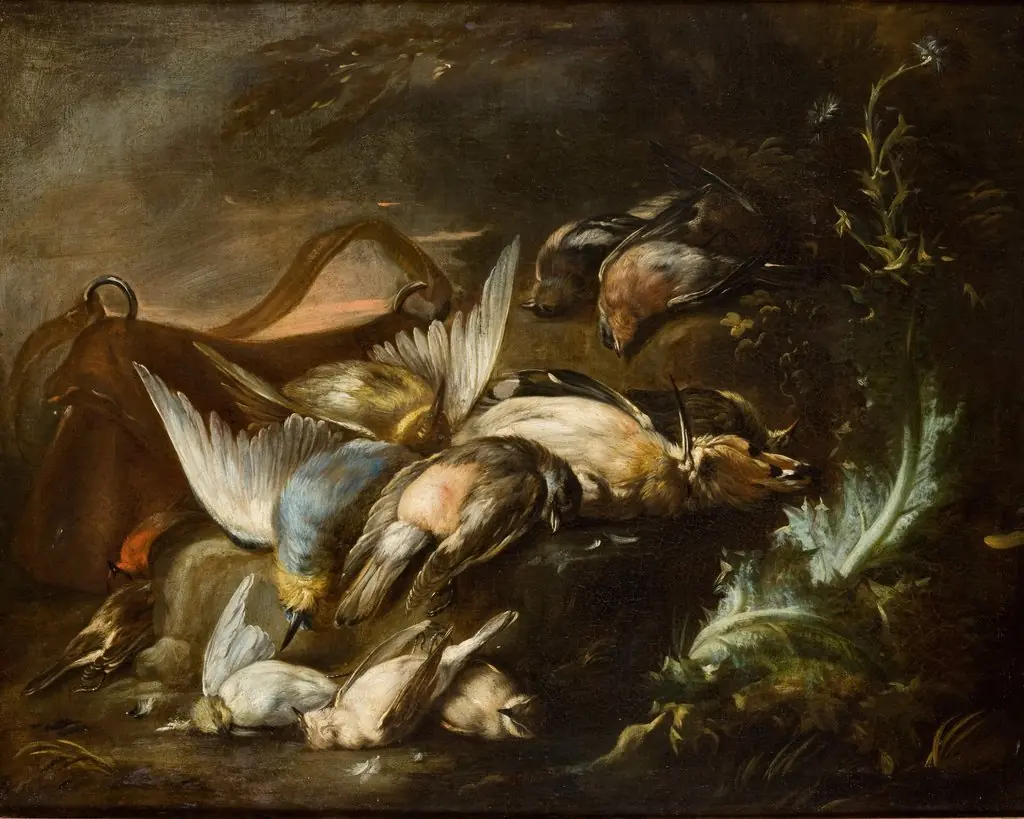
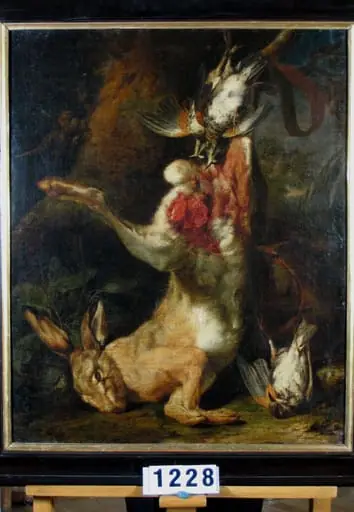
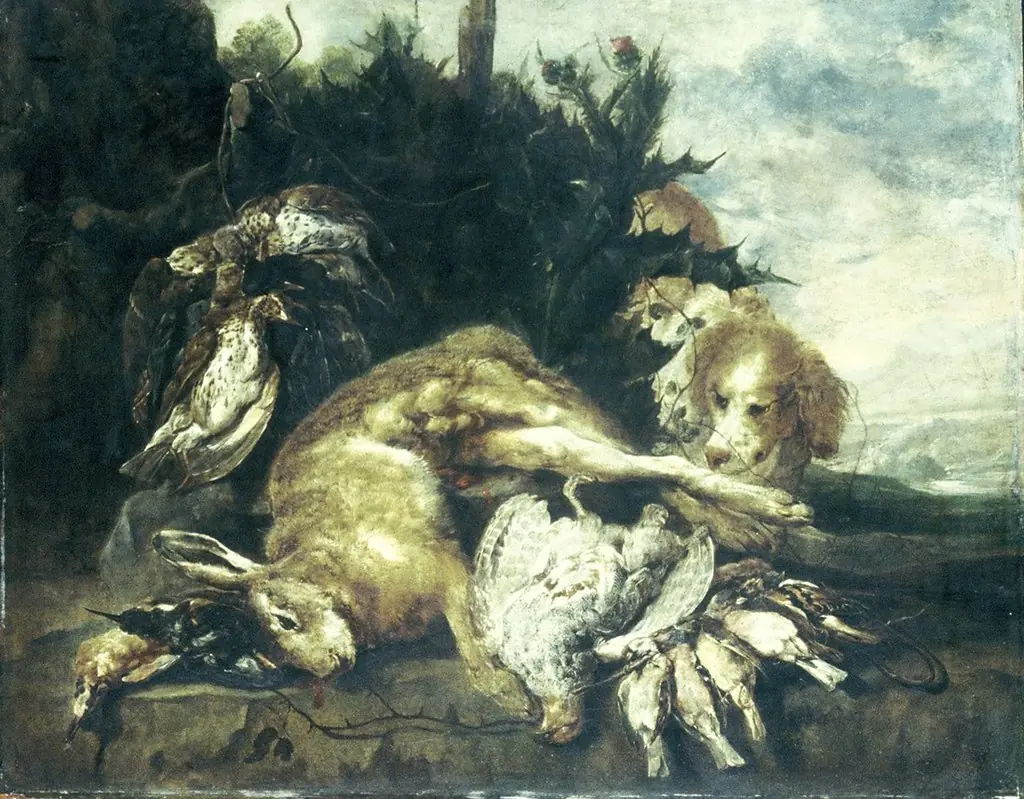
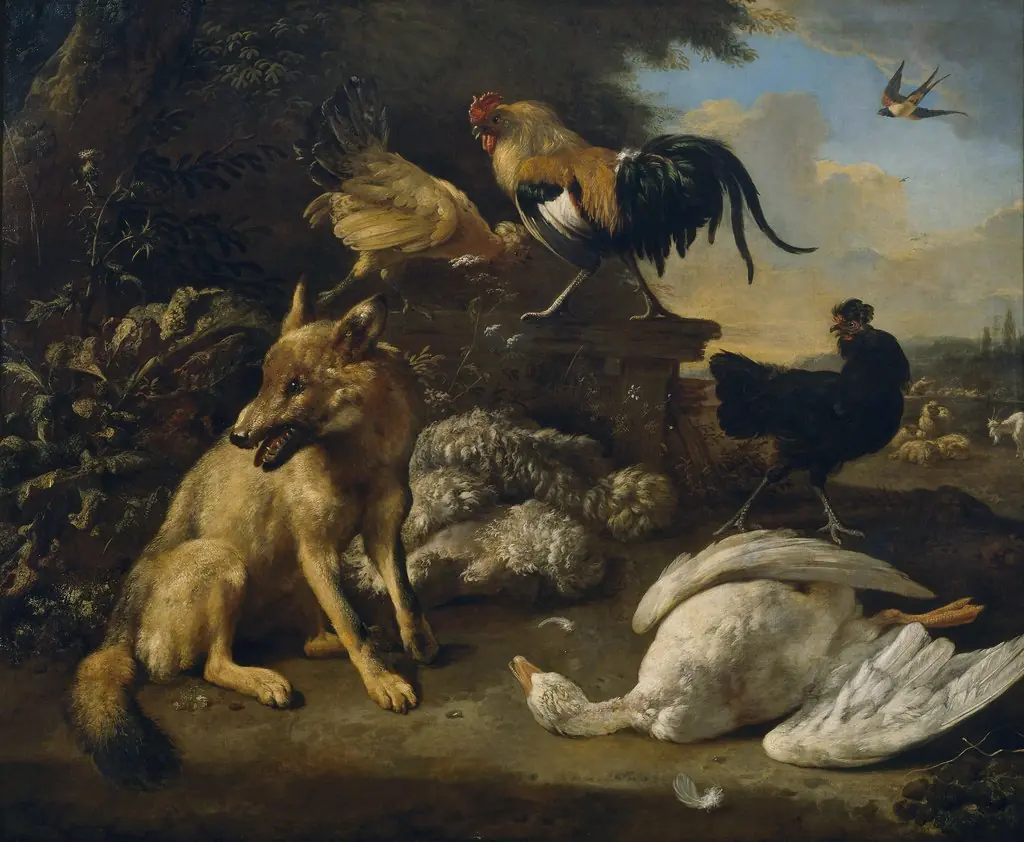
Mistreț și dropie is a print by the Baroque artist Philipp Ferdinand Hamilton. It is held in the collection of the Brukenthal National Museum. This artwork depicts a moment of violent stillness in a dense woodland.
About this work
Overview
The scene is rendered with textured brushwork and a muted palette of forest greens and browns, suggesting an older, possibly 17th-century technique.
This artwork depicts a moment of violent stillness in a dense woodland. A wild boar, pinned and struggling, is surrounded by the remnants of a failed hunt. A dead bird lies nearby, its feathers scattered in the earth. The scene is rendered with textured brushwork and a muted palette of forest greens and browns, suggesting an older, possibly 17th-century technique. The faint glimpse of sky above reinforces the enclosed, claustrophobic atmosphere of the undergrowth.
Subject & Meaning
The boar, caught mid-reaction, and the lifeless bird together suggest a disrupted natural order. The hunt, intended to assert control, ends in chaos—neither predator nor prey achieves victory. The boar’s wide eyes and thrashing limbs convey raw survival instinct, while the bird’s stillness implies sudden, senseless death. Together, they evoke the fragility of life and the unpredictability of nature’s violence.
Technique & Style
The artist employs thick, deliberate brushstrokes to render the boar’s bristled fur and the layered foliage, creating a tactile surface. Subtle chiaroscuro defines the boar’s musculature and the depth of the forest, with light filtering weakly through the canopy. Shadows pool around the bird and the boar’s hooves, anchoring the scene in physical space. The lack of sharp detail in the background enhances the sense of immersion in the wild.
History & Provenance
The painting’s origins are undocumented, but its style and materials suggest it was created in Northern Europe during the late Renaissance or early Baroque period. It may have been part of a private collection focused on hunting scenes or naturalist studies. No records of its early ownership or exhibition history are known, and its survival suggests it was preserved as a curiosity rather than a celebrated work.
Context
During the 16th and 17th centuries, depictions of wild animals in peril were common among Northern European artists, often reflecting human anxieties about control over nature. Hunting scenes served both as displays of status and as moral allegories. This work diverges from glorified hunts by emphasizing failure and decay, aligning more closely with emerging naturalist interests in the raw, unvarnished reality of the wild.
Legacy
Though not widely known, the painting contributes to a quieter tradition of animal studies that prioritize emotional truth over spectacle. Its unidealized portrayal of death and struggle anticipates later naturalist and realist approaches in 19th-century art. It remains a quiet testament to the complexity of human interaction with the natural world—neither heroic nor sentimental, but observed with sober attention.
Artist & collection
Artist
This painter made quiet, precise pictures of game birds and animals caught in forests and fields.

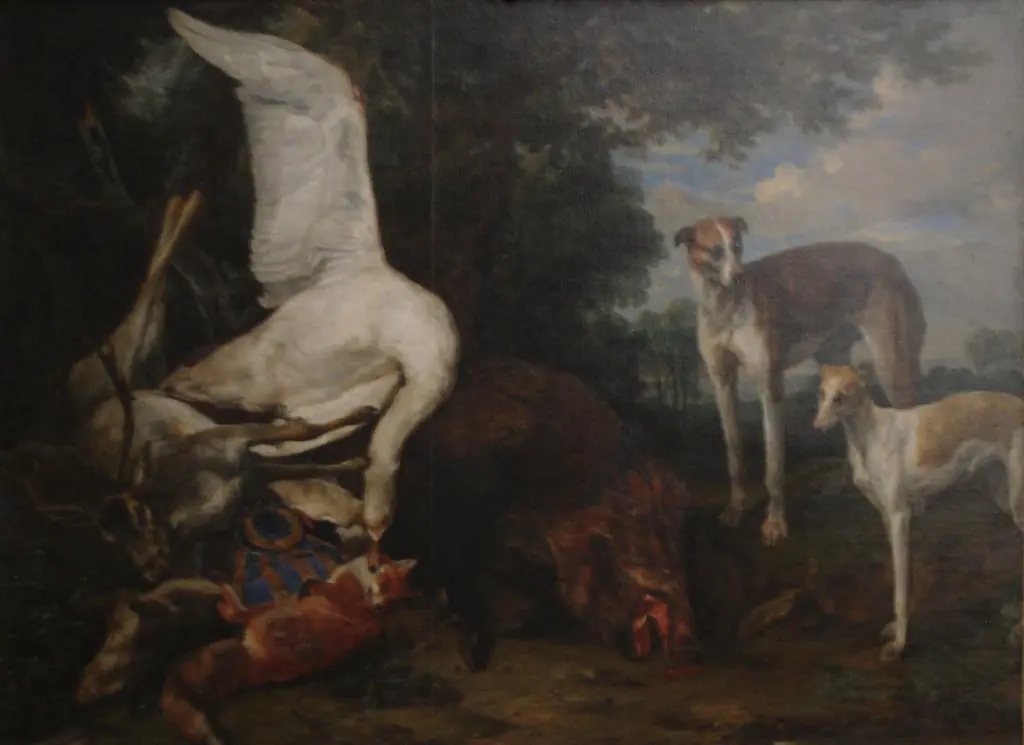
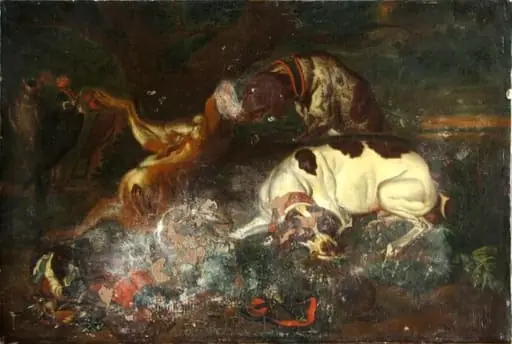 Vânat păzit de câini ; pandant: Vânat păzit de doi câini
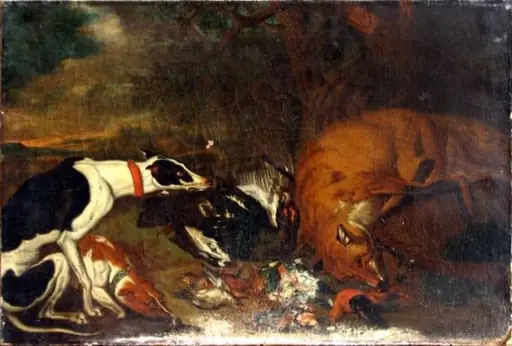 Vânat păzit de doi câini ; pandant: Vânat păzit de câini
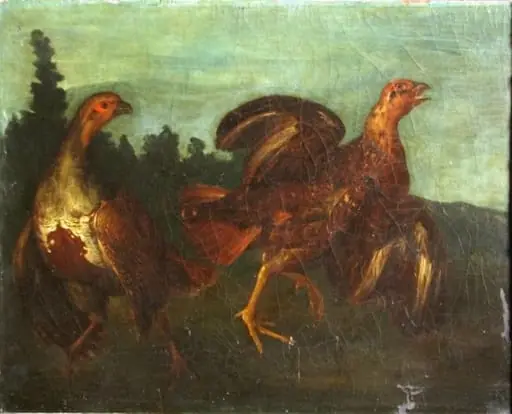 Potârnichi speriate ; pandant; Potârniche zburând
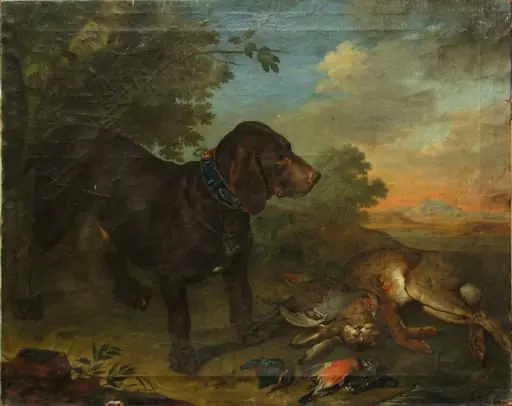 Prepelicar brun; pandant: Prepelicar alb
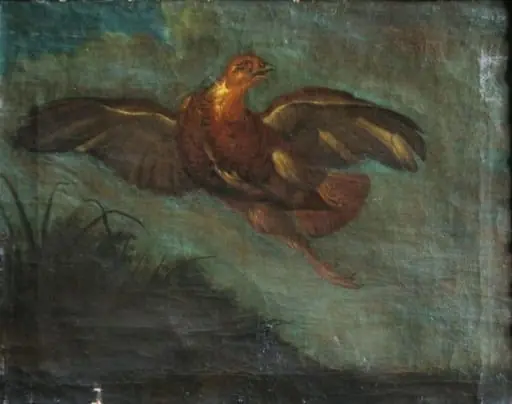 Potârniche zburând ; pandant: Potârnichi speriate
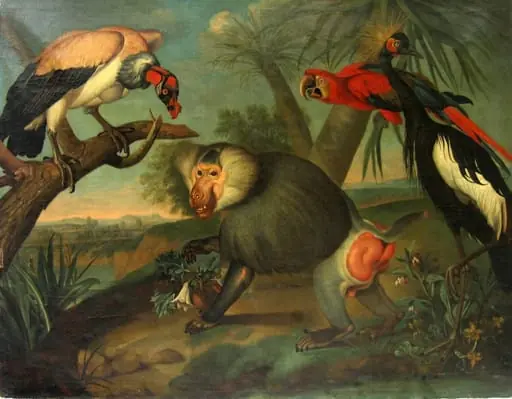 Animale exotice
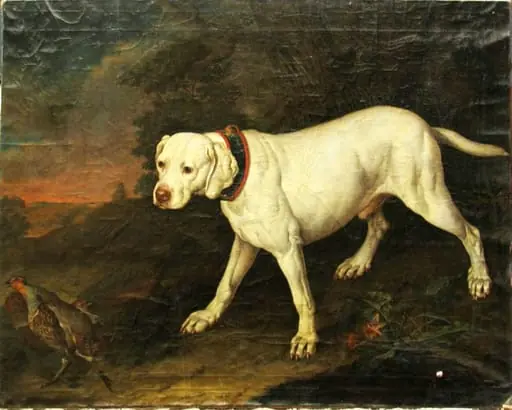 Prepelicar alb; pandant: Prepelicar brun